 @cdarwin@c.im
2026-06-21 00:32:25
Team, there is no “undo” button for irreplaceable landscapes, yet ConocoPhillips and other oil companies are trying to get their hands on one of America’s wildest and most fragile places: The Arctic National Wildlife Refuge.
Despite overwhelming public opposition, the administration just announced it will hold an oil and gas lease sale next month, offering tracts on the refuge’s sensitive coastal plain.
We will not stand by and let corporate greed and this administration's …

 @arXiv_physicsmedph_bot@mastoxiv.page
2026-06-23 08:05:47
A Positron Range Correction with Texture Preservation Framework in PET Imaging
Nerea Encina-Baranda, Yifan Zheng, Jorge Cabello, Robert. J. Paneque-Yunta, Cindy. M. Solano-Cordero, Alejandro Lopez-Montes, Maurizio Conti, Joaquin. L. Herraiz
https://arxiv.org/abs/2606.23100 https://arxiv.org/pdf/2606.23100 https://arxiv.org/html/2606.23100
arXiv:2606.23100v1 Announce Type: new
Abstract: Positron range (PR) blurring is a fundamental resolution limitation in PET imaging with high-energy positron emitters such as 82Rb, causing contrast loss and spill-out effects across heterogeneous tissue interfaces. We propose PRC-TP, a positron range correction (PRC) framework with explicit texture preservation that decouples deterministic resolution recovery from stochastic texture restoration. A nnFormer-based neural network (NN) was trained on patient-derived Monte Carlo simulations to map PR-degraded 82Rb reconstructions to PR-free references using attenuation maps as anatomical context. However, this NN also significantly removed the noise in the images, which could impact some texture analysis methods or make the images look unrealistic. An auxiliary Noise2Noise model estimates that smoothing effect, enabling texture extraction and transfer to the PR-corrected prediction through Model-consistent Texture Re-Injection (MTRI). In simulated patients, PRC-TP preserved contrast recovery close to ground truth (GT) (98.96-99.04%) while restoring noise and CNR closer to the reference. The function-based MTRI formulation achieved near unity global texture amplitude agreement with GT (0.997 /- 0.011), reducing the input texture amplitude bias (0.951 /- 0.011). Radiomics analysis showed improved agreement with GT across texture-sensitive feature families. A clinical 82Rb evaluation showed trends consistent with simulations, including comparable contrast-ratio increase (10.18% vs. 10.99%) and restoration of texture suppressed by PRC. These results support PRC-TP as a practical framework for resolution recovery with acquisition-consistent texture preservation in PET imaging.
Submitted to IEEE TRPMS.
toXiv_bot_toot
 @Mediagazer@mstdn.social
2026-06-20 13:40:54
A profile of Don Lemon, whose independent company Lemon Media Network has surpassed 10M followers across platforms, with more than 50% growth in the past year (Christopher Wiggins/Advocate)
https://www.advocate.com/exclusives/don-lemon-relevant-after-arrest

 @arXiv_astrophGA_bot@mastoxiv.page
2026-07-22 08:12:01
Physical Properties of 6.7 Million Galaxies from the DESI Bright Galaxy Survey: Spectral Fitting and Systematic Tests with Mock Spectra
Niu Li, Hu Zou, Jinfu Gou, Weijian Guo, Wenxiong L, Haoming Song, Jipeng Sui, Xi Tan, Yunao Xiao, Jingyi Zhang
https://arxiv.org/abs/2607.19162 https://arxiv.org/pdf/2607.19162 https://arxiv.org/html/2607.19162
arXiv:2607.19162v1 Announce Type: new
Abstract: We present a comprehensive analysis of the physical properties of galaxies in the Dark Energy Spectroscopic Instrument (DESI) Data Release 1 (DR1) Bright Galaxy Survey (BGS), based on full spectral fitting of $\sim 6.7$ million galaxy spectra. Using a customized spectral fitting pipeline, we derive key physical parameters including stellar mass, stellar velocity dispersion, stellar population age, dust attenuation, and emission-line properties. To quantify the reliability and systematic uncertainties of our measurements, we construct a large set of mock spectra that closely reproduce the observed properties of DESI data, including realistic noise and spectral features. By comparing the recovered parameters with the known inputs, we assess the performance of the spectral fitting as a function of stellar continuum signal-to-noise ratio (S/N, defined as the ratio of the median continuum flux to its associated error) and redshift. We find that stellar masses can be robustly recovered with negligible bias for spectra with $\mathrm{S/N} \gtrsim 5$, while low-S/N spectra ($\mathrm{S/N} \lesssim 5$) show a mild systematic overestimation of $\sim 0.1$ dex and increased scatter. Similar trends are observed for stellar population parameters, while emission-line fluxes are recovered with high accuracy and minimal bias. We further validate our stellar mass estimates by comparison with independent measurements from photometric spectral energy distribution fitting, finding good overall consistency within the expected systematic uncertainties. The value-added catalog presented in this work enables a wide range of statistical studies of galaxy evolution with DESI, and provides a foundation for future analyses.
toXiv_bot_toot
 @leftsidestory@mstdn.social
2026-06-16 02:57:08
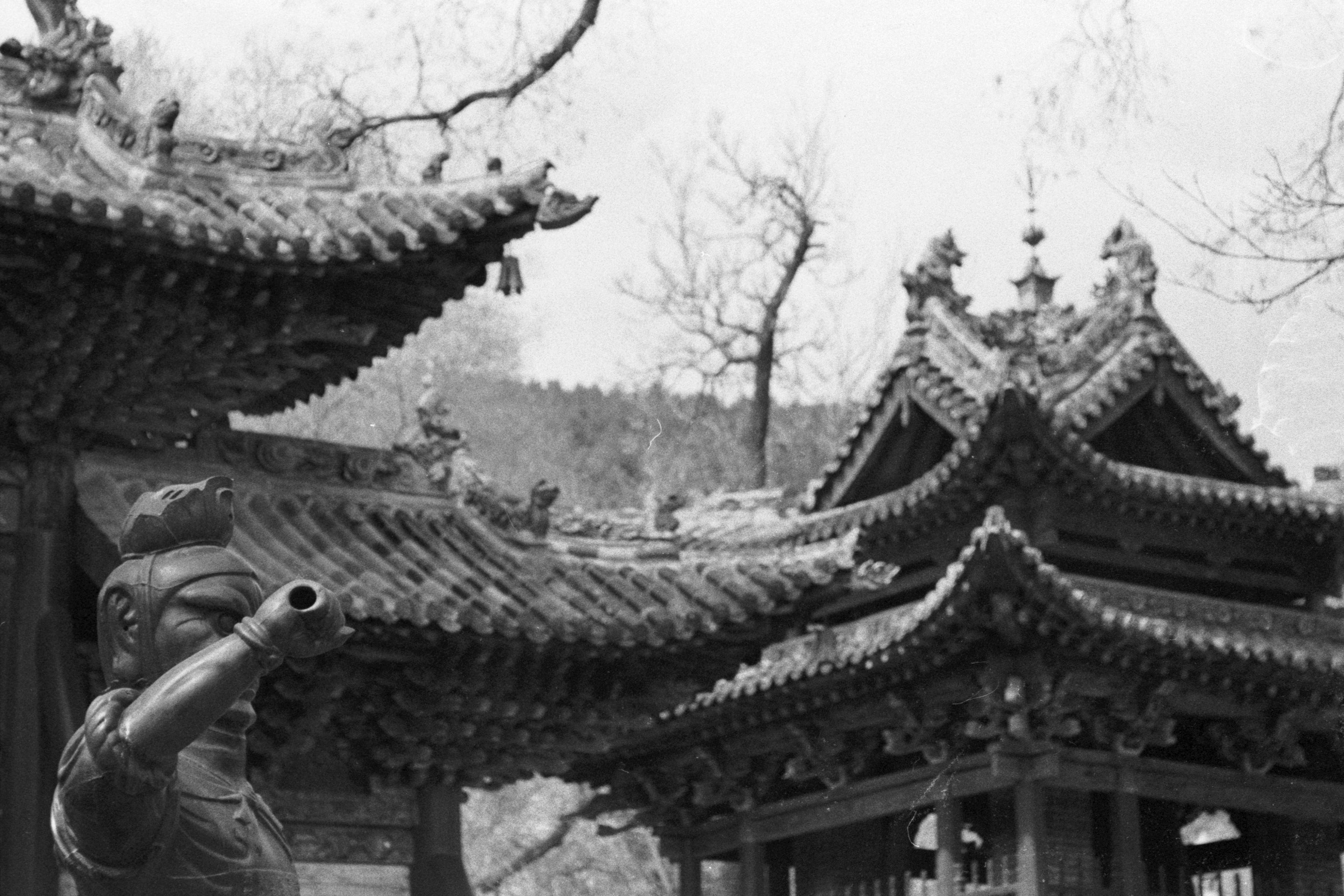
Quartet 🎵
四重奏 🎵
📷 Nikon F4E
🎞️ Ilford Pan 400
If you like my work, Support by buying me a coffee or a roll of film from
PayPal https://www.paypal.com/paypalme/ydcdingsite
Wise


 @cdarwin@c.im
2026-06-16 17:46:07
Around 13,000 years ago,
as the world was emerging from the grip of the last ice age,
much of the North Atlantic region plunged back into near-glacial conditions.
Sea ice expanded across the North Atlantic,
reaching as far south as the Shetland Islands.
Glaciers began to regrow in the Scottish Highlands,
while winter temperatures across Europe and North America plummeted.
⭐️Yet off the coast of Atlantic Canada, the ocean did the opposite.
In ou…
 @cdarwin@c.im
2026-06-12 15:55:01
The Greater Chaco region is a living, ancestral landscape,
replete with invaluable cultural resources and deeply sacred to Indigenous peoples of the Southwest since time immemorial.
However, the region continues to face the fossil fuel industry’s relentless attempts to drill these lands,
and the administration is now moving rapidly to revoke the area's 20-year ban on oil and gas development.
Roughly 90% of nearby public lands are already leased for drilling
—…
 @cdarwin@c.im
2026-07-06 16:16:28
 @cdarwin@c.im
2026-07-17 02:37:12
Grand Staircase-Escalante’s stunning slot canyons and dramatic vistas make it instantly recognizable.
Bears Ears’ red-rock canyons house culturally significant petroglyphs and ancient dwellings that have endured for centuries.
Right now they are facing unprecedented attacks–again.
Donald Trump just took executive action to virtually eliminate both of these iconic Utah national monuments,
slashing their boundaries by more than 90%.
Vital wildlife habitats,
 @cdarwin@c.im
2026-07-15 00:09:07
Joan Sebastian Guerrero,
a 26-year-old husband and father, reportedly possessing a social security number and the legal right to work in the US,
was fatally shot by federal immigration agents on the street in Maine on Monday.
Guerrero is the fourth person to have been killed by ICE agents this year alone.
The surge of violence is again igniting anger at Trump's aggressive immigration agenda,
and the apparent lack of accountability for ICE agents.
Ma…