 @fanf@mendeddrum.org
2026-09-16 14:42:04
from my link log —
A design space exploration of async/await.
https://cel.cs.brown.edu/blog/design-space-async-await/
saved 2026-09-15 https:/…

 @cheryanne@aus.social
2026-07-16 12:16:49
Two Brunettes & A Gay
Indulge in an hour of witty banter and lively discussions with these cheeky 30-somethings, along with special guests from the entertainment industry and beyond...
Great Australian Pods Podcast Directory: https://www.greataustralianpods.com/two-br…

 @arXiv_mathST_bot@mastoxiv.page
2026-08-17 07:39:50
Generalization Error Estimation for Primal--Dual Algorithms in Non-Smooth Regression
Kai Tan, Pierre C Bellec
https://arxiv.org/abs/2608.13870 https://arxiv.org/pdf/2608.13870 https://arxiv.org/html/2608.13870
arXiv:2608.13870v1 Announce Type: new
Abstract: This paper studies trajectory-wise estimation of generalization error for primal--dual algorithms in non-smooth regression. Motivating examples include \(\ell_1\)-penalized least absolute deviations regression and square-root Lasso regression, where the data-fitting loss is non-differentiable and existing risk estimators for gradient-type optimization paths do not apply directly. We develop a general recursive framework that includes the Chambolle--Pock algorithm and related primal--dual splitting methods. We estimate risk by correcting each in-sample fitted value with a weighted combination of past dual iterates. The ideal weights are Stein derivative contractions and depend on the design covariance. We construct replacement weights from observable derivative contractions of the fitted-signal trajectory, yielding a covariance-free, data-driven correction. For high-dimensional Gaussian designs and fixed finite iteration horizon, we prove finite-sample guarantees for both estimators. For square-root ridge, we further establish a matched-Gaussian universality result beyond Gaussian designs. Numerical experiments show that the proposed estimators accurately track the out-of-sample risk along finite optimization paths.
toXiv_bot_toot
 @leftsidestory@mstdn.social
2026-07-29 01:26:55
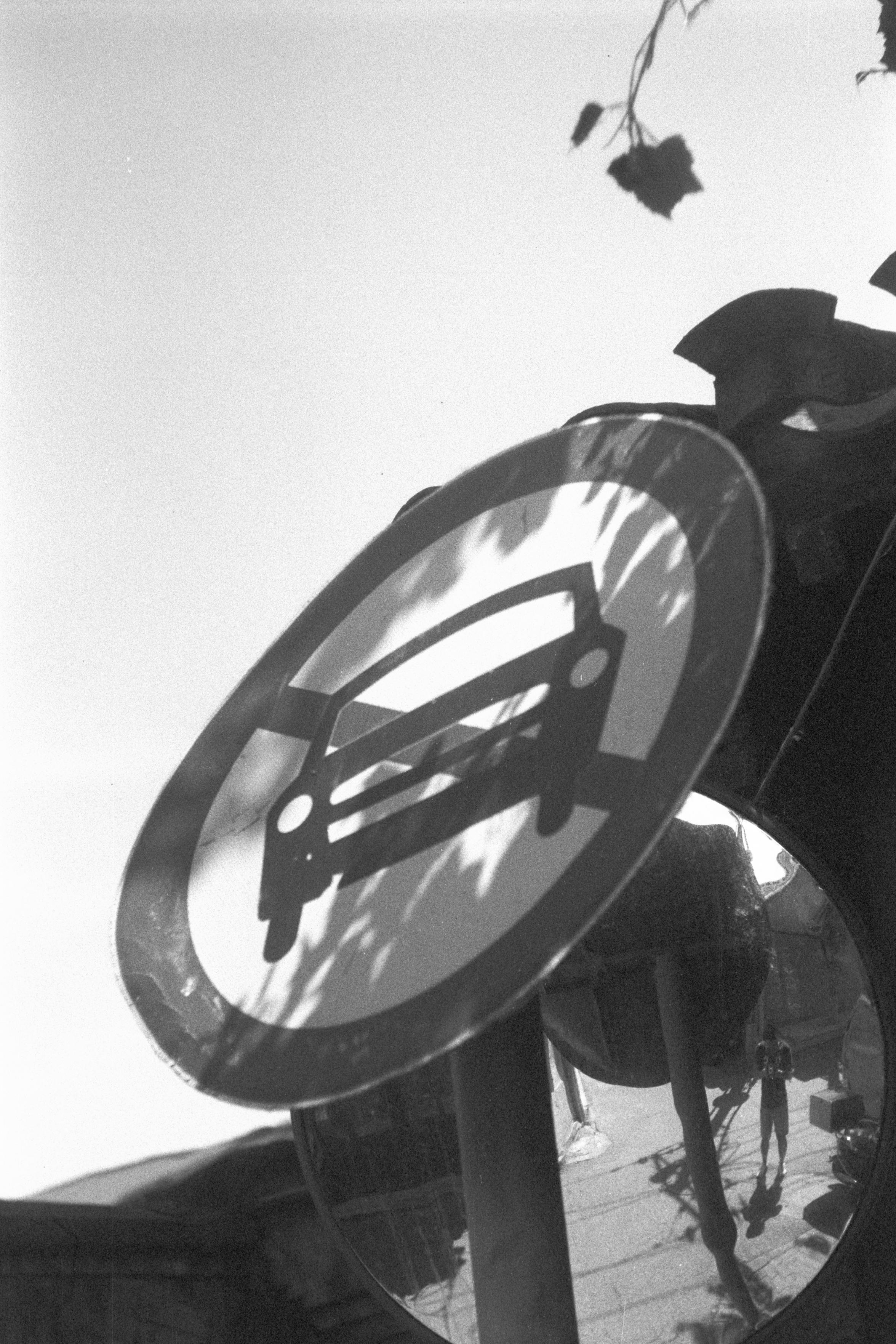
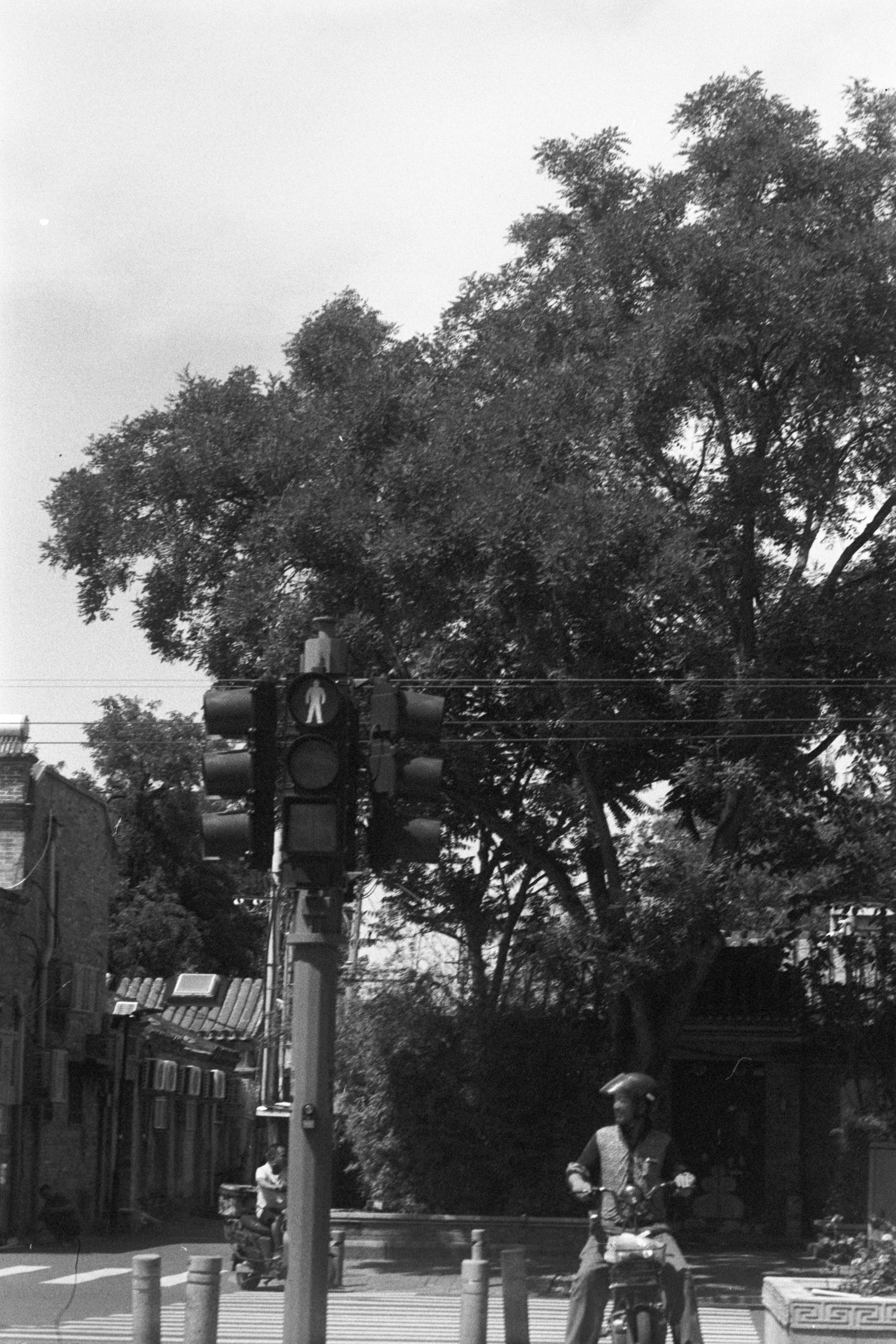
Non-Blurry Figures 🧿
非-模糊的形象 🧿
📷 Yashica 635
🎞️ Ilford FP4 Plus 125 (FF), expired 1994
If you like my work, Support by buying me a coffee or a roll of film from
PayPal https://www.paypal.com/paypalme/ydcdingsite
Wise


 @tiotasram@kolektiva.social
2026-07-12 16:28:07
Since it was relevant to a discussion I just had on here and is something most people probably haven't thought about much (unless you've taken one of a handful of philosophy classes), I thought I'd try to lay out a key piece of Descartes' Meditations (#philosophy
 @christydena@zirk.us
2026-09-12 23:54:27
@… You may already know about this. Just in case you don't, here!
Point-&-Click Showcase & Steam Event
https://

 @benthos@mastodon.sdf.org
2026-07-11 14:19:21


 @cdarwin@c.im
2026-06-19 18:21:16
This is the most detailed picture of a human cell ever made 🧪
https://www.instagram.com/reel/DX1CGIZMKJs/?igsh=NTc4MTIwNjQ2YQ

 @arXiv_csAR_bot@mastoxiv.page
2026-08-14 07:30:17
SCALE-Sim EVA: Design Principles for an Extensible, Visualizable, and Adaptable Accelerator Simulation Framework
Jingtian Dang, Ritik Raj, Tushar Krishna
https://arxiv.org/abs/2608.12354 https://arxiv.org/pdf/2608.12354 https://arxiv.org/html/2608.12354
arXiv:2608.12354v1 Announce Type: new
Abstract: Modern AI accelerators increasingly combine heterogeneous compute units, hierarchical memories, local buffers, and specialized data movement paths. This diversity makes fixed accelerator simulators difficult to extend beyond their original execution model. We present SCALE-Sim EVA, an extensible, visualizable, and adaptable simulation framework for IR-aware accelerator modeling. EVA represents workloads as tensor-based commands, tracks runtime tensor placement and readiness, and executes commands on composable hardware components with user-defined functional units and memory behavior. Instead of replaying address-level cycle traces, EVA computes cycle timing from tensor readiness, hardware-unit availability, and modeled operation or transfer latency. Its command decomposition mechanism bridges compiler-level IR granularity and hardware-level execution granularity, allowing global tensor operations to be lowered and scheduled locally across a hardware hierarchy. EVA also emits open command and storage traces for visual analysis of execution timelines, memory occupancy, and resource contention.
toXiv_bot_toot