 @Techmeme@techhub.social
2026-02-27 13:02:02
Tether says it has frozen $4.2B of its crypto token over links to "illicit activity", including $3.5B since 2023 and $61M linked to pig-butchering scams (Elizabeth Howcroft/Reuters)
https://www.reuters.com/sustainabi…
 @ErikJonker@mastodon.social
2026-03-27 14:15:28
RE: #drones
 @denmanrooke@social.coop
2026-02-27 16:53:22
I'm absolutely floored by how cool this video turned out!
I had the honour of working with Wild Blue Studios on a couple of the illustrations in this cinematic trailer.
And that song is a proper banger.
Very excited for this project.
https://www.youtube.com/watch?v=uxZXjHZ45t0
 @gwire@mastodon.social
2026-01-28 15:58:04
“Crypto Cash Fusion Cell”
https://ofsi.blog.gov.uk/2026/01/28/ofsi-and-partners-clamp-down-on-the-abuse-of-cryptoassets/

 @edintone@mastodon.green
2026-02-28 11:36:15
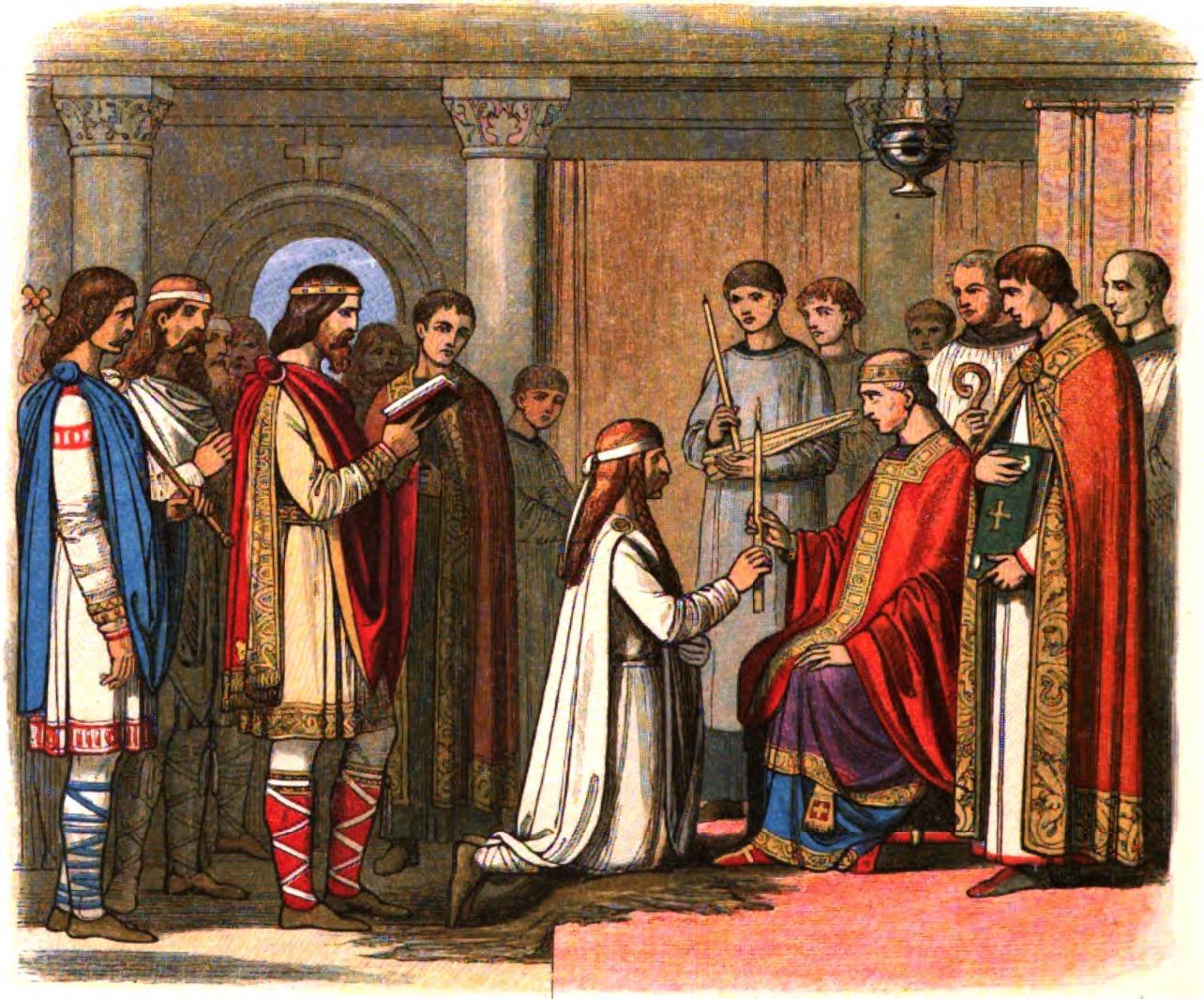
Alfred, Gunthrum & Danelaw The making of England. Dr Toby Purser, University of Northampton takes us on a tour of the Viking invasion of England. FREE Zoom talk https://www.ticketsource.co.uk/fostp 25 Mar 2026, 19.30 GMT. No Guthrum, no Alfred, no Alfred, no England ….
 @cdarwin@c.im
2026-04-27 04:03:39
Unlike the race to the moon between the Soviet Union and the US,
the 21st-century competition is shaping up to be more like a marathon,
with a gargantuan effort to launch multiple missions over many years.
“What this is really illustrating is that it doesn’t matter who gets to the moon next.
It matters who gets to the moon the next 10 times,”
said Scott Manley, a Scottish astrophysicist and expert on rocket engineering.
“The nation that keeps going is goi…
 @arXiv_physicschemph_bot@mastoxiv.page
2026-03-27 08:44:52
Automating Computational Chemistry Workflows via OpenClaw and Domain-Specific Skills
Mingwei Ding, Chen Huang, Yibo Hu, Yifan Li, Zitian Lu, Xingtai Yu, Duo Zhang, Wenxi Zhai, Tong Zhu, Qiangqiang Gu, Jinzhe Zeng
https://arxiv.org/abs/2603.25522 https://arxiv.org/pdf/2603.25522 https://arxiv.org/html/2603.25522
arXiv:2603.25522v1 Announce Type: new
Abstract: Automating multistep computational chemistry tasks remains challenging because reasoning, workflow specification, software execution, and high-performance computing (HPC) execution are often tightly coupled. We demonstrate a decoupled agent-skill design for computational chemistry automation leveraging OpenClaw. Specifically, OpenClaw provides centralized control and supervision; schema-defined planning skills translate scientific goals into executable task specifications; domain skills encapsulate specific computational chemistry procedures; and DPDispatcher manages job execution across heterogeneous HPC environments. In a molecular dynamics (MD) case study of methane oxidation, the system completed cross-tool execution, bounded recovery from runtime failures, and reaction network extraction, illustrating a scalable and maintainable approach to multistep computational chemistry automation.
toXiv_bot_toot
 @sergiofdezsaez@masto.es
2026-03-27 08:50:49
Recientemente en epublibre han publicado la saga de Stephen King "La torre oscura" en un solo volumen, con ilustraciones y todo.
Si desaparezco un tiempo por aquí, ya sabéis una de las posibles causas. #mastolibros #mastobooks

 @benthos@mastodon.sdf.org
2026-03-28 15:13:29
Prokofiev - "Cinderella" (Cleveland Orch., V. Ashkenazy cond.) (1983)
#NowPlaying
 @cdarwin@c.im
2026-03-28 07:17:39
Plant specimens and teaching materials that inspired Charles Darwin
and qualified him to work as a naturalist on HMS Beagle
have been unearthed from an archive in Cambridge
and will be used for the first time to teach contemporary students about botany.
The fragile specimens, ink drawings and watercolour illustrations of plants belonged to
Darwin’s teacher and mentor,
Prof John Stevens Henslow,
and have been stored in Cambridge University’s herbarium…