 @thomasfuchs@hachyderm.io
2025-11-26 15:30:16
The whole thing is optimized for scams, deception and other criminal behavior:
- user interface that deceptively pretends it's a human you're talking to
- claims from companies highly exaggerate capabilities
companies and "experts" constantly hype "AGI" which they (funnily enough) do to both make investors greedier and spread fear and as a distraction because these algorithms can't actually do what they keep promising
- large-scale accounting and financial fraud (e.g. what Nvidia is doing with circular selling)
- biggest case of copyright infringement in history
Note: I think the underlying technology is really cool, and definitely has use cases and can be used for actually good things. But: some technology just has more downsides than upsides, and some should only be used by experts in controlled environments. Leaded gasoline, asbestos and chlorofluorocarbon are also all really cool technology.
In this case perhaps the techology itself doesn't do anything inherently bad, however the people making it are lying about what it can do, the people selling it are motivated purely by greed and the people using it (often forced to do so) are being deceived.
 @arXiv_physicsoptics_bot@mastoxiv.page
2025-11-25 10:30:13
Manipulation of photonic topological edge and corner states via trivial claddings
Hai-Xiao Wang, Li Liang, Shuai Shao, Shiwei Tang, Junhui Hu, Yin Poo, Jian-Hua Jiang
https://arxiv.org/abs/2511.18705 https://arxiv.org/pdf/2511.18705 https://arxiv.org/html/2511.18705
arXiv:2511.18705v1 Announce Type: new
Abstract: Crystalline symmetry offers a powerful tool to realize photonic topological phases, in which additional trivial claddings are typically required to confine topological boundary states. However, the utility of the trivial cladding in manipulating topological waves is often overlooked. Here, we demonstrate two topologically distinct kagome photonic crystals (KPCs) based on different crystalline symmetries: \mathbit{C}_\mathbf{6}- symmetric KPCs exhibit a quantum spin Hall phase, while \mathbit{C}_\mathbf{3}-symmetric KPCs serve as trivial cladding. By tuning the geometric parameter of the trivial cladding, we observe that a pair of topological interface states featured with pseudospin-momentum locking undergoes a phase transition, accompanied by the appearance and disappearance of corner states in a finite hexagonal supercell. Such a geometry-induced band inversion is characterized by a sign change in the Dirac mass of the topological interface states and holds potential for applications such as rainbow trapping. Furthermore, we experimentally demonstrate the corner states, which is a hallmark of higher-order topology, also depend critically on the trivial cladding. Our work highlights the crucial role of trivial claddings on the formation of topological boundary states, and offers a novel approach for their manipulation.
toXiv_bot_toot
 @cdarwin@c.im
2025-12-22 16:17:00
I learned on Saturday that Bari Weiss spiked our story,
INSIDE CECOT,
which was supposed to air tonight.
We (Ori and I) asked for a call to discuss her decision.
She did not afford us that courtesy/opportunity.
Our story was screened five times
and cleared by both CBS attorneys and Standards and Practices.
It is factually correct.
In my view, pulling it now
-after every rigorous internal check has been met
is not an editorial decis…

 @zachleat@zachleat.com
2026-01-22 16:33:46
@… this perspective doesn’t resonate with me, knowing my incentives and internal motivations as a maintainer (not an “external” contributor) but I am curious what you mean!
 @Mediagazer@mstdn.social
2025-12-22 16:20:36
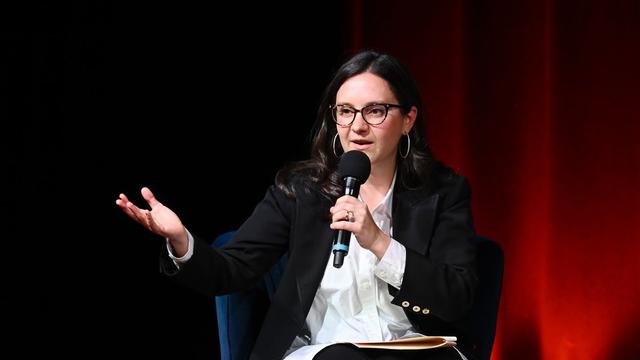
Sources: Weiss thinks that the existing 60 Minutes framework did not provide sufficient checks and balances to ensure that the reporting met Weiss' standards (Sara Fischer/Axios)
https://www.axios.com/2025/12/22/60-minutes-bari-weiss-cecot
 @markhburton@mstdn.social
2026-01-04 09:30:47
'Hoy.. Venezuela, mañana.. Cuba o Colombia, pero también países europeos que no adopten los marcos políticos de EEUU –como apuntan algunas declaraciones de Trump y la Estrategia de Seguridad Nacional – y que contengan recursos o territorios con rutas interesantes para Washington, como es el caso de Groenlandia, perteneciente a Dinamarca.'
Los bombardeos de EEUU en Venezuela y el secuestro de Maduro: un crimen internacional de agresión con consecuencias para Europa

 @arXiv_csLG_bot@mastoxiv.page
2025-12-22 10:34:10
Exploiting ID-Text Complementarity via Ensembling for Sequential Recommendation
Liam Collins, Bhuvesh Kumar, Clark Mingxuan Ju, Tong Zhao, Donald Loveland, Leonardo Neves, Neil Shah
https://arxiv.org/abs/2512.17820 https://arxiv.org/pdf/2512.17820 https://arxiv.org/html/2512.17820
arXiv:2512.17820v1 Announce Type: new
Abstract: Modern Sequential Recommendation (SR) models commonly utilize modality features to represent items, motivated in large part by recent advancements in language and vision modeling. To do so, several works completely replace ID embeddings with modality embeddings, claiming that modality embeddings render ID embeddings unnecessary because they can match or even exceed ID embedding performance. On the other hand, many works jointly utilize ID and modality features, but posit that complex fusion strategies, such as multi-stage training and/or intricate alignment architectures, are necessary for this joint utilization. However, underlying both these lines of work is a lack of understanding of the complementarity of ID and modality features. In this work, we address this gap by studying the complementarity of ID- and text-based SR models. We show that these models do learn complementary signals, meaning that either should provide performance gain when used properly alongside the other. Motivated by this, we propose a new SR method that preserves ID-text complementarity through independent model training, then harnesses it through a simple ensembling strategy. Despite this method's simplicity, we show it outperforms several competitive SR baselines, implying that both ID and text features are necessary to achieve state-of-the-art SR performance but complex fusion architectures are not.
toXiv_bot_toot
 @vform@openbiblio.social
2026-01-17 17:41:39
It's interesting how alternatives to the classic corporate #Android keep coming up
1. Android-based but modified & 'de-Googled', like I think #LineageOS, #CalyxOS,
@arXiv_physicsoptics_bot@mastoxiv.page2025-11-25 11:19:03
Scattering in Time-Varying Drude-Lorentz Models
Bryce Dixon, Calvin M. Hooper, Ian R. Hooper, Simon A. R. Horsley
https://arxiv.org/abs/2511.19322 https://arxiv.org/pdf/2511.19322 https://arxiv.org/html/2511.19322
arXiv:2511.19322v1 Announce Type: new
Abstract: Motivated by recent experiments, the theoretical study of wave propagation in time varying materials is of current interest. Although significant in nearly all such experiments, material dispersion is commonly neglected in theoretical studies. Yet, as we show here, understanding the precise microscopic model for the material dispersion is crucial for predicting experimental outcomes. Here we study the temporal scattering coefficients of four different time-varying Drude-Lorentz models, exploring how an incident continuous wave splits into forward and backward waves due to an abrupt change in plasma frequency. The differences in the predicted scattering are unique to time-varying media, and arise from the exact way in which the time variation appears in the various model parameters. We verify our results using a custom finite difference time domain algorithm, concluding with a discussion of the limitations that arise from using these models with an abrupt change in plasma frequency.
toXiv_bot_toot