 @cdarwin@c.im
2026-07-20 23:57:42
The people have moved on.
Americans are not just fed up with pandering to Israel by politicians beholden to funding from the American Israel Public Affairs Committee.
The people have moved on from this notion that things need to move slowly or worse yet, nothing can be done at all.
The current fear-mongering about democratic socialists overshadows the fact it started in the early 1980s,
a time when Americans struggled to make ends meet.
And the current scare f…

 @fanf@mendeddrum.org
2026-06-21 08:42:02
from my link log —
PostgreSQL is a great pub/sub and job server.
https://webapp.io/blog/postgres-is-the-answer/
saved 2021-12-18 https://

 @leftsidestory@mstdn.social
2026-08-20 03:32:12
Parts V ⚙️
部分 V ⚙️
📷 Yashica 635
🎞️ Ilford HP5 Plus 400 (FF), expired 1994
If you like my work, Support by buying me a coffee or a roll of film from
PayPal https://www.paypal.com/paypalme/ydcdingsite
Wise




 @adulau@infosec.exchange
2026-06-21 22:01:33
Training an LLM on a heavily cleaned, de-identified corpus can be like correcting every grammatical mistake in a large collection of texts: the result may look cleaner, but it can also lose the context, variation, and imperfections that reflect real-world language and behaviour.
A corpus scrubbed of every sensitive detail and irregularity can become a polished imitation of reality. Privacy protection could be necessary, but a model trained mostly on synthetic or over-sanitised data ris…
 @blackknight95857669@social.linux.pizza
2026-08-21 02:43:09
So I rolled credits on Clair Obscur yesterday.
.. I mean it's good, but I don't think it's a "masterpiece" or GOTY material. There was nothing "groundbreaking", which isn't a requirement or anything, just.. well there's a decent amount of janky oddness that definitely is jarring. Cut scenes that are locked to 30fps in IDK what res but def not the 4K I was playing it in, so they just didn't look right next to my gameplay. The facial animations…
 @azonenberg@ioc.exchange
2026-08-21 13:45:24
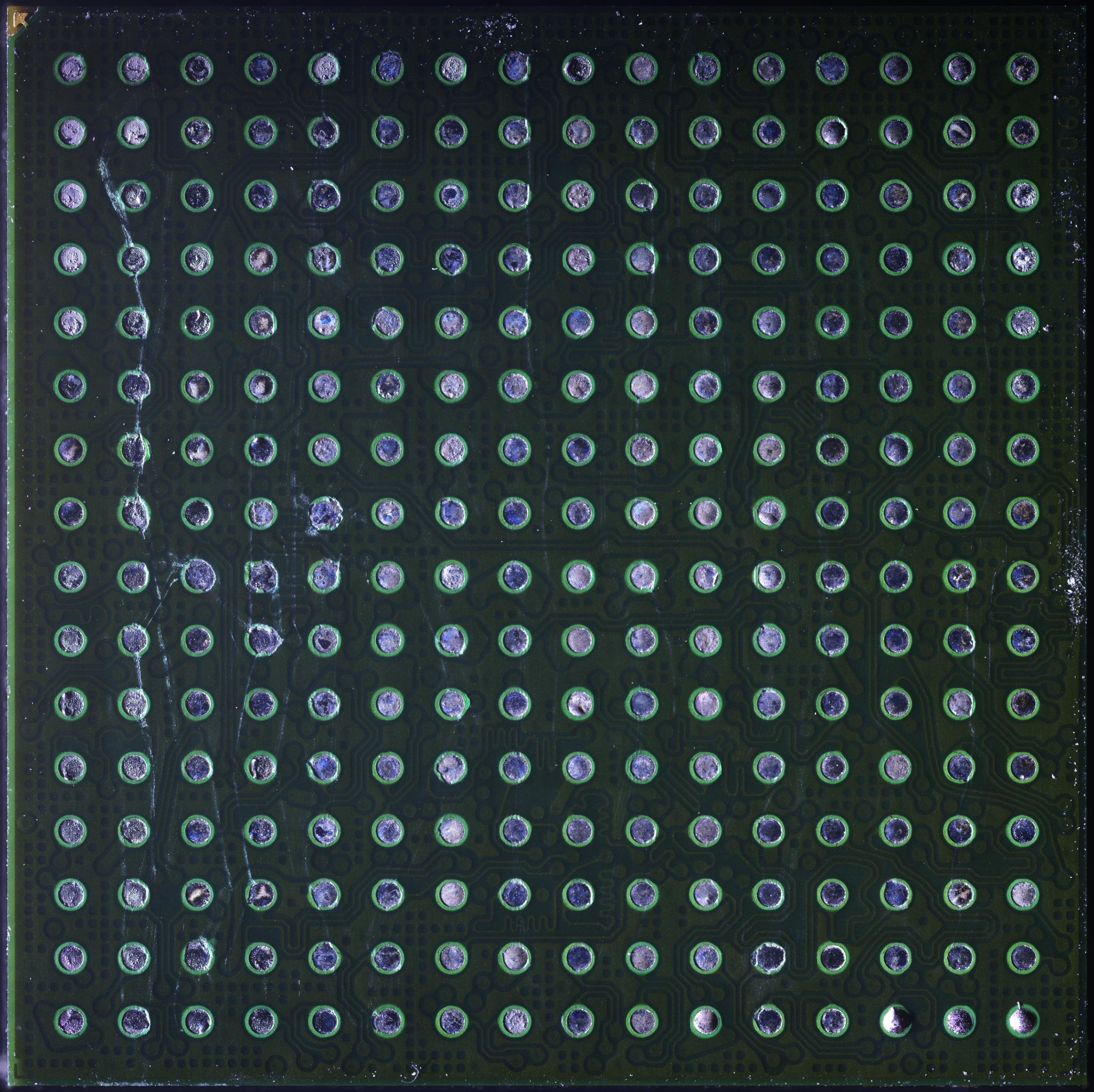
Xilinx Artix-7 FPGA, XC7A15T.
The die is covered in yellow polyimide film (basically kapton) which is a soft plastic that scratches super easily and has some marks despite my best attempts to keep it pristine with careful handling.
I'll try removing it with sulfuric acid later on and see how it goes. Or maybe take it into work and run it on the RIE with oxygen plasma.
There's not a whole lot to see other than the GTP quad in the southwest corner. I'll delayer at…


 @Mediagazer@mstdn.social
2026-06-21 00:15:58
Le Monde is considering ways to grant access to AI agents of paying readers while maintaining its block on crawler bots and other unlicensed non-human traffic (Jessica Davies/Digiday)
https://digiday.com/media/le-monde-blo

 @cheryanne@aus.social
2026-09-21 19:08:20
Fit Chit Chat
Whether chit chatting solo or collaborating with a range of others from the fitness space (think PTs, dieticians, physios, counsellors, and even her own clients!) you are guaranteed to leave feeling educated, entertained, and empowered to become your baddest damn self...
Great Australian Pods Podcast Directory: https://www.…
 @cdarwin@c.im
2026-07-20 15:53:47
Mainers have spoken:
I am incredibly proud to be their choice for Democratic nominee in our U.S. Senate race.
I’m Troy Jackson.
If you don’t know me yet, here are the basics:
I’m from Allagash, a town of 237 people in northern Maine right on the Canadian border.
Growing up, I didn’t think I’d ever be anything other than a fifth-generation logger.
And that was enough.
But when I was working in the North Woods, grinding out 80-hour workweeks under t…
@leftsidestory@mstdn.social2026-07-20 00:30:05
Civic Museums III - Relics🏛️
民间博物馆 III - 残垣 🏛️
📷 Pentax MX
🎞️ LUCKY SHD 400 (FF)
If you like my work, Support by buying me a coffee or a roll of film from
PayPal https://www.paypal.com/paypalme/ydcdingsite
Wise