 @aral@mastodon.ar.al
2026-07-16 06:57:34
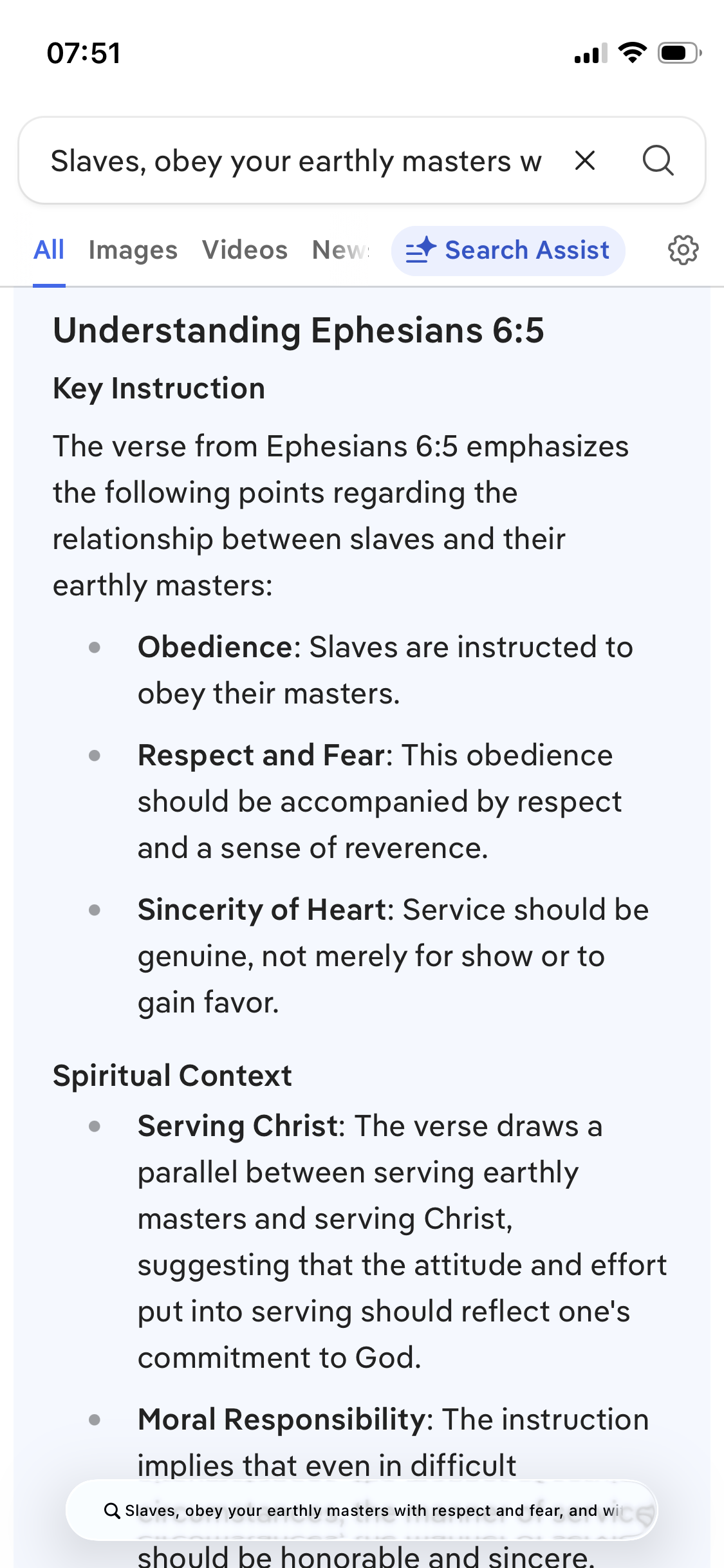
Donno what’s worse, the verse itself or DuckDuckGo’s generated explanation of it. @… https://partyon.xyz/@nando161/116925119988965039

 @arXiv_mathDG_bot@mastoxiv.page
2026-09-15 08:54:44
Singularities of the Wigner Caustic and the Centre Symmetry Set of Frontal Curves in the Euclidean Plane
Micha\l{} Zwierzy\'nski
https://arxiv.org/abs/2609.14653 https://arxiv.org/pdf/2609.14653 https://arxiv.org/html/2609.14653
arXiv:2609.14653v1 Announce Type: new
Abstract: Motivated by the role of the Wigner caustic in semiclassical phase-space analysis, we extend it, together with the centre symmetry set, from regular planar curves to cooriented frontals. For an angularly regular parallel pair, the signed speed of the Wigner caustic is one half of the difference of the extended signed radii of curvature, while singular points of the finite centre symmetry set are the critical points of their projective ratio. These formulas yield criteria and explicit invariants for ordinary and higher cusps, an order-lowering relation between the two constructions, and a multiplicity-weighted extension of the classical cusp-count inequality for strictly convex ovals.
We also analyse parallel pairs containing a singular frontal which is not a front. A $5/2$-cusp produces either a $5/2$- or, at a signed-radius resonance, a $5/3$-cusp on the Wigner caustic. The opposite resonance sends the centre symmetry set to infinity. We obtain the corresponding transfer results for a $5/3$-cusp and give a projective completion which resolves vanishing denominators and simultaneous finite-order zeros of the two signed radii.
toXiv_bot_toot
 @metacurity@infosec.exchange
2026-08-17 15:24:26
Never a weekend slowdown in cybersecurity news, so check out today's Metacurity for the most critical infosec developments you might have missed since Friday, including
--Alibaba’s Qwen races past Meta, Google with 3 billion AI model downloads,
--AI agent exploits Snowflake flaw introduced by Copilot,
--US tells allies to pick sides in AI race with China,
--China pushes to reshape the world’s AI training data,
--China’s Zhipu claims AI edge over Anthropic in cyber test,
--Pentagon scrambles to keep pace with AI’s military risks,
--France holds crisis meeting over massive tax agency hack,
--Iran targets Israeli journalists with phishing attacks,
--Election officials blast CISA over lack of cyber support,
--AI deepfake scams surge in Australia,
--SafePal breach exposes data of nearly 40k customers,
--Bits of Gold breach exposes customer data,
--Hackers exploit Mac flaw to mine cryptocurrency,
--Seven arrested over $35m German bank hack,
--Hong Kong university probes ransomware breach claims,
--Fake GitHub site spreads Mac infostealer,
--US courts to disclose government spyware use,
--Sogang University breach exposes 180k people,
--DDoS attacks hammer secure messaging service Threema,
--Hackers hawk millions of records stolen from Azure tenants,
--London police expose emails of Al Fayed accusers,
--Microsoft kills Windows tool long abused by malware,
--French court blocks social media ban for children,
--AI can’t seem to produce any tech heroes,
--AI makes data breaches even more expensive,
--Amazon used to sell books, not destroy them
https://www.metacurity.com/alibabas-qwen-races-past-meta-google-with-3-billion-ai-model-downloads/
 @cdarwin@c.im
2026-09-10 20:10:19
If you buy a T-shirt at Gap, it will have a label that tells you where it was made. That’s federal law.
The same is true for automobiles, appliances, television sets, every fresh or frozen fruit and vegetable sold at the supermarket.
Beef and pork are notable exceptions to these laws.
And that may help to explain why President Trump signed a proclamation last month that will allow the duty-free importation of about 660 million pounds of inexpensive beef.
If American co…
 @arXiv_mathDG_bot@mastoxiv.page
2026-09-15 08:50:02
Boundary flexibility for curvature conditions
Helge Frerichs
https://arxiv.org/abs/2609.14581 https://arxiv.org/pdf/2609.14581 https://arxiv.org/html/2609.14581
arXiv:2609.14581v1 Announce Type: new
Abstract: We prove a general boundary gluing principle for families of Riemannian metrics with pointwise curvature restrictions on manifolds with possibly non-compact boundary. This includes, as special cases, the classical gluing theorems by Perelman for metrics with positive Ricci curvature and convex singularities and by Gromov-Lawson and B\"ar-Hanke for metrics with positive scalar curvature and mean convex singularities. Using the language of algebraic curvature cones, our theorem implies and unifies many more previous gluing results. We also prove a boundary deformation principle that enables us to compare spaces of metrics with interior curvature restrictions and different boundary conditions. Our construction is based on the local flexibility lemma for open partial differential relations, as well as explicit 1-jet deformations of metrics along the boundary.
toXiv_bot_toot
 @Techmeme@techhub.social
2026-08-03 13:02:33
Horizon3, whose AI penetration testing platform NodeZero helps find and exploit attack paths in production systems, raised a $250M Series E at a $2B valuation (Kate Park/TechCrunch)
https://techcrunch.com/2026/08/03/horizon3-hits…

 @arXiv_hepth_bot@mastoxiv.page
2026-08-07 08:23:08
Pseudoreal AMSB: Troubling Tensions with Tumbling
Bea Noether
https://arxiv.org/abs/2608.06148 https://arxiv.org/pdf/2608.06148 https://arxiv.org/html/2608.06148
arXiv:2608.06148v1 Announce Type: new
Abstract: I analyze the pseudoreal confining $\mathcal{N}=1$ SUSY gauge theories deformed by anomaly mediated SUSY breaking (AMSB). Taking the conjecture that the AMSB and non-SUSY limits are in the same universality class, I find broadly that the non-SUSY confining pseudoreal gauge theories of this class have no massless particles in their spectra. This contradicts recent expectations from tumbling. I explore whether or not non-standard tumbling could reconcile the two pictures, and find that it would require condensation in repulsive channels in three of the cases, and that in one case it does not appear possible regardless of attractiveness/repulsiveness. I briefly comment on the additional theories that may be in the conformal window, and find that their SUSY versions are consistent with flowing to superconformal fixed points.
toXiv_bot_toot
 @arXiv_mathCV_bot@mastoxiv.page
2026-08-05 07:48:48
Explicit Estimates for the Bergman Kernel Form on Polarized Riemann Surfaces for General Tensor Powers
Johannes Testorf
https://arxiv.org/abs/2608.03493 https://arxiv.org/pdf/2608.03493 https://arxiv.org/html/2608.03493
arXiv:2608.03493v1 Announce Type: new
Abstract: Let $(L,e^{-\phi})$ be a positive Hermitian holomorphic line bundle over a compact Riemann surface $X$, and put $\omega=\ddbar\phi$. We obtain effective pointwise estimates for the Bergman form of $H^0(X,K_X\otimes L^m)$. If $\Ric\omega\leq\omega$ and the shortest nonconstant closed geodesic has length at least $2\pi$, then \[
K_{m\phi}\geq \frac{2m-1}{4\pi}\,\omega, \] and the constant is sharp on $(\mathbb P^1,\mathcal O_{\mathbb P^1}(2))$. A local version, depending on an upper curvature bound and the injectivity radius, recovers the first two terms of the Bergman expansion when the curvature is constant. Under the two-sided bound $-\omega\leq\Ric\omega\leq\omega$ and the same closed-geodesic hypothesis, we also prove \[ K_{m\phi}\leq \frac{m\omega}{2\pi}
\left(1 \frac{54.8\log(2m)}{m-\frac{1}2}\right). \] The lower estimates use the deformation-to-the-tangent-space form of the Ohsawa--Takegoshi theorem established by He, Wang, and the author, whereas the upper bound combines a weighted submean inequality with quantitative isothermal coordinates which was obtained in recent work by Eilat.
toXiv_bot_toot
@cdarwin@c.im2026-08-07 22:43:17
Major military contractor and surveillance giant Palantir
has posted a chilling manifesto on social media that calls for tech companies like itself to play a larger role in a dystopian future
where imperialist and white supremacist powers are unleashed and Americans are increasingly subject to the whims of the surveillance state.
The post contains 22 points it says were summarized from a 2025 book,
"The Technological Republic", written by Palantir co-founder…
 @cdarwin@c.im
2026-08-07 19:16:33
The armed drone found at Leipzig airport on Wednesday may not have exploded,
but the fact that it got inside the perimeter, close to Ukrainian cargo planes, raises obvious concerns for the security of international aviation.
Though the identity of the culprits is unknown,
the initial evidence points firmly towards a Russian-orchestrated plot.
It is the first time that a drone with explosives has been found in Europe far from the Ukrainian border.
Photographs pub…
