 @migueldeicaza@mastodon.social
2026-06-17 21:40:35
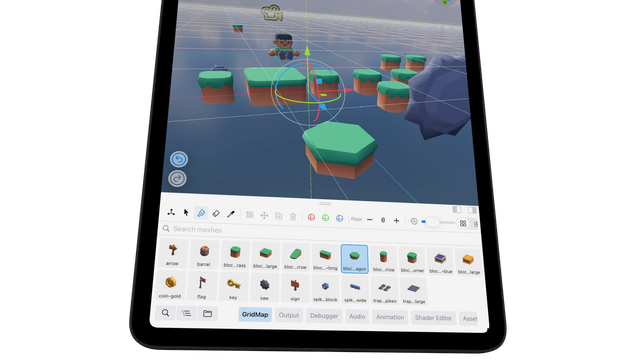
When you are a Xogot user, every day is Xmas!
Performance, exploration, usability, live shader debugging and more!
https://blog.xogot.com/xogot-1-6-2-is-out/
 @mszll@datasci.social
2026-08-17 07:30:48
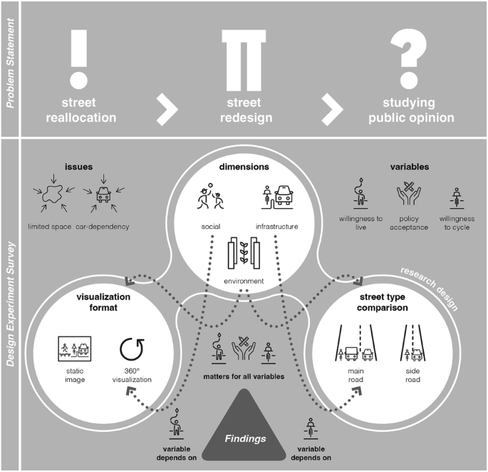
Space for people, not cars: a large-scale visual choice experiment on urban street redesigns
https://www.nature.com/articles/s42949-026-00463-5
 @rettichschnidi@swiss.social
2026-09-16 12:50:18
22. September für eine #CRA-Veranstaltung ist ja etwas doof, weil die Reporting Obligations sind ja seit dem 11. September scharf und gemäss LinkedIn müssten fast alle unsere Arbeitgeber ja schon schon kaputt sein. </s>
Ernsthaft: Freue mich auf rege Teilnahme!

 @Techmeme@techhub.social
2026-07-15 10:46:06
Samsung unveils a new Flex Titanium foldable display that is slimmer, more durable, and less prone to creasing, debuting in its upcoming Galaxy Z Fold 8 series (Jess Weatherbed/The Verge)
https://www.theverge.com/tech/965850/samsung-display-flex-titanium-g…

 @arXiv_csHC_bot@mastoxiv.page
2026-08-12 09:04:18
Replaced article(s) found for cs.HC. https://arxiv.org/list/cs.HC/new
[1/2]:
- Music Interpretation and Emotion Perception: A Computational and Neurophysiological Investigation
Lyberatos, Kantarelis, Zioga, Anagnostopoulou, Stamou, Georgaki
https://arxiv.org/abs/2506.01982 https://mastoxiv.page/@arXiv_csHC_bot/114623887921808883
- Selective Prediction Reduces the Negative Effects of Automation Bias Overall but Increases False ...
Jabbour, Fouhey, Banovic, Shepard, Kazerooni, Sjoding, Wiens
https://arxiv.org/abs/2508.07617 https://mastoxiv.page/@arXiv_csHC_bot/115015501954907821
- Sighted by Default: Addressing Implicit Vision Assumptions in Real-Time VLM Assistance for BLV Users
Yi Zhao, Siqi Wang, Qiqun Geng, Erxin Yu, Jing Li
https://arxiv.org/abs/2511.00945 https://mastoxiv.page/@arXiv_csHC_bot/115490927925171769
- UXCascade: Scalable Usability Testing with Simulated User Agents
Steffen Holter, Eunyee Koh, Mustafa Doga Dogan, Gromit Yeuk-Yin Chan
https://arxiv.org/abs/2601.15777 https://mastoxiv.page/@arXiv_csHC_bot/115943802965989174
- Does Explanation Correctness Matter? Linking Computational XAI Evaluation to Human Understanding
Gregor Baer, Chao Zhang, Isel Grau, Pieter Van Gorp
https://arxiv.org/abs/2603.25251 https://mastoxiv.page/@arXiv_csHC_bot/116300187728326082
- Beyond Screenshots: Evaluating VLMs' Understanding of UI Animations
Chen Liang, Xirui Jiang, Naihao Deng, Eytan Adar, Anhong Guo
https://arxiv.org/abs/2604.26148 https://mastoxiv.page/@arXiv_csHC_bot/116492495199874264
- Quieting the Cobwebs: Browser Interaction for Visual Floaters
Kenneth Ge, Jinglin Li, Shikhar Ahuja
https://arxiv.org/abs/2605.12739 https://mastoxiv.page/@arXiv_csHC_bot/116571803728109358
- Patients With Personality: Realistic Patient Simulation through Controlled Diversity and Selectiv...
Moritz Schlager, et al.
https://arxiv.org/abs/2606.17441 https://mastoxiv.page/@arXiv_csHC_bot/116764285920198987
- TailVis: Expressive Chart Refinement Preserving Data-Binding Integrity
Yumin Song, Seokhyeon Park, Soohyun Lee, Aeri Cho, Hyeon Jeon, John Joon Young Chung, Jinwook Seo
https://arxiv.org/abs/2607.25386 https://mastoxiv.page/@arXiv_csHC_bot/117002258150815192
- How Usable Are Geospatial Foundation Models? A Systematic Evaluation of 89 Models
Robin Young, Artyom Gabtraupov, Kenzy Soror, Srinivasan Keshav
https://arxiv.org/abs/2608.03804 https://mastoxiv.page/@arXiv_csHC_bot/117041905504697955
toXiv_bot_toot
 @arXiv_mathDG_bot@mastoxiv.page
2026-09-15 08:55:05
Ricci Solitons, Almost Theta-Yamabe Solitons, and Finite-Order Tensor Symmetries of a Vector Field on Riemannian Manifolds with Rank-One Anisotropic Curvature
Abdou Bousso, Ameth Ndiaye
https://arxiv.org/abs/2609.14866 https://arxiv.org/pdf/2609.14866 https://arxiv.org/html/2609.14866
arXiv:2609.14866v1 Announce Type: new
Abstract: We study the iterated action of the Lie derivative on the curvature tensor of a Riemannian manifold with rank-one anisotropic curvature, whose Riemann tensor is expressed via the Kulkarni-Nomizu product as $R = \lambda (\xi^\flat\otimes\xi^\flat)\owedge g$. First, we examine the conditions under which such a manifold admits a Ricci soliton structure and demonstrate that this property implies the almost $\theta$-Yamabe soliton structure. Furthermore, we show that if the associated potential vector field $X$ is a symmetry of the Ricci tensor of a fixed order $k$ (i.e., $\mathcal{L}_X^k \operatorname{Ric} = 0$), the geometric problem reduces to solving a partial differential equation of order $k 1$ along the flow. Finally, under the assumption that $X$ is a conformal vector field ($\mathcal{L}_X g = 2\varphi g$) whose infinitesimal flow preserves the line distribution $\mathcal{D}=\operatorname{Span}\{\xi\}$ (with $[X,\xi]=a\xi$ for $a\in\mathbb{R}$), we prove that several key geometric problems (such as establishing the relation $\mathcal{L}_X^k R = R$, determining the minimal order $k$ for $X$ to be a Lie curvature symmetry, or satisfying $\mathcal{L}_X^{k 1}R = f \mathcal{L}_X^k R$ for a continuous function $f$) are equivalent to a scalar differential problem governed by the operator $D_X = X 6\varphi 2a$.
toXiv_bot_toot
 @leftsidestory@mstdn.social
2026-06-24 00:30:09
End of a Trip III ✈️
旅行结束 III ✈️
📷 Pentax MX
🎞️ Ilford FP4 Plus 125 (FF), expired 1994
If you like my work, Support by buying me a coffee or a roll of film from
PayPal https://www.paypal.com/paypalme/ydcdingsite
Wise



 @rettichschnidi@swiss.social
2026-08-17 15:34:53
Schöner Rant. Ich hätte die Hacks aber eher als Marketinggag der Techbros abgetan.
Kommentar: Schummelnde KI – einfach nur peinlich | heise online
https://www.heise.de/meinung/Kommentar-Schummelnde-KI-einfach-nur-peinlich-11412339.html…
 @Techmeme@techhub.social
2026-07-14 16:20:52
Google Images launches a Pinterest-like redesign with a browsable, dynamic gallery of images, and adds a way for users to create AI images in Search (Aisha Malik/TechCrunch)
https://techcrunch.com/2026/07/14/google-images-gets-a-pinterest-…
 @rettichschnidi@swiss.social
2026-07-15 01:11:17
Slop-Code produzieren schon vor den Zeiten von LLMs - gesponsert by Venture Capital aka Kapitalismus!
https://andrewkelley.me/post/my-thoughts-bun-rust-rewrite.html
(Gefunden via