Logistics in the technical sense (part of supply chain management) is a subset of logistics in the vernacular sense ("the handling of the details of an operation"). You can explore this second and more general sense, and thereby build an understanding of the first and more technical sense, by iteratively asking the question, "how does one make that happen" and follow questions from there.
A big part of organizing is figuring out the (vernacular) logistics (and helping others figure it out). You want to organize a seed swap? Ok. How does one make that happen? Well, you need seeds, people, a place, and perhaps a time. How does one make that happen? You can forage seeds or you can buy seeds for a garden and swap extras. How do you get people to come? Well, figure out where you want people to come from and choose an accessible place. What's the easiest thing to do? Get people from your neighborhood. How does one make that happen? Well, maybe put up flyers. How does one make that happen? Well, print them on your printer if you have one, or at a library, then go post them up. Etc.
Keep asking questions until you either find a roadblock that you can't find a way around, or you find things you can do yourself (one of those things you can do yourself is asking friends to help).
If you practice the exercise of thinking about how things happen, you can start to find things that you can do yourself. You can start to understand what exists now, and you can imagine what's possible. By thinking about logistics, you can figure out how to replace things when they collapse or are dismantled. You can also identify things that can't easily be replaced, and try to figure out alternatives.
This practice is good for figuring out how to build, but it can also be a valuable practice for figuring out how to resist. Concentration camps and ethnic cleansing also require logistics. Mass displacement means moving people. How does one do that? People are generally going to be moved in planes or buses. How does one do that? Well, people get loaded on to planes or buses in specific places. Planes and buses need fuel. Planes are fueled at their airports, which may well be the same places where people are loaded on to them. There is a fuel depo and a fuel truck that makes flying people out of a specific place possible. How does the fuel get to that fuel depo? Well, that fuel is probably also delivered by truck. Someone drives those trucks. Someone fuels those planes. Someone clears the planes for takeoff. Someone fuels those busses. Someone drives those busses. And so on.
Logistics networks can be highly complex. The more complex the operation, the more possible points of failure and more possible points where pressure can be applied, where operations can be disrupted. Ethnic cleansing is a complicated operation. The logistics of disrupting complicated things tend to be much less complicated than the logistics of the complicated things themselves.
The Right has exploited this fact for a long time. Centralized social services are logistically complex. Public infrastructure is logistically complex. By destroying these things, they can loot public resources by privatizing the infrastructure and functionality.
But the things that support the Right are even more logistically complex. Oil, cars, AI data centers, internal paramilitary, these are extremely complicated and fragile. There are numerous pressure points, all of which can respond to numerous strategies.
If we want to win, we should reduce the influence of politics over the things we care about. We should focus on building distributed mutual aid networks that don't rely on state funding and aren't subject to the whims of politicians. This is also known as "dual power." That is, creating counter-institutions outside of the dominant political system. The Right already does this in the form of churches and corporations.
As we reduce our complexity, we can then press our complexity advantage against the things for which the Right *needs* the state: the apparatus of violence needed to maintain capital and enforce the dominant order.
O&C – ownership and control – *that’s* the lens by which we should be evaluating data and technology.
Who owns and controls data and technology?
If we want a fair, just world with human rights, freedom, and democracy, the answer to that question must be twofold:
1. Data about and technology for the commons must be owned and controlled by the commons.
2. Data about and technology for people must be owned and controlled by individuals.
That’s it.
Notice …
We know from polling that voters want us to be talking about preserving their rights and freedoms (No Kings)
and not just “kitchen table issues”
and that there is nothing more intrinsically American than fighting for freedom and democracy.
We also know from polling, lots and lots of polling, that voters believe that our hearts are in right place
but question our toughness, and whether we are strong enough to be able to fight and deliver for them.
So we should se…
NYC Health Hospitals says hackers accessed its network from Nov. 2025 to Feb. 2026, exposing personal data, medical records, and fingerprints of 1.8M people (Zack Whittaker/TechCrunch)
https://techcrunch.com…
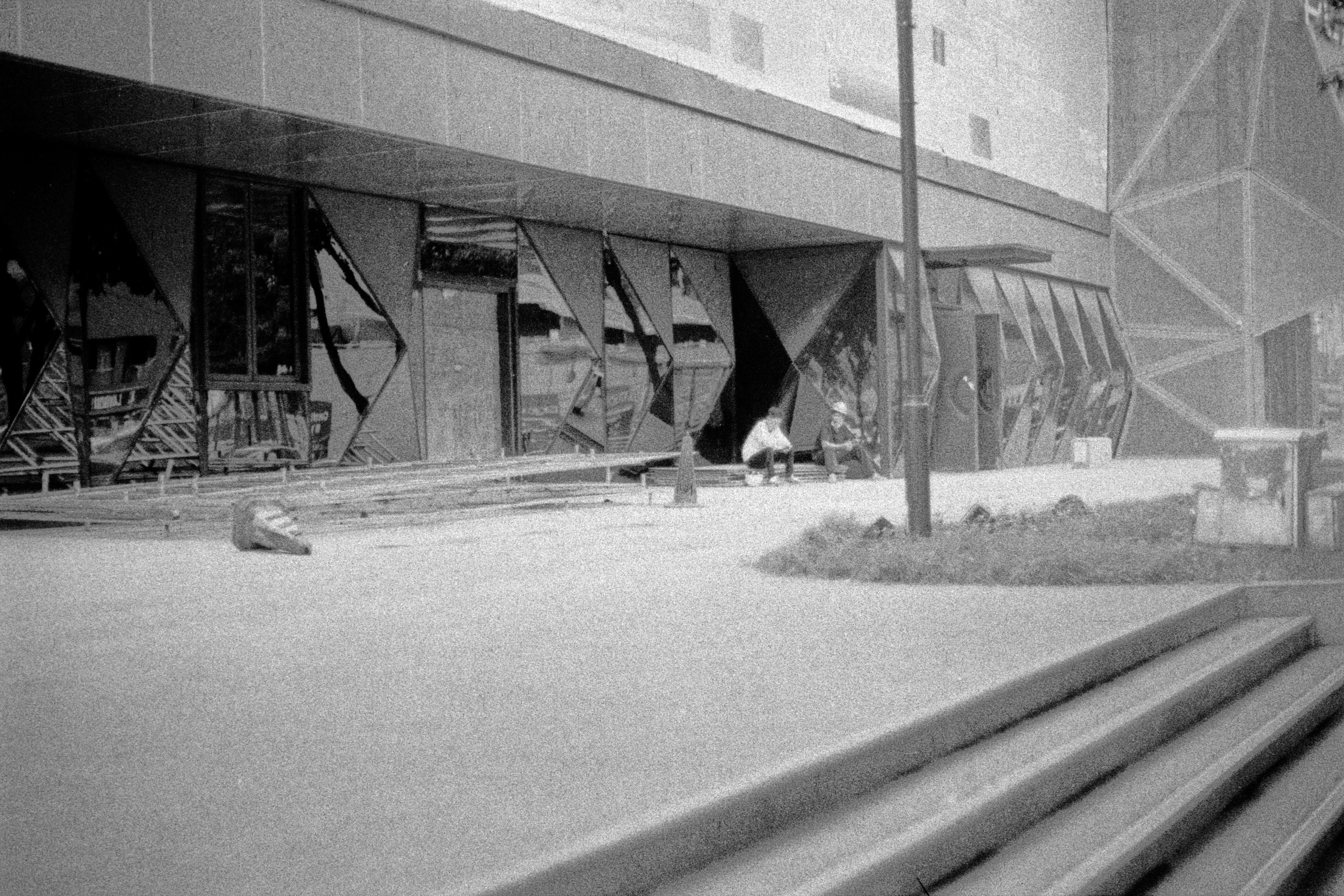
Deities of the Past 🗿
过去的神衹 🗿
📷 Nikon F4E
🎞️ Ilford Pan 400
If you like my work, Support by buying me a coffee or a roll of film from
PayPal https://www.paypal.com/paypalme/ydcdingsite
Wise

Andy Burnham Ditches Digital ID Plan,
Saying Billions Will Go To Cost-Of-Living Priorities Instead
Incoming UK Prime Minister Andy Burnham prioritises cost-of-living support over Starmer's controversial digital ID plan.
https://www.ibtimes.co.uk/andy-burnham-scr
Troy Jackson is ready to flip Maine's Senate seat
and unseat Susan Collins once and for all.
He's a fifth-generation logger from Allagash,
a lifelong labor champion,
and former Maine Senate President,
who's proven he can win
— by 20 points
— in a district carried by both Susan Collins and Donald Trump.
https://w…
Video footage of two Immigration and Customs Enforcement agents tackling a man at the airport in Las Vegas drew public outrage and criticism from elected officials.
One video posted on social media showed a man yelling and crying on the ground in Terminal 3 at Harry Reid International Airport on Monday
when a man and a masked woman, both in plainclothes, tried to control, handcuff and detain him.
When the pair realized they were being filmed, they walked away, leaving the ma…