Tootfinder

Opt-in global Mastodon full text search. Join the index!

@hex@kolektiva.social
2026-07-22 11:45:28

And, yeah, there are both anarchists in Ethiopia and anarchist adjacent ideas. This was a good interview. I'd love to read or listen to more (if anyone knows any):
theanarchistlibrary.org/librar

@hex@kolektiva.social
2026-07-22 11:48:46

There are also some really interesting anarchist adjacent ideas, or things that I would probably label as anarchist even if folks wouldn't self-label. Awra Amba is fascinating and worth learning about all on it's own.
youtube.com/watch?v=feYv2wZFbb0

@rasterweb@mastodon.social
2026-07-05 04:00:03

➡️ Anarchist Federation
#bookmarks

@hex@kolektiva.social
2026-07-22 19:57:37

Holy shit, I'm in the anarchist library! This is cool!
theanarchistlibrary.org/librar

@hex@kolektiva.social
2026-07-20 19:48:56

Alright, I fucking wrote the first draft. Now I'm tired.
Something something #FuckCars
hexmhell.writeas.com/transitli
Edit: also the usual. Editing is welcome, feedback, fact checks, typo call-outs, are all greatly appreciated.

@bourgwick@heads.social
2026-07-14 03:52:06

reading about a musician-founded anarchist/utopian commune on the south shore of long island in... 1851? en.wikipedia.org/wiki/Modern_T

@scott@carfree.city
2026-09-15 01:46:17

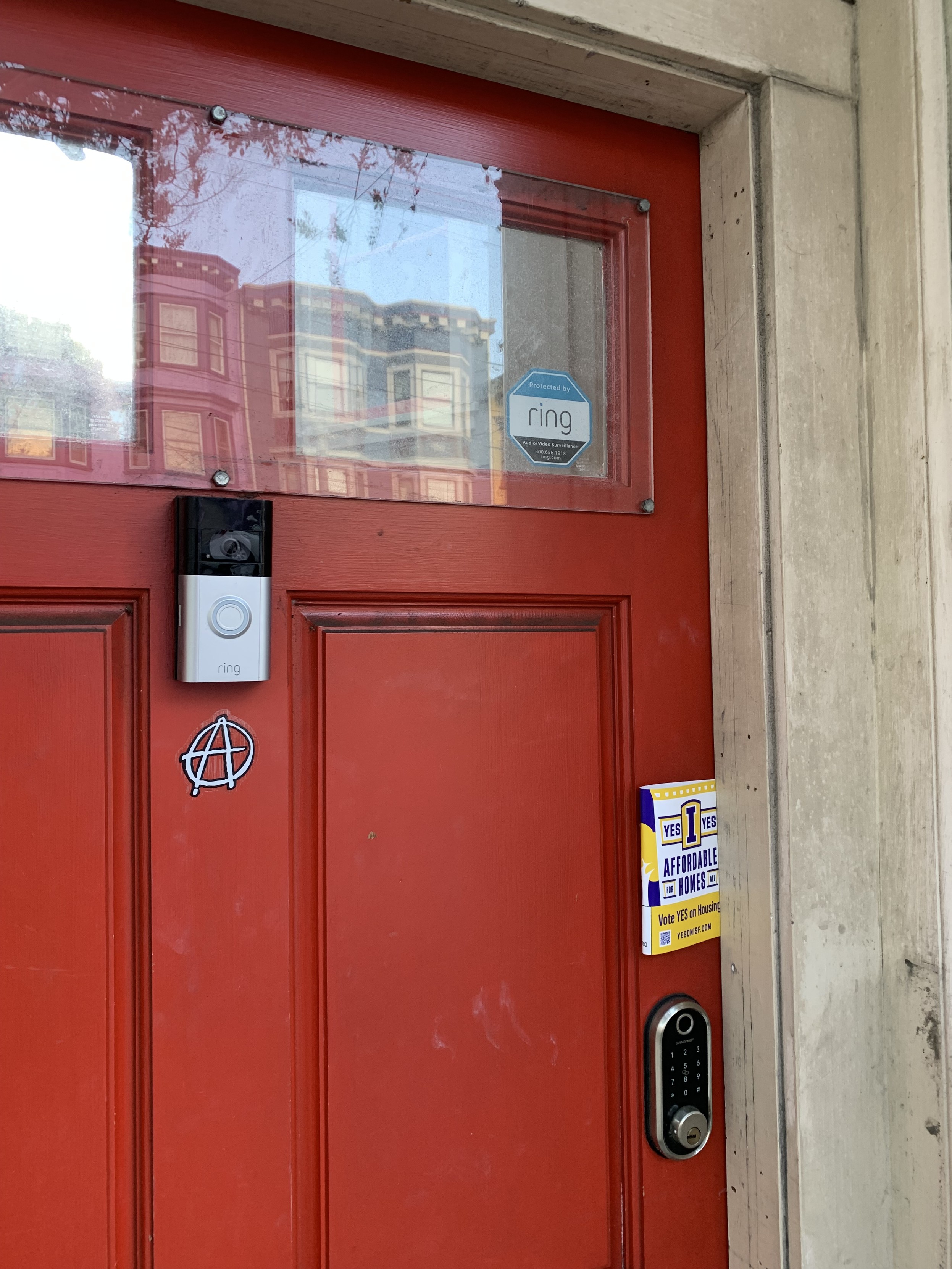
Lit dropped some anarchists with Ring cameras. #YesonI #sfpol

A red door with an anarchist circle-A symbol right below a Ring camera. I’ve tucked some Yes On I lit in the doorjamb.

The FBI says that anti-capitalist graffiti can indicate a mobilization to violence and can be reported to the bureau,
according to a counterterrorism report obtained through a public records request.
The public safety awareness report, dated Jan. 30, states that “anarchist violent extremists,” dubbed AVEs by the FBI, “pose [a] persistent public safety threat.”
Among the activities the report claims are “potential indicators of AVE ['anarchist violent extremist'] mob…

@mlncn@social.coop
2026-07-05 21:15:03

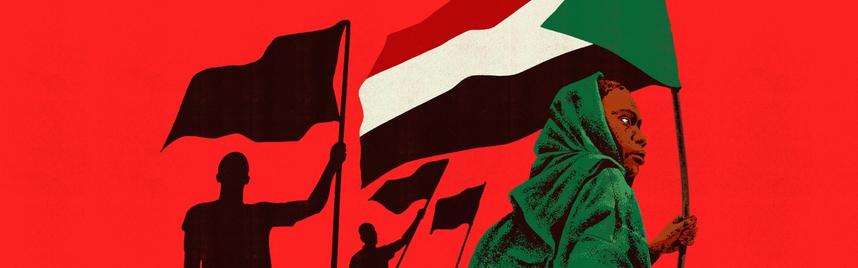
Support Sudanese people still working for the promise of Sudan's 2018 revolution.
opencollective.com/support-sud

@lapizistik@social.tchncs.de
2026-06-26 11:15:28

Mein grundsätzliches Problem mit der Politik ist der Eindruck, das ich denjenigen, die sich in (politischen¹) Machtstrukturen besonders wohlfühlen und daher bevorzugt nach oben kommen, keineswegs (politische¹) Macht geben möchte.
Nein, ich hab auch keine Alternative.²
__
¹nicht nur, eigentlich gilt das generell
²ich bin Anarchist im Janosch'schen Sinne, aber das löst nichts.
#pol

@ose_rouge@don.linxx.net
2026-07-19 12:10:04

Nichts gegen Anarchist*innen an sich, sind wirklich viele tolle und stabile Menschen dabei.

@mlncn@social.coop
2026-09-06 18:11:51

Looking for tiny ways to resist a major expansion of fascism this past week, as the US government declared the volunteer-run anarchist collective Autistici/Inventati a "global terrorist organization" without any trial or judicial process and the cowards at PIR.org took down one of their domain names (autistici.org) almost immediately, and then their Italian bank Banca Etica shut down their account and seized their money, with all of that they will not be maintaining noblogs and oth…

@hex@kolektiva.social
2026-07-10 04:22:10

I need to write that "Bicycle Anarchist Manifesto" I've had in my notes for a while.

@hex@kolektiva.social
2026-07-10 21:43:10

Why yes, I *am* writing that bicycle anarchist manifesto and I am on the section about how American motonormitivity reinforces white supremacy. Why do you ask?

@tiotasram@kolektiva.social
2026-08-12 23:54:12

Just finished "Salvage" by Renée Nault. I'm a sucker for romances in general and for characters like these, so I enjoyed it a lot, even though I wish works like this would actually address the structural issues they bring up more thoroughly. I tend to think about the messages of a work in terms of counterfactuals. For example, how would this story play out of Paolo hadn't been a good artist, or hadn't been so likeable, etc.
Also: how do the wealth differences play out in the end? Paolo & his family might escape poverty by association, but where I their community does these line get drawn and the rest get left behind? The natural true "good ending" for all these cross-class romances is an anarchist revolution, but so rarely do we get to see that... The alternative is to believe that only some of the lower class deserve being saved because of their virtues, which ends up being a toxic and regressive message.
To be fair, I think Nault pulls off an above-average landing for this trope, and her illustrations of the lower-class communities and their own richness are hopeful. I just always find myself wanting more.
All of that aside, Nault's art is truly wonderful, especially her use of color and the way she uses it consistently to emphasize thematic elements. It's a really beautiful graphic novel.
#AmReading #ReadingNow #Bookstodon

@luana@wetdry.world
2026-08-06 18:20:55
Content warning: Saltsea Cronicles major spoilers, play log

Chose Sisao and uuuuuh... Weird place. I assumed everywhere in Saltsea was anarchist-adjacent but it seems some places are still basically dictator-ships (lol)... Iris was really happy in the radio room, but rightfully disappointed at the rest. I remember Sammy from the demo so eventually we should be able to take her in. Tho, maybe fork the journey and go to The Grace instead next?
Neshko still isn't really fitting in I think, since I went back in time to choose Stew instead in the previous island and then chose Murl here.
I wonder who'd be the crew options for The Grace.

@hex@kolektiva.social
2026-06-27 04:47:42

- Literature of its own
Write stuff together. Reference other stuff. If you're making an anarchist coven, then you can draw from literally the entire history of anarchism and adjacent stuff. I think you can figure this out.
You just need literally any text. Here's a zine I wrote that talks about all this:
ia601509.us.archive.org/3/item
Or like, reference The Parable of the Sower trilogy. Whatever, as long as it's written down somewhere that you can point to.

@tiotasram@kolektiva.social
2026-08-14 12:50:14
Content warning: Yearning for more social-science fiction

The world needs more science fiction of the social- variety.
Rather than imagining how life could be different because of advances in purely mechanistic technologies, why not imagine how life could be different because of advances in social technologies: new inventions of ways societies can be organized or groups of people can relate to each other.
Some concrete examples of existing social technologies: Amish barn-raising, dolphin surf-fishing, online crowd-funding, Capoeira, potlucks, punk rock concerts, etc.
Each of these things was invented at some point, spread (not inevitably) through social communication, allows groups to achieve a specific purpose (or facilitates several different outcomes) and may or may not require specific tools or mechanistic technologies. There will be new social technologies in the future, and they could radically change how human societies function and what human lives look like, just as mechanistic technologies can.
In the current sociopolitical climate, we see one vision of the future, heavily propagandized, which assures us that advances in mechanistic technology will make life ever easier for humans, leading into a golden age where human needs are met by robots. In this imagination, each individual can actualize the productive capacity to meet their own needs because an individual's productive capacity has been multiplied in every dimension by new mechanistic technologies. Humans can finally be rid of the messy complexity of community-dependence and be totally free because mechanistic technologies will replace the need for community connections to satisfy material desires.
But there's an ugly underside to this vision explored by cyberpunk, where advances in mechanistic technologies bring us to a point of total hierarchical domination and control. In this future, productivity-multipliers are recognized as force-multipliers, and the humans who gain control of them use them to subjugate everyone else.
Some of the best science fiction authors, like Le Guin or Asimov, look at not only mechanistic but also at social technologies, and often at the interaction between the two. Social technologies also have the capacity to radically change the human condition, but they don't lend themselves as well to the power fantasy or libertarian utopia of the self-sufficient individual. Social technologies involve people satisfying their needs through dependence on others, and in turn being obligated to take part in communities.
As an anarchist, I believe that the social technologies needed for human flourishing have not been invented yet. I also believe that with the right social technologies, even without significant advances in mechanistic technologies, it's possible for everyone to be able to meet their own needs through community, in a truly sustainable way.
I wish we had more authors using their craft to help explore the space of social technologies and inspire others to join in that exploration, so that the technologies we need can more quickly be invented and evangelized.
#anarchy #SciFi #technology

@hex@kolektiva.social
2026-07-02 10:11:01

Just started listening to this one, and I'd absolutely recommend it. It's great.
It's really hard to explain how complicated beliefs can be, especially to folks in an urban bubble. The truth is, part of my anarchism came from listening to #rural folks. I didn't really live in a big city until I was like 18, but I came to those places already with a set of liberal biases.
Some of the things I experienced in those places pushed me towards being a Communist. But there are some strangely anarchistic tenancies, even in those who profess to be politically the opposite.
My stance on guns was largely shaped by understanding and extending the arguments of rural gun owners. They continued to evolve long after, but it took actually listening to break through my liberal biases and understand the ways in which gun control can actually intersect with other forms of oppression. There is a lot more nuance than I had grown up to believe.
And it goes both ways. Conservative gun owners have absolutely no intellectual against anarchist gun arguments. They're generally either gonna fall into racism that you can talk about, or start to radicalize left. There are plenty of similar pathways.
But also, not everyone in rural areas is conservative. There are plenty of rural anarchists and communists. They just get buried under stereotypes.
Anyway, this has been great to listen to and I'd recommend it.
tangledwilderness.org/stranger

@hex@kolektiva.social
2026-06-27 04:23:41

- Distinct religious history
Where does your religion come from? Maybe you're pulling from other traditions that go back thousands, or tens of thousands, of years? Or perhaps not. If you're reading this I'm going to assume you might be anarchist, so I'll just leave this right here:
theanarchistlibrary.org/librar
You may also have your own text and history. Great ;)

@tiotasram@kolektiva.social
2026-08-11 23:25:20

Just finished "What Elephants Know" by Eric Dinerstein. Leaves me with very mixed feelings: it's a novel in many ways about Nepal, and I don't doubt that the author's experience living there gives him a not-insignificant window into the culture, plus there are multiple people mentioned in the acknowledgements as judging faithfulness to Nepali culture. I myself have no direct connection to the country, nor enough knowledge to see any clear inaccuracies in the writing, nor ways in which it directly disrespects the culture.
That said, my instincts say this is a portrayal of the culture and country that probably elides much about the downsides of foreign influence and the monarchy (something I naturally distrust as an anarchist). At minimum, the internal contradiction is clear between the police as an inept and dangerous institution when encountered directly, but as a clean and unproblematic way to resolve problems with criminals when the Maroons subplot needs wrapping up. This is typical of neoliberals who have begun to acknowledge the most obvious problems with police but who refuse to admit the necessity of police abolition. Furthermore, there's a strong thread of white saviorism thrown in, and a big piece of meritocracy to go along with it. This story presents only highly particular fictionalized solutions to the real structural problems facing the elephants and other animals it describes, and the solutions it imagines require reliance on institutions which are in the real world fundamentally untrustworthy.
I enjoyed learning about the ecology of the Nepali borderlands, and about the cultures surrounding elephants there, plus some of the diversity of religions and cultures that interact in the area, and the story was satisfyingly written in terms of the main character's trials and responses to them, if I disregard the issues mentioned above.
If anyone has recommendations for novels in English (including via translation) by actual Nepali authors, I'd love to hear them, as I'll be looking for that perspective to balance this one.
#AmReading #ReadingNow #Bookstodon

@hex@kolektiva.social
2026-09-09 07:12:12

The other big factor here is the massive centralization of noblogs. There's a huge single target that they could choose. That single target was all anarchist. There was essentially no collateral damage. Half of the anarchist internet went offline, and practically no one else even noticed.
This is a *huge* problem...

@tiotasram@kolektiva.social
2026-07-29 13:09:21

Just finished "Amazona" by Canizales (indirect trigger warning: rape). An excellent fictional graphic novel about the displacement of indigenous people from the Amazon in Columbia. I especially liked the dedication: "Dedicated to those who have had to flee, leaving their lives behind. May the light in their hearts never fade. May it light new paths, so its brightness can blind the greedy. Early on the refugees, hosted in a city, comment that they now need money, when before if they had a need they could just take what they needed from the jungle. The book doesn't make this point, but communities like that have been living that way for tens of thousands of years, and I have hope that those ways of life will continue, at least where not yet destroyed, for tens of thousands more years, if not millions or billions of years. I am myself not a primitivist, despite being an anarchist, but I think there are nevertheless a plethora of important perspectives to be seen if one pays attention to indigenous groups around the world.
#AmReading #ReadingNow #Bookstodon

@hex@kolektiva.social
2026-09-10 20:54:34

"No one that the authorities have caught has been proven to be a BOAK activist. In one case, the authorities claimed that they had arrested a BOAK member for carrying out direct action, but an anarchist political prisoner who was held in the same prison confirmed that the activist had nothing to do with BOAK or anarchism. The case of another person who was arrested last year and accused of being a BOAK member still awaits confirmation or refutation, due to the secrecy of the court materials. BOAK cannot confirm or refute such claims because it does not preserve the personal details of its contacts."
I'm just saying, take some notes y'all.

@tiotasram@kolektiva.social
2026-07-26 17:31:24

Semi-subtoot: there's a certain kind of anti-genocide narrative that draws comparisons between the Gaza genocide and the genocide of Jews, queer, and disabled people during WW2, with an incredulous overtone, the subtext of which is: if the good nations invaded Germany to stop the Nazis' evil in WW2, it's hypocritical for this nations not to take action to protect Gazan civilians now. There are a couple of problems with this line of reasoning, but the most obvious from an anarchist perspective (which sees "good nation" for the oxymoron it is) is that it's ahistorical. The reasons for the various allies' entrance into WW2 are varied, but they weren't about good and evil, and in fact the full depth of the evils of the Holocaust *was not known* in allied countries until after the war. Nations never really do things to "fight evil" like some humans might; they always act out of a kind of (imperfect) self-interest. The motivations for many of the allies were simply "we don't want Germany to conquer and destroy us" (and the imperfection in that motive is amply evident in the appeasement that preceded the war). America was of course not swayed by that motive, and it was the Japanese that (thinking the issue would have to come to a head eventually and that a surprise attack was worth speeding it up) put America in a situation where it joined for similar reasons.
Why is this extra relevant right now? Because neither the US nor any European country is existentially threatened by Israel (or threatened at all in fact, quite the opposite they're all benefiting economically from the situation in Gaza). The lesson of history isn't "brave, good nations will stand up to fight against anyone who commits genocide or other major evils", it's "nations act in their narrow and twisted and often mistaken self-interest (the interest of the national entity, which is often counter to the interest of it's citizens), and they always mythologize their actions after the fact as having been a fight against evil, which sometimes by luck is partially true."
To double down on this point: in the European theater the U.S. war actions were pretty good overall, defeating an evil opponent through military force and being a fairly gracious victor to the civilian populations there. In contrast, in the Pacific theater the U.S. was one of two evil empires duking it out for global dominance at the expense of civilians on both sides. The Japanese empire was a vile regime and perpetrated horrors in China, Korea, and across southeast Asia. The U.S. was barely better, between Japanese internment camps at home, and mass targeting of civilians on Japan, both with the firebombing of Tokyo and especially the nuclear bombs dropped on Hiroshima and Nagasaki.
So if your model of how we stop genocide is "convince the good guys to invade (or exert political pressure) and save the day", your model is wrong. That's not what happened in WW2. I'm not confident I know the perfect solution, but I do think it involves a mass of people making increasingly disruptive protest so that the cost *to rich companies and thus politicians* of falling to intervene is too high to stomach. That's a large part of what succeeded in South Africa, for example. Thankfully, there is already a vibrant protest movement to end the genocide in Gaza, and even though they haven't been fully successful yet, I'm optimistic that as things naturally (and through hard work) fall apart for various fascists politically, that movement will be able to succeed.
#gaza #genocide

@hex@kolektiva.social
2026-09-09 07:34:12

A hosting federation can also achieve the "maximize collateral damage of enemy attacks" goal, without needing to sell services. Common infrastructure will be used to support capitalist goals because it makes things cheaper.
So you can put together a small collective that hosts anarchist projects in your city or community, and share the tools with capitalists to minimize risk and maximize the collateral damage of attacks on said infrastructure...

@hex@kolektiva.social
2026-09-09 07:20:25

We are facing global petro-fascism, centered in the US. We have to start threat modeling like an insurgency.
There are two basic goals an insurgency needs to keep in mind at all times: minimize the collateral damage in attacks against the opponent, maximize collateral damage in attacks from the opponent.
A successful insurgency will carefully target their enemy, specifically focusing on the most obvious infrastructure and symbols of oppression.
Meanwhile, they will make sure that their own infrastructure is intermixed with the general population.
What does this mean concretely? Minimize "anarchist hosting." Hosting should be free to community projects of all types. It should be inclusive. When it's shut down, it should take as many other groups with it as possible. This radicalizes other groups.
Optimally, it should provide cheap hosting for small businesses and cheap or free hosting for small community organizations.
There also needs to be a backup plan, because things *will* be attacked...

@tiotasram@kolektiva.social
2026-08-26 16:24:32

Just finished "Rialto" by Kate Milford. A wonderful book with a *lot* of things to like but also a few I wish had been done differently.
Starting with the good stuff, an #OwnVoices portrayal of anxiety depression is always welcome, *especially* one that portrays positive coping strategies, including active therapy, and complex but ultimately supportive family dynamics. Dad & daughter each reminding each other to use calming strategies at different points in the book was lovely, and getting to see the complexities of the trying to be a supportive sibling was great! Larger than that aspect, portraying a YA adventure in which the parents are actively involved but don't spoil things is so great and must have been difficult to pull off. Most YA stuff quickly ushers the parents out of the picture, and this fails to provide any kind of positive or negative role model for parent/child interaction. This book had ample examples of the former, *and* let the kids have plenty of agency too. Excellent stuff that I absolutely want to see more of.
So what didn't I like?
First, as an anarchist, I always hate to see unapologetically positive (and thus drastically unrealistic) portrayals of the police. Without getting into spoilers, even the stuff about the Piepowder court bothered me. It's presented here as a cutesy alternate court tradition, but I can't help but speculate that these courts were likely not always fair in practice, and the whole "single person makes immediate judgments model" from this book is terrible in general. I just don't like positive portrayals of terrible systems that happen to be good because the people involved are good people, since they reinforce harmful positive mental models of "justice" that don't apply to the real world. This element wasn't enough to totally spoil the book for me (the plot could have mostly functioned without it) but it's a downside to me.
Second, the book is set in rural Missouri, and has plenty of Black characters. Yay for representation? Certainly better than the cast being all-white given the setting. But the book doesn't have any Black *culture* that I picked up on, and it chooses to try to completely sidestep the relevant history. Maybe I'm just not attuned to elements that were there; if anyone who read this did see them feel free to point them out. The history definitely isn't there though... for example, was the park segregated, or not? During the time it was active one imagines most parks would have been, and that if it hadn't been that would have been a very important difference, which would even have been relevant to the plot and themes of the book as written.
Now perhaps this critique is unfair because Black children and young adults *should* get to see themselves portrayed in cozy fantasies without things always having to be about racism... In a choice between erasing Black characters and erasing racism (and especially racist histories) maybe there's no right answer here and this is fine, actually. My instinct tells me that there are ways to do better, though, and that presenting a history with all the racism carefully elided isn't the greatest compromise to make here.
A while ago I read "Under the Heron's Light" by Randi Pink. It also has mythical animal guides, a Southern setting, helpful family members, a multi-generational mystery to solve, and a (slightly older) teen protagonist who is up to the task. In contrast, it is all about racist history, and takes us through multiple extremely harrowing scenes from the past.
In any case, this discomfort also wasn't a deal-breaker for me, in part because, as I said, I think it's probably good for Black children to see uncomplicatedly positive representations of people like them alongside the plenty of stuff out there that does get deep into the racism and history. I also don't have the best perspective to judge this stuff, although that doesn't mean I should default to "it's probably fine" (I'd be happy to hear from anyone who feels they have a better perspective on this, about this book or the trend in general...).
Overall, I enjoyed Rialto quite a lot. I don't think it quite makes it into my top tier of recommendations for my kids, but I think it does make the list somewhere.
#AmReading #ReadingNow #Bookstodon