 @Sustainable2050@mastodon.energy
2026-10-18 07:13:44
One Antarctic glacier, now expected to raise global sea level by 3 cm this century, and a lot more after that.
https://phys.org/news/2026-10-thwaites-glacier-contribute-sea-previously.html
 @ruth_mottram@fediscience.org
2026-10-06 18:34:42
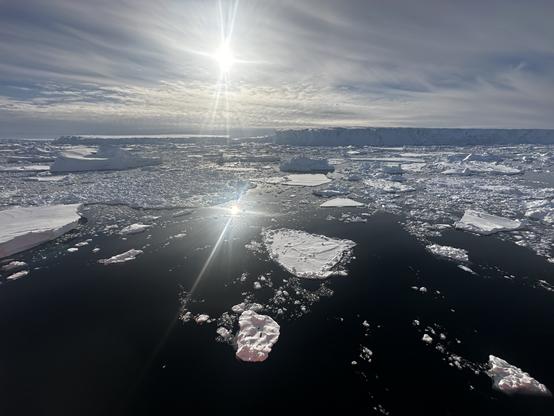
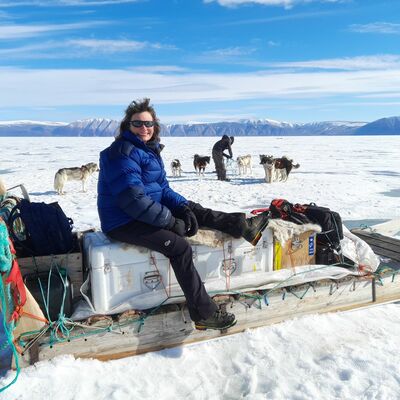
Only 6 months after the paper came out - but I was too exhausted after #Antarctic #Fieldwork to write this then!
Apologies if you've already seen it...
https://fediscience.org/@Ruth_Mottram/117392507008643669
Ruth_Mottram - Antarctic snows
For most of this century, the Antarctic Ice Sheet has been losing mass at a pretty steady rate of around 100 Gigatonnes a year, pushing up global sea levels a small amount (about one third of a millimetre per year in fact, a little less than half the Greenland contribution for example). Antarctica is by far the biggest potential contributor to future sea level rise, so this is the number we all watch rather closely, as we also discussed the other week…
http://sternaparadisaea.net/2026/10/06/antarctic-snows/
@ruth_mottram@fediscience.org2026-10-06 06:18:21
Antarctic snows
For most of this century, the Antarctic Ice Sheet has been losing mass at a pretty steady rate of around 100 Gigatonnes a year, pushing up global sea levels a small amount (about one third of a millimetre per year in fact, a little less than half the Greenland contribution for example). Antarctica is by far the biggest potential contributor to future sea level rise, so this is the number we all watch rather closely, as we also discussed the other week…
http://sternaparadisaea.net/2026/10/06/antarctic-snows/
@ruth_mottram@fediscience.org2026-10-06 06:28:47
Finally got around to writing about our paper on #Antarctica, #AtmoRivers and #SeaIce - better late than never I guess?
http://sternaparadisaea.net/2026/10/06/antarctic-snows/
@ruth_mottram@fediscience.org2026-10-20 11:48:49
New climate and cryosphere preprint from the @precise-project.bsky.social project out: How well do models replicate Antarctic surface mass budget?
Led by our ace Phd colleague Clement Cherblanc
https://egusphere.copernicus.org/preprints/2026/egusphere-2026-4690/