 @Techmeme@techhub.social
2026-08-19 12:45:50
Amazon appears to have leaked Jason Statham's new film Mutiny, streaming it in full on Prime Video in the US, two days before it was supposed to hit theaters (Jess Weatherbed/The Verge)
https://www.theverge.com/entertainment/981943/amazon-prime-video-mu…

 @Mediagazer@mstdn.social
2026-08-19 12:47:05
Amazon appears to have leaked Jason Statham's new film Mutiny, streaming it in full on Prime Video in the US, two days before it was supposed to hit theaters (Jess Weatherbed/The Verge)
https://www.theverge.com/entertainment/981943/amazon-prime-video-mu…

 @pavelasamsonov@mastodon.social
2026-08-20 12:39:59
Let me introduce the crew. *points to enormous muscular guy.* This is Big Dog, we call him that because he's huge, ha ha!
*points to slim average looking guy* and his name is Medium Dog. I'm sure you can guess why! That's right — he communes with the spirits of the departed
 @holger_moller@bildung.social
2026-09-19 07:37:49
Diese einfallslosen, rückständigen Ideen aus Berlin! Ich kann nicht anders als mich darüber aufregen. #Tankrabatt 3.0 – mehr fällt #Merz und Co. wirklich nicht ein? Unfassbar. Immer mehr vom Gleichen.
#depol
 @arXiv_physicsinsdet_bot@mastoxiv.page
2026-08-21 08:05:41
Developing a Compact SWIR Imaging Spectrometer for CO2 and CH4 Retrieval Using Photonic Crystal Filters
Marijn Siemons, Brecht Simon, Irina Malysheva, Ralf Kohlhaas
https://arxiv.org/abs/2608.19877 https://arxiv.org/pdf/2608.19877 https://arxiv.org/html/2608.19877
arXiv:2608.19877v1 Announce Type: new
Abstract: The need for atmospheric measurements with higher spatial and temporal resolution is driving the development of satellites and satellite constellations to complement existing flagship missions. We are developing an instrument concept based on photonic crystal filters with tailored spectral transmission for trace gas retrieval. These filters can be integrated directly with the detector module, enabling a highly compact system architecture.
In this work, we present performance simulations for methane and carbon dioxide retrieval in the 1.6 um SWIR band for a medium-resolution global coverage mission with an approximately 250 m spatial resolution and a 150 km swath. We furthermore introduce an improved retrieval algorithm that substantially reduces retrieval bias. These results demonstrate the potential of the proposed architecture for medium-resolution global greenhouse-gas mapping, with retrieval performance comparable to state-of-the-art global mapping missions such as the planned CO2M mission at substantially finer spatial resolution. This measurement approach also inherently compresses the acquired spectral information, reducing the need for high downlink data rates. In the coming year, these filters will be fabricated by NIL Technology, followed by mechanical integration and experimental validation in a breadboard system.
toXiv_bot_toot
 @arXiv_physicsmedph_bot@mastoxiv.page
2026-07-20 08:02:29
Fast ungated five-dimensional cardiac MRI on a 1.5 T MR-linac for MRI-guided radiotherapy
M. L. Terpstra, T. E. Olausson, M. M. N. Aubert, C. Beijst, A. Sbrizzi, C. A. T. van den Berg, M. F. Fast
https://arxiv.org/abs/2607.16033 https://arxiv.org/pdf/2607.16033 https://arxiv.org/html/2607.16033
arXiv:2607.16033v1 Announce Type: new
Abstract: Background: Stereotactic arrhythmia radio-ablation (STAR) for patients with ventricular tachycardia is currently limited by complex cardiorespiratory motion. Current 5D-MRI motion models require long acquisition and reconstruction times, limiting clinical viability. Objective: To develop a fast, ungated 5D-MRI reconstruction method for personalized motion characterization to support MRI-guided STAR treatments. Methods: We propose a fast, ungated 5D-MRI reconstruction method based on the CMR-MOTUS framework. The method uses a 3D Cartesian acquisition with a joint optimization framework to reconstruct a motion-corrected reference image and low-rank deformation vector fields (DVFs). By exploiting the low rank structure, we explicitly disentangle respiratory and cardiac motion during optimization. Then, the DVFs are used for 5D-MRI reconstruction with a retrospectively adjustable number of motion states. Validation was performed using digital and physical cardiorespiratory phantoms. Furthermore, the approach was evaluated using 10 healthy volunteers, comparing motion consistency with 2D cine MRI. Results: Validation of 5D CMR-MOTUS using digital and physical phantoms demonstrated accurate 5D-MRI reconstruction. In the physical phantom, 5D CMR-MOTUS achieved a left-ventricle DICE of 0.96 /- 0.01. In the volunteer cohort, the 5D-MRI scans showed strong motion to 2D cine MRI, with a cardiac motion error of 0.1 /- 0.9 mm and a respiratory motion error of 0.2 /- 2.9 mm. Crucially, 5D-MRI data were acquired in 1 minute and reconstructed in 6 minutes. Conclusions: The proposed 5D-MRI method enables rapid, high-quality, and personalized motion characterization, demonstrating potential for integration into MRI-guided STAR treatments. Data Availability: The 3D k-space data and 5D reconstructions for the ten volunteers are publicly available at https://doi.org/10.5281/zenodo.21278894
toXiv_bot_toot
 @matematico314@social.linux.pizza
2026-08-10 14:48:01
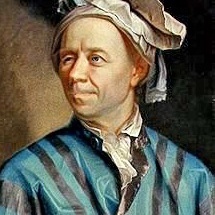
Eu adoro esse quadrinho. É uma crítica ótima ao ensino de matemštica que se limita a apresentar fórmulas e regras "caídas do céu". Na minha opinião, a forma de pensar da matemštica é mais importante do que qualquer uma de suas všrias aplicações e necessšria para a formação de um cidadão completo, capaz de pensar criticamente.

 @roelgrif@mstdn.social
2026-08-13 09:37:23
Mensonterend, hoe er met migranten omgegaan wordt, zelfs als ze vrijwillig terugkeren.
https://www.trouw.nl/buitenland/deze-afrik

 @arXiv_physicsfludyn_bot@mastoxiv.page
2026-07-23 07:56:59
Sidewall effects on the onset of interfacial Holmboe waves in stratified exchange flows at high Schmidt number
Guilherme Siqueira de Aquino, Metten M. de Lange, Adrien Lefauve, Matias Duran-Matute
https://arxiv.org/abs/2607.19565 https://arxiv.org/pdf/2607.19565 https://arxiv.org/html/2607.19565
arXiv:2607.19565v1 Announce Type: new
Abstract: Predicting the onset of interfacial instabilities is central to understanding turbulent mixing in natural and engineered stratified shear flows. Here, we study the onset of travelling Holmboe waves in confined exchange flows along a slope. Earlier stratified inclined duct experiments have mapped this transition, and stability analyses based on measured or prescribed profiles have explained their emergence. However, a predictive criterion linking forcing, geometry, base flow, and wave onset was still lacking. We closed this gap with a long-duct, sharp-interface asymptotic theory for the three-dimensional laminar exchange flow, including the effects of sidewall friction. The resulting analytical solution naturally identifies a confinement-adjusted Froude number, $Fr^*$, which unifies the effects of forcing and confinement into a single measure of the effective laminar exchange flow. Using this solution to parameterise sidewall drag in a practical width-averaged model, we perform linear stability analyses and numerical simulations at high Schmidt number. Together, linear stability analysis, direct numerical simulations, and existing experiments across a range of duct widths show that wave onset is accurately predicted by an approximately constant critical value of $Fr^*$. Deviations arise only in very narrow ducts, where sidewalls influence instability not only by modifying the laminar exchange flow but also by directly damping perturbations and delaying wave onset. These findings provide a predictive criterion for wave onset, reconcile long-standing discrepancies among experimental configurations, and establish lateral confinement as a fundamental control on the transition from laminar exchange to wave-driven mixing in stratified shear flows.
toXiv_bot_toot
 @arXiv_astrophGA_bot@mastoxiv.page
2026-07-22 08:03:31
Vz-GAL Dusty Star-Forming Galaxies: Revisiting the CO-H2 Conversion Factor Tension
Prachi Prajapati, Axel Weiss, Dominik Riechers, Tom J. L. C. Bakx, Leindert A. Boogaard, Diana Ismail, Pierre Cox, Andrew J. Baker, Roberto Neri, Matthew Lehnert, Chentao Yang, Emilio Romano-Diaz, Hiddo S. B. Algera, Stefano Berta, Edoardo Borsato, Kirsty M. Butler, Asantha Cooray, Bethany Jones, Amelie Saintonge, Paul van der Werf
https://arxiv.org/abs/2607.18440 https://arxiv.org/pdf/2607.18440 https://arxiv.org/html/2607.18440
arXiv:2607.18440v1 Announce Type: new
Abstract: The CO luminosity-to-H$_2$ mass conversion factor ($\alpha_{CO}$) remains a debated uncertainty in determining molecular gas masses of high-redshift dusty star-forming galaxies (DSFGs). Dynamical mass constraints have often favored $\alpha_{CO}=0.8$~$M_{\odot}~{(K~km~{s}^{-1}~{pc}^{2})}^{-1}$, whereas dust- and radiative-transfer-based methods imply higher values. We revisit this ``tension" using the largest homogeneous sample of 21 unlensed $z\sim1-4$ DSFGs, with securely measured \coonezero luminosities from the VLA \vzgal survey and resolved ($\sim{0.1}^{\prime\prime}$) ALMA 1~mm dust continuum imaging. For 12 galaxies with robust modeling constraints, we derive molecular gas masses using dust spectral energy distribution modeling and the TUNER LVG framework, adopting a solar-metallicity gas-to-dust mass ratio of 100. Although not fully independent due to shared assumptions on dust properties, these approaches yield mutually consistent gas masses corresponding to $\alpha_{CO}\sim1.5-11.5$, with a median near the Galactic $\alpha_{CO}=4.3$. Isotropic virial dynamical masses agree with these gas masses when realistic molecular gas sizes are adopted, while our proposed ``mixed" (rotating, pressure-supported, thick-disk) estimator systematically underestimates dynamical masses, producing low $\alpha_{CO}$ limits. Using GN20 ($z=4.055$) as a case study, we show that resolved gas geometry and kinematics reconcile the discrepancy with LVG-derived $\alpha_{CO}$. Our results suggest that current data do not require $\alpha_{CO}=0.8$, and intermediate to near-Galactic values remain dynamically viable given uncertainties in gas geometry, dust properties, and gas-to-dust ratios. Further progress in calibrating $\alpha_{CO}$ in the early universe will require resolved molecular gas observations, physically motivated ISM modeling, and stringent constraints on dust properties.
toXiv_bot_toot