 @simon_jf@mastodon.scot
2026-01-09 12:09:31
I know dunking on Google's AI summaries is cheap, but this did give me a chuckle:

 @stefan@gardenstate.social
2025-12-08 14:11:16
the verge is all in on 90s web design.
https://www.theverge.com/cs/features/810002/influencers-creator-economy-special-series

 @@arXiv_physicsatomph_bot@mastoxiv.page@mastoxiv.page
2025-12-09 08:27:37
Thermal one-loop self-energy correction for hydrogen-like systems: relativistic approach
M. Reiter, D. Solovyev, A. Bobylev, D. Glazov, T. Zalialiutdinov
https://arxiv.org/abs/2512.06828 https://arxiv.org/pdf/2512.06828 https://arxiv.org/html/2512.06828
arXiv:2512.06828v1 Announce Type: new
Abstract: Within a fully relativistic framework, the one-loop self-energy correction for a bound electron is derived and extended to incorporate the effects of external thermal radiation. In a series of previous works, it was shown that in quantum electrodynamics at finite temperature (QED), the description of effects caused by blackbody radiation can be reduced to using the thermal part of the photon propagator. As a consequence of the non-relativistic approximation in the calculation of the thermal one-loop self-energy correction, well-known quantum-mechanical (QM) phenomena emerge at successive orders: the Stark effect arises at leading order in $\alpha Z$, the Zeeman effect appears in the next-to-leading non-relativistic correction, accompanied by diamagnetic contributions and their relativistic refinements, among other perturbative corrections. The fully relativistic approach used in this work for calculating the SE contribution allows for accurate calculations of the thermal shift of atomic levels, in which all these effects are automatically taken into account. The hydrogen atom serves as the basis for testing a fully relativistic approach to such calculations. Additionally, an analysis is presented of the behavior of the thermal shift caused by the thermal one-loop correction to the self-energy of a bound electron for hydrogen-like ions with an arbitrary nuclear charge $Z$. The significance of these calculations lies in their relevance to contemporary high-precision experiments, where thermal radiation constitutes one of the major contributions to the overall uncertainty budget.
toXiv_bot_toot
 @TobiasFrech@ijug.social
2025-11-28 21:26:21
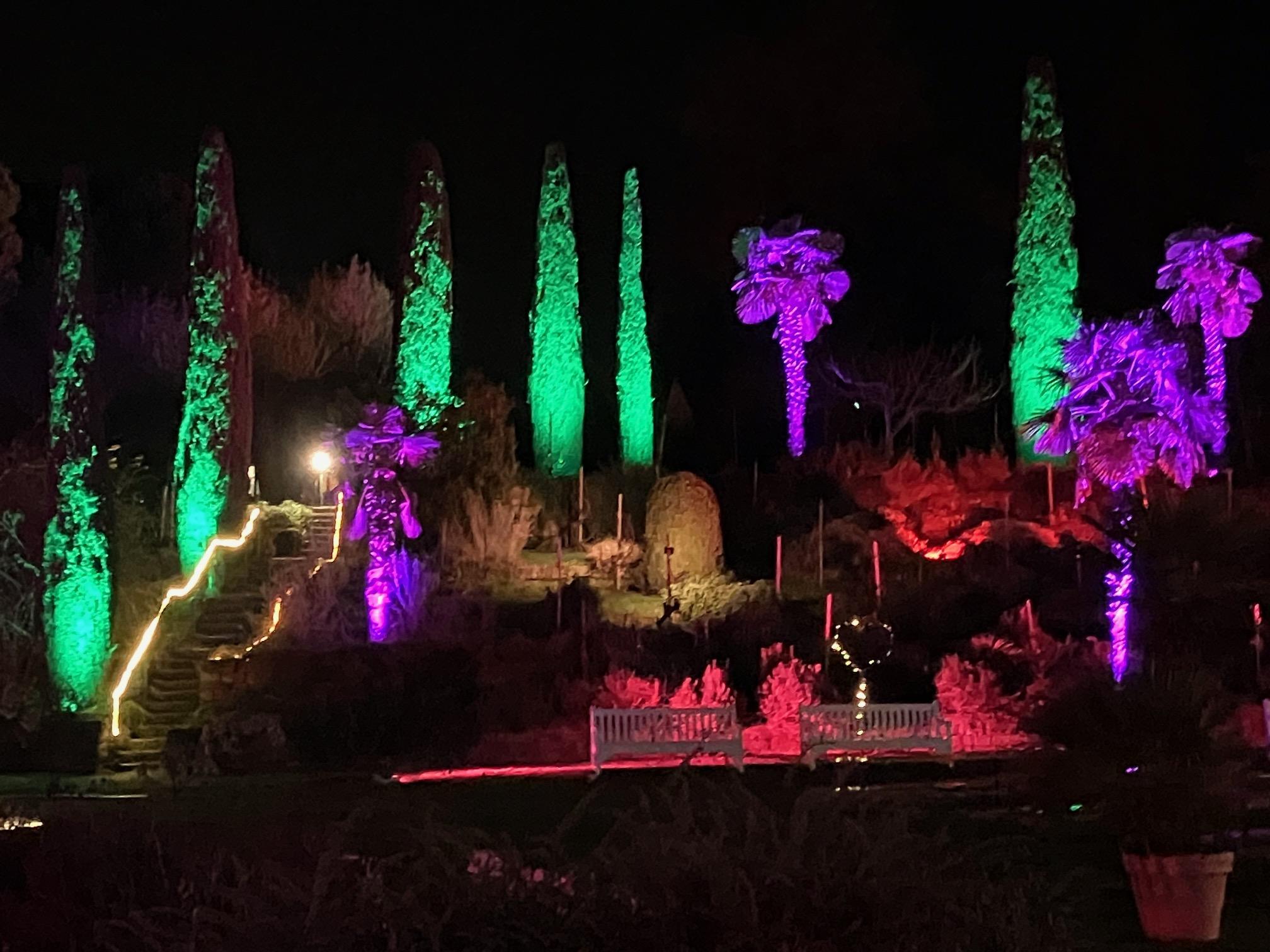
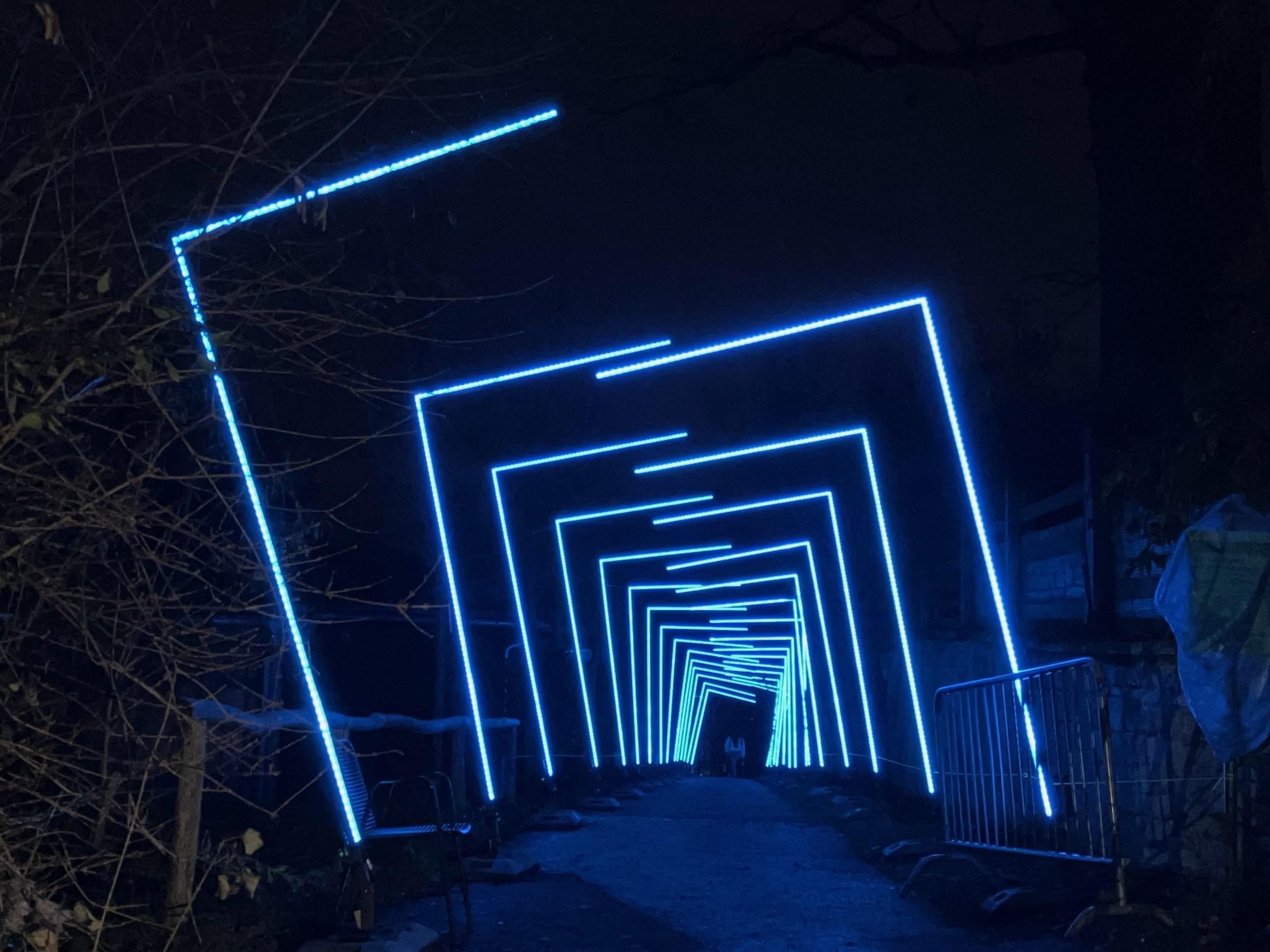
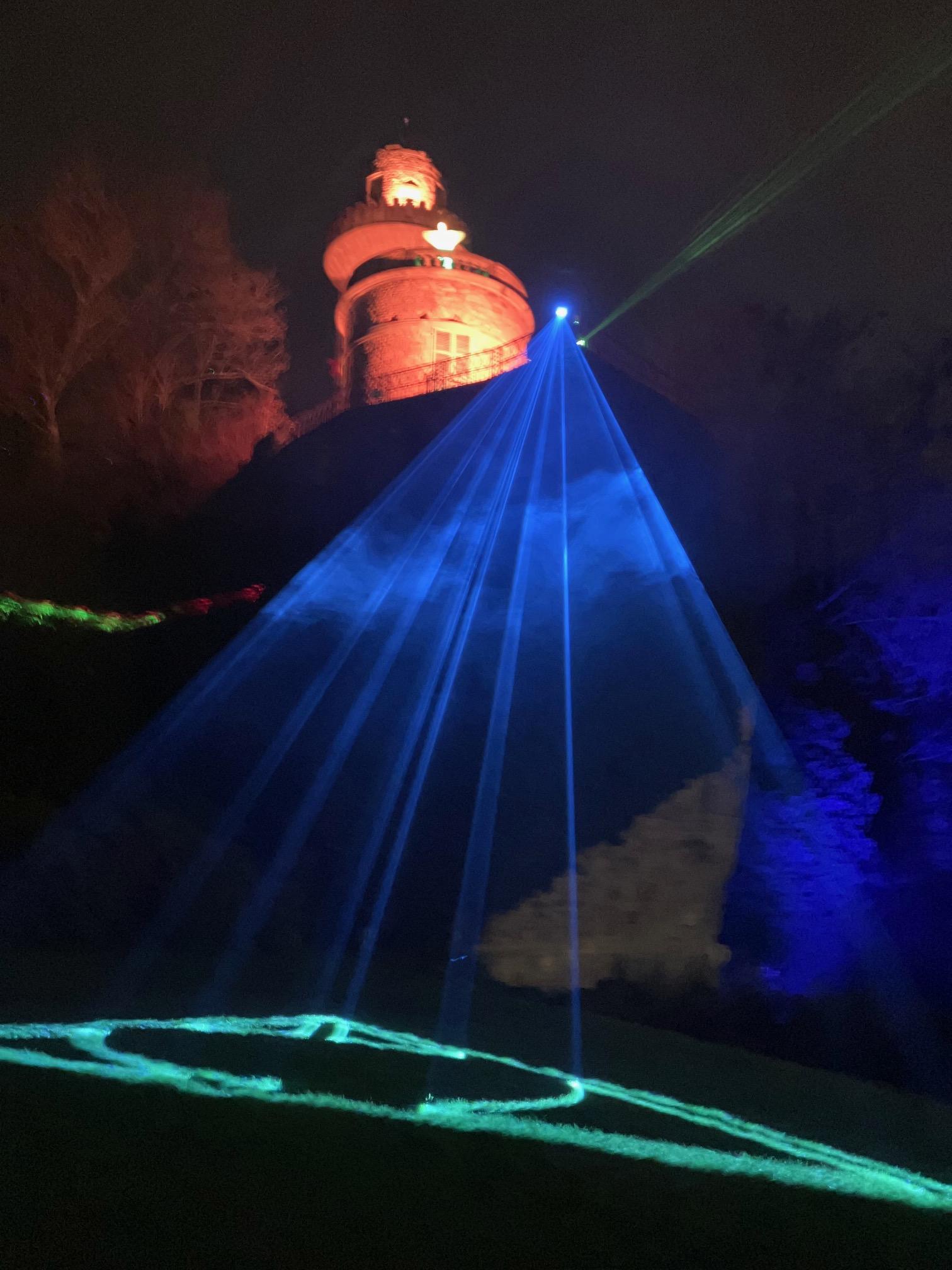
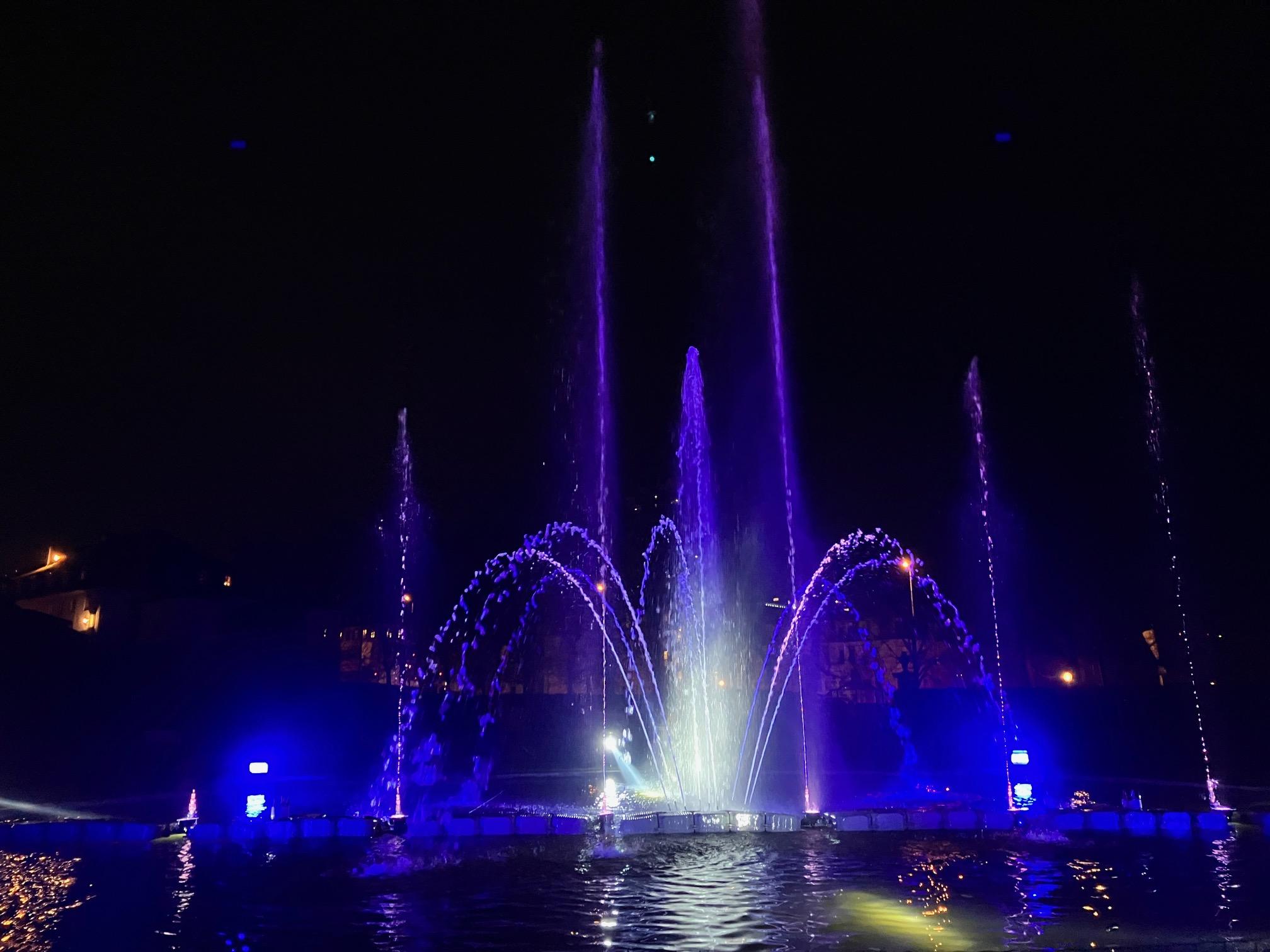
Our local castle and park is illumated for some weeks in a special way, creating the "illuminated paths of dreams". We walked them this evening and got to listen to the wonderful music of Thomas J Curran https://youtu.be/ZsrIdq8LJ90
 @thesaigoneer@social.linux.pizza
2026-01-05 09:16:12
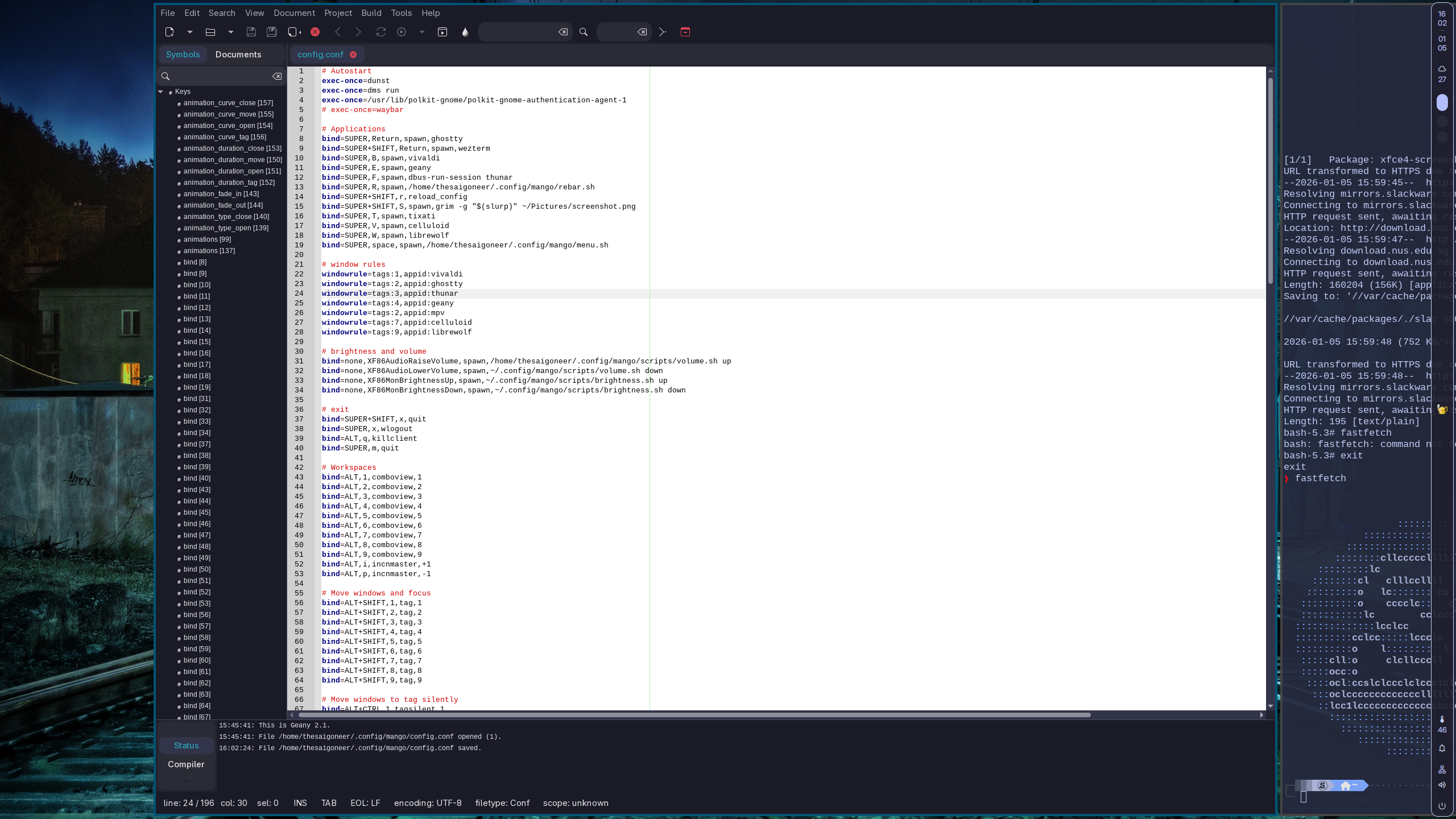
But with one keybind it scrolls as well 🤓
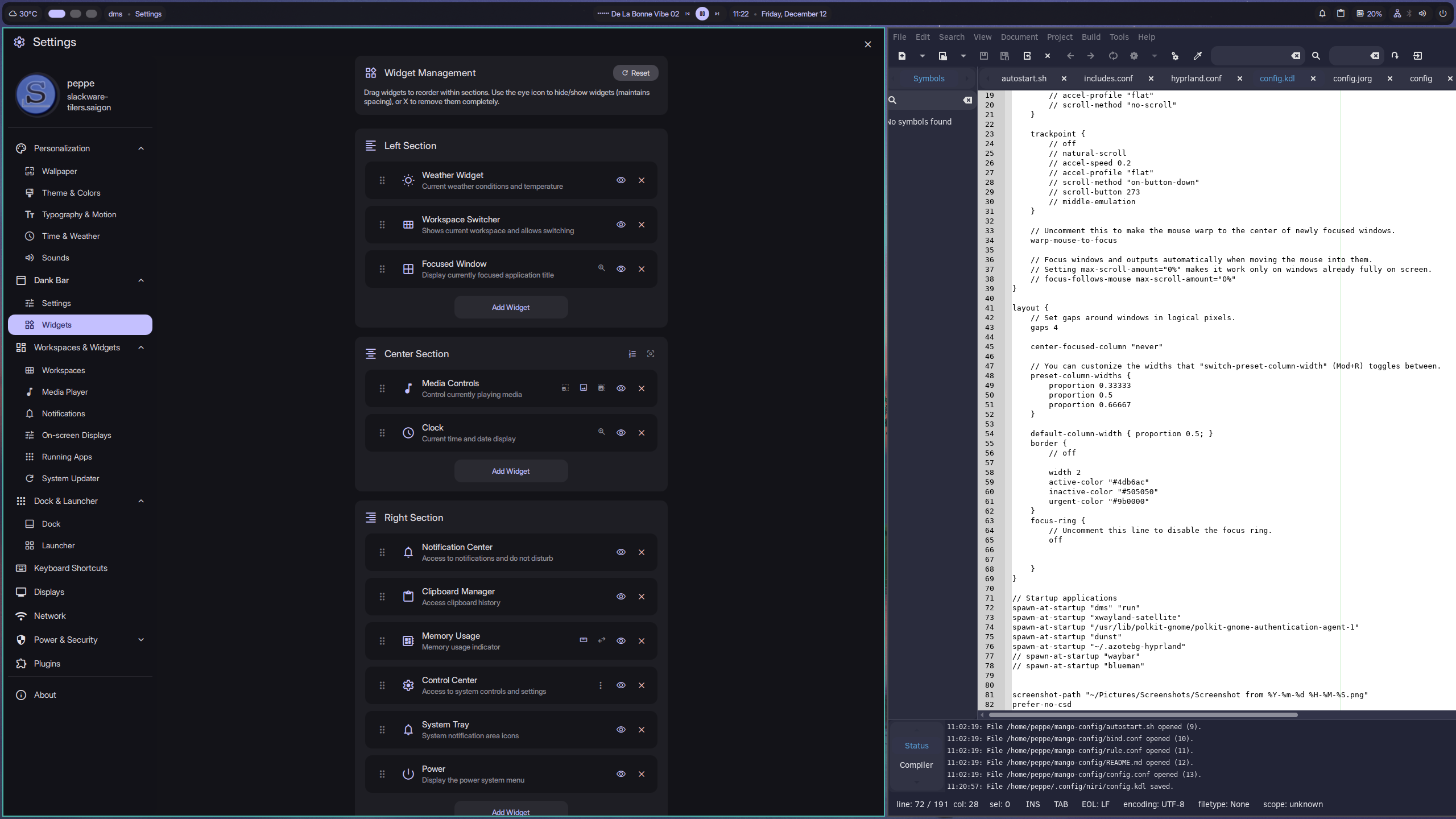
Slackware Current, MangoWC, DankMaterialShell, another fine production by @…
#slackware #mangowc
 @pre@boing.world
2025-12-30 03:08:16
Hummm.
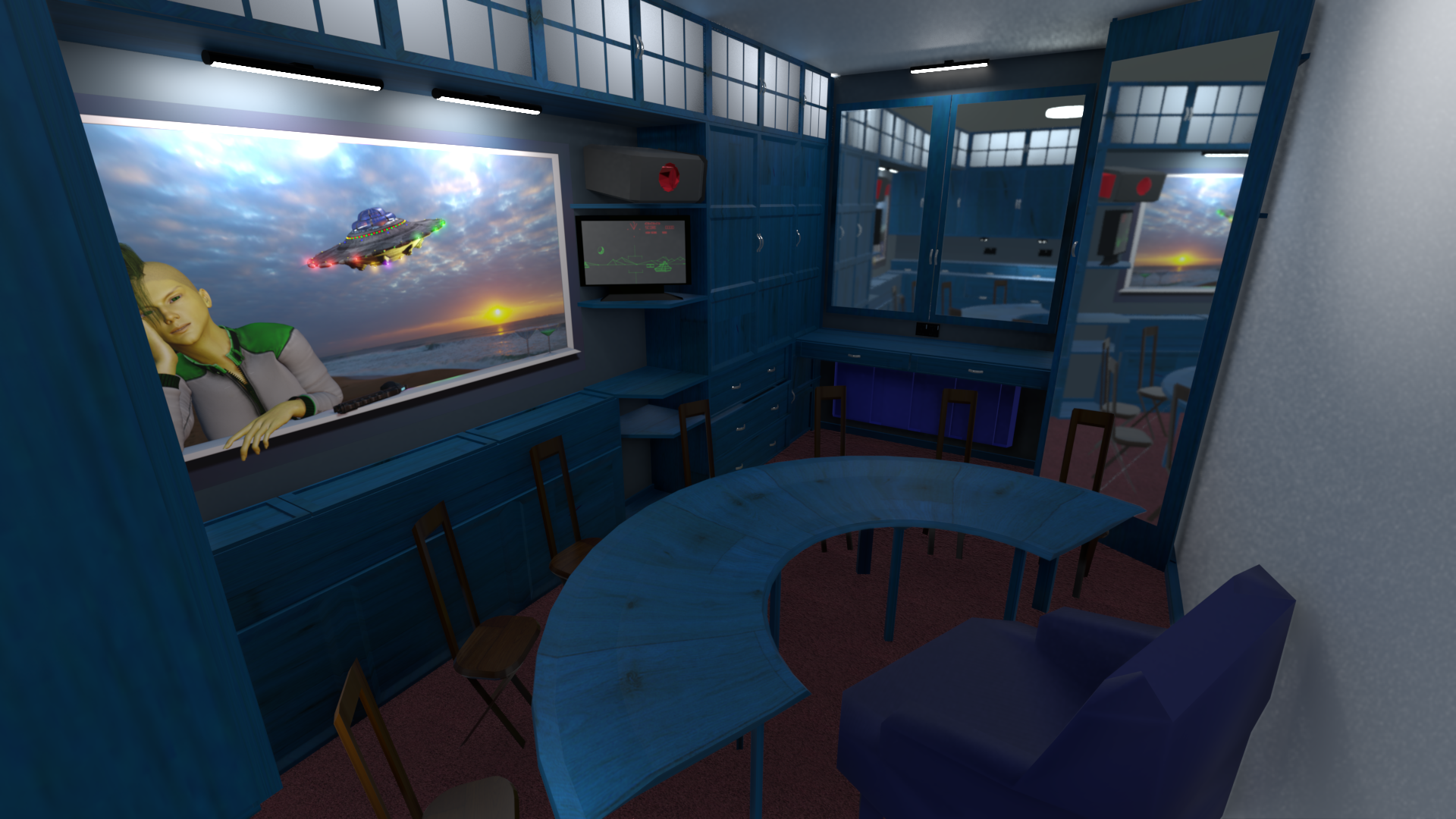
So I was thinking about how with a couple of caster-boards and straps, the bed could be upturned and stowed in the studio. Probably? I should have figured for a fold-away really.
Still. Could work...
Then, without a bed in there, the place could turn into a dining room.
I was thinking about a shape of a table for a dinner party in there.
Oh my god.
This semi-circle table curve of wood and attachable table-legs and fold-able stools might just fit, like, under the bed normally?
Looks perfect for a card-game or a Dungeon Master setup.
Could that table and it's legs and it's chairs all fit under the bed? Probably not at it's current height. But I want to raise it a bit anyway.
🤔
Oh my god, look at this though. The projector is pointed at the wall behind the throne surrounded by the seats for the council of seven.
This could be built.
Not right away, but eventually?
 @thesaigoneer@social.linux.pizza
2026-02-04 13:22:07
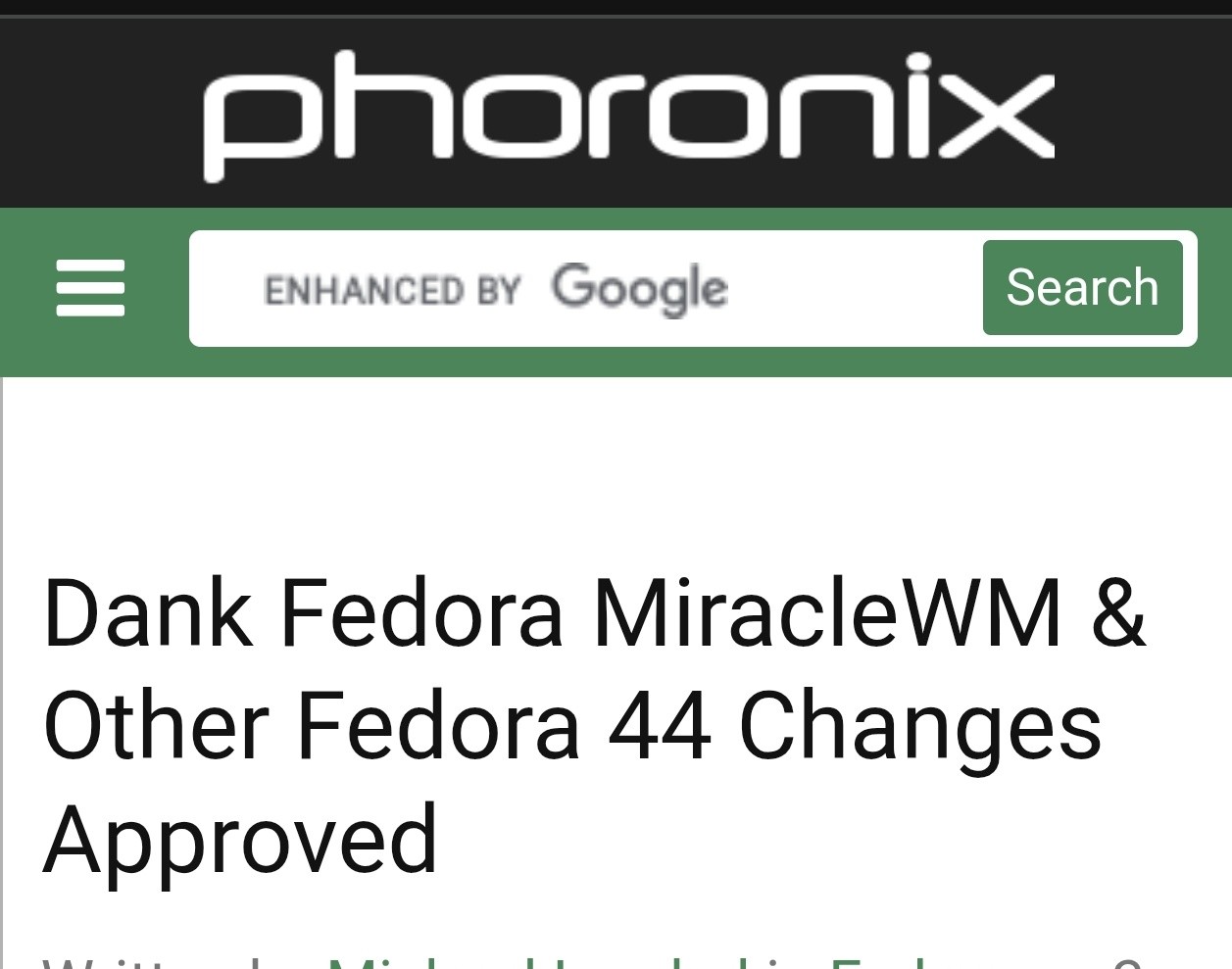
Told you yesterday 😁
 @arXiv_physicsinsdet_bot@mastoxiv.page
2026-02-03 09:41:32
Proton Energy Dependence of Radiation Induced Low Gain Avalanche Detector Degradation
Veronika Kraus, Marcos Fernandez Garcia, Luca Menzio, Michael Moll
https://arxiv.org/abs/2602.01800 https://arxiv.org/pdf/2602.01800 https://arxiv.org/html/2602.01800
arXiv:2602.01800v1 Announce Type: new
Abstract: Low Gain Avalanche Detectors (LGADs) are key components for precise timing measurements in high-energy physics experiments, including the High Luminosity upgrades of the current LHC detectors. Their performance is, however, limited by radiation induced degradation of the gain layer, primarily driven by acceptor removal. This study presents a systematic comparison of how the degradation evolves with different incident proton energies, using LGADs from Hamamatsu Photonics (HPK) and The Institute of Microelectronics of Barcelona (IMB-CNM) irradiated with 18 MeV, 24 MeV, 400 MeV and 23 GeV protons and fluences up to 2.5x10^15 p/cm2. Electrical characterization is used to extract the acceptor removal coefficients for different proton energies, whereas IR TCT measurements offer complementary insight into the gain evolution in LGADs after irradiation. Across all devices, lower energy protons induce stronger gain layer degradation, confirming expectations. However, 400 MeV protons consistently appear less damaging than both lower and higher energy protons, an unexpected deviation from a monotonic energy trend. Conversion of proton fluences to 1 MeV neutron-equivalent fluences reduces but does not eliminate these differences, indicating that the standard Non-Ionizing Energy Loss (NIEL) scaling does not fully account for the underlying defect formation mechanisms at different energies and requires revision when considering irradiation fields that contain a broader spectrum of particle types and energies.
toXiv_bot_toot
 @iam_jfnklstrm@social.linux.pizza
2026-01-16 08:46:32
No words needed
 @thesaigoneer@social.linux.pizza
2025-12-12 04:33:13
Junkies are Waiting for the Man (cf. Lou Reed).
Not so with @… and his Niri and DankMaterialShell repos.
The Goodies have landed already 🥳
So: Niri 25.11 and DankMaterialShell 1.0 in full action on Slackware Current.
#slackware