Finally caught up with this two-year-old archive (🫣).
It'sage isn't relevant, as it talks about things that are unlikely to change: Your data is only yours if you also have it on physical media in your possession. (And stored there in open formats.)
Because services will come and go, promises will be forgotten, data loss will not cause more than a shy "sorry". Especially for free online services, but it also happens for paid services.
@… could definitely check feed content to guess if the feeds are the same and then just select from a radio of formats!
A Java Geek weekly 154
Choosing a dependency. European Union Public Licence. Rust debugging survey 2026 results. Comparing TSV and CSV formats. Call14 — Smart Elevator Companion. Ma stack de service logiciels pour construire des produits. OTel Collector metrics: how to monitor Collector health. What Should Programmers Do While the AI Writes Code?. What will our economic future look like?. Why Code Quality Still Matters in the Age of AI Agents and more
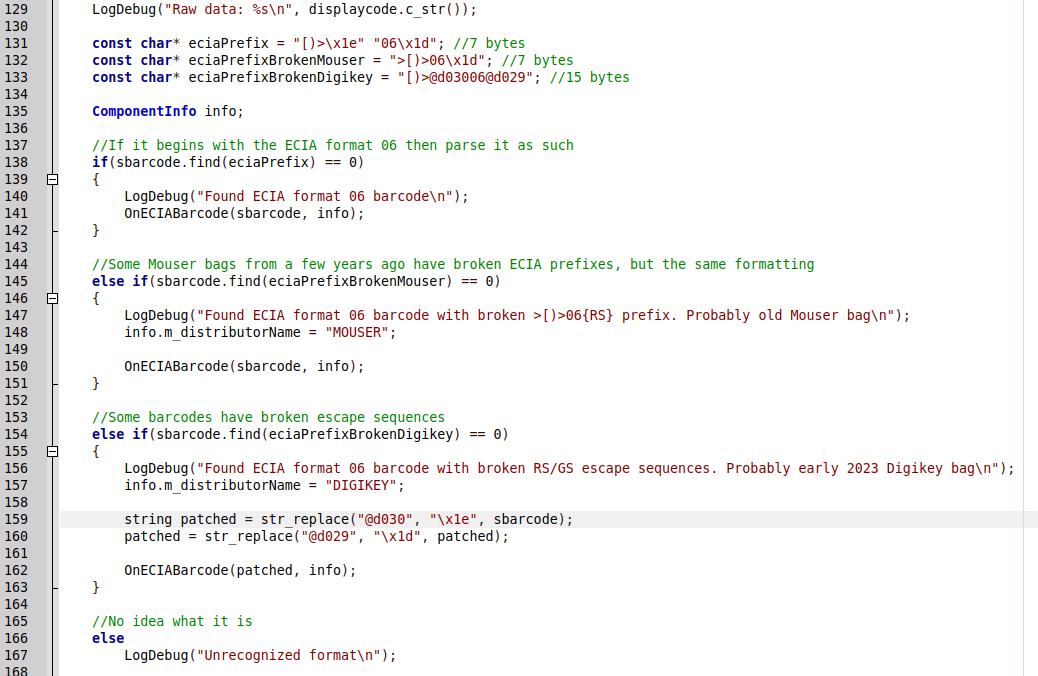
I love industry standard barcode formats.
Since it's a standard, all you have to do is implement what the standard says and you're golden. There's no chance anybody might do something weird...
Samsungs HDR10 Advanced startet diesen Monat auf Amazon Prime Video
Mit HDR10 Advanced führt Samsung die nächste Generation seines HDR-Formats ein. Prime Video macht diesen Monat den Anfang.
https://ww…
LOL, we (Vivaldi) recently had a bug "[Linux][Media] Open media video formats will not play on modern distros (VB-131482)" after we bumped to Chromium 152, for which we had to offer a hot fix
https://vivaldi.com/blog/desktop/minor-update-three-8-2/
Today I…
Do you duplicate your feed content across multiple feed formats?
RE: https://fosstodon.org/@TheASF/117277070685861233
As a Member of the ASF, I probably should hold my tongue, but I’m no smarter about this tool after reading this than I was before.
The lake formats I am familiar with are artificial, prairie pothole,…
⚡ Four built-in artisan agents: ai:code edits files, runs tests and formats code; ai:review reviews git diffs read-only with severity levels; ai:explain describes what a class or method does; ai:test generates Pest tests for any class.
A great example of optical music recognition (OMR) used to convert old sheet music into digital formats that could then be played through synthesisers: Bringing Forgotten Music Back to Life with Optical Music Recognition https://blog.archive.org/2026/07/22/br
The GCVE Lab is an open space for experimenting with new ideas, tools, formats, and services related to the Global CVE Allocation System initiative.
The lab allows the GCVE community to explore promising concepts without immediately imposing the stability, compatibility, and operational requirements expected from the core GCVE infrastructure.
Open to comments/ideas.
#gcve #cve #cybersecurity
https://discourse.ossbase.org/t/gcve-lab-proposal/1117
https://gcve.eu
@… @…
@… oh… hm, why? they are different feed formats no?
Just released a new version of https://thi.ng/mime, reflecting the current mime-db and now also including manual additions of 20 common camera RAW image file formats (various manufacturers), as well as new helper functions and the ability to dynamically register/override file extensions and their MIME types in their prefe…
Hier kommen noch ein paar Lesetipps aus unserem Culture Information Portal 🌞
📙Erfolgreicher Auftakt des neuen NFDI4Culture-Jour-fixe-Formats mit dem FID-Netzwerk: https://nfdi4culture.de/id/E6854
📗Workshop zum Performing Arts Thesaurus (PAT):
@… This is great!
But there seems to be something wrong when converting Markdown to XML—the text is missing, even though it’s fine in the other target formats.
@… This is great!
But there seems to be something wrong when converting Markdown to XML—the text is missing, even though it’s fine in the other target formats.
Linux's USB Video code doesn't look like it supports any of the formats with inter-frame compression (although it's not clear if any devices exist?) I had an idea for a hack that involved misusing a vp8/mpeg stream over uvc, but my reading of the uvc kernel code is it only supports frame based, mjpeg and DV (1394) all which are intraframe only.
COBRA2026: a large-scale multicenter pelvic cone-beam computed tomography projection dataset
Adrian Thummerer, Simon Rit, Florian Kamp, Matteo Maspero, Martjin P. W. Intven, Thomas G. Bon\'e, Christopher Kurz, Guillaume Landry, Thomas Baudier, Mustafa Kadhim, Julius Arnold, Michael Rauter, Barbara Kn\"ausl, Lukas Zimmermann
https://arxiv.org/abs/2607.20037 https://arxiv.org/pdf/2607.20037 https://arxiv.org/html/2607.20037
arXiv:2607.20037v1 Announce Type: new
Abstract: The COBRA2026 dataset is a large-scale, multicenter resource of raw radiotherapy cone-beam computed tomography (CBCT) acquisitions created for the development and evaluation of conventional and learning-based reconstruction and image-correction methods. It contains data from 867 patients undergoing pelvic radiotherapy at six European centers, acquired using Elekta and Varian imaging systems. For each case, the dataset includes raw projection data, acquisition geometry, calibration and correction information, clinically reconstructed CBCT images, and corresponding planning CT images. Vendor-specific files were anonymized and converted into open formats. Planning CT images were deformably registered to the daily CBCT anatomy, and matched projections were simulated using the corresponding acquisition geometry. All cases underwent visual quality control, and cases with substantial processing or registration errors were excluded. The approximately 950 GB dataset is divided into training, validation, and test sets containing 692, 52, and 123 cases, respectively. Projection stacks and volumetric images are provided as compressed MetaImage files, with geometry and metadata supplied in XML and YAML formats. COBRA2026 supports research on full- and sparse-view reconstruction, low-dose imaging, artifact and scatter correction, motion compensation, and synthetic CT generation. The dataset is released under the CC BY-NC 4.0 license, indexed on Zenodo (doi:10.5281/zenodo.21322350), and accompanied by openly available preprocessing and baseline reconstruction code. It also forms the basis of the COBRA2026 reconstruction challenge.
toXiv_bot_toot
Fast Wave-optics Rendering of Multiplane Images for 3D Holographic Displays
Brian Chao, Dario Seyb, Nathan Matsuda, Oliver Cossairt, Yang Zhou, Douglas Lanman, Gordon Wetzstein, Grace Kuo, Changwon Jang
https://arxiv.org/abs/2607.19731 https://arxiv.org/pdf/2607.19731 https://arxiv.org/html/2607.19731
arXiv:2607.19731v1 Announce Type: new
Abstract: Recent advances in neural rendering have unlocked unprecedented capabilities in 3D reconstruction and novel view synthesis, giving rise to applications such as virtual fly-throughs of a 3D scene reconstructed from a set of sparse, casually captured images. However, these renderings are viewed on a computer screen or conventional VR headsets as 2D images, greatly limiting the perceptual realism and immersiveness of such experiences. The rapid development in novel 3D scene representations calls for dedicated rendering algorithms that convert these readily-available 3D contents into formats that are compatible with emerging 3D display technologies, such as holographic displays. In this paper, we propose a wave-optics rendering pipeline that works with multiplane images (MPIs) for efficient and high-quality hologram synthesis. Our MPI-based computer-generated holography algorithm greatly outperforms state-of-the-art primitive-based CGH algorithms in terms of runtime, achieving speedups up to 250,000x while achieving comparable image quality, and significantly outperforms conventional layer-based CGH algorithms in terms of image quality. We validate our method extensively on a wide variety of 3D scene datasets both in simulation and through experimentally captured results, showing exceptional 3D focal stack and 4D light field reconstruction performance without sacrificing efficiency.
toXiv_bot_toot
What might #SHAPE mean in practice?
S — Stage: split processing into explicit, understandable steps
H — Handover: make transitions between tools, formats, and stages clear
A — Automate: make repeatable steps executable and reproducible
P — Preserve: retain provenance, parameters, context, and relevant intermediate states
E — Evaluate: check transformations and results throughout the workflow
Not a rigid sequence, but a set of principles for designing better data-processing workflows.
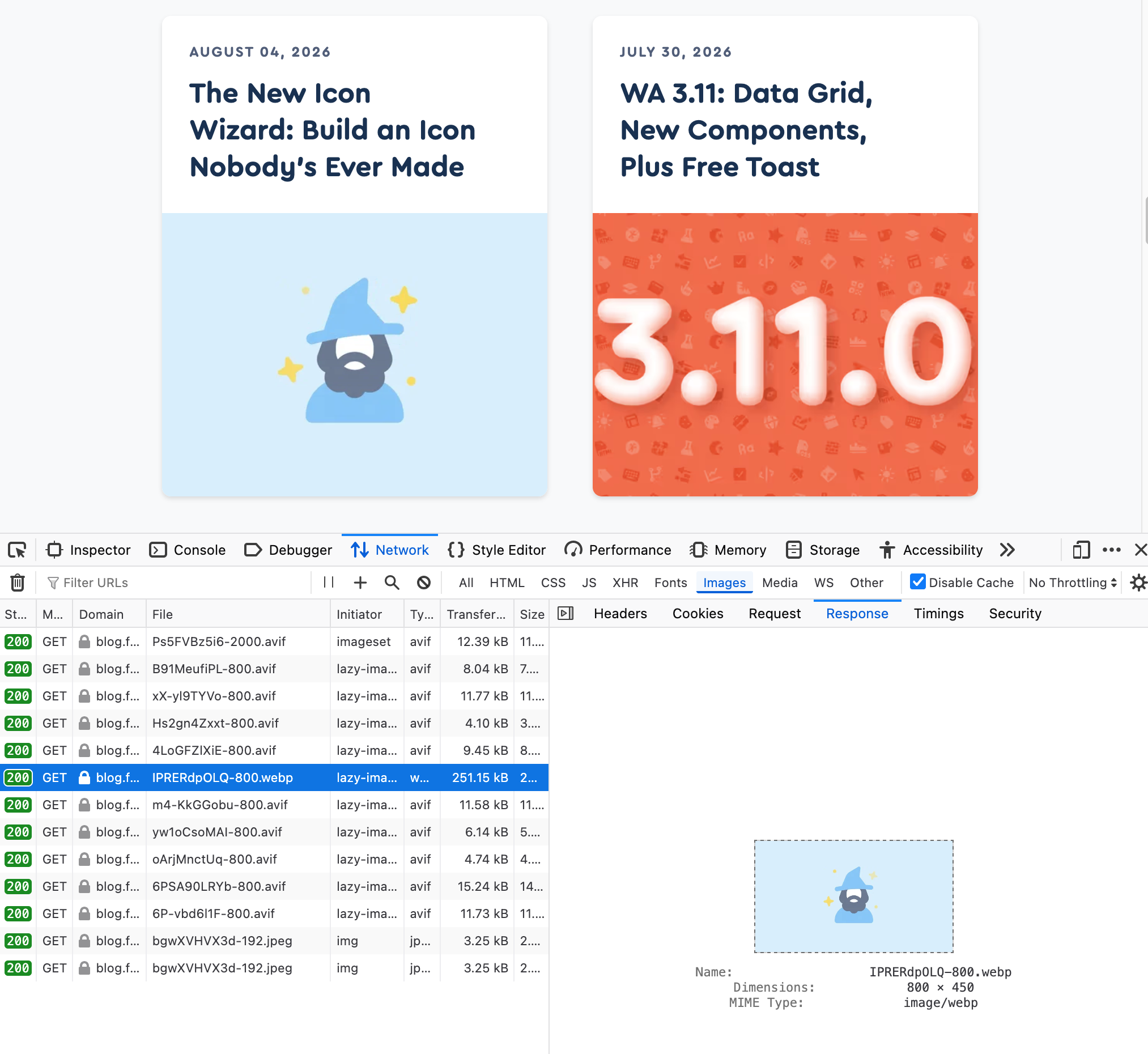
Perf win: blog.fontawesome.com had an animated GIF poster image published recently (for an Aug 4 blog post). Changing the @… Image plugin formats from "avif,auto" to "avif,webp,auto" added an animated WebP to the <picture> stack and saved 439kB of transfer weight! (nothing else changed) 🏆
FQTree: Fine-grained Quantization and Hardware Generation of Boosted Decision Trees
Zhiqiang Que, Chang Sun, Haiyang Wang, Dinesh Pamunuwa, Roshan Weerasekera, Qijia Tang, Bakhtiar Zadeh, Wayne Luk, Maria Spiropulu
https://arxiv.org/abs/2608.12140 https://arxiv.org/pdf/2608.12140 https://arxiv.org/html/2608.12140
arXiv:2608.12140v1 Announce Type: new
Abstract: Boosted decision trees (BDTs) are widely used in latency-critical applications, but efficient hardware deployment remains challenging. Existing designs often rely on uniform or manually tuned fixed-point formats, which can introduce unnecessary hardware cost or accuracy loss. This work presents the FQTree algorithm{https://github.com/ecs-bristol/FQTree} for fine-grained quantization-aware training of BDTs, together with the QXGB framework for automatic hardware generation. FQTree introduces a hardware-oriented leaf-value quantization scheme that uses a global quantization step together with a tree-wise shift, enabling compact non-negative integer leaf representations, controlled clipping/pruning, and bias folding to reduce datapath cost. This work further applies this quantization during boosting so that later trees adapt to the errors of the already-quantized ensemble, and then lowers the trained model into low-latency hardware implementations through a compiler-based flow. Results on JSC, MNIST, and NID show that our method reduces LUT usage by 26-57\% compared with the state-of-the-art FPGA-based BDT designs while matching or improving accuracy.
toXiv_bot_toot
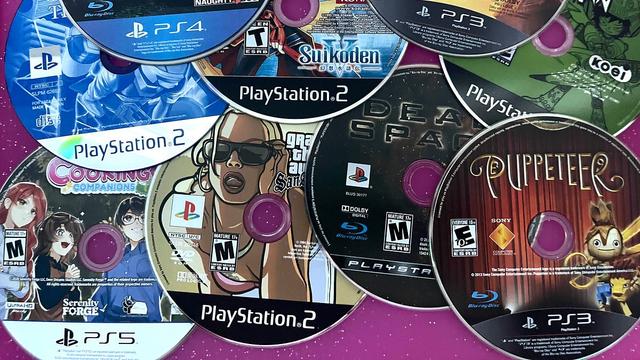
Sony, the inventor/co-inventor of the CD, the 3 1/2” floppy disk, MiniDisc, the DVD and of Blu-ray has now basically abandoned all these formats (they still sell some Blu-ray players which haven’t been updated in years).
I’m gonna hold on to my players, burners and disk drives for all time.
 @nic@geno.social