Tootfinder

Opt-in global Mastodon full text search. Join the index!

@thomasfuchs@hachyderm.io
2026-06-07 13:29:33

RE: hachyderm.io/@thomasfuchs/1167
I got a lot of “but it’s business people making programmers do this”, implying that software engineers want to be ethical but can’t.
That’s the software engineers who just stole the term “engineer” from another profession that has very strict certification requirements including mandatory ethics classes.

@primonatura@mstdn.social
2026-08-02 16:00:58

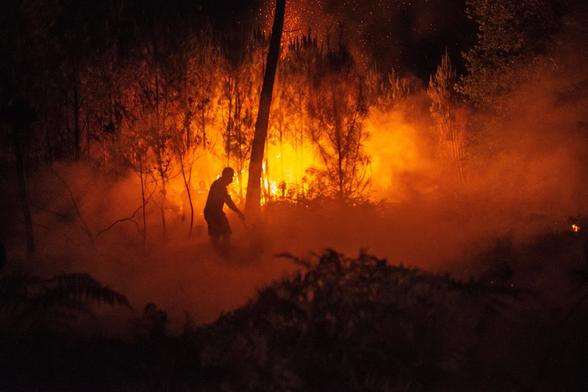
"Factcheck: No, Europe is not having its ‘quietest’ year for wildfires"
#Europe #Wildfires

@aardrian@toot.cafe
2026-07-31 18:25:12

I am reminded of the time AudioEye filed a SLAPP against me and its attorneys used untagged PDFs to do so.
IMO [added the ‘IMO’ because AudioEye are litigious bastards and might claim I’m implying a legal ruling happened and that I’m more of a filthy liar than they are], an indictment of AudioEye’s accessibility capability and both its and its attorney’s ethics.
Anyway, useful nuggets are littered throughout the book, in case you don’t have it:

One page of the book, with this bullet highlighted: “Are legal documents, including fee retainers, accessible? Can disabled clients independently read documents relevant to their cases if they cannot hold a mouse or read visual text?”
Chapter 32 Legal Ethics, Access to Justice & the Need for Digital Accessibility, page 389.
@khalidabuhakmeh@mastodon.social
2026-07-29 18:54:08

When #OpenAI executives are trying to convince you they are solvent. #AI

Moon Knight (from Marvel) throwing a bunch of random weapons. Saying “Random Bullshit Go!!!”. OpenAI logo over the face of the hero, implying OpenAI is just throwing out random bullshit.
@Techmeme@techhub.social
2026-07-16 15:35:42

Filing: a Chinese company says a fund in which its unit invested paid ~$420M for an indirect 0.8265% stake in DeepSeek, implying DeepSeek is valued at ~$52B (Eduardo Baptista/Reuters)
reuters.com/world/asia-pacific

@philip@mastodon.mallegolhansen.com
2026-07-20 22:06:39

@… I think it’s interesting that Mastodon treats the subject field as a CW field.
I’m not implying I’m anti-CW, but it feels like a lot of headache might be caused by the fact that different AP implementations could fundamentally disagree on what that field is for.

@Mediagazer@mstdn.social
2026-06-09 10:05:46

Sources: Paramount seeks a business-side counterpart to Bari Weiss, implying she would oversee editorial across CBS News and CNN if Paramount's WBD deal closes (Axios)
axios.com/2026/06/09/cbs-news-

@gwire@mastodon.social
2026-07-19 16:15:20

Ended up on a page where an "independent journalist" seems to be implying the government is keeping something secret since it didn't produce a report within weeks.
Like, yeah, suppressing their own reports *is* a thing a thing that the government does do. But also, not having a rapid turnaround on producing these reports is also a thing.
The only difference between "a disturbing conspiracy of silence", and normal production lengths, is expectations gained…

@arXiv_mathSP_bot@mastoxiv.page
2026-05-14 07:38:34

Ultrametric Graphons and Hierarchical Community Networks: Spectral Theory and Applications
\'Angel Alfredo Mor\'an Ledezma
arxiv.org/abs/2605.13423 arxiv.org/pdf/2605.13423 arxiv.org/html/2605.13423
arXiv:2605.13423v1 Announce Type: new
Abstract: We develop a theory of ultrametric graphons as limiting objects for random networks with nested hierarchical community structure. A graphon $W:[0,1]^2\to[0,1]$ is called ultrametric if $W(x,y)=w(d(x,y))$, where $d$ is an ultrametric on $[0,1]$ induced by a family of nested partitions and $w$ is a positive kernel. The resulting random graphs exhibit a nested hierarchical community structure in which the density of connections is governed by the ultrametric distance between vertices. The Laplacian $L_d^k$ of the deterministic graph sampled from an ultrametric graphon is itself an ultrametric Laplacian, whose eigenvalues and spectral projectors admit completely explicit closed-form expressions in terms of the community sizes and inter-community connection densities. We show that the normalized eigenvalues and spectral projectors of the random Laplacian $L_r^k$ are arbitrarily close to those of $L_d^k$ with high probability as $k\to\infty$, so that the explicit formulas for $L_d^k$ provide closed-form approximations for the spectrum and spectral projectors of $L_r^k$. As applications: a sign structure theorem generalizes the Fiedler vector criterion to hierarchical networks with arbitrarily many communities; a detectability threshold $p^*=\min_i\rho_i$ governs spectral community detection for one-level hierarchical graphons; the pseudo-inverse Laplacian $L_W^ $ is constructed and shown to be the almost sure limit of the pseudo-inverse of $L_r^k$, implying that hitting and commute times collapse to quantities depending only on the expected degrees of the endpoints; and explicit closed-form stability conditions for the SIS disease-free equilibrium reveal a fundamental tension between homogeneous and heterogeneous community structures, confirmed by numerical experiments.
toXiv_bot_toot

@arXiv_astrophGA_bot@mastoxiv.page
2026-07-22 08:14:16

The Large Magellanic Cloud through the lens of the James Webb Space Telescope: Binaries and the mass function in the galaxy's outskirts
M. V. Legnardi, F. Muratore, A. P. Milone, G. Cordoni, E. Dondoglio, L. N. Gorza, A. Bellini, F. Calura, S. Jang, H. Jerjen, A. Karakas, E. P. Lagioia, C. Li, A. Mastrobuono-Battisti, M. Tailo, E. Vesperini, E. Bortolan, A. F. Marino, S. Di Stefano
arxiv.org/abs/2607.19260 arxiv.org/pdf/2607.19260 arxiv.org/html/2607.19260
arXiv:2607.19260v1 Announce Type: new
Abstract: Nearby galaxies such as the Large Magellanic Cloud (LMC) offer an ideal laboratory to test the initial mass function under different physical conditions, but previous works have been limited by photometric depth and have therefore poorly constrained the low-mass regime. Here, we analyze ultra-deep James Webb Space Telescope observations of a field in the LMC outskirts, near the intermediate-age and massive star cluster NGC 1846. Using the $m_{\rm F322W2}$ versus $m_{\rm F115W}-m_{\rm F322W2}$ color-magnitude diagram, we derive the mass function (MF) down to unprecedentedly low masses ($M=0.17 M_{\odot}$), explicitly accounting for the contribution of unresolved binaries, whose fraction is constrained directly from the data. For systems with mass ratios $q>0.6$, we measure a binary fraction of $f_{\rm bin}^{q>0.6}=0.15\pm0.01$, implying a total binary fraction of $f_{\rm bin}^{\rm TOT}=0.34\pm0.02$ for a flat mass-ratio distribution. This is consistent with values in the Small Magellanic Cloud (SMC) and in the Milky Way field, suggesting similar binary formation efficiency across low-density environments. We also derive the MF over the mass interval 0.17-0.82 $M_{\odot}$ and fit it with a power law, obtaining a slope of $\alpha = -1.49 \pm 0.16$. This slope is shallower than the canonical Salpeter value ($\alpha=-2.35$) and slightly shallower than that measured in the SMC field, while remaining consistent with determinations for Galactic open clusters and for several clusters in the Magellanic Clouds and the Milky Way. Together, these results support a scenario in which both binary formation efficiency and the shape of the low-mass MF depend only weakly on the environment.
toXiv_bot_toot

@arXiv_astrophGA_bot@mastoxiv.page
2026-07-22 08:11:55

An (in)complete NIRSpec census of Balmer absorption in Type 1 AGN -- radiation-driven outflows in little red dots, quasars and variable stars
Ignas Juod\v{z}balis, Xihan Ji, Francesco D'Eugenio, Jan Scholtz, Roberto Maiolino, Amanda Stoffers, Alessandro Marconi, Elena Bertola, Andrew J. Bunker, Stefano Carniani, Giovanni Cresci, Emma Curtis-Lake, Zheng Ma, Cosimo Marconcini, Eleonora Parlanti, Pierluigi Rinaldi, Brant Robertson, Hannah \"Ubler, Giacomo Venturi, Junyu Zhang
arxiv.org/abs/2607.19057 arxiv.org/pdf/2607.19057 arxiv.org/html/2607.19057
arXiv:2607.19057v1 Announce Type: new
Abstract: A notable achievement of the first generation of JWST surveys was the discovery of an abundance of faint high-redshift ($z > 4$) broad-line active galactic nuclei (AGN) in the $L_{\rm bol} < 10^{45}$~erg~s$^{-1}$ regime, previously only accessible at $z < 1$. The high prevalence of absorption features in their broad hydrogen lines is one of the peculiarities of a significant fraction of this new population. In this paper, we conduct a broad census of Balmer absorption in a sample of 47 Type-1 AGN spanning $2 < z < 7$. Accounting for incompleteness of JWST spectroscopic data, we estimate that $44_{-6}^{ 21}$~\% of Little Red Dots (LRDs) have absorption in \Has while the incidence rate is $< 25$~\% (at 2$\sigma$) in Little Blue Dots (LBDs). Additionally, R1000 JWST/NIRSpec data is strongly resolution limited, implying an inability to disentangle Doppler broadening in the absorption from optical depth effects. This is alleviated with R2700 observations, although some degeneracies remain. We find a significant correlation between the velocity of the Balmer absorption and the [OIII]5007 narrow line luminosity, suggesting a common driving mechanism. We do not find any other significant correlations (and do not confirm previously claimed correlations) between Balmer absorption and other spectral properties of LRDs (except for the expected correlation between \Has and \Hbs absorption velocities). Comparing LRDs, quasars and stellar \Has absorbers, we establish that absorption in both LRDs and broad absorption line quasars is consistent with radiatively driven outflows, echoing the physics of variable stars yet occurring at vastly different scales.
toXiv_bot_toot