 @arXiv_csCR_bot@mastoxiv.page
2025-10-14 11:39:28
A Scalable, Privacy-Preserving Decentralized Identity and Verifiable Data Sharing Framework based on Zero-Knowledge Proofs
Hui Yuan
https://arxiv.org/abs/2510.09715 https://
@arXiv_csCR_bot@mastoxiv.pageA Scalable, Privacy-Preserving Decentralized Identity and Verifiable Data Sharing Framework based on Zero-Knowledge Proofs
Hui Yuan
https://arxiv.org/abs/2510.09715 https://
 @arXiv_csGR_bot@mastoxiv.page
D3MAS: Decompose, Deduce, and Distribute for Enhanced Knowledge Sharing in Multi-Agent Systems
Heng Zhang, Yuling Shi, Xiaodong Gu, Haochen You, Zijian Zhang, Lubin Gan, Yilei Yuan, Jin Huang
https://arxiv.org/abs/2510.10585
 @aral@mastodon.ar.al
So I’m teaching a friend who doesn’t have any development knowledge how to get started with Small Web development and I thought it would be a good opportunity to start creating and sharing the course on the Kitten web site, one lesson at a time.
Here’s the link:
https://kitten.small-web.org/course<…
 @grumpybozo@toad.social
Or one could use LibreOffice or Apache OpenOffice and not be dependent on some distant service provider.
Online office suites confuse me. It’s unclear what *modern* problem they address. Sharing files is a solved problem. Common data formats exist. https://mastodon.social/@DevOpsPink/11
 @mia@hcommons.social
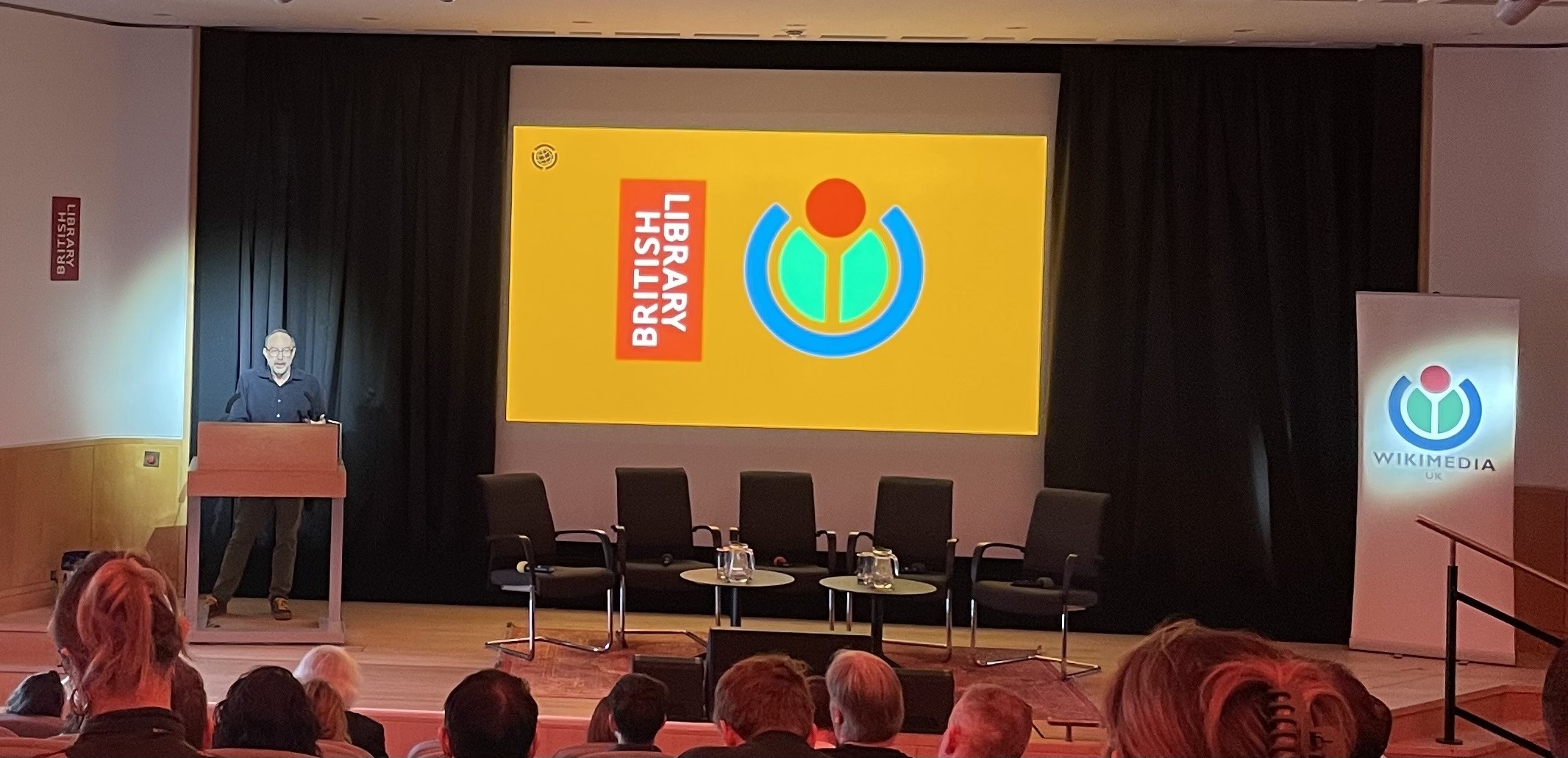
Great start to #KnowledgeIsHuman by Jimmy Wales: open knowledge is essential infrastructure. Every layer of knowledge in ecosystem is grounded in human effort - creating; sharing; synthesising; remixing; reusing. GLAMs, BBC, Wikimedia and us - we can all contribute
 @inthehands@hachyderm.io
An LLM generates a statistically typical response.
If you ask an LLM whether the world is round, it generates what would be a typical response to the question of whether the world is round. (It will probably be correct, because the typical answer to that question is the correct one.)
If you ask an LLM to provide examples of its own bias, it will generate what would be a typical response to a request to provide examples of bias.
In neither case is the LLM sharing any knowledge or insight other than what is typical.
2/
 @tiotasram@kolektiva.social
Day 29: Leanne Betasamosake Simpson
I've been sitting on Simpson for a while because there's some overlap in her writing with Robin Wall Kimmerer, and I've had a lot of different genres/styles/subjects/media I've wanted to post at least one author from. But I've now hit repeats on at least YA romance and manga, and Simpson's writing is actually quite different from Kimmerer's in a lot of ways. While Kimmerer is a biologist by training and literally braids that knowledge together with her knowledge of Potawatomi cosmology and ethics, Simpson is an Anishinaabe philosopher and anarchist, and her position as a scholar of Indigenous philosophy adds a different depth to her work: she talks in more depth about knowledge relationships and her connections with specific elders, and she has more citations to other Indigenous theorists, which is the one criticism I've ever seen of Kimmerer's work. Rather than being Indigenous and a scientist, she's Indigenous and a scholar of indigenous studies.
I've only read "Theory of Water" by Simpson, but it was excellent, and especially inspiring to read as an anarchist. Simpson's explicit politics are another difference from Kimmerer's work, which is more implicitly than explicitly political. This allows Simpson to draw extremely interesting connections to other anarchist theorists and movements. "Theory of Water" is probably a bit less accessible than "Braiding Sweetgrass," but it's richer from a theory perspective as a result.
In any case, Simpson is a magnificent writer, sharing personal insights and stories along with (and inseparable from) her theoretical ideas.
#30AuthorsNoMen
 @brichapman@mastodon.social
99% of us breathe unsafe air—and it's hitting low- and middle-income countries hardest.
The World Bank says we can cut exposure to hazardous air pollution in half by 2040, and it's actually cost-effective. Multilateral development banks are stepping up with funding, partnerships, and knowledge sharing to make it happen.
 @phpugmrn@phpc.social