
Tootfinder

Opt-in global Mastodon full text search. Join the index!

@tiotasram@kolektiva.social
2025-10-13 06:16:23

Just finished "Beasts Made of Night" by Tochi Onyebuchi...
Indirect CW for fantasy police state violence.
So I very much enjoyed Onyebuchi's "Riot Baby," and when I grabbed this at the library, I was certain it would be excellent. But having finished it, I'm not sure I like it that much overall?
The first maybe third is excellent, including the world-building, which is fascinating. I feel like Onyebuchi must have played "Shadow of the Colossus" at some point. Onyebuchi certainly does know how to make me care for his characters.
Some spoilers from here on out...
.
.
.
I felt like it stumbles towards the middle, with Bo's reactions neither making sense in the immediate context, nor in retrospect by the end when we've learned more. Things are a bit floaty in the middle with an unclear picture of what exactly is going on politics-wise and what the motivations are. Here I think there were some nuances that didn't make it to the page, or perhaps I'm just a bit thick and not getting stuff I should be? More is of course revealed by the end, but I still wasn't satisfied with the explanations of things. For example, (spoilers) I don't feel I understand clearly what kind of power the army of aki was supposed to represent within the city? Perhaps necessary to wield the threat of offensive inisisia use? In that case, a single scene somewhere of Izu's faction deploying that tactic would have been helpful I think.
Then towards the end, for me things really started to jumble, with unclear motivations, revelations that didn't feel well-paced or -structured, and a finale where both the action & collapsing concerns felt stilted and disjointed. Particularly the mechanics/ethics of the most important death that set the finale in motion bothered me, and the unexplained mechanism by which that led to what came next? I can read a couple of possible interesting morals into the whole denouement, but didn't feel that any of them were sufficiently explored. Especially if we're supposed to see some personal failing in the protagonist's actions, I don't think it's made clear enough what that is, since I feel his reasons to reject each faction are pretty solid, and if we're meant to either pity or abjure his indecision, I don't think the message lands clearly enough.
There *is* a sequel, which honestly I wasn't sure of after the last page, and which I now very interested in. Beasts is Onyebuchi's debut, which maybe makes sense of me feeling that Riot Baby didn't have the same plotting issues. It also maybe means that Onyebuchi couldn't be sure a sequel would make it to publication in terms of setting up the ending.
Overall I really enjoyed at least 80% of this, but was expecting even better (especially politically) given Onyebuchi's other work, and I didn't feel like I found it.
#AmReading
@LaChasseuse@mastodon.scot
2025-10-08 21:54:41

Challenge: "Name 20 female authors you admire, 1 per day"
Day 15:
Jenni Fagan
She is like a volcano of creativity - 4 novels, numerous books of poetry, film, sculpture, painting ... she is amazingly productive, and unique in her style and voice.
I particularly enjoyed The Sunlight Pilgrims and some of the things in it helped explain odd things I'd notice when I moved to rural Scotland. Can also recommend her first novel The Panopticon.

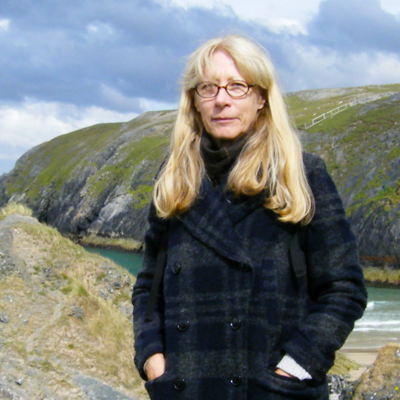
the author against a background of books, possibly at a library. She is signing books and looking up
@hex@kolektiva.social
2025-11-07 19:38:13

What's especially interesting, and dangerous to capitalism, is that there are a lot of opportunities that come out of this.
Corporations are destroying everything. We actually don't need them. We can build mutual aid networks, guerilla gardening, library socialism... When we stop with consumerism, we can find the joy in actually living, creating, being a creative human rather than simply a consumer. With a bit of momentum we can bend the system to our will. With enough momentum we can shatter it completely and free ourselves from this trap.
Things can go a lot of different ways. I'm excited to see how things go.
Edit:
I'm specifically excited about this...
blackoutthesystem.com/about-mu
This is cool. This is really fucking cool.

@mariyadelano@hachyderm.io
2025-10-20 20:41:14

I’ve worked over the past year to reduce the amount of noise in my consciousness on a daily basis.
By that I mean - information noise, not literal sounds “noise”. (That problem was solved long ago by some good earplugs and noise canceling earphones.)
I’ve gotten used to spending less time on social media, regularly blocking most apps on my devices (anything with a feed news, most work communication apps, etc.), putting my phone and other devices aside for extended periods of time. Often go to work places with my iPad explicitly having its WiFi turned off and selecting cafes that don’t offer WiFi at all.
Negotiated better boundaries at work and in personal life where I exchange messages with people less often but try to make those interactions more meaningful, and people rarely expect me to respond to requests in less than 24 hours. Spent a lot of time setting up custom notification settings on all apps that would allow it, so I get fewer pings. With software, choosing fewer cloud-based options and using tools that are simple and require as few interruptions as possible.
Accustomed myself to lower-tech versions of doing things I like to do: reading on paper, writing by hand, drawing in physical sketchbooks, got a typewriter for typing without a screen. Choosing to call people on audio more, trying to make more of an effort to see people in person. Going to museums to look at art instead of browsing Pinterest. Defaulting to the library when looking for information.
I’m commenting on this now for two reasons:
1. I am pretty proud of myself for how much I’ve actually managed to reduce the constant stream of modern life esp. as a remote worker in tech!
2. Now that I’ve reached a breaking point of reducing enough noise that it’s NOTICEABLE - I am struck by the silence. I don’t know what to do with it. I don’t know how to navigate it and fill it. I made this space to be able to read and write and think more deeply - for now I feel stuck in limbo where I’m just reacquainting myself with the concept of having any space in my mind at all.

@deprogrammaticaipsum@mas.to
2025-11-02 19:56:09

"Programmers, as users of compilers, experience Wittgenstein’s observation every day; newer programming languages provide more sophisticated ways to express algorithms, thereby expanding the limits of their own programming capacity, LLMs and “vibe coding” notwithstanding."
deprogrammaticaipsum.com/vikra…

@mia@hcommons.social
2025-12-02 23:24:03

On the eve of Fantastic Futures #FF2025, two things I want to share: firstly, I'm super-excited about seeing people in person and online tomorrow to Friday! And secondly, huge thanks to everyone who's helped - everyone who put in a proposal, all our reviewers, the British Library's excellent International and Events teams, the incredible Digital Research team

@cheryanne@aus.social
2025-10-25 18:08:48

Good Librations - A Kiama Library Podcast
Welcome to the Good Librations podcast, an entertaining dive down the rabbit hole of all things books, reading, libraries and more...
Great Australian Pods Podcast Directory: greataustralianpods.com/good-l

Good Librations - A Kiama Library Podcast
Screenshot of the podcast listing on the Great Australian Pods website
@tiotasram@kolektiva.social
2025-10-24 13:52:52

Day 28: Samira Ahmed
As foreshadowed, we're back to YA land, which represents a lot of what I've been enjoying from the library lately.
I've read "Hollow Fires", "This Book Won't Burn", and "Love, Hate, and other Filters" by Ahmed, along with "Mad, Bad, and Dangerous to Know" which is quite different. All four are teen ~romances with interesting things to say about racism & growing up as a South Asian Muslim, but whereas the first three are set in small-town Indiana, the third is set in France and includes a historical fiction angle involving Dumas and a hypothetical Muslim woman who was (in this telling) the inspiration for several Lord Byron poems.
Ahmed's novels all include a strong and overt theme of social justice, and it's refreshing to see an author not try to wade around the topic or ignore it. Her romances are complex, with imperfect protagonists and endings that aren't always "happily ever after" although they're satisfying and believable.
My library has a plethora of similar authors I've been enjoying, including Adiba Jaigirdar (who appeared earlier in this list), Sabaa Tahir ("All my Rage" is fantastic but I'm less of a fan of her fantasy stuff), Sabina Khan ("The Love and Lies of Rukhsana Ali"), and Randa Abdel-Fattah ("Does My Head Look Big In This?"; from an earlier era). Ahmed gets the spot here because I really like her politics and the way she works them into her writing. Her characters are unapologetic advocates against things like book bans, and Ahmed doesn't second-guess them or try to make things more palatable for those who want to ban books (or whatever). Her historical fiction in "Mad..." is also really cool in terms of "huh that could actually totally be true" and grappling with literary sexism from ages past.
#30AuthorsNoMen

@tiotasram@kolektiva.social
2025-11-27 01:21:24

Just checked out some truly excellent books from the library to read to my 4-year-old:
Adèle & Simon by Barbara McClintock (things to find), The Marvelous Now by Angela DiTerlizzi and Lorena Alvarez Gómez (rhyming & positive encouragement about mood regulation), and Forts by Katie Venit & Kenard Pak (lovely ode to children's forts).
I had a wonderful reverse-Magritte moment reading Adèle & Simon where Simon loses his drawing of a cat and my kid pointed out one of the actual cats in the image. I said "No, that's a cat, we're looking for a drawing of a cat," before realizing that technically we were looking for a drawing of a drawing of a cat, and the thing my kid pointed to was indeed a drawing of a cat, just not in that category relative to Simon's frame of reference...
#AmReading #ReadingNow #ChildrensBooks

@dudalias@social.linux.pizza
2025-11-07 12:15:18

Playing games on Linux has never been easier, yet sometimes things are just baffling.
For instance: installing Wasteland2 DC from GOG with Lutris using the native Linux version completed fine, but the game refused to start. Lutris logs showed it exited without any error, with code 0. Usually a library, or 2 ... or 10 is missing. But this time there was no clue as to what went wrong as `ldd` showed all of them in place.
Until I found this log:
```
cat ~/.config/unity3d/P…

@tiotasram@kolektiva.social
2025-09-27 12:26:53

Day 4: Adiba Jaigirdar
Thought I'd mix things up a bit in terms of intensity & genre. Jaigirdar has written several lovely sapphic teen romances that grapple with parental acceptance in Muslim Bengali immigrant culture, along with racism and other aspects of second generation immigrant life in Dublin.
I've discovered a few other Southeast Asian authors at my local library who will appear on this list, but I'm putting Jaigirdar first because of just how enjoyable her books are, and because I generally find queer romance to be more engaging than non-queer romance. Jaigirdar's characters are sympathetic and convincing, and their problems are both dramatic and a little funny. "Hani & Ishu's Guide to Fake Dating" is probably my favorite by Jaigirdar, but I also enjoyed "The Henna Wars" and "Rani Choudhury Must Die." "A Million to One" is a bit of a departure from her other books, as historical fiction with a heist plot, but it still engages with Irish culture, immigrants, and queer romance.
#20WomenAuthors

@tiotasram@kolektiva.social
2025-11-26 13:36:33

Writing unit tests for my random number generation library continues to be difficult. My tests are failing because the bias in the distribution exceeds my expectations, but I'm wondering whether I should just repeat the test more times and permit it to exceed expectations some of the time (as long as it does it symmetrically/rarely/etc. My gut tells me that second-order expectations aren't any better than first-order expectations, but another part of me disagrees.
Thinking more as I write this (writing is thinking): second-order tests can at least give me better info to work with towards fixing things I think! So maybe I'll invest in them.
#coding