 @raiders@darktundra.xyz
2026-09-23 18:18:20
@raiders@darktundra.xyz @chiraag@mastodon.online
Connect.Game · Daily · Sep 25, 2026
🎉 Solved with no mistakes!
🟨🟨🟨🟨
🟦🟦🟦🟦
🟩🟩🟩🟩
🟪🟪🟪🟪
Can you beat my score?
https://connect.game/
 @Techmeme@techhub.social
Investigation: AI hacker house AGI House had 37 incidents logged by police since 2022, many for party-related complaints, as Bay Area tech houses proliferate (Kirsten Grind/New York Times)
https://www.nytimes.com/2026/09/21/technology/agi-house-ai-culture.html
 @yetiinabox@todon.nl
new Nepali language textbook from a great team including Indigenous Himalayan scholars. the article is worth a read --
"working in a team where none of us had Nepali as our only or first language, but where all of us still had strong connections to it in different ways. That mix shaped a collaborative process drawing on different experiences and approaches to the language. More importantly, bringing those different relationships to language into the same space helped us create s…
 @grumpybozo@toad.social
 @cdarwin@c.im
The eighth generation of Wi-Fi represents a change in focus.
While previous incarnations of the Wi-Fi standard have promised higher connection speeds,
Wi-Fi 8 seems to be more about improving the basics:
reliability, stability, and lower latency.
Wi-Fi 8 also promises seamless roaming, keeping devices connected as you move and cutting down on dropped connections and dead zones.
For those keeping score, Wi-Fi 8 is IEEE 802.11bn using the old naming convention, w…
@chiraag@mastodon.onlineConnect.Game · Daily · Sep 18, 2026
🎉 Solved with no mistakes!
🟦🟦🟦🟦
🟪🟪🟪🟪
🟩🟩🟩🟩
🟨🟨🟨🟨
Can you beat my score?
https://connect.game/
 @cowboys@darktundra.xyz
Game Preview: Cowboys vs. Saints | 2026 NFL Preseason Week 3 https://www.neworleanssaints.com/news/dallas-cowboys-vs-new-orleans-saints-game-preview-2026-nfl-preseason-week-3-series-history-stats-con…
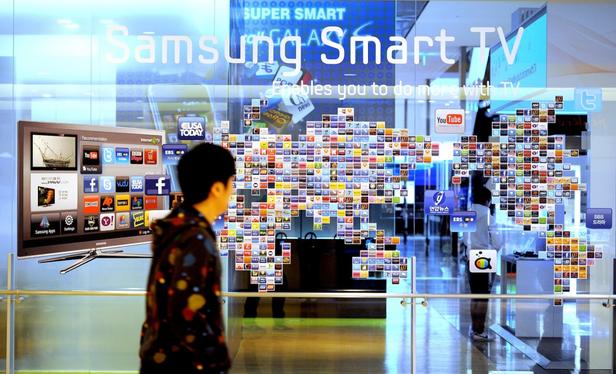
@Techmeme@techhub.socialSamsung says it's restricting app registrations and removing apps with SDKs that can turn smart TVs into residential proxy exit nodes, after a similar ban by LG (Zack Whittaker/TechCrunch)
https://techcrunch.com/2026/08/03/sams
 @arXiv_mathDG_bot@mastoxiv.page
Polarization complete left invariant connections
Bal\'azs Forman, R\'obert Sz\H{o}ke
https://arxiv.org/abs/2609.15673 https://arxiv.org/pdf/2609.15673 https://arxiv.org/html/2609.15673
arXiv:2609.15673v1 Announce Type: new
Abstract: Let $(M,\nabla)$ be a real analytic Koszul manifold. An adapted complex structure (ac-structure) on a neighborhood $N$ of the zero section in $TM$ is a complex structure on $N$ such that the leaves of the Levi-Civita foliation are holomorphic curves. More generally, a complex polarization $P$ on $N$ is called an ac-polarization if the leaves of the Levi-Civita foliation are tangential to $P$. The bundle of (1,0) tangent vectors of an ac-structure is an ac-polarization.
The connection is called entire (resp. polarization complete or simply $\mathcal P$-complete) if the ac-structure (resp. the ac-polarization) exists on $TM$. Although on a small enough $N$ an ac-structure always exists, entire connections are rear and if a maximal domain of definition $N_{max}$ of an ac-structure exists (different from $TM$), $N_{max}$ is a complicated domain. On the other hand in many cases the associated ac-polarization can be extended to the whole $TM$. The main purpose of the paper is to gain better understanding of this phenomenon using a generalized version of the polar map.
As special cases we show that many of those metrics studied by Aslam-Burns-Irvine and Halverscheid-Iannuzzi although are not entire but are $\mathcal P$-complete.
toXiv_bot_toot
 @rasterweb@mastodon.social
 @primonatura@mstdn.social
 @edintone@mastodon.green
Northamptonshire D-Day Stories from the Summer of 1944 https://edintone.com/d-day-stories/ Step back into one of the most defining moments of history and discover the powerful local
 @arXiv_qbioNC_bot@mastoxiv.page
Toward a mechanistic understanding of inference in visual cortex and diffusion models
Zeyu Yun, Alexander Belsten, Dasheng Bi, Zahra Kadkhodaie, Yubei Chen, Bruno A. Olshausen
https://arxiv.org/abs/2607.15693 https://arxiv.org/pdf/2607.15693 https://arxiv.org/html/2607.15693
arXiv:2607.15693v1 Announce Type: new
Abstract: We describe a model of perceptual inference in primary visual cortex (V1) equivalent to a minimal diffusion model whose function can be readily understood from its parameters. The model is based on sparse coding with a non-factorial prior over latent variables in the form of an unconstrained, pairwise interaction matrix, extending standard sparse coding inference to a general recurrent dynamical system. We efficiently train these recurrent dynamics using a denoising score-matching objective and implicit differentiation. After training on natural images, the learned interaction matrix mirrors the structure of horizontal connections in superficial layers of V1 that link neurons of similar orientation tuning. This model exhibits exceptionally good denoising performance, restoring image features such as extended contours amid extreme visual ambiguity, nearly matching the behavior of standard, black-box diffusion architectures in generalization regime. Owing to the model's simplicity, the network's Jacobian can be decomposed directly in terms of the interaction matrix between latent variables, revealing mechanistically how the recurrent dynamics assign high probability over a continuous family of natural structural deformations. Intriguingly, within this circuit, a large fraction of latent variables learn to disconnect from visual input altogether, essentially forming a hierarchical representation that appears to enforce global consistency among image features. Together, the model and results bridge two distinct domains: for neuroscience, it generates concrete, testable hypotheses regarding functional connectivity in recurrent neural circuits during perceptual inference tasks; for machine learning, it elucidates the internal mechanisms learned by diffusion models that allow them to generate infinitely many novel images from a finite training set.
toXiv_bot_toot
@chiraag@mastodon.onlineConnect.Game · Daily · Sep 11, 2026
🎉 Solved with no mistakes!
🟨🟨🟨🟨
🟪🟪🟪🟪
🟩🟩🟩🟩
🟦🟦🟦🟦
Can you beat my score?
https://connect.game/
 @tiotasram@kolektiva.social
The world needs more science fiction of the social- variety.
Rather than imagining how life could be different because of advances in purely mechanistic technologies, why not imagine how life could be different because of advances in social technologies: new inventions of ways societies can be organized or groups of people can relate to each other.
Some concrete examples of existing social technologies: Amish barn-raising, dolphin surf-fishing, online crowd-funding, Capoeira, potlucks, punk rock concerts, etc.
Each of these things was invented at some point, spread (not inevitably) through social communication, allows groups to achieve a specific purpose (or facilitates several different outcomes) and may or may not require specific tools or mechanistic technologies. There will be new social technologies in the future, and they could radically change how human societies function and what human lives look like, just as mechanistic technologies can.
In the current sociopolitical climate, we see one vision of the future, heavily propagandized, which assures us that advances in mechanistic technology will make life ever easier for humans, leading into a golden age where human needs are met by robots. In this imagination, each individual can actualize the productive capacity to meet their own needs because an individual's productive capacity has been multiplied in every dimension by new mechanistic technologies. Humans can finally be rid of the messy complexity of community-dependence and be totally free because mechanistic technologies will replace the need for community connections to satisfy material desires.
But there's an ugly underside to this vision explored by cyberpunk, where advances in mechanistic technologies bring us to a point of total hierarchical domination and control. In this future, productivity-multipliers are recognized as force-multipliers, and the humans who gain control of them use them to subjugate everyone else.
Some of the best science fiction authors, like Le Guin or Asimov, look at not only mechanistic but also at social technologies, and often at the interaction between the two. Social technologies also have the capacity to radically change the human condition, but they don't lend themselves as well to the power fantasy or libertarian utopia of the self-sufficient individual. Social technologies involve people satisfying their needs through dependence on others, and in turn being obligated to take part in communities.
As an anarchist, I believe that the social technologies needed for human flourishing have not been invented yet. I also believe that with the right social technologies, even without significant advances in mechanistic technologies, it's possible for everyone to be able to meet their own needs through community, in a truly sustainable way.
I wish we had more authors using their craft to help explore the space of social technologies and inspire others to join in that exploration, so that the technologies we need can more quickly be invented and evangelized.
#anarchy #SciFi #technology
 @arXiv_nlinSI_bot@mastoxiv.page
Crosslisted article(s) found for nlin.SI. https://arxiv.org/list/nlin.SI/new
[1/1]:
- Two-dimensional Toda--Arnoldi correspondence: Holomorphic Krylov geometry and counterdiabatic tra...
Urei Miura
https://arxiv.org/abs/2608.04850 https://mastoxiv.page/@arXiv_quantph_bot/117047618895534612
- Machine-Learning Search for Lax Connections
Osamu Fukushima, Tomohiro Shigemura, Ryosuke Suda, Norihiro Tanahashi, Kentaroh Yoshida
https://arxiv.org/abs/2608.05146 https://mastoxiv.page/@arXiv_hepth_bot/117047572101225603
toXiv_bot_toot
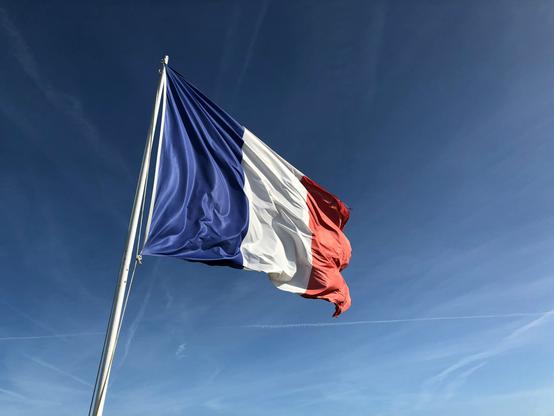
@primonatura@mstdn.social"France’s installed PV capacity hits 34 GW"
#France #SolarPower #Energy #Renewables
@arXiv_mathDG_bot@mastoxiv.pageRicci flow with metric torsion on surfaces of positive Euler characteristic
Shubham Dwivedi
https://arxiv.org/abs/2609.15880 https://arxiv.org/pdf/2609.15880 https://arxiv.org/html/2609.15880
arXiv:2609.15880v1 Announce Type: new
Abstract: We study an adapted Ricci flow of connections with metric torsion on surfaces with positive Euler characteristic. We first prove that there do not exist any nontrivial solitons of the flow on the $2$-sphere thus confirming a conjecture of Branding--Kr\"oncke (J. Geom. Anal. 27.3 (2017), arXiv:1606.09121). We give an explicit family of torsion data for which the corresponding global solutions fail to converge on $\mathbb{S}^2$. Nevertheless, we provide several sufficient conditions for the convergence of the flow to a stationary point. We first prove that the normalized adapted Ricci flow always converges on $\mathbb{RP}^2$, which completely answers a question in the paper of Branding and Kr\"oncke. Using this, we deduce that the flow converges on $\mathbb{S}^2$ whenever the initial metric and the torsion one-form are antipodally symmetric. We also prove a {\L}ojasiewicz--Simon gradient inequality for the flow and use it to prove convergence to a stationary point provided the solution is close to an arbitrary stationary point.
toXiv_bot_toot
@edintone@mastodon.greenNorthamptonshire D-Day Stories from the Summer of 1944 https://edintone.com/d-day-stories/ Step back into one of the most defining moments of history and discover the powerful local
 @arXiv_hepth_bot@mastoxiv.page
Phase transition from eigenstate thermalization: forbidden singularity and instanton proliferation via AGT correspondence
Yongjiang Xu, Weixin Sun, Chushun Tian, Huajia Wang
https://arxiv.org/abs/2608.13246 https://arxiv.org/pdf/2608.13246 https://arxiv.org/html/2608.13246
arXiv:2608.13246v1 Announce Type: new
Abstract: In theoretical physics, finding connections between problems that appear in distinct contexts is an important way to leapfrog progresses, often by illuminating deep aspects that may otherwise seem obscure. In this paper, we consider in 2d CFTs the phenomenon of forbidden singularities in auto-correlation functions -- a key signature of eigenstate thermalization. We show that they correspond to phase transitions in the context of eigenstates. The connection is made explicit by utilizing the AGT correspondence, which relates eigenstate auto-correlations to the Nekrasov partition functions describing an instanton gas of the $\mathcal{N}=2$ SUSY gauge theories. We show that by taking the counter-part of the heavy-light limit, two phases emerge for the instanton gas. They are dominated by configurations represented by string-like Young tableaux with distinct structures and thermodynamic properties, which bare resemblance to the confined and the deconfined phases. A phase transition occurs as instantons proliferate from one side, in a manner that mimics the Lee-Yang theory. We work out the critical fugacity and find it corresponding exactly to the forbidden singularity.
toXiv_bot_toot
 @burger_jaap@mastodon.social
Furthermore, the report summary does not address the important context of the German DSO control over charging points: it was introduced to ensure that new / upgraded grid connections for EVs are not delayed, and it also obliges DSOs to offer time-variable grid tariffs.
 @servelan@newsie.social
"Publicly, Trump turned on his supporters who wanted more information about Epstein’s connections to the world elite. “Their [Democrats’] new SCAM is what we will forever call the Jeffrey Epstein Hoax, and my PAST supporters have bought into this ‘bullshit,’ hook, line, and sinker”
How Trump is damaging QAnon - Daily Kos
https://www.dailykos.com/stories/2026/8/9/800079678/series/trump-qanon-epstein-files-polling/
@arXiv_mathDG_bot@mastoxiv.pageCompact balanced threefolds and LCK manifolds with constant holomorphic sectional curvature
Shuwen Chen, Junpeng Li
https://arxiv.org/abs/2608.05598 https://arxiv.org/pdf/2608.05598 https://arxiv.org/html/2608.05598
arXiv:2608.05598v1 Announce Type: new
Abstract: A long-standing conjecture in Hermitian geometry says that a compact Hermitian manifold with constant Chern holomorphic sectional curvature $c$ is K\"ahler for $c\neq 0$ and Chern flat for $c=0$. Although the conjecture has been established in complex dimension two, it remains open in general in higher dimensions. We verify the conjecture for compact balanced threefolds when $c\leq 0$. For compact locally conformally K\"ahler manifolds, Chen, Chen, and Nie established the case $c\leq 0$, while Huang and Wan recently settled the remaining case. Inspired by the approach of Huang and Wan, we investigate a generalization of the conjecture for canonical metric connections and establish it for connected compact locally conformally K\"ahler manifolds.
toXiv_bot_toot
 @chris@mstdn.chrisalemany.ca
good morning!
did some early-morning ponding on the #pandemicPond this morning.
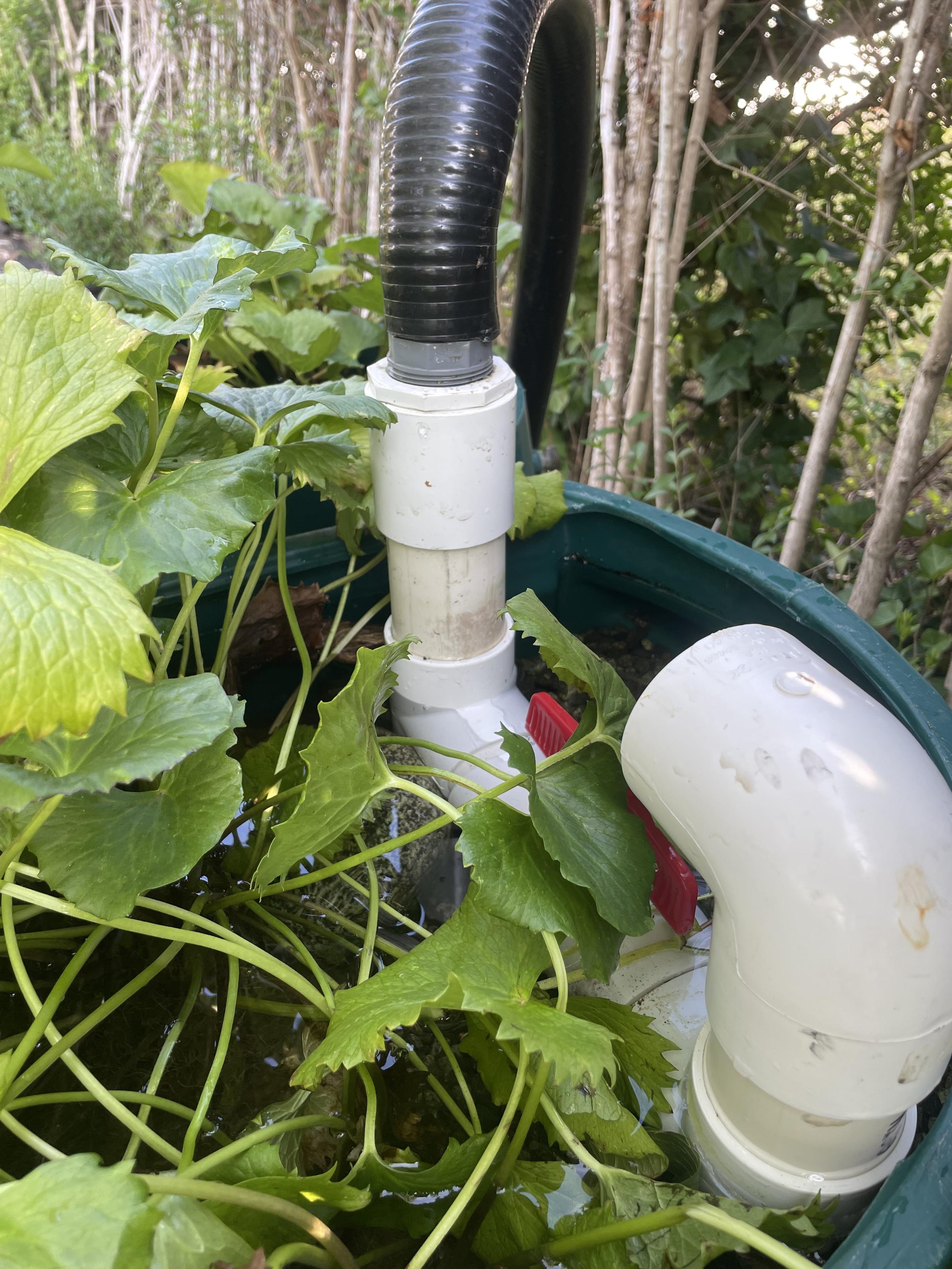
The water level was unusually low, so I started looking around for leaks or blocks. I have been wanting to cut down the vertical PVC at the top of the bog barrels to make it not stick out so much and blend in a little nicer and also because it would reduce the height for the pump, so increase flow.
Well it turns out that connection, where the black pipe goes into the white PVC in the barrel, was a little loose and some water was leaking out and adding to the evaporation budget.
So that gave me the push to do the small modifications on the top end of the pipe. It was also a good time since turning off the pump meant the top pond would drain into the bottom pond. When the system is full, that would normally cause the bottom pond to over flow, but since it was all low, no extra water was lost.
I cut the inlet down a few inches under the water in the bog barrel to move the T down and then cut another 6in from the top pipe to snug it all up.
Then I also tightened up the connections for the over flow/air valve and added an elbow to keep water from escaping out the valve outlet. Only took about 5 minutes. I have been wanting to do this for months. 😂
Result:
black pipe doesn't curl as high over the barrel ✅
no more leak from the PVC connection ✅
no more water escaping from the air valve ✅
noticeably more flow over the waterfall! ✅
Pump is back on and water is replenished from the rain barrel ✅
the fish are happy! 🐟 and me too. ✅
oh oh! did I tell you we have a new fish! The top pond fish had babies and it looks like one has survived to be big enough not to be cannibalized. 😂 It is very skittish and is still mostly black so I havent got a good picture of it yet.
#pondlife #diy #gardening #portalberni
 @arXiv_mathDG_bot@mastoxiv.page
Holonomy Asymptotics along Quartic Differential Rays
Weihan Ma
https://arxiv.org/abs/2608.04729 https://arxiv.org/pdf/2608.04729 https://arxiv.org/html/2608.04729
arXiv:2608.04729v1 Announce Type: new
Abstract: Let \(X\) be a closed Riemann surface and let \(q\in H^0(X,K^4)\) be a nonzero holomorphic quartic differential on \(X\). For \(t >0\), the ray \(tq\) determines a family of Hitchin representations in the \(\operatorname{PSp}(4,\mathbb R)\)-Hitchin component. We study, as \(t\to \infty\), the asymptotic behavior of their holonomy along closed curves. We obtain explicit asymptotic formulas for all singular values and for the absolute values of all eigenvalues of the holonomy. Their logarithmic growth rates are given by integrating the local fourth roots of \(q\) along the saddle connections forming the geodesic representative of the curve with respect to the singular flat metric \(\lvert q\rvert^{1/2}\). No restriction is imposed on the orders of the zeros of \(q\).
toXiv_bot_toot
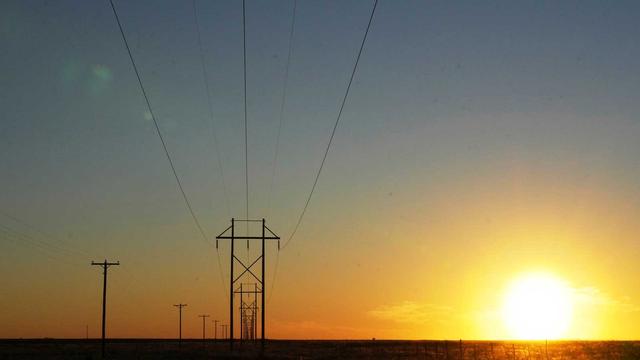
@primonatura@mstdn.social"The state that’s beating dirty electricity "
#US #USA #America #NewMiexico
@burger_jaap@mastodon.socialThe Dutch DSO Liander allows businesses to skip the waiting list for new grid connections or capacity if they invest in a battery and make part of it available to the DSO in return for a fee. What do we make of this? It has a bit of a Sicilian-American feel to it.
https://solarmagazine.nl/nieuws-zonne-energie/i44673/bedrijven-kunnen-wachtlijst-omzeilen-door-batterij-te-delen-met-stroomnet
 @katrinakatrinka@infosec.exchange @chris@mstdn.chrisalemany.ca
Here is the transcript of the meat of Carney’s proposal for a deeper Canada and EU partnership in text. Full text of the speech at the second link. The 2 minute video clip got a chuckle (“better manners”).
“So let me say plainly what Canada proposes.
Canada and Europe should secure our strategic autonomy through deep cooperation in the full range of strategic capabilities, including critical minerals, defence industrial capacity, AI and compute, energy security, space, and payments.
We should move toward seamless, digital trade in non-agricultural goods and a wide range of services.
We should deepen our people-to-people ties, allowing our youth to live, work and study where they want on either side of the Atlantic.
Canadian membership of Erasmus can give your students, and ours, more opportunity to learn at some of the world’s top universities, to broaden their horizons, and to build lasting ties that will sustain our alliance for the future.
Canadian membership of the next generation of Horizon would allow us to pool resources, cooperate on frontier technologies, and leverage our world-class research institutes and universities.
Yesterday, President von der Leyen announced a “new European Corporation on Critical Raw Materials” to obtain and stockpile the material needed for electric cars, chips and batteries, clean technology, and defence. Canada has deposits of over 34 critical minerals, and we are among the top producers of the 10 most essential for the world’s energy transition. Our alliance can help fill Europe’s need for reliable supply, Canada’s need for advanced processing capabilities, and our common objective to build complete value chains.
Canada can contribute LNG and hydrogen at large scale to support Europe’s energy security including by developing and leveraging new port infrastructure in the High North and on our East Coast. We, in turn, can benefit from your leadership in many clean energy technologies.
We can pool new sovereign compute capacity and build more secure broadband connections between Europe and Asia via our common geography.
Canada and Europe can join forces to develop AI safety protocols, coordinate common standards, and strengthen transparency, all while developing applications so our governments and companies can serve our citizens better.
Canada and Europe should also consider exploring an integrated market for financial services to broaden choice and reduce costs for our citizens, improve access to capital for our companies while maintaining our world-leading financial resilience.”
Official Text of speech: #canada #eu #europe #canPoli #cdnpoli #trade #security #war #russiaUkraineWar #theAmericanFascist