 @seeingwithsound@mas.to
2026-09-19 18:06:00
Sensory restoration via brain-computer interfaces: a scoping review https://arxiv.org/abs/2606.15091 "Teams developing high-density invasive stimulation interfaces rarely collaborate with teams building non-invasive sensory substitution setups";

 @matematico314@social.linux.pizza
2026-07-19 22:20:00
É impressão minha ou o Porro abriu uma bandeira da Palestina durante as comemorações?!
EDITADO: Alarme falso, galera, acho que era bandeira de Extremadura, nome de uma Comunidade Autônoma da Espanha. Mas é mesmo muito parecida.

 @heiseonline@social.heise.de
2026-08-18 14:13:03

 @yetiinabox@todon.nl
2026-08-20 19:35:40
new Nepali language textbook from a great team including Indigenous Himalayan scholars. the article is worth a read --
"working in a team where none of us had Nepali as our only or first language, but where all of us still had strong connections to it in different ways. That mix shaped a collaborative process drawing on different experiences and approaches to the language. More importantly, bringing those different relationships to language into the same space helped us create s…
 @netzschleuder@social.skewed.de
2026-09-20 10:00:04
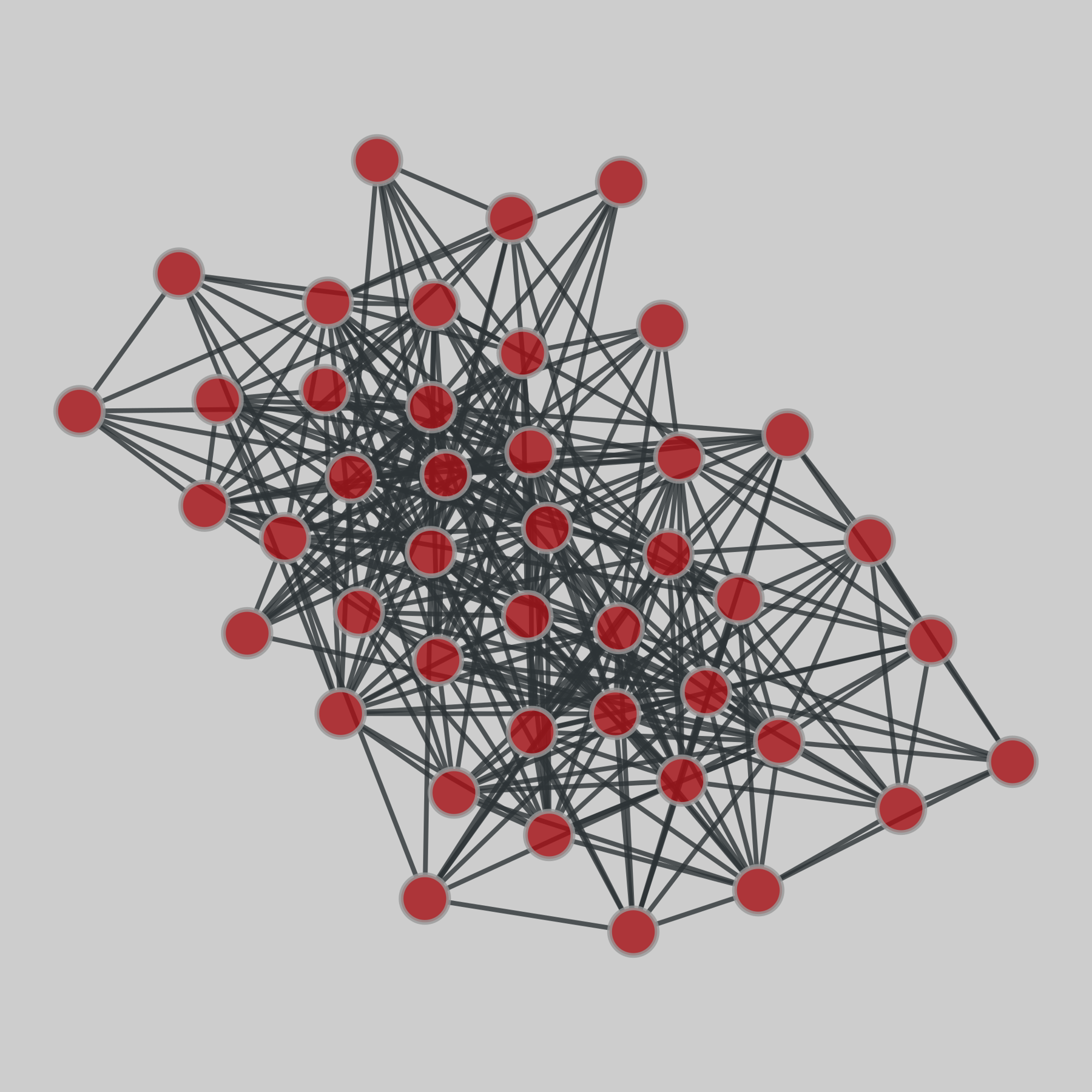
windsurfers: Windsurfers network (1986)
A network of interpersonal contacts among windsurfers in southern California during the Fall of 1986. The edge weights indicate the perception of social affiliations majored by the tasks in which each individual was asked to sort cards with other surfer’s name in the order of closeness.
This network has 43 nodes and 336 edges.
Tags: Social, Offline, Weighted
 @LaChasseuse@mastodon.scot
2026-07-20 18:28:15
A friend of mine's husband is quite proud of the fact that the only flower he can recognise and name is the tulip. I've never understood that.

 @grumpybozo@toad.social
2026-07-17 22:12:05
So, https://mastodon.social/@JenniferSmith345 is an odd bot. I don’t think it’s even a LLM behind it, the replies are just too weird.
Profile looks like it was taken from someone real…

 @arXiv_nlincd_bot@mastoxiv.page
2026-07-21 07:43:28
A Measure-Theoretic Approach to Spontaneous Stochasticity
Wandrille Ruffenach, Eric Simonnet, Nicolas Valade
https://arxiv.org/abs/2607.16328 https://arxiv.org/pdf/2607.16328 https://arxiv.org/html/2607.16328
arXiv:2607.16328v1 Announce Type: new
Abstract: Spontaneous stochasticity (SpSt), originating in Richardson's picture of turbulent dispersion and Lorenz's Eulerian view of finite-time loss of predictability, was later formulated under this name by Gaw\k{e}dzki and collaborators and developed in shell models by Mailybaev and collaborators. Whether it occurs in fully developed turbulence remains a major open question.
Beyond a few specific classes of systems, however, SpSt has lacked a general mathematical definition. We introduce a measure-theoretic formalism in which it is understood as a measure-selection principle. Given an inviscid problem, a well-posed regularization, and an ambient measure, we study the pushforward of that measure by the regularized flow. Strong SpSt occurs when these pushforward measures converge to a non-Dirac probability law, replacing classical deterministic selection by statistical selection.
For finite-dimensional systems, we establish several structural results. Our central attainability theorem shows that, whenever the inviscid problem is nonunique, any probability measure supported on the set of inviscid states can be selected as the limiting law of a suitable regularization. We also identify singular sets in the inviscid dynamics, detected through Dini-type directional growth, as necessary obstructions underlying nonuniqueness. We analyze the relation between SpSt and sensitivity to initial data, clarifying the scope and limitations of turbulence-inspired finite-time separation criteria. Finally, we develop a renormalization-(semi)group viewpoint in which limiting statistics arise as statistical attractors. Explicit examples illustrate how ambient measures, inviscid singularities, regularization scales, and initial-data sensitivity interact in the emergence of SpSt.
toXiv_bot_toot
 @tiotasram@kolektiva.social
2026-07-12 16:28:07
Since it was relevant to a discussion I just had on here and is something most people probably haven't thought about much (unless you've taken one of a handful of philosophy classes), I thought I'd try to lay out a key piece of Descartes' Meditations (#philosophy
@netzschleuder@social.skewed.de2026-08-17 14:00:05
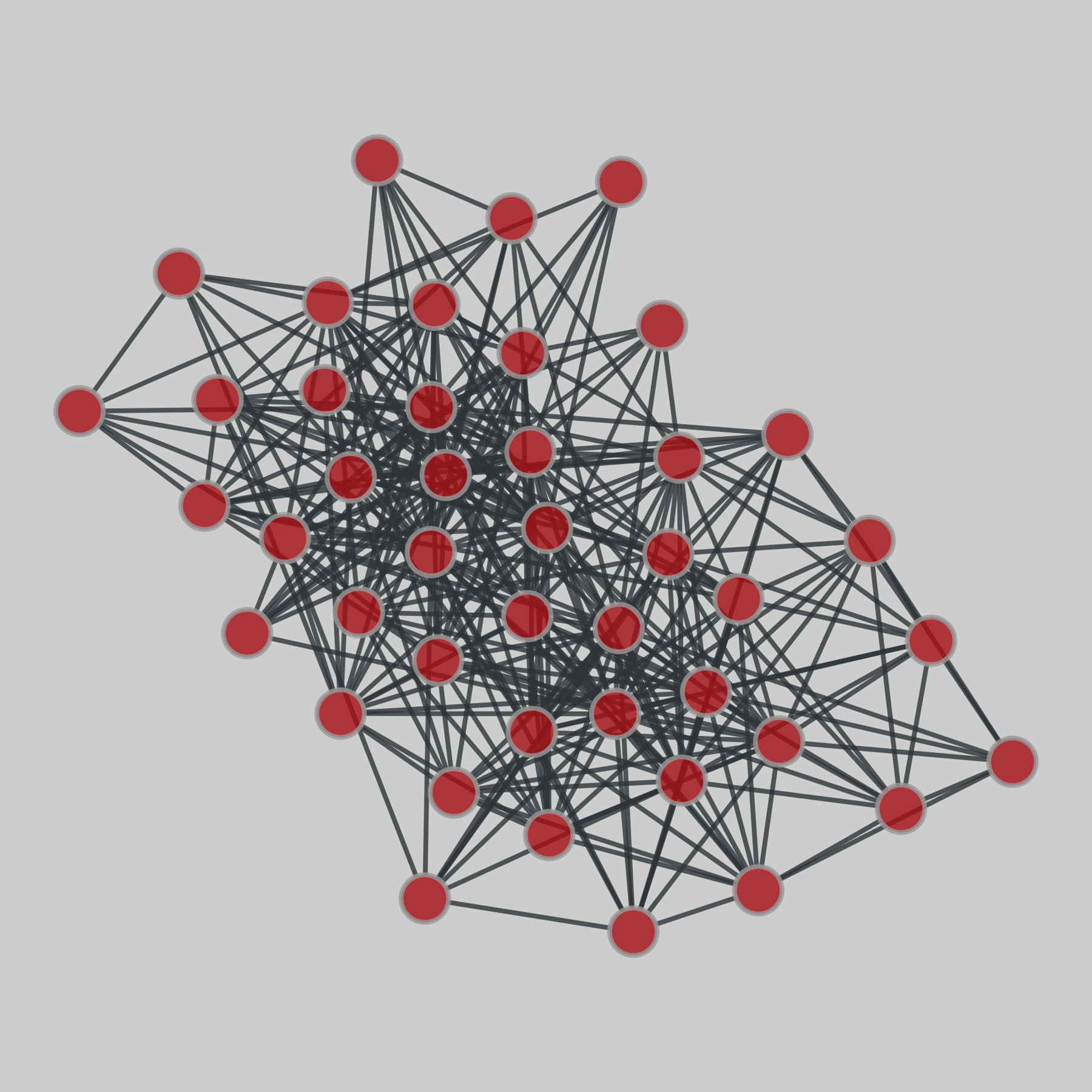
windsurfers: Windsurfers network (1986)
A network of interpersonal contacts among windsurfers in southern California during the Fall of 1986. The edge weights indicate the perception of social affiliations majored by the tasks in which each individual was asked to sort cards with other surfer’s name in the order of closeness.
This network has 43 nodes and 336 edges.
Tags: Social, Offline, Weighted