 @arXiv_physicsoptics_bot@mastoxiv.page
2025-09-19 09:13:51
Fermat's Spiral-Based Characterization of Squeezed Nonlinear Motional States of Levitated Nanoparticle
Martin Ducha\v{n}, Alexandr Jon\'a\v{s}, Radim Filip, Jan Je\v{z}ek, Petr J\'akl, Pavel Zem\'anek, Martin \v{S}iler
https://arxiv.org/abs/2509.14853

 @mgorny@social.treehouse.systems
2025-10-02 17:42:42
"""
Traditional politics of assistance and the repression of unemployment were now called into question. The need for reform became urgent.
Poverty was gradually separated from the old moral confusions. Economic crises had shown that unemployment could not be confused with indolence, as indigence and enforced idleness spread throughout the countryside, to precisely the places that had previously been considered home to the purest and most immediate forms of moral life. This demonstrated that poverty did not solely fall under the order of the fault: ‘Begging is the fruit of poverty, which in turn is the consequence of accidents in the production of the earth or in the output of factories, of a rise in the price of basic foodstuffs, or of growth of the population, etc.’ Indigence became a matter of economics.
But it was not contingent, nor was it destined to be suppressed forever. There would always be a certain quantity of poverty that could never be effaced, a sort of fatal indigence that would accompany all forms of society until the end of time, even in places where all the idle were employed: ‘The only paupers in a well governed state must be those born in indigence, or those who fall into it by accident.’ This backdrop of poverty was somehow inalienable: whether by birth or accident, it formed an inevitable part of society. The state of lack was so firmly entrenched in the destiny of man and the structure of society that for a long time the idea of a state without paupers remained inconceivable: in the thought of philosophers, property, work and indigence were terms linked right up until the nineteenth century.
This portion of poverty was necessary because it could not be suppressed; but it was equally necessary in that it made wealth possible. Because they worked but consumed little, a class of people in need allowed a nation to become rich, to release the value of its fields, colonies and mines, making products that could be sold throughout the world. An impoverished people, in short, was a people that had no poor. Indigence became an indispensable element in the state. It hid the secret but most real life of society. The poor were the seat and the glory of nations. And their noble misery, for which there was no cure, was to be exalted:
«My intention is solely to invite the authorities to turn part of their vigilant attention to considering the portion of the People who suffer … the assistance that we owe them is linked to the honour and prosperity of the Empire, of which the Poor are the firmest bulwark, for no sovereign can maintain and extend his domain without favouring the population, and cultivating the Land, Commerce and the Arts; and the Poor are the necessary agents for the great powers that reveal the true force of a People.»
What we see here is a moral rehabilitation of the figure of the Pauper, bringing about the fundamental economic and social reintegration of his person. Paupers had no place in a mercantilist economy, as they were neither producers nor consumers, and they were idle, vagabond or unemployed, deserving nothing better than confinement, a measure that extracted and exiled them from society. But with the arrival of the industrial economy and its thirst for manpower, paupers were once again a part of the body of the nation.
"""
(Michel Foucault, History of Madness)
 @aredridel@kolektiva.social
2025-10-05 00:48:41
I keep realizing that one of my main differences in behavior is that I don't let fear of loss keep me from connecting with people nor existing comfortably in places.
It plays out in some specific ways. I'm usually the first to volunteer to lend something, and I'm willing to (and in fact most excited to) lend whatever it is to someone I don't know. I know I might not get it back. It’s _fine_.
I'm willing to leave my bike locked up in a part of the city where it might get stolen. It won’t, probably but it might. And that's fine. Annoying, but fine. It's cheap enough to replace. Expensive enough to suck but it's fine.
What I'm tilting at here though is that the constant vigilance to make sure things work out okay and the waiting for low-risk situations cuts us off from a lot of things. Better to have a bit of a "well fuck" budget. Go do the thing. It'll probably be fine. if not, well, it sucks, but ... it's fine.
 @StephenRees@mas.to
2025-10-11 00:45:56
Portland's weird, effective resistance
We live in strange times, and the people of Portland are responding with their trademark whimsy. Despite US president Donald Trump's best attempts to portray the City of Roses as a "war-torn" "hellhole," folks who live there are demonstrating that these are lies – lies intended to bolster his authoritarian efforts to deploy the National Guard in cities that oppose him and his tyrannical policies

 @mariyadelano@hachyderm.io
2025-10-20 20:41:14
I’ve worked over the past year to reduce the amount of noise in my consciousness on a daily basis.
By that I mean - information noise, not literal sounds “noise”. (That problem was solved long ago by some good earplugs and noise canceling earphones.)
I’ve gotten used to spending less time on social media, regularly blocking most apps on my devices (anything with a feed news, most work communication apps, etc.), putting my phone and other devices aside for extended periods of time. Often go to work places with my iPad explicitly having its WiFi turned off and selecting cafes that don’t offer WiFi at all.
Negotiated better boundaries at work and in personal life where I exchange messages with people less often but try to make those interactions more meaningful, and people rarely expect me to respond to requests in less than 24 hours. Spent a lot of time setting up custom notification settings on all apps that would allow it, so I get fewer pings. With software, choosing fewer cloud-based options and using tools that are simple and require as few interruptions as possible.
Accustomed myself to lower-tech versions of doing things I like to do: reading on paper, writing by hand, drawing in physical sketchbooks, got a typewriter for typing without a screen. Choosing to call people on audio more, trying to make more of an effort to see people in person. Going to museums to look at art instead of browsing Pinterest. Defaulting to the library when looking for information.
I’m commenting on this now for two reasons:
1. I am pretty proud of myself for how much I’ve actually managed to reduce the constant stream of modern life esp. as a remote worker in tech!
2. Now that I’ve reached a breaking point of reducing enough noise that it’s NOTICEABLE - I am struck by the silence. I don’t know what to do with it. I don’t know how to navigate it and fill it. I made this space to be able to read and write and think more deeply - for now I feel stuck in limbo where I’m just reacquainting myself with the concept of having any space in my mind at all.
 @cdarwin@c.im
2025-10-11 15:35:06
As reports emerged of a White House memorandum suggesting that furloughed federal workers might not receive back pay, Trump
– who ostentatiously posed as the champion of American workers during last year’s presidential election campaign
– was quick to twist the knife.
“I would say it depends on who we’re talking about,” he told reporters.
“There are some people that really don’t deserve to be taken care of, and we’ll take care of them in a different way.”
On Fri…
 @randy_@social.linux.pizza
2025-10-11 19:14:30
Really the best?
There are over a million people living in the city of Prague. It’s one of the most touristy places in Europe and, in my eyes, probably the most beautiful place Europe has to offer.
But man! There’s something that bothers me more than a pimple on my ass: bike apps.
For context—Google Maps doesn’t offer bike navigation here, Apple Maps only added it in the last update, and Mapy (the Czech app) does a good job with hikes and all the rest—but not with bikes.
 @bthalpin@mastodon.social
2025-10-08 09:15:19
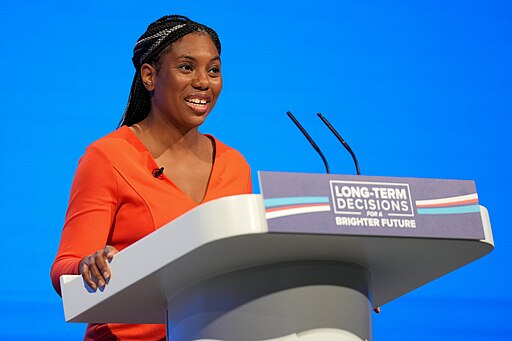
Britain clearly has a problem with too many people going to university, and Badenoch proposes to change that.
Imagine how much better off the UK would be, if Cameron, Osborne, Bojo, Gove et al had never gone to Oxford!
https://www.timeshighereducation.com/new…
 @Techmeme@techhub.social
2025-12-10 21:01:58
Reddit starts a limited test of verified profiles, an opt-in feature that places a gray checkmark beside the usernames of notable people or businesses (Amanda Silberling/TechCrunch)
https://techcrunch.com/2025/12/10/reddit-is-testing-verification-badges/

 @cjust@infosec.exchange
2025-10-11 17:29:19
