 @mxp@mastodon.acm.org
2026-08-23 18:16:18
@… @… I guess the issue is that there’s no standard syntax for cross references. If you restrict yourself to, say, pandoc Markdown with explicit IDs, it’s trivial to implement.
@mxp@mastodon.acm.org2026-08-23 18:16:18
@… @… I guess the issue is that there’s no standard syntax for cross references. If you restrict yourself to, say, pandoc Markdown with explicit IDs, it’s trivial to implement.
 @michabbb@social.vivaldi.net
2026-09-21 20:05:37
🧭 When an agent breaks a rule, the error doesn't stop at "not allowed". It explains why and suggests a fix from your own components, variants and theme. Example: "p-4" on <Button> points the agent to a size (sm, lg), margin, or gap on the parent
📜 Contracts per component: allow margin and w-full on Button but block padding and shape, or let CardTitle change text size but not font weight. Custom error messages support placeholders like {{sizes}} and {{file}…
 @primonatura@mstdn.social
2026-09-19 13:00:07
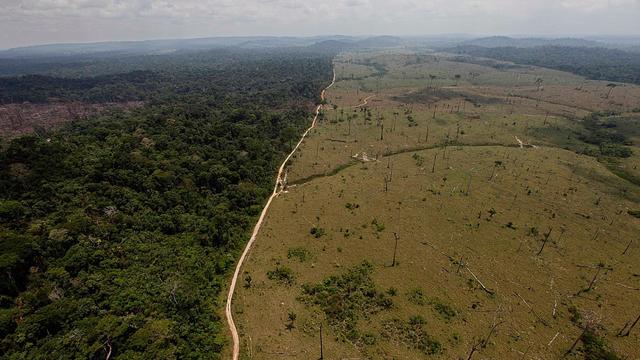
"‘Recovery becomes self-propelling’: Five positive tipping points that can save the world"
#Environment #Climate #ClimateChange
 @aral@mastodon.ar.al
2026-07-16 06:57:34
Donno what’s worse, the verse itself or DuckDuckGo’s generated explanation of it. @… https://partyon.xyz/@nando161/116925119988965039


 @cdarwin@c.im
2026-09-10 20:10:19
If you buy a T-shirt at Gap, it will have a label that tells you where it was made. That’s federal law.
The same is true for automobiles, appliances, television sets, every fresh or frozen fruit and vegetable sold at the supermarket.
Beef and pork are notable exceptions to these laws.
And that may help to explain why President Trump signed a proclamation last month that will allow the duty-free importation of about 660 million pounds of inexpensive beef.
If American co…

 @arXiv_qbioOT_bot@mastoxiv.page
2026-07-21 07:56:08
Orientation Reading by Production Vision-Language Models on Optotype Charts: A Controlled Multi-Model Evaluation Across Reasoning Modes, Prompts, and Access Modalities
Shahryar Wasif, Avneek Sandhu, Bin Hu
https://arxiv.org/abs/2607.16595 https://arxiv.org/pdf/2607.16595 https://arxiv.org/html/2607.16595
arXiv:2607.16595v1 Announce Type: new
Abstract: OBJECTIVES: Vision-language models are increasingly used to interpret medical and everyday images through consumer chat interfaces, yet their ability to read orientation - the single perceptual operation tested by the tumbling-E acuity optotype - is poorly characterized on the surfaces through which they are actually used. METHODS: We evaluated four production vision-language models (referred to as Claude, GPT, GROK, and Gemini) through their consumer chat interfaces on a locked set of seven optotype charts: four uniform tumbling-E charts (one per cardinal orientation), two mixed-orientation tumbling-E charts, and one Snellen letter chart as a specificity control. Each model was run in two reasoning modes (Fast and Thinking) under two prompt variants (with and without an explicit orientation-decoding rule) by up to three operators. The corpus comprised 920 scoreable trials and 50,420 glyph judgements. The primary outcome was glyph-level accuracy against the chart's designed orientation, summarized with Wilson 95% confidence intervals. RESULTS: Accuracy ranged from 43.0% to 97.0% across models on identical charts, and the strongest model depended on reasoning mode (GPT 97.0% in Fast mode; GROK 96.6% in Thinking mode). Errors were not random but collapsed onto a model-specific attractor direction. Models were 96-100% internally self-consistent yet ranged widely in accuracy, dissociating reliability from validity. An answer-key-free ensemble-consensus estimate tracked accuracy closely (r = 0.998). For one model, consumer-interface accuracy fell 25-27 points below programmatic access, almost entirely on a single orientation. CONCLUSIONS: A single accuracy figure conceals clinically relevant, orientation-specific failure modes; vision-language models should be evaluated along multiple axes and on the deployment surface before image-interpretation outputs are trusted.
toXiv_bot_toot
 @arXiv_qbioNC_bot@mastoxiv.page
2026-07-22 07:57:17
How the fly holds a single goal: normalization, not selection, in Drosophila FC2
Gioele Nanni, Christopher Lee
https://arxiv.org/abs/2607.18969 https://arxiv.org/pdf/2607.18969 https://arxiv.org/html/2607.18969
arXiv:2607.18969v1 Announce Type: new
Abstract: A walking fly steers toward a goal direction, held as a bump of activity across the FC2 neurons of the fan-shaped body. These neurons also inhibit one another over distance, more strongly the farther apart they are, a feedback proposed to keep the fly on a single goal. We asked, from the connectome, what circuit produces this inhibition, and whether it lets FC2 actively choose one goal among competitors (a winner-take-all) or simply keeps a goal set elsewhere as one clean bump. Tracing the wiring in a single FlyWire brain, we find the inhibition is almost entirely global: four FB5A cells inhibit every FC2 neuron roughly equally, with a smaller, distance-dependent contribution from hDelta interneurons and a negligible direct component. A ring-attractor winner-take-all (the kind the compass uses) requires local recurrent excitation that the FC2 wiring lacks, so this geometry cannot build one; and across a range of dynamical models, including a spiking network, no version of the circuit locks onto a winner at the connectome-scaled reference coupling. FC2 therefore normalizes an externally set goal rather than selecting it, with FB5A likely acting as the global normalizer, much as the APL neuron does in the mushroom body. We are explicit about two open points: a different mechanism, mutual inhibition between two competing goals (which hDelta supplies), could in principle select at very strong coupling, and we bound rather than exclude it; and FB5A's inhibitory identity is a low-confidence prediction of the connectome's transmitter classifier, not yet measured, and likely not GABAergic. We then ask where the goal is actually set: the connectome nominates an upstream hDelta network and rules out the leading proposed alternative, whose neurons supply under 0.2% of FC2's input. Finally, we propose a direct experiment, silencing FB5A while imaging FC2, that would test the account.
toXiv_bot_toot
 @arXiv_csGR_bot@mastoxiv.page
2026-07-21 07:33:19
Points as Tori: Fast Pointwise Signed Distance for Point Clouds
Nicole Feng, Ioannis Gkioulekas, Keenan Crane
https://arxiv.org/abs/2607.16946 https://arxiv.org/pdf/2607.16946 https://arxiv.org/html/2607.16946
arXiv:2607.16946v1 Announce Type: new
Abstract: We describe a method for computing signed distance to point clouds that allows fast pointwise evaluation at arbitrary spatial resolution. As input, our method takes a point cloud with normals; as output, it provides an analytical parameterization that allows queries of signed distance to the approximate underlying surface at arbitrary points - simultaneously providing reconstruction and distance. Our key idea is to reconstruct shapes by locally fitting point clouds with tori, which have closed-form signed distance functions. Tori are fitted in a feed-forward manner, using a pre-trained network to output per-point curvature and shift parameters. Importantly, our method does not require costly global optimization or spatial discretization, and is easily parallelizable. Underlying our method is a new theory that unifies signed distance with the classic reconstruction methods of winding numbers and Poisson surface reconstruction. We use our method to compute signed distance to point clouds arising from photogrammetry, meshes, 3D Gaussians, and neural implicits. Our method allows point clouds to be used directly in applications, without explicit surface reconstruction: as examples, we take offsets of point clouds, apply morphological and Boolean operations, and directly visualize offset surfaces using sphere tracing.
toXiv_bot_toot
@cdarwin@c.im2026-08-07 19:16:33
The armed drone found at Leipzig airport on Wednesday may not have exploded,
but the fact that it got inside the perimeter, close to Ukrainian cargo planes, raises obvious concerns for the security of international aviation.
Though the identity of the culprits is unknown,
the initial evidence points firmly towards a Russian-orchestrated plot.
It is the first time that a drone with explosives has been found in Europe far from the Ukrainian border.
Photographs pub…
