 @seeingwithsound@mas.to
2026-07-23 07:44:01
University of Texas study, for blind or low vision participants: Living in an AI-filtered reality: Participant recruitment & eligibility screening form https://docs.google.com/forms/d/e/1FAIpQLSfrJaZokMcnv7t0ExHT1hdVZ8dEsgV-AymJxguendMqTKxEZA…

 @tschfflr@fediscience.org
2026-07-20 12:25:59
🤗 Welcome, Follower #1700!
I'm a professor of Digital Forensic Linguistics at Ruhr-Uni Bochum, Germany. Professionally, I research emojis, disinformation, metaphors, and digital language in general using computational and experimental methods. Mastodon provides my regular supply of cat pictures. I post in English and German (but try to provide proper language tags for filtering/translation).
 @lapizistik@social.tchncs.de
2026-06-29 19:48:50
Als ich zur Schule ging, war das WWW noch nicht erfunden. Mußte ich ein Referat halten, gab es in der Bücherei ein Buch zum Thema, und in dem stand die Wahrheit¹.
Mit dem Internet kippte die Anforderung von Informationen finden zu Informationen filtern und bewerten. Der Beitrag der höheren Lehranstalten zu dieser Problematik beschränkte sich lange Zeit auf „nicht aus der Wikipedia abschreiben, weil da ja jeder editieren kann“. Kompetent in digitalen Medien recherchieren, Quellen bewert…
 @arXiv_csAR_bot@mastoxiv.page
2026-08-14 07:31:47
Dryas: A Reprogrammable Engine for High-Speed Interconnect Tracing and Analysis
Manuel Br\"ochin, Tom Kuchler, Michael Giardino, David Cock, Timothy Roscoe
https://arxiv.org/abs/2608.12934 https://arxiv.org/pdf/2608.12934 https://arxiv.org/html/2608.12934
arXiv:2608.12934v1 Announce Type: new
Abstract: The proliferation of heterogeneous components in modern computing systems has been accompanied by new higher bandwidth and lower latency interconnects. These interfaces and protocols are enormously complex and the process of developing, debugging, and analyzing FPGA-based implementations requires significant engineering work. Moreover, once a functional implementation is completed, optimization of the controller and associated software requires processing potentially hundreds of gigabytes of trace data.
In this paper, we present Dryas, an open source tool for analyzing such an interconnect. We developed our tool, using minimal hardware resources, alongside an FPGA implementation of a very high speed, low latency (30~GiB/s, 200~ns) interconnect. With our run-time reprogrammable overlay engine we can inspect this interconnect to find rare, complex, or transient events even at full operation. This filtering engine is based on non-deterministic finite automata (NFAs), efficiently implemented using state transition elements (STEs), allowing us to trace events at a cache-line granularity. Moreover we can change the filters in less than a second, without reprogramming the FPGA or interfering with the running application. This data enables not only debugging the implementation of the interconnect itself, but analyzing the behavior of accelerated applications.
We examine the mathematical basis for using NFAs and describe their implementation on a real coherent CPU-FPGA research platform. We then evaluate the scalability of Dryas for various size NFAs, followed by two different use cases: debugging FPGA implementation of the interconnect and analyzing cache behavior.
toXiv_bot_toot
 @arXiv_csHC_bot@mastoxiv.page
2026-08-12 08:26:35
ProtoGIB-Workload: Learning Workload-Specific Neural Topology Prototypes across Subjects
Yuzhe Zhang, Yixi Zhang, Shengdian Jiang, Chengxi Xie, Jihong Wang, Huan Liu, Man Yao, Minnan Luo, Chao Shen
https://arxiv.org/abs/2608.10647 https://arxiv.org/pdf/2608.10647 https://arxiv.org/html/2608.10647
arXiv:2608.10647v1 Announce Type: new
Abstract: Reliable electroencephalography (EEG)-based mental workload recognition is crucial for adaptive human-centered systems, yet practical deployment requires models to generalize to users unseen during training. Although functional connectivity graphs are widely adopted to capture workload-related neural interactions, they inherently entangle task-relevant structures with subject-specific physiological traits and sample-level noise. This entanglement often leads models to learn structural shortcuts, severely degrading cross-subject generalization. To address this, we propose ProtoGIB-Workload, a novel framework that explicitly regularizes and aligns graph structures for subject-independent workload recognition. Our approach introduces a Stochastic Graph Information Bottleneck (SGIB) to compress dense correlation priors into compact, task-relevant subgraphs, filtering out input-related redundancy. Crucially, to prevent the retention of subject-specific spurious edges, we propose a Class-Conditional Topology Stabilizer (CTS). Leveraging the fixed electrode coordinates of EEG data, CTS operates directly on graph-generation probabilities to encourage consistent edge-generation statistics across different subjects sharing the same workload class. Extensive experiments on two public EEG workload datasets and one in-house EEG cognitive load dataset of air traffic controllers under strict leave-one-subject-out (LOSO) protocols demonstrate that ProtoGIB-Workload significantly outperforms state-of-the-art temporal and graph-based baselines, improving the cross-subject Macro-F1 score by an average of 5.15% (up to 6.34%). Further analyses confirm that our method successfully extracts stable, cross-subject consistent neural connectivity patterns.
toXiv_bot_toot
 @penguin42@mastodon.org.uk
2026-08-25 13:57:07
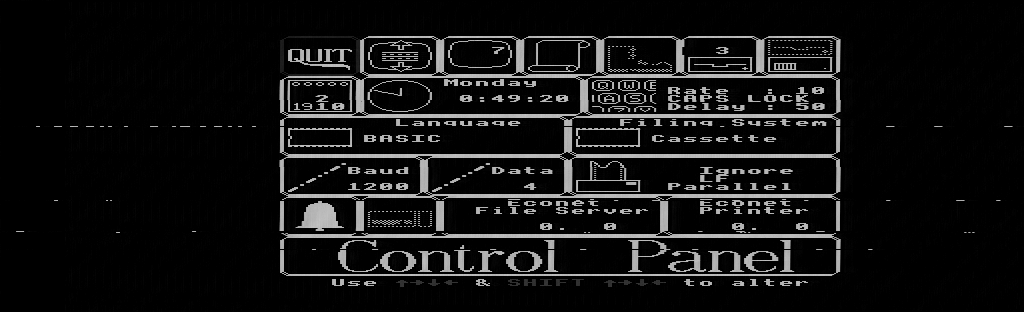
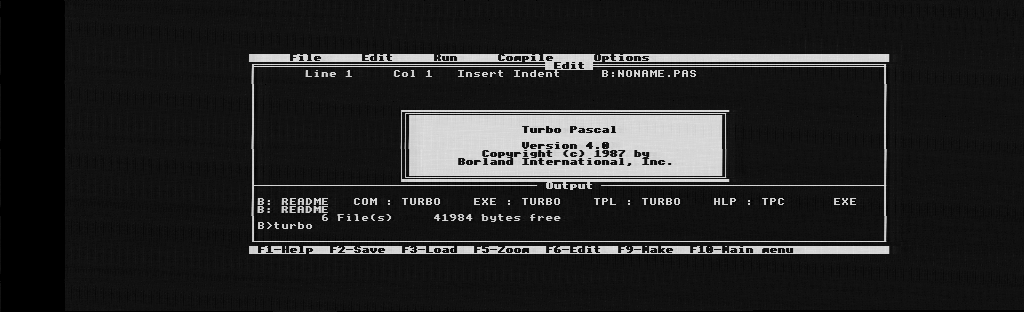
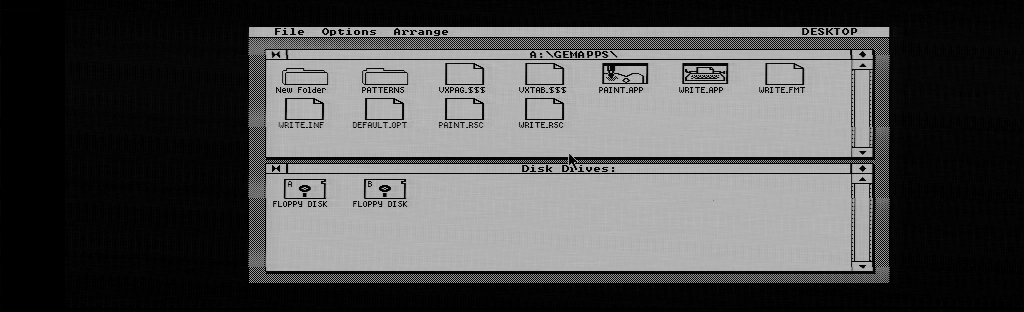
BBC Master 512 in DOS Plus; GEM, Turbo Pascal ( the 6502 Welcome panel). The video on the Master 512 is a bit odd - it's not got enough VRAM to be able to do normal PC modes, and it's not got the character gen to do hardware text (except teletext which is no use to the PC side). It was DOS Plus not MSDOS so some stuff was touchy. Hmm only thing I'm missing is the mouse, it might be in the loft somewhere.
I also need to try a PI RGB thing, my LCD doesn't like some st…
![A green 'Digital Research' loading page 'Boot strap loader [16-July-86] Loading DOS PLUS.' With a nice blur that is probably camera rather than a CRT!](https://cdn.mastodon.org.uk/media_attachments/files/117/156/463/626/218/248/original/e6049b511bf18145.jpeg)