 @heiseonline@social.heise.de
2026-06-27 16:00:00
Per Brief: US-Regierung hebt Sperre von Claude Mythos auf
Per Brief hat der Handelsminister der USA der Firma Anthropic erlaubt, ihr KI-Modell Claude Mythos wieder freizuschalten. Fable bleibt gesperrt.
https://www…

 @Techmeme@techhub.social
2026-09-08 14:25:46
Runway co-CEO Anastasis Germanidis says the startup's annual recurring revenue hit $200M in September; source: it expects ARR to cross $350M by the end of 2026 (Rachel Metz/Bloomberg)
https://www.bloomberg.com/news/articles/20
 @presseportal_pol_NDS@frawas.de
2026-07-09 11:01:33
POL-CLP: Pressemeldungen für den Nordkreis Cloppenburg Cloppenburg/Vechta (ots) - Saterland / Strücklingen - Diebstahl von Kabeln Am Mittwoch, den 10.06.2026 und am Sonntag, den 05.07.2026, begab sich ein unbekannter Täter zur Nachtzeit auf ein Gelände an der Bürgermeister-Lucassen-Straße in ... https://www.presseportal.…
 @Digitale_Ueberwachung@chaos.social
2026-09-09 10:23:53
Für die #Überwachung hat diese #Regierung Geld übrig: die Zuschüsse an den Bundesnachrichtendienst steigen demnach um 342 Millionen Euro in 2027 auf dann ca. 1,85 Milliarden Euro im Jahr ( 23% zu 2026). Mehr als ein Drittel der Ausgaben des Etats Bundeskanzler und Bundeskanzleramt im Bundeshaus…

 @grist@fosstodon.org
2026-09-04 06:29:53
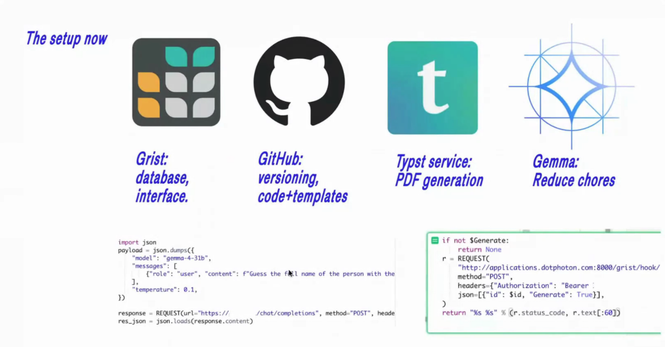
The system runs on-prem, meets ESA’s engineering standards, and produces delivery-ready PDFs on demand. https://www.getgrist.com/case-studies/how-dotphoton-built-a-fully-traceable-qa-system-for…
 @jdrm@social.linux.pizza
2026-09-02 06:39:10
"A principios del siglo XX, la tasa nacional de mortalidad [por paludismo] estaba en unos 10 fallecidos por cada 100.000 habitantes, pero comenzó a bajar de manera sostenida a partir de 1920. En 1936, se situaba ya en 0,67 fallecidos por cada 100.000 habitantes. Para 1943, la contienda bélica [y fusilar al director de la campaña contra esta enfermedad en 1936] había vuelto a disparar este indicador hasta 6,77 casos por cada 100.000 personas"
 @cdonat@hostsharing.coop
2026-07-02 16:40:00
This week on #ProFed: I fixed the bug in the message bus.
Finding the bug was less of a problem. But the solution, that meets all the requirements at this foundational level, was the real challenge.
As a bonus, the message bus is now slightly more efficient and uses fewer resources in most situations. Not a game changer, but still good.
 @Techmeme@techhub.social
2026-08-20 18:10:42
Source: Anthropic plans a safety system this year requiring enterprises to retain data for 30 days, with an option to do so on their own cloud infrastructure (Rachel Metz/Bloomberg)
https://www.bloomberg.com/news/articles/202…
@presseportal_pol_NDS@frawas.de2026-08-26 22:50:27
POL-H: Nachtragsmeldung: Öffentlichkeitsfahndung nach zwei Kindern beendet Hannover (ots) - Die seit Mittwoch, 26.08.2026, als vermisst gemeldeten Kinder aus Hannover sind wohlbehalten angetroffen worden. Eine Bürgerin hatte sich am späten Abend bei der Polizei gemeldet, nachdem sie die beiden Kinder an einer ... https://www.
@grist@fosstodon.org2026-09-03 22:54:53
Hybrid retrieval for structured data: where a vector index meets a relational database. https://www.getgrist.com/blog/why-rag-hits-a-wall-on-structured-data/