 @arXiv_csPL_bot@mastoxiv.page
2026-07-21 09:17:05
Crosslisted article(s) found for cs.PL. https://arxiv.org/list/cs.PL/new
[1/1]:
- The EDGE Language: Extended General Einsums for Graph Algorithms
Odemuyiwa, Porumbescu, Nayak, Pellauer, Emer, Owens
https://arxiv.org/abs/2404.11591 https://mastoxiv.page/@arXiv_csDS_bot/112291034292734261
- Composable Verification Pipelines for Multi-Agent Systems
Julian Alfredo Mendez, Andreas Br\"annstr\"om
https://arxiv.org/abs/2607.16266 https://mastoxiv.page/@arXiv_csLO_bot/116956805448253784
- AoA: Theorem Proving Agent over Abstract Syntax Tree of Redesigned Language
Qiyuan Xu, Joshua Ong Jun Leang, Renxi Wang, Wenda Li, Haonan Li, Luke Ong, Conrad Watt
https://arxiv.org/abs/2607.16372 https://mastoxiv.page/@arXiv_csSE_bot/116956840082703202
- Exact Network Surgery: Functional Invariance and Gradient Plasticity in Reactive Computational Gr...
Abdallah Khemais (ISITCOM, University of Sousse)
https://arxiv.org/abs/2607.16568 https://mastoxiv.page/@arXiv_csAI_bot/116957045910225353
- Topology in Synthetic Domain Theory and its Formalisation in Agda
Runze Xue
https://arxiv.org/abs/2607.17292 https://mastoxiv.page/@arXiv_csLO_bot/116956840838635477
- Portable models as a replacement for industrial heuristics in compiler optimizations
Fot Nikolai, Vinarsky Alexander
https://arxiv.org/abs/2607.17389 https://mastoxiv.page/@arXiv_csSE_bot/116957129471226499
- Proceedings 42nd International Conference on Logic Programming
Wolfgang Faber, Laura Giordano, Ricardo Rocha, V\'itor Santos Costa
https://arxiv.org/abs/2607.17707 https://mastoxiv.page/@arXiv_csLO_bot/116956852438717401
toXiv_bot_toot
 @arXiv_physicsinsdet_bot@mastoxiv.page
2026-08-21 08:05:41
Developing a Compact SWIR Imaging Spectrometer for CO2 and CH4 Retrieval Using Photonic Crystal Filters
Marijn Siemons, Brecht Simon, Irina Malysheva, Ralf Kohlhaas
https://arxiv.org/abs/2608.19877 https://arxiv.org/pdf/2608.19877 https://arxiv.org/html/2608.19877
arXiv:2608.19877v1 Announce Type: new
Abstract: The need for atmospheric measurements with higher spatial and temporal resolution is driving the development of satellites and satellite constellations to complement existing flagship missions. We are developing an instrument concept based on photonic crystal filters with tailored spectral transmission for trace gas retrieval. These filters can be integrated directly with the detector module, enabling a highly compact system architecture.
In this work, we present performance simulations for methane and carbon dioxide retrieval in the 1.6 um SWIR band for a medium-resolution global coverage mission with an approximately 250 m spatial resolution and a 150 km swath. We furthermore introduce an improved retrieval algorithm that substantially reduces retrieval bias. These results demonstrate the potential of the proposed architecture for medium-resolution global greenhouse-gas mapping, with retrieval performance comparable to state-of-the-art global mapping missions such as the planned CO2M mission at substantially finer spatial resolution. This measurement approach also inherently compresses the acquired spectral information, reducing the need for high downlink data rates. In the coming year, these filters will be fabricated by NIL Technology, followed by mechanical integration and experimental validation in a breadboard system.
toXiv_bot_toot
 @leftsidestory@mstdn.social
2026-06-24 00:30:09
End of a Trip III ✈️
旅行结束 III ✈️
📷 Pentax MX
🎞️ Ilford FP4 Plus 125 (FF), expired 1994
If you like my work, Support by buying me a coffee or a roll of film from
PayPal https://www.paypal.com/paypalme/ydcdingsite
Wise




 @arXiv_csHC_bot@mastoxiv.page
2026-08-12 09:04:18
Replaced article(s) found for cs.HC. https://arxiv.org/list/cs.HC/new
[1/2]:
- Music Interpretation and Emotion Perception: A Computational and Neurophysiological Investigation
Lyberatos, Kantarelis, Zioga, Anagnostopoulou, Stamou, Georgaki
https://arxiv.org/abs/2506.01982 https://mastoxiv.page/@arXiv_csHC_bot/114623887921808883
- Selective Prediction Reduces the Negative Effects of Automation Bias Overall but Increases False ...
Jabbour, Fouhey, Banovic, Shepard, Kazerooni, Sjoding, Wiens
https://arxiv.org/abs/2508.07617 https://mastoxiv.page/@arXiv_csHC_bot/115015501954907821
- Sighted by Default: Addressing Implicit Vision Assumptions in Real-Time VLM Assistance for BLV Users
Yi Zhao, Siqi Wang, Qiqun Geng, Erxin Yu, Jing Li
https://arxiv.org/abs/2511.00945 https://mastoxiv.page/@arXiv_csHC_bot/115490927925171769
- UXCascade: Scalable Usability Testing with Simulated User Agents
Steffen Holter, Eunyee Koh, Mustafa Doga Dogan, Gromit Yeuk-Yin Chan
https://arxiv.org/abs/2601.15777 https://mastoxiv.page/@arXiv_csHC_bot/115943802965989174
- Does Explanation Correctness Matter? Linking Computational XAI Evaluation to Human Understanding
Gregor Baer, Chao Zhang, Isel Grau, Pieter Van Gorp
https://arxiv.org/abs/2603.25251 https://mastoxiv.page/@arXiv_csHC_bot/116300187728326082
- Beyond Screenshots: Evaluating VLMs' Understanding of UI Animations
Chen Liang, Xirui Jiang, Naihao Deng, Eytan Adar, Anhong Guo
https://arxiv.org/abs/2604.26148 https://mastoxiv.page/@arXiv_csHC_bot/116492495199874264
- Quieting the Cobwebs: Browser Interaction for Visual Floaters
Kenneth Ge, Jinglin Li, Shikhar Ahuja
https://arxiv.org/abs/2605.12739 https://mastoxiv.page/@arXiv_csHC_bot/116571803728109358
- Patients With Personality: Realistic Patient Simulation through Controlled Diversity and Selectiv...
Moritz Schlager, et al.
https://arxiv.org/abs/2606.17441 https://mastoxiv.page/@arXiv_csHC_bot/116764285920198987
- TailVis: Expressive Chart Refinement Preserving Data-Binding Integrity
Yumin Song, Seokhyeon Park, Soohyun Lee, Aeri Cho, Hyeon Jeon, John Joon Young Chung, Jinwook Seo
https://arxiv.org/abs/2607.25386 https://mastoxiv.page/@arXiv_csHC_bot/117002258150815192
- How Usable Are Geospatial Foundation Models? A Systematic Evaluation of 89 Models
Robin Young, Artyom Gabtraupov, Kenzy Soror, Srinivasan Keshav
https://arxiv.org/abs/2608.03804 https://mastoxiv.page/@arXiv_csHC_bot/117041905504697955
toXiv_bot_toot
 @Techmeme@techhub.social
2026-09-17 22:15:50
Anthropic redesigns Claude projects, letting users describe work in one conversation and have Claude manage it across parallel threads, starting in Claude Code (Claude)
https://claude.com/blog/projects-redesigned

 @Dragofix@veganism.social
2026-09-18 21:33:26
Eating A Handful Of Nuts Per Day Reduces Blood Pressure Risk By 20% #nutrition

 @mszll@datasci.social
2026-08-17 07:30:48
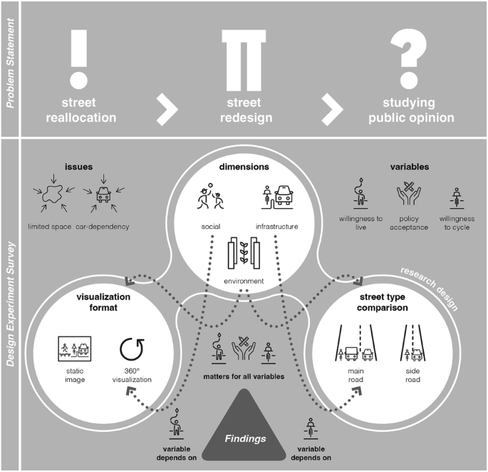
Space for people, not cars: a large-scale visual choice experiment on urban street redesigns
https://www.nature.com/articles/s42949-026-00463-5
 @colinpurrington@flipping.rocks
2026-07-18 09:56:18
Here's somebody's blog post about grackles' fondness for dropping feces in water, written from the perspective of an annoyed koi-pond owner. The author gives the usual explanation that behavior reduces nest predation (presumably because fecal smell is attractant). I couldn't find support for this hypothesis in the primary literature, however. Nor could I find support for the idea that a clean nest reduces parasites such as flesh-eating flies. But I'm not a birdologist so I could have missed the definitive paper. https://www.pondtrademag.com/blackbird-gift-sacs-the-airmail-no-pond-keeper-wants/
@arXiv_csPL_bot@mastoxiv.page2026-07-22 07:43:31
Build-Authorized Evidence for Opaque Calls: A Fail-Closed Rewrite-Authority Boundary
Zhonghua Yi (Toka Language Research Group)
https://arxiv.org/abs/2607.18949 https://arxiv.org/pdf/2607.18949 https://arxiv.org/html/2607.18949
arXiv:2607.18949v1 Announce Type: new
Abstract: Detached semantic facts about opaque native providers do not by themselves justify compiler rewrites: rewrite authority must be confined to the accepted fact, selected provider and build, caller, callback environment, observation, and runtime target. We present a build-authorized path-effect interface that enforces this boundary through fail-closed authorization and link receipts. The design separates receipt closure, callback-environment closure, and projection identity, and passes accepted facts to LLVM through a narrow internal API. We use one-hop topology-load reuse as a minimal observable witness of authority, not as the optimization target.
A conservative LLVM consumer reuses a pointer observation only from a noalias root or one constant nonzero projection. Rocq models prove conditional refinement and authority non-amplification under explicit effect, alias, compiler/ABI, and target-resolution premises. We instantiate checked production with Toka: a source-summary gate emits exact LLVM IR, a separate IR checker accepts only a bounded topology-preserving subset, and only accepted IR is compiled into the receipt-bound provider object. A bounded static Darwin/arm64 profile also checks the final direct branch target.
Across issuer-declared readv, recvmsg, and Cairo boundaries, authorized IR retains each opaque call, reduces the relevant loads from two to one, and preserves observed results; mismatched providers, builds, callbacks, projections, and unsupported IR remain neutral. A libjpeg case is rejected because its callback environment is open, while a bound callback singleton demonstrates the supported closure rule. The contribution is a checked deployment-compiler boundary with an explicit trust and applicability frontier, not a uniquely expressive effect encoding or a new load-elimination algorithm.
toXiv_bot_toot
@Techmeme@techhub.social2026-07-15 10:46:06
Samsung unveils a new Flex Titanium foldable display that is slimmer, more durable, and less prone to creasing, debuting in its upcoming Galaxy Z Fold 8 series (Jess Weatherbed/The Verge)
https://www.theverge.com/tech/965850/samsung-display-flex-titanium-g…