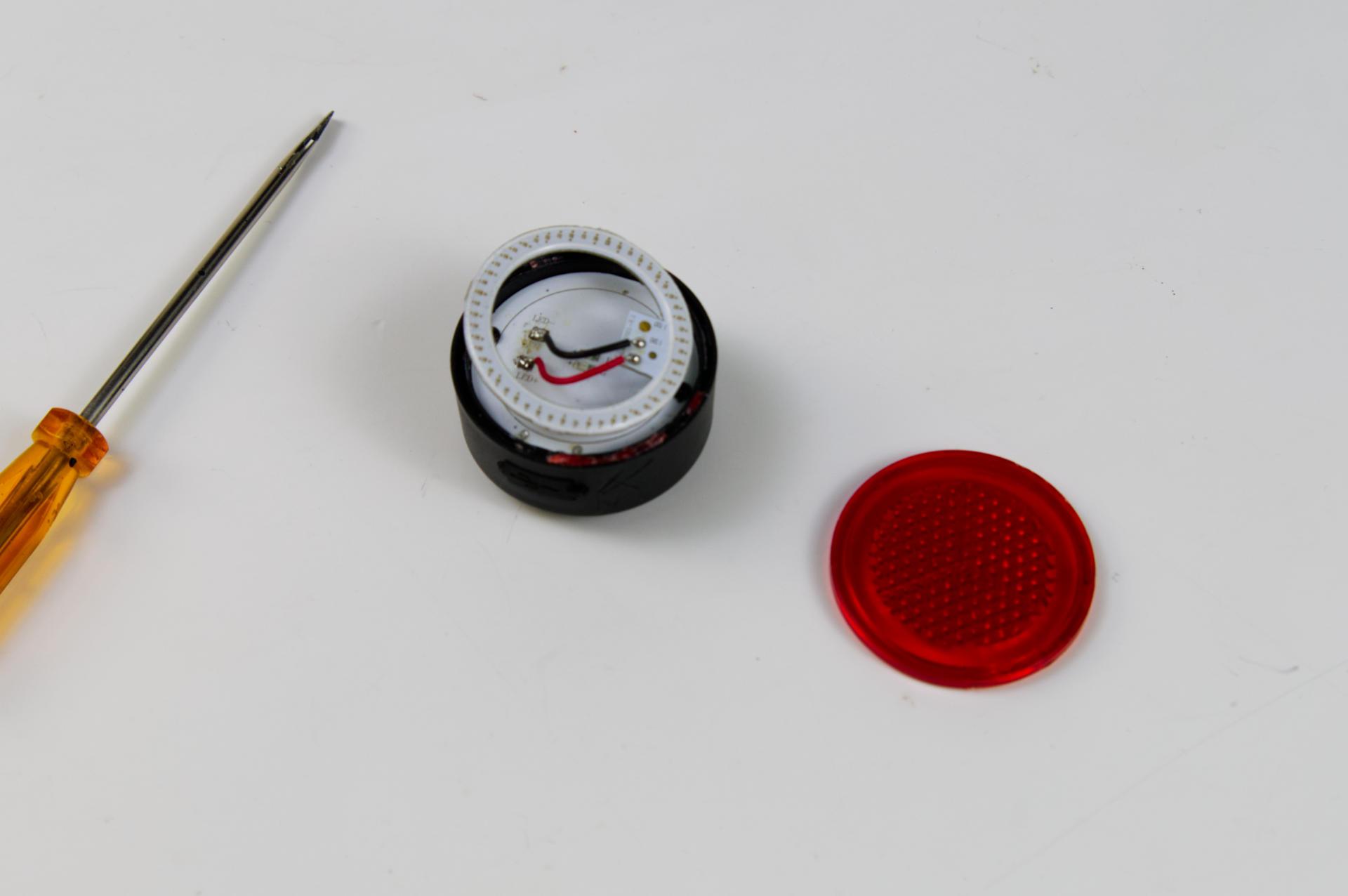
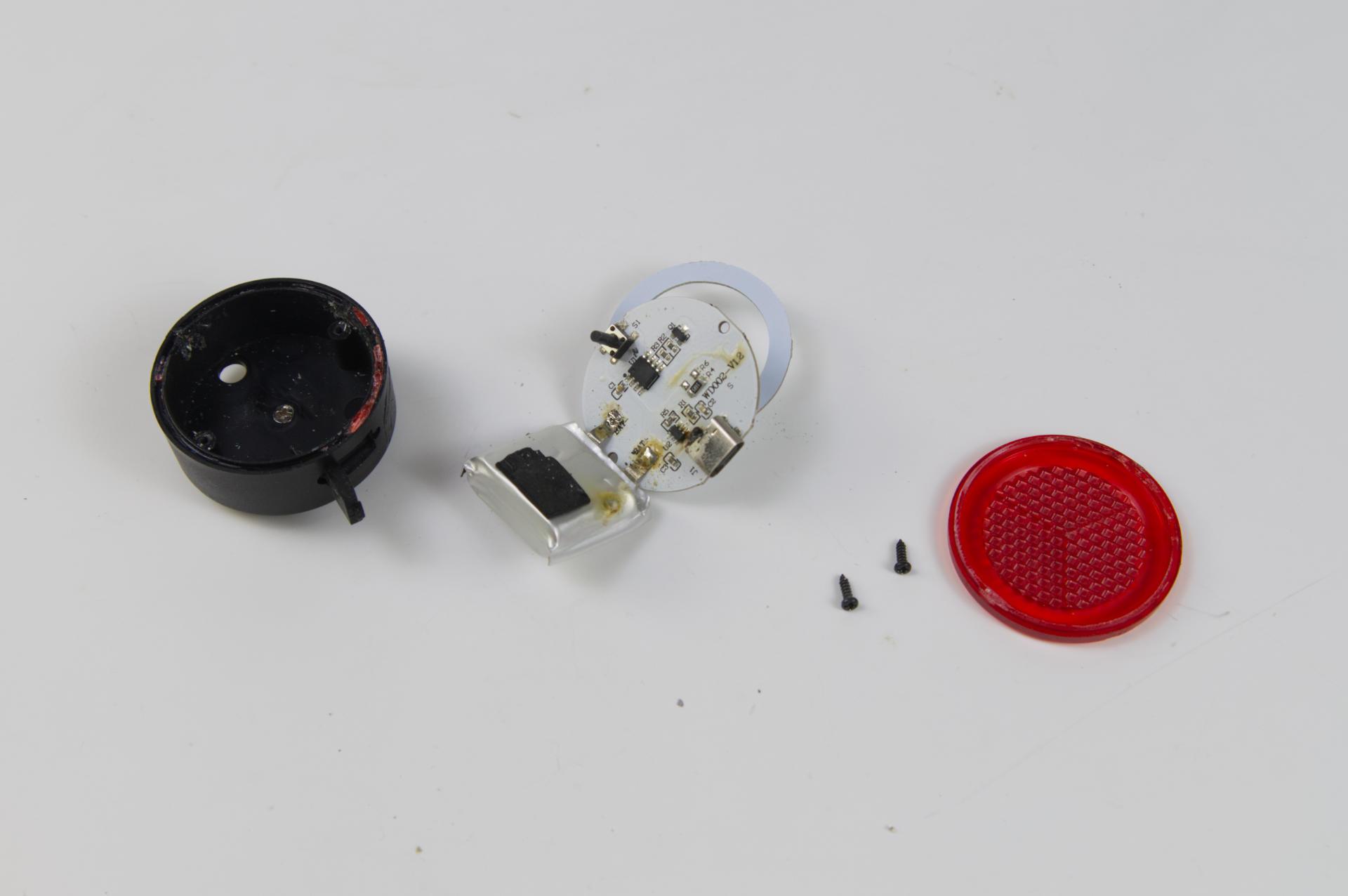
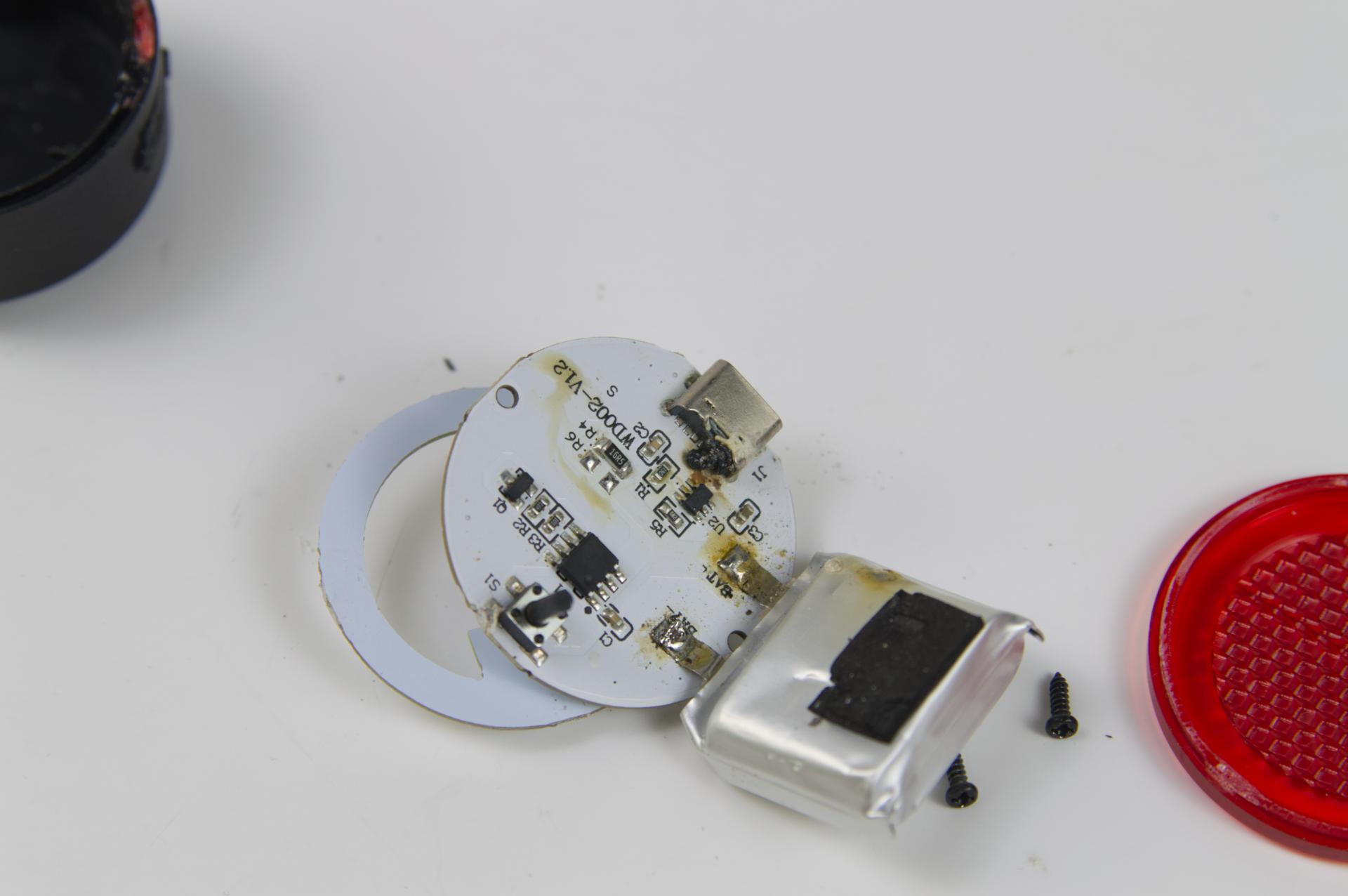
Remember that smokin' USB bike light I had back in May? Well, I opened it up. The charge circuit is fried, the battery, ehh, not sure yet... but the LED ring still works fine.
I may try to rebuild it using the LED ring and red reflector. Replacing the power and electronics.
Replaced article(s) found for physics.app-ph. https://arxiv.org/list/physics.app-ph/new
[1/1]:
- Reflector-Free, Highly Confined Love-Like SAWs Enabled by a Phononic Metasurface for Real-Time Mo...
Monaldi, Kosior, Mart\'inez, Badie, Alem, Sarry, Oudich
https://arxiv.org/abs/2604.24436 https://mastoxiv.page/@arXiv_physicsappph_bot/116481341300116455
- A Rapid Reconstruction Method of Gamma Radiation Field based on Normalized Proper Orthogonal Deco...
Kai Tan, Hojoon Son, Fan Zhang
https://arxiv.org/abs/2505.07088 https://mastoxiv.page/@arXiv_physicsmedph_bot/114499371059179663
- A universal framework for nonlinear frequency combs under electro-optic modulation
Xue, Lv, Wu, Lei, Cao, Lei, Wang, Zhu, Li, Gong, Zhu, Hu
https://arxiv.org/abs/2511.21059 https://mastoxiv.page/@arXiv_physicsoptics_bot/115620753361832407
toXiv_bot_toot
Imaging of ultrasound specularity at cortical bone interfaces to detect unbalanced remodeling: A preliminary study
Amadou S. Dia, Salom\'e Vignat, Guillaume Renaud, Quentin Grimal
https://arxiv.org/abs/2607.16791 https://arxiv.org/pdf/2607.16791 https://arxiv.org/html/2607.16791
arXiv:2607.16791v1 Announce Type: new
Abstract: The region near the interface between cortical bone and the medullary cavity (the endosteal surface) is of particular interest for the early detection of osteoporosis. This region is typically the first to exhibit signs of unbalanced remodeling (enlarged pores and increased surface roughness). In this study, we analyze ultrasound reflection at the endosteal surface to introduce a novel potential biomarker of cortical bone health based on specularity. Our hypothesis is that increased pore size and surface roughness enhance ultrasound scattering, thereby reducing specular reflection. We reconstruct maps of specularity by combining a signal processing technique initially designed to enhance specular reflectors in soft tissues with a beamforming technique that accounts for refraction at bone soft tissue interfaces. Specularity values (between 0 and 1) quantify the similarity between received signals and signals from an ideal specular reflector. Using numerical simulations and ex vivo measurements with a 2.5 MHz phased array we highlight a strong relationship between specularity and bone microstructure, as assessed by high-resolution micro-computed tomography. Among 12 regions of interest (ROI) in the femoral bone of three donors, 8 ROIs without large pores showed high specularity (>0.5) in over 50% of pixels, in contrast to 4 ROIs with signs of extensive remodeling. Both pore volume fraction and pore size were strongly associated with specularity. In simple linear regression analyses, each parameter individually explained 84% of the variability in specularity. These findings suggest that specularity reflects bone microstructure and may potentially serve as a sensitive marker for identifying cortical bone degradation near the endosteal surface.
toXiv_bot_toot
 @Mediagazer@mstdn.social