 @laxsill@social.spejset.org
2026-04-13 07:04:46
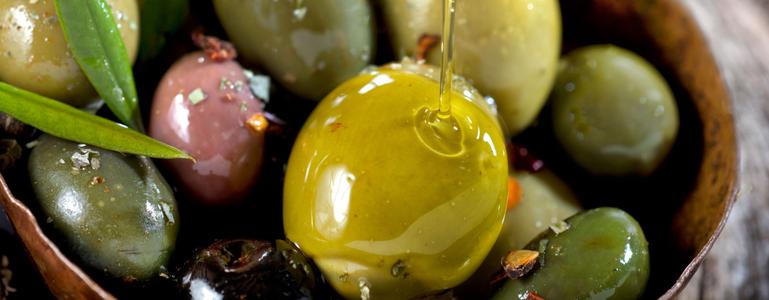
Ok #drinkklubben. För en vegetarian har jag väldigt mycket "äta hela djuret"-mentalitet, så jag älskar såklart Dirty Martini. Jag tänker att man får göra vilken variant man vill, och får pluspoäng för kreativitet.
1) här är ett grundrecept
 @blakes7bot@mas.torpidity.net
2026-02-13 13:33:37
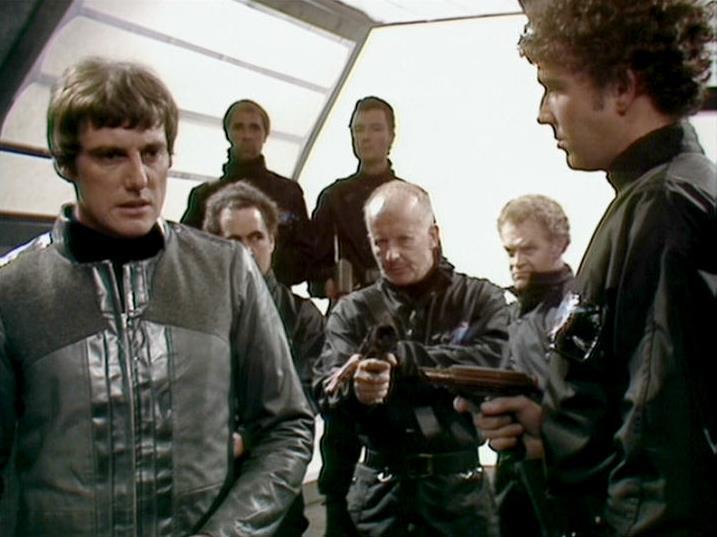
Series C, Episode 02 - Powerplay
KLEGG: You were supposed to have searched the ship. These two should have been found. Where were you hiding?
DAYNA: We weren't hiding. We've...
https://blake.torpidity.net/m/302/5 B7B3
 @markhburton@mstdn.social
2026-02-25 08:51:11
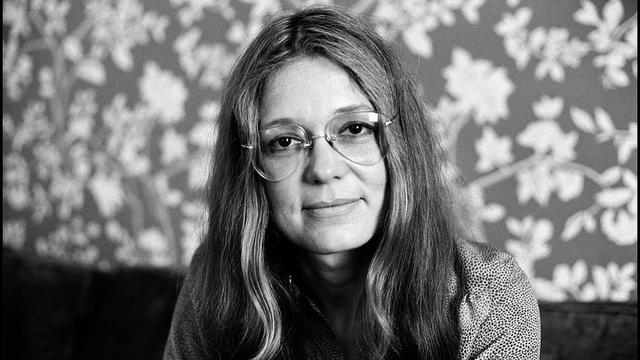
Feminist Icon Gloria Steinem Was An Anti-Communist CIA Operative who Kept Feminism From Discussing Class
https://hrnews1.substack.com/p/feminist-icon-gloria-steinem-was
 @arXiv_csLG_bot@mastoxiv.page
2026-02-25 10:35:21
WeirNet: A Large-Scale 3D CFD Benchmark for Geometric Surrogate Modeling of Piano Key Weirs
Lisa L\"uddecke, Michael Hohmann, Sebastian Eilermann, Jan Tillmann-Mumm, Pezhman Pourabdollah, Mario Oertel, Oliver Niggemann
https://arxiv.org/abs/2602.20714 https://arxiv.org/pdf/2602.20714 https://arxiv.org/html/2602.20714
arXiv:2602.20714v1 Announce Type: new
Abstract: Reliable prediction of hydraulic performance is challenging for Piano Key Weir (PKW) design because discharge capacity depends on three-dimensional geometry and operating conditions. Surrogate models can accelerate hydraulic-structure design, but progress is limited by scarce large, well-documented datasets that jointly capture geometric variation, operating conditions, and functional performance. This study presents WeirNet, a large 3D CFD benchmark dataset for geometric surrogate modeling of PKWs. WeirNet contains 3,794 parametric, feasibility-constrained rectangular and trapezoidal PKW geometries, each scheduled at 19 discharge conditions using a consistent free-surface OpenFOAM workflow, resulting in 71,387 completed simulations that form the benchmark and with complete discharge coefficient labels. The dataset is released as multiple modalities compact parametric descriptors, watertight surface meshes and high-resolution point clouds together with standardized tasks and in-distribution and out-of-distribution splits. Representative surrogate families are benchmarked for discharge coefficient prediction. Tree-based regressors on parametric descriptors achieve the best overall accuracy, while point- and mesh-based models remain competitive and offer parameterization-agnostic inference. All surrogates evaluate in milliseconds per sample, providing orders-of-magnitude speedups over CFD runtimes. Out-of-distribution results identify geometry shift as the dominant failure mode compared to unseen discharge values, and data-efficiency experiments show diminishing returns beyond roughly 60% of the training data. By publicly releasing the dataset together with simulation setups and evaluation pipelines, WeirNet establishes a reproducible framework for data-driven hydraulic modeling and enables faster exploration of PKW designs during the early stages of hydraulic planning.
toXiv_bot_toot
 @arXiv_mathSG_bot@mastoxiv.page
2026-03-23 07:59:33
Information Geometry via the Q-Root Transform
Levin Maier
https://arxiv.org/abs/2603.20081 https://arxiv.org/pdf/2603.20081 https://arxiv.org/html/2603.20081
arXiv:2603.20081v1 Announce Type: new
Abstract: In this paper, we introduce \emph{$\ell^p$-information geometry}, an infinite-dimensional framework that shares key features with the geometry of the space of probability densities \( \mathrm{Dens}(M) \) on a closed manifold, while also incorporating aspects of measure-valued information geometry. We define the \emph{$\ell^2$-probability simplex} with a noncanonical differentiable structure induced via the \emph{$q$-root transform} from an open subset of the \( \ell^q \)-sphere. This choice makes the \(q\)-root transform an \emph{isometry} and allows us to construct the \(\ell^2\)- and \(\ell^q\)-Fisher--Rao geometries, including \emph{Amari--\v{C}encov \(\alpha\)-connections} and a \emph{Chern connection} in the \(\ell^q\)-setting.
We then apply this framework to an infinite-dimensional linear optimization problem. We show that the corresponding gradient flow with respect to the \(\ell^2\)--Fisher--Rao metric can be solved explicitly, converges to a maximizer under a natural monotonicity assumption, and admits an interpretation as the geodesic flow of an \emph{exponential connection}. In particular, we prove that this \(e\)-connection is \emph{geodesically complete}. We further relate these flows to a \emph{completely integrable Hamiltonian system} through a \emph{momentum map} associated with a Hamiltonian torus action on infinite-dimensional complex projective space.
Finally, inspired by the \(\ell^2\)-theory, we outline an analogous Fisher--Rao geometry for \( \mathrm{Dens}(M) \) on possibly noncompact Riemannian manifolds, showing that, with a suitable spherical differentiable structure, the square-root transform remains an \emph{isometry}.
toXiv_bot_toot
 @cosmos4u@scicomm.xyz
2026-03-19 21:49:55
A super long #NovayaZemlya #mirage phenomenon at #sunset in real-time: https://www.youtube.com/watch?v=98cU4zjmSbs with stills in https://spaceweathergallery2.com/indiv_upload.php?upload_id=231610 - the Sun was still visible when more than 3° below the geometrical horizon!
 @servelan@newsie.social
2026-01-17 17:03:22
"The attorneys general of California and nearly 20 other states to submit a comment letter on the US Department of Health and Human Services’ (HHS) proposed rule that would reverse HHS regulations concerning the definition of “disability” under Section 504 of the Rehabilitation Act of 1973 to exclude gender dysphoria, which is the underlying diagnosis for transgender individuals."
‘We Strongly Support The Rights Of Transgender People’
https://washingtoncurrent.substack.com/p/we-strongly-support-the-rights-of
 @relcfp@mastodon.social
2026-01-27 16:10:19
San Sebastiano: l’immagine di un santo tra arte, letteratura e cultura visuale
https://ift.tt/8L0nYZG
CFP: [FRISTVERLÄNGERUNG] Variations 28/2021: Gender through technology (25.09.2021) Call…
via Input 4 RELCFP
 @arXiv_csGR_bot@mastoxiv.page
2026-01-30 08:16:47
Mesh Splatting for End-to-end Multiview Surface Reconstruction
Ruiqi Zhang, Jiacheng Wu, Jie Chen
https://arxiv.org/abs/2601.21400 https://arxiv.org/pdf/2601.21400 https://arxiv.org/html/2601.21400
arXiv:2601.21400v1 Announce Type: new
Abstract: Surfaces are typically represented as meshes, which can be extracted from volumetric fields via meshing or optimized directly as surface parameterizations. Volumetric representations occupy 3D space and have a large effective receptive field along rays, enabling stable and efficient optimization via volumetric rendering; however, subsequent meshing often produces overly dense meshes and introduces accumulated errors. In contrast, pure surface methods avoid meshing but capture only boundary geometry with a single-layer receptive field, making it difficult to learn intricate geometric details and increasing reliance on priors (e.g., shading or normals). We bridge this gap by differentiably turning a surface representation into a volumetric one, enabling end-to-end surface reconstruction via volumetric rendering to model complex geometries. Specifically, we soften a mesh into multiple semi-transparent layers that remain differentiable with respect to the base mesh, endowing it with a controllable 3D receptive field. Combined with a splatting-based renderer and a topology-control strategy, our method can be optimized in about 20 minutes to achieve accurate surface reconstruction while substantially improving mesh quality.
toXiv_bot_toot
@arXiv_csGR_bot@mastoxiv.page2026-02-03 07:44:55
Genus-0 Surface Parameterization using Spherical Beltrami Differentials
Zhehao Xu, Lok Ming Lui
https://arxiv.org/abs/2602.01589 https://arxiv.org/pdf/2602.01589 https://arxiv.org/html/2602.01589
arXiv:2602.01589v1 Announce Type: new
Abstract: Spherical surface parameterization is a fundamental tool in geometry processing and imaging science. For a genus-0 closed surface, many efficient algorithms can map the surface to the sphere; consequently, a broad class of task-driven genus-0 mapping problems can be reduced to constructing a high-quality spherical self-map. However, existing approaches often face a trade-off between satisfying task objectives (e.g., landmark or feature alignment), maintaining bijectivity, and controlling geometric distortion. We introduce the Spherical Beltrami Differential (SBD), a two-chart representation of quasiconformal self-maps of the sphere, and establish its correspondence with spherical homeomorphisms up to conformal automorphisms. Building on the Spectral Beltrami Network (SBN), we propose a neural optimization framework BOOST that optimizes two Beltrami fields on hemispherical stereographic charts and enforces global consistency through explicit seam-aware constraints. Experiments on large-deformation landmark matching and intensity-based spherical registration demonstrate the effectiveness of our proposed framework. We further apply the method to brain cortical surface registration, aligning sulcal landmarks and jointly matching cortical sulci depth maps, showing improved task fidelity with controlled distortion and robust bijective behavior.
toXiv_bot_toot