@Techmeme@techhub.social
2026-10-22 17:03:27
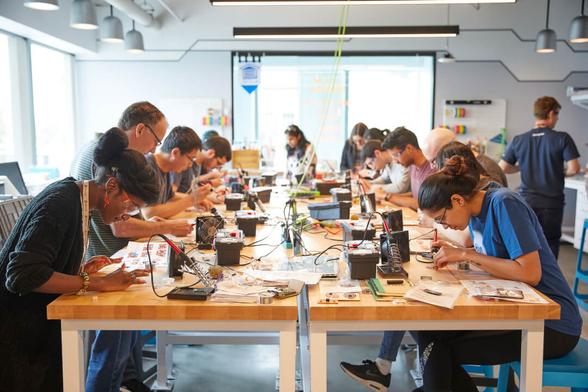
Microsoft says it is closing The Garage, which gave employees around the world space and tools for side projects and ran the company's Global Hackathon (Todd Bishop/GeekWire)
https://www.geekwire.com/2026/microsoft-sh
 @cdarwin@c.im
2026-10-23 15:12:45
Trump says Starlink access restored,
but Ukraine reports more interruptions
The president said SpaceX CEO Elon Musk lifted restrictions on Ukraine’s access to Starshield,
but Ukrainian soldiers said the service was still disrupted Friday.
https://www.
 @Techmeme@techhub.social
2026-10-22 22:26:10
Sources: SpaceX is in talks with at least one major cellular infrastructure firm to secure a minimum of 80K US cell sites, as it eyes a wireless carrier launch (Kelcee Griffis/Bloomberg)
https://www.bloomberg.com/news/articles/20
@cdarwin@c.im2026-10-23 15:10:52
Eleven days after Ukraine's Starshield terminals started mysteriously malfunctioning,
there is still nobody in Washington who will take responsibility,
while Trump administration officials continue pointing fingers firmly at SpaceX CEO Elon Musk.
https://…

 @v_i_o_l_a@openbiblio.social
2026-10-23 06:15:11
"Bullshit universities: the future of automated education"
https://doi.org/10.1007/s00146-025-02340-8
"[…] The dream that AI could teach students effectively neglects the importance of ‘learning how’ in order to ‘learn that’, that teachers are also role models, and t…
 @samvarma@fosstodon.org
2026-10-23 14:06:36
My brother described headless guitars as invoking a kind of body horror among guitarists, similar to the reflexive feelings that surround the subject of amputation, and I can't help thinking he's right.
https://www.

 @kuba@toot.kuba-orlik.name
2026-10-14 16:00:48
What’s Earth’s dominant species by mass?
https://signoregalilei.com/2026/09/27/whats-earths-dominant-species-by-mass/
 @losttourist@social.chatty.monster
2026-10-22 12:46:37
This doesn't add up. According to a UK government spokesperson:
"NCSC was able to make 50,000 proactive notifications [before public disclosure] to advise business and other organisations on what actions they should take" regarding the #PHP debacle.
But I am yet to hear of a single PHP-using site, either in the UK or elsewhere in the world, that hasn't been completely caught on the hop by this.
#php2shell
 @haayman@todon.nl
2026-10-15 05:41:34
Hoe zou het voelen om te weten dat door jouw besluit tientallen mensen gedood worden?
Ukraine Loses Starlink Access as Musk Says Zelenskiy Went “Too Far” | The New Republic
https://newrepublic.com/post/216600/ukraine-loses-starlink-access-musk-z…
 @ckent@urbanists.social
2026-10-02 01:37:17