 @cdarwin@c.im
2026-07-10 03:12:45
NASA has announced that it will release a solicitation related to lunar surface power this month
and that it is considering sending a rover powered by a
"radioisotope thermoelectric generator" (RTG) to the moon.
In a press conference,
NASA Administrator Jared Isaacman and NASA Moon Base Program Manager Carlos García-Galšn discussed new award announcements
to Astrobotic, Firefly Aerospace, and Intuitive machines
to deliver NASA science payloads to…

 @Techmeme@techhub.social
2026-07-06 05:05:32
Shanghai-based AI chipmaker Biren raises ~$892.5M in a new share sale to boost GPU production; Biren's stock is up 150% since its January Hong Kong IPO (Ann Cao/South China Morning Post)
https://www.scmp.com/tech/tech-trends/arti

 @salrandolph@zirk.us
2026-08-20 14:14:47
I’m thrilled to be teaching a class next week with the amazing Sarah Kokernot, fiction writer, essayist, dharma friend, and author of the monthly, Your Wild and Radiant Mind.
The class, More Than Seeing: Writing From Art, will meet online next week Thursday (August 27).
I’d love to see you there!
#Art #writing

 @tiotasram@kolektiva.social
2026-06-29 01:58:24
Thinking about some things that @… said in another thread, and as someone who advocates against AI hype and against the use of most generative AI in most circumstances, I feel it's important to say: many of the ethical issues with using generative AI mirror almost directly the ethical issues with living/working on land stolen by colonists, except that they're less harmful.
Arguments like "well we don't really know whose work it's ripping off this time" and "artists that post their art online know it's going to be looked at; this is the same thing" and "well it's inevitable and everyone's doing it so it's unreasonable to make a big deal about it" directly echo arguments like "well now we don't know whose land it was any more exactly" (yes, we do; you can literally go look up the website of their descendants), or "the natives weren't really using the land anyways", or "it's all in the past now, and it's unavoidable." That unavoidable one is actually somewhat true of using stolen land, at least compared to LLM usage.
If you can see through those lies in the case of AI hype but choose not to do so in the case of colonialism, that says something about your priorities and allegiances.
This is not at all a call for people to talk less about AI; rather it's a call for those who take opposing AI hype seriously to look around and make some noise about other injustices too (I realize many of you already do this).
#AI #LLMs #LandBack #GenAI
 @arXiv_csAR_bot@mastoxiv.page
2026-08-13 07:42:17
FQTree: Fine-grained Quantization and Hardware Generation of Boosted Decision Trees
Zhiqiang Que, Chang Sun, Haiyang Wang, Dinesh Pamunuwa, Roshan Weerasekera, Qijia Tang, Bakhtiar Zadeh, Wayne Luk, Maria Spiropulu
https://arxiv.org/abs/2608.12140 https://arxiv.org/pdf/2608.12140 https://arxiv.org/html/2608.12140
arXiv:2608.12140v1 Announce Type: new
Abstract: Boosted decision trees (BDTs) are widely used in latency-critical applications, but efficient hardware deployment remains challenging. Existing designs often rely on uniform or manually tuned fixed-point formats, which can introduce unnecessary hardware cost or accuracy loss. This work presents the FQTree algorithm{https://github.com/ecs-bristol/FQTree} for fine-grained quantization-aware training of BDTs, together with the QXGB framework for automatic hardware generation. FQTree introduces a hardware-oriented leaf-value quantization scheme that uses a global quantization step together with a tree-wise shift, enabling compact non-negative integer leaf representations, controlled clipping/pruning, and bias folding to reduce datapath cost. This work further applies this quantization during boosting so that later trees adapt to the errors of the already-quantized ensemble, and then lowers the trained model into low-latency hardware implementations through a compiler-based flow. Results on JSC, MNIST, and NID show that our method reduces LUT usage by 26-57\% compared with the state-of-the-art FPGA-based BDT designs while matching or improving accuracy.
toXiv_bot_toot
@Techmeme@techhub.social2026-07-29 15:36:00
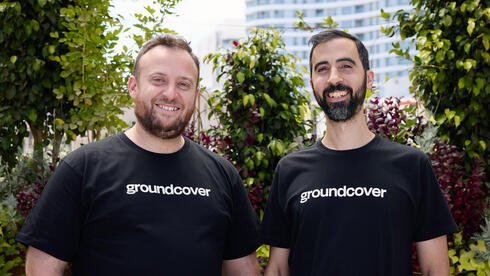
Groundcover, which provides observability software that can monitor AI agents, raised a $100M Series C led by One Peak, bringing its total funding to $160M (Meir Orbach/CTech)
https://www.calcalistech.com/ctechnews/article/r19aupvrme
 @cdarwin@c.im
2026-07-22 20:40:55
Charles Ross has a degree in math and a yen for physics.
He says he can sense celestial alignments, and feel the difference between colors of light in a spectrum.
When he needed a well dug for his desert home, he called a dowser.
The artist, 88, belongs to a generation of land artists who shed galleries and cities to work at a scale more common in ancient Egypt and Mesoamerica.
In 1975, he had been crisscrossing the Southwest for four years, hunting for the perfect…
