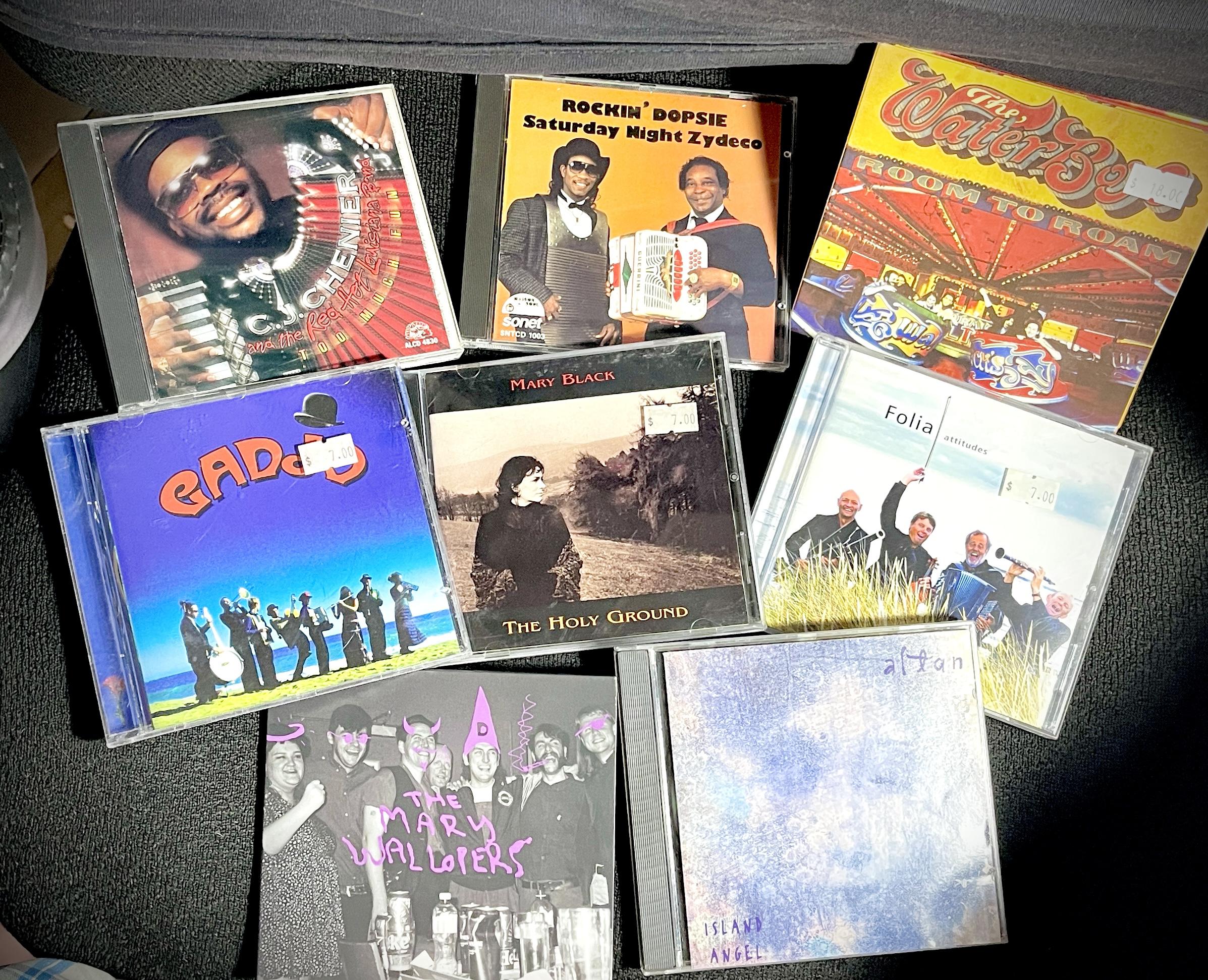
#3GoodThings
Taking Kid2 to the local public pool.
Reading on the porch (for the last time this year?) in the few minutes of sun we had this morning.
Live radio, still my favorite way of discovering musicians I haven't heard before (today's take-away is the Mary Wallopers).
Pretty good analysis from @… but subtleties make it difficult to translate Danish model elsewhere. It's a PR system, so always coalitions many different flavours to vote for; Danish Peoples Party are left on welfare but not on immigration
https://www.theguardian.com/commentisfree/2025/nov/22/danish-model-centre-left-parties-labour-doesnt-work
Freedom for Animals has delved into the dark world of the bird of prey industry for a second time, to carry out a major new investigation as part of our Tether and Torment campaign.
This comes seven years after our landmark 2018 report first brought national attention to the hidden suffering behind the industry, and exposed the continuing welfare failures in UK bird of prey centres.
I recently researched the etymology of two interesting German words:
- "nonchalant" (informal, relaxed, casual, carefree, easy-going): I found that interesting because it's obviously a negation and I never read the non-negated form "chalant". Turns out that the non-negated form goes back to latin "calēre" (warm, to be hot, to be alarmed, to be fired up)
- "verschollen" (lost, missing, nothing has been known about the whereabouts of sth. or sb. for a long time). I found it weird because I couldn't make any sense of "schollen". This might be related to "verschallen" (stop making noise) and might go back to old high German "skellan" (which is also related to German "Schelle", a small bell). So, "verschollen" can be seen as a euphemistic expression because stop making noise is used to refer to being lost (and maybe dead).
#etymology #linguistics #German
Georgia DFCS claims neglect, and also won't let a family see most of their case file.
https://reason.com/2026/01/16/she-let-her-6-year-old-ride-to-the-park-alone-georgia-called-it-neglect/
Replaced article(s) found for cs.LG. https://arxiv.org/list/cs.LG/new
[2/5]:
- The Diffusion Duality
Sahoo, Deschenaux, Gokaslan, Wang, Chiu, Kuleshov
https://arxiv.org/abs/2506.10892 https://mastoxiv.page/@arXiv_csLG_bot/114675526577078472
- Multimodal Representation Learning and Fusion
Jin, Ge, Xie, Luo, Song, Bi, Liang, Guan, Yeong, Song, Hao
https://arxiv.org/abs/2506.20494 https://mastoxiv.page/@arXiv_csLG_bot/114749113025183688
- The kernel of graph indices for vector search
Mariano Tepper, Ted Willke
https://arxiv.org/abs/2506.20584 https://mastoxiv.page/@arXiv_csLG_bot/114749118923266356
- OptScale: Probabilistic Optimality for Inference-time Scaling
Youkang Wang, Jian Wang, Rubing Chen, Xiao-Yong Wei
https://arxiv.org/abs/2506.22376 https://mastoxiv.page/@arXiv_csLG_bot/114771735361664528
- Boosting Revisited: Benchmarking and Advancing LP-Based Ensemble Methods
Fabian Akkerman, Julien Ferry, Christian Artigues, Emmanuel Hebrard, Thibaut Vidal
https://arxiv.org/abs/2507.18242 https://mastoxiv.page/@arXiv_csLG_bot/114913322736512937
- MolMark: Safeguarding Molecular Structures through Learnable Atom-Level Watermarking
Runwen Hu, Peilin Chen, Keyan Ding, Shiqi Wang
https://arxiv.org/abs/2508.17702 https://mastoxiv.page/@arXiv_csLG_bot/115095014405732247
- Dual-Distilled Heterogeneous Federated Learning with Adaptive Margins for Trainable Global Protot...
Fatema Siddika, Md Anwar Hossen, Wensheng Zhang, Anuj Sharma, Juan Pablo Mu\~noz, Ali Jannesari
https://arxiv.org/abs/2508.19009 https://mastoxiv.page/@arXiv_csLG_bot/115100269482762688
- STDiff: A State Transition Diffusion Framework for Time Series Imputation in Industrial Systems
Gary Simethy, Daniel Ortiz-Arroyo, Petar Durdevic
https://arxiv.org/abs/2508.19011 https://mastoxiv.page/@arXiv_csLG_bot/115100270137397046
- EEGDM: Learning EEG Representation with Latent Diffusion Model
Shaocong Wang, Tong Liu, Yihan Li, Ming Li, Kairui Wen, Pei Yang, Wenqi Ji, Minjing Yu, Yong-Jin Liu
https://arxiv.org/abs/2508.20705 https://mastoxiv.page/@arXiv_csLG_bot/115111565155687451
- Data-Free Continual Learning of Server Models in Model-Heterogeneous Cloud-Device Collaboration
Xiao Zhang, Zengzhe Chen, Yuan Yuan, Yifei Zou, Fuzhen Zhuang, Wenyu Jiao, Yuke Wang, Dongxiao Yu
https://arxiv.org/abs/2509.25977 https://mastoxiv.page/@arXiv_csLG_bot/115298721327100391
- Fine-Tuning Masked Diffusion for Provable Self-Correction
Jaeyeon Kim, Seunggeun Kim, Taekyun Lee, David Z. Pan, Hyeji Kim, Sham Kakade, Sitan Chen
https://arxiv.org/abs/2510.01384 https://mastoxiv.page/@arXiv_csLG_bot/115309690976554356
- A Generic Machine Learning Framework for Radio Frequency Fingerprinting
Alex Hiles, Bashar I. Ahmad
https://arxiv.org/abs/2510.09775 https://mastoxiv.page/@arXiv_csLG_bot/115372387779061015
- ASecond-Order SpikingSSM for Wearables
Kartikay Agrawal, Abhijeet Vikram, Vedant Sharma, Vaishnavi Nagabhushana, Ayon Borthakur
https://arxiv.org/abs/2510.14386 https://mastoxiv.page/@arXiv_csLG_bot/115389079527543821
- Utility-Diversity Aware Online Batch Selection for LLM Supervised Fine-tuning
Heming Zou, Yixiu Mao, Yun Qu, Qi Wang, Xiangyang Ji
https://arxiv.org/abs/2510.16882 https://mastoxiv.page/@arXiv_csLG_bot/115412243355962887
- Seeing Structural Failure Before it Happens: An Image-Based Physics-Informed Neural Network (PINN...
Omer Jauhar Khan, Sudais Khan, Hafeez Anwar, Shahzeb Khan, Shams Ul Arifeen
https://arxiv.org/abs/2510.23117 https://mastoxiv.page/@arXiv_csLG_bot/115451891042176876
- Training Deep Physics-Informed Kolmogorov-Arnold Networks
Spyros Rigas, Fotios Anagnostopoulos, Michalis Papachristou, Georgios Alexandridis
https://arxiv.org/abs/2510.23501 https://mastoxiv.page/@arXiv_csLG_bot/115451942159737549
- Semi-Supervised Preference Optimization with Limited Feedback
Seonggyun Lee, Sungjun Lim, Seojin Park, Soeun Cheon, Kyungwoo Song
https://arxiv.org/abs/2511.00040 https://mastoxiv.page/@arXiv_csLG_bot/115490555013124989
- Towards Causal Market Simulators
Dennis Thumm, Luis Ontaneda Mijares
https://arxiv.org/abs/2511.04469 https://mastoxiv.page/@arXiv_csLG_bot/115507943827841017
- Incremental Generation is Necessary and Sufficient for Universality in Flow-Based Modelling
Hossein Rouhvarzi, Anastasis Kratsios
https://arxiv.org/abs/2511.09902 https://mastoxiv.page/@arXiv_csLG_bot/115547587245365920
- Optimizing Mixture of Block Attention
Guangxuan Xiao, Junxian Guo, Kasra Mazaheri, Song Han
https://arxiv.org/abs/2511.11571 https://mastoxiv.page/@arXiv_csLG_bot/115564541392410174
- Assessing Automated Fact-Checking for Medical LLM Responses with Knowledge Graphs
Shasha Zhou, Mingyu Huang, Jack Cole, Charles Britton, Ming Yin, Jan Wolber, Ke Li
https://arxiv.org/abs/2511.12817 https://mastoxiv.page/@arXiv_csLG_bot/115570877730326947
toXiv_bot_toot
Selling Privacy in Blockchain Transactions
Georgios Chionas, Olga Gorelkina, Piotr Krysta, Rida Laraki
https://arxiv.org/abs/2512.08096 https://arxiv.org/pdf/2512.08096 https://arxiv.org/html/2512.08096
arXiv:2512.08096v1 Announce Type: new
Abstract: We study methods to enhance privacy in blockchain transactions from an economic angle. We consider mechanisms for privacy-aware users whose utility depends not only on the outcome of the mechanism but also negatively on the exposure of their economic preferences. Specifically, we study two auction-theoretic settings with privacy-aware users. First, we analyze an order flow auction, where a user auctions off to specialized agents, called searchers, the right to execute her transaction while maintaining a degree of privacy. We examine how the degree of privacy affects the revenue of the auction and, broadly, the net utility of the privacy-aware user. In this new setting, we describe the optimal auction, which is a sealed-bid auction. Subsequently, we analyze a variant of a Dutch auction in which the user gradually decreases the price and the degree of privacy until the transaction is sold. We compare the revenue of this auction to that of the optimal one as a function of the number of communication rounds. Then, we introduce a two-sided market - a privacy marketplace - with multiple users selling their transactions under their privacy preferences to multiple searchers. We propose a posted-price mechanism for the two-sided market that guarantees constant approximation of the optimal social welfare while maintaining incentive compatibility (from both sides of the market) and budget balance. This work builds on the emerging line of research that attempts to improve the performance of economic mechanisms by appending cryptographic primitives to them.
toXiv_bot_toot
We joined with some friends this morning for a greyhound walk in Bedfont Lakes. I didn't have a hound to bring because the only one I can borrow now is Violet and she's too old to walk that distance. The three people we met up with had 5 dogs between them though, so Lynn let me keep hold of her boy Freddie.
I didn't take any photos because it was really cold and my hands were full! But here's a recent photo of Freddie.
"In truth, no Number fully insulates anyone from life’s vicissitudes. Markets crash, health fails, taxes rise, wars and pestilence break out...."
So, pay your taxes and invest in a welfare safety net, is the unspoken part.
The absurdity of bankers’ retirement fund targets - https://on.ft.com/4o2NNbV