 @hex@kolektiva.social
2025-12-18 19:13:23
The #IWW #GDC as an antifascist organization was always kind of a hack. It was a beautiful hack and it worked well for what it did.
In 2016, as Trump was rising, I found info from the Twin Cities GDC. They were super organized, building an amazing community defense organization. When we (Seattle) went to set up our chapter, following their lead, they were extremely supportive. When I got shot, Twin Cities folks were at my house keeping my partner safe. They literally flew people out to support us. They very much remain in my mind when I think about what mutual aid looks like.
Unionism is an important strategy of a larger fight. But it's important to realize that it's not the other way around. The GDC was built to defend the union, because there wasn't something larger to do that work. It filled a gap.
When we organized against Trump, we tried to make the GDC the greater thing. We tried to make the GDC into the vehicle for social revolution against the fascist threat... And it sort of worked. We were able to do a lot.
But that was never what it was built to do. It was always built as an appendage of the IWW. This contains its own problem. If Unionism is the revolutionary movement, then it becomes impossible to build a truly revolutionary society. Unionism centers "workers" which implicitly decenters those who can't work in the traditional sense (the young, the elderly, those physically or mentally able to work). It also decenters care labor that hasn't yet been widely commodified. Sure, there are all types of hacks to patch the holes, but the fundamental construction starts from the wrong assumptions.
It felt, for a while, like things could go another way. Like that our ability to bring members in could shift things a bit, maybe set the GDC on more equal footing with the core focus of the IWW. But that was always an illusion, far less important to think about than the crushing terror of the regime we were fighting.
Now, I will absolutely trash talk the IWW on occasion but in the end I do think they're doing good and important work. Any criticism I have should be taken with a grain of salt... And I know I do have a lot of salt. Again, Unionism is an important strategy. It's useful both in improving immediate material conditions and as part of the most powerful weapon we have against the capitalist system: the general strike. It's important, I can't say that enough. But it's not sufficient.
I've been thinking about this a bit recently, and I wonder if there are any other GDC organizers or former organizers who might be feeling the same. Feel free to DM me. I'd like to get some more perspectives and see if my understanding from several years ago deviates significantly from what other folks are feeling right now.
I'd also like to bounce some ideas around that come from my own organizing experience.
 @mariyadelano@hachyderm.io
2025-11-14 21:05:53
So I grew up next to #Chernobyl and this is, well, TERRIFYING.
A story for y’all: I’m from a city called Zhytomyr, 2 hours west of Kyiv in the North of #Ukraine. We were downwind of the Chernobyl #nuclear power plant when the 1986 disaster happened.
I wasn’t born for another 12 years, but my childhood was filled with stories and the aftermath of it all. Things like:
- My grandmother worked as a head doctor in a hospital and rehabilitation facility exclusively for children of Chernobyl victims to treat the extremely high prevalence of Tuberculosis and other severe health complications. (To specify: these were SECOND GENERATION of exposure).
- A lot of the kids in that facility were orphans, because their parents died young from health problems.
- My uncle’s wife was born in Pripyat. She was 1 year old when the disaster happened. Her parents were told to evacuate while given no information about what happened. They had to pack up their things and rush out to an unfamiliar city with their baby, never to see the rest of their belongings, apartment, or hometown again.
- When I was a kid, it became so common to see weirdly mutated animals and insects that even 2-3 year olds would make jokes about “Chernobyl mosquitos” and I wouldn’t even flinch seeing occasional giant bugs, dark frogs, weird-looking dogs.
- We’d frequently hear of nearby farms having issues with their animals being born too mutated to survive or random outbreaks from contaminated water / food. Crops would randomly fail. People would get poisoned on a regular basis. This all got less common as I grew up.
- My mother still remembers being a little girl, 10 years old, and looking outside from their balcony at the clouds blowing over from Chernobyl that day. People were told to not go outside and to shut all the windows, but not given an explanation as to why. My mother swears that the rain looked different. They weren’t able to go and buy more food for the kitchen for multiple days.
Anyway - nuclear safety isn’t a joke. I don’t understand how this level of carelessness can happen after Chernobyl and Fukushima.
https://www.404media.co/power-companies-are-using-ai-to-build-nuclear-power-plants/
 @pre@boing.world
2025-11-23 17:45:52
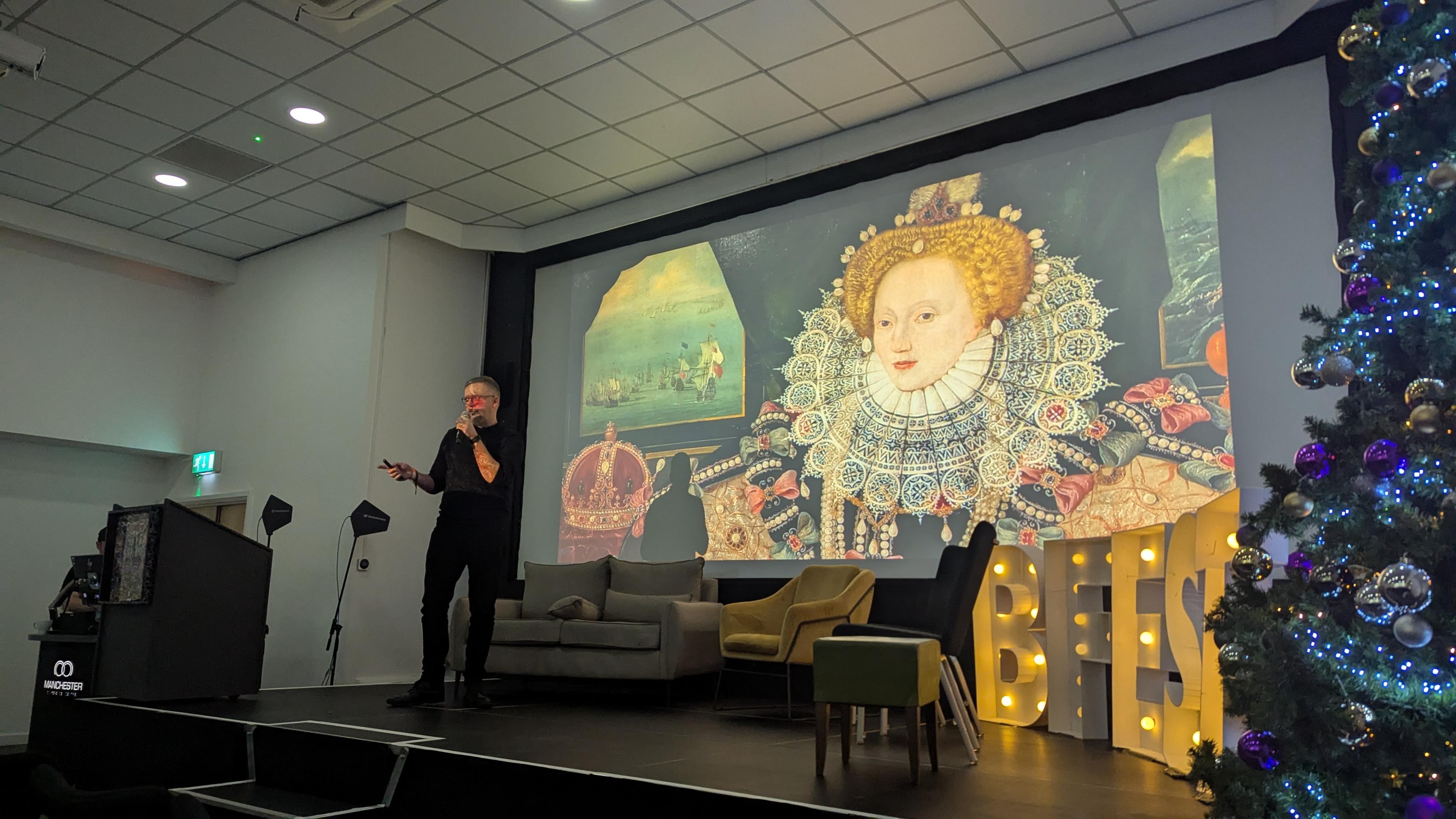
Finally, Martin from BTC Prague wonders how to empower bitcoiners in the UK.
He's inspired by many UK scientists and artists and creators.
But he thinks it's declining. Socialism and regulation reducing freedom.
His home country had a peaceful velvet revolution, ending communism in the 80s.
And it now has a law that there is no capital gains tax on long term held bitcoin!
The UK, he thinks, needs to build new strong bitcoin based money to have it's own peaceful revolution.
#bitfest #bitcoin #uk
 @mgorny@social.treehouse.systems
2025-10-02 17:42:42
"""
Traditional politics of assistance and the repression of unemployment were now called into question. The need for reform became urgent.
Poverty was gradually separated from the old moral confusions. Economic crises had shown that unemployment could not be confused with indolence, as indigence and enforced idleness spread throughout the countryside, to precisely the places that had previously been considered home to the purest and most immediate forms of moral life. This demonstrated that poverty did not solely fall under the order of the fault: ‘Begging is the fruit of poverty, which in turn is the consequence of accidents in the production of the earth or in the output of factories, of a rise in the price of basic foodstuffs, or of growth of the population, etc.’ Indigence became a matter of economics.
But it was not contingent, nor was it destined to be suppressed forever. There would always be a certain quantity of poverty that could never be effaced, a sort of fatal indigence that would accompany all forms of society until the end of time, even in places where all the idle were employed: ‘The only paupers in a well governed state must be those born in indigence, or those who fall into it by accident.’ This backdrop of poverty was somehow inalienable: whether by birth or accident, it formed an inevitable part of society. The state of lack was so firmly entrenched in the destiny of man and the structure of society that for a long time the idea of a state without paupers remained inconceivable: in the thought of philosophers, property, work and indigence were terms linked right up until the nineteenth century.
This portion of poverty was necessary because it could not be suppressed; but it was equally necessary in that it made wealth possible. Because they worked but consumed little, a class of people in need allowed a nation to become rich, to release the value of its fields, colonies and mines, making products that could be sold throughout the world. An impoverished people, in short, was a people that had no poor. Indigence became an indispensable element in the state. It hid the secret but most real life of society. The poor were the seat and the glory of nations. And their noble misery, for which there was no cure, was to be exalted:
«My intention is solely to invite the authorities to turn part of their vigilant attention to considering the portion of the People who suffer … the assistance that we owe them is linked to the honour and prosperity of the Empire, of which the Poor are the firmest bulwark, for no sovereign can maintain and extend his domain without favouring the population, and cultivating the Land, Commerce and the Arts; and the Poor are the necessary agents for the great powers that reveal the true force of a People.»
What we see here is a moral rehabilitation of the figure of the Pauper, bringing about the fundamental economic and social reintegration of his person. Paupers had no place in a mercantilist economy, as they were neither producers nor consumers, and they were idle, vagabond or unemployed, deserving nothing better than confinement, a measure that extracted and exiled them from society. But with the arrival of the industrial economy and its thirst for manpower, paupers were once again a part of the body of the nation.
"""
(Michel Foucault, History of Madness)
 @Techmeme@techhub.social
2025-10-18 13:46:03
An interview with Cloudflare CEO Matthew Prince on the company's new Content Signals Policy, which lets sites fine tune how their data can be used by crawlers (Samuel Axon/Ars Technica)
https://arstechnica.com/ai/2025/10/inside-the-web-i…

 @cdarwin@c.im
2025-12-14 18:24:03
US companies are gathering for the spoils.
One contender, the Guardian has learned, is Gothams LLC, a politically connected contractor that won a $33m contract to help run the notorious south Florida detention center nicknamed
“Alligator Alcatraz”,
where immigrants are housed in tents and trailers.
Documents and three people familiar with the plans say that the contractor had an “inside track” to secure what might be the most lucrative contract it’s ever had.
Bu…
 @AimeeMaroux@mastodon.social
2025-12-14 10:19:34
It's the #DayOfHelios / Sol's Day / #Sunday! ☀️
"O daughter, to take the juices of herbs and spices, which the great god Helios Mithras ordered to be revealed to me by his archangel, so that I alone may ascend into heaven as an inquirer and behold the universe."
Line …
 @Techmeme@techhub.social
2025-12-15 06:11:06
Filing: Oracle signed ~$150B of data center leases in the three months ending November 30, raising its total data center and cloud capacity commitments to $248B (Martin Peers/The Information)
https://www.theinformation.com/briefings/o
 @hex@kolektiva.social
2025-10-07 20:39:38
Now, for any person with a shred of moral dignity, there's some time during US history where you would have to admit that an insurrection or rebellion was necessary. Only complete scum bag fascists would try to argue that a slave revolt wasn't an absolute good, and that it was a bad thing when those revolts were crushed. Anyone with a shred of moral decency has to admit that there is at least one point in US history where the nation was doing something so incredibly evil, that it would have been good if people would have rose up and stopped it.
Today we're talking about the displacement and genocide of people in Gaza. We can look at any number of genocide on US soil carried out by the US government. Who, with any moral clarity, wouldn't point to those and want to believe that they would have resisted, violently if necessary, against those slaughters. Who, that today condemns slavery, could look at John Brown and not wish to have the moral integrity to fight and die along side of him?
Every liberal who actually believes in justice, who isn't just virtue signaling out of guilt, should be able to point to a time in history where they would absolutely agree with the most militant resistance. For those folks, I always wonder, when did that evil end? Where is your line? Have you thought about that?