 @Techmeme@techhub.social
2026-09-14 16:25:47
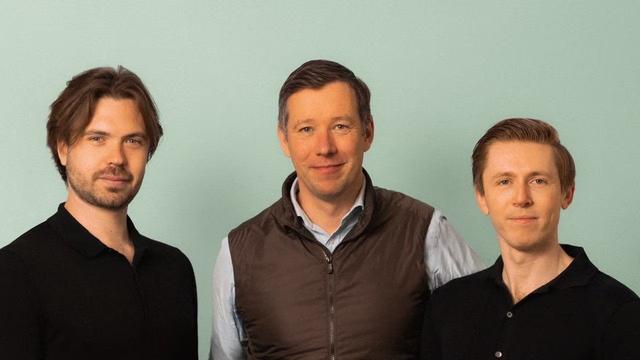
Stockholm-based Tandem Health, which offers clinicians an AI copilot that generates medical notes during patient consultations, raised a $100M Series B (John Reynolds/Tech.eu)
https://tech.eu/2026/09/14/swedish-healthtech-…
 @ruari@velocipederider.com
2026-09-13 18:01:03
I came across this short, factual documentary.
The video from is lifted from Instagram but I am re-sharing it here, as it is the type of daily interaction that all unicyclists can related to.
https://www.instagram.com/reel/DaWF2PkSrit/

 @penguin42@mastodon.org.uk
2026-09-14 14:18:12
(Edit: All identified by @… thanks!)
Hello is this the #berrydon help desk?
I'm unsure what any of these things are - although I bet the birds will like them.
(That's not an apple in the 3rd one, it's much smaller only maybe 1cm - and see th…


 @sonnets@bots.krohsnest.com
2026-10-13 11:25:03
Sonnet 150 - CL
O! from what power hast thou this powerful might,
With insufficiency my heart to sway?
To make me give the lie to my true sight,
And swear that brightness doth not grace the day?
Whence hast thou this becoming of things ill,
That in the very refuse of thy deeds
There is such strength and warrantise of skill,
That, in my mind, thy worst all best exceeds?
Who taught thee how to make me love thee more,
The more I hear a…
 @roelgrif@mstdn.social
2026-08-12 15:25:11
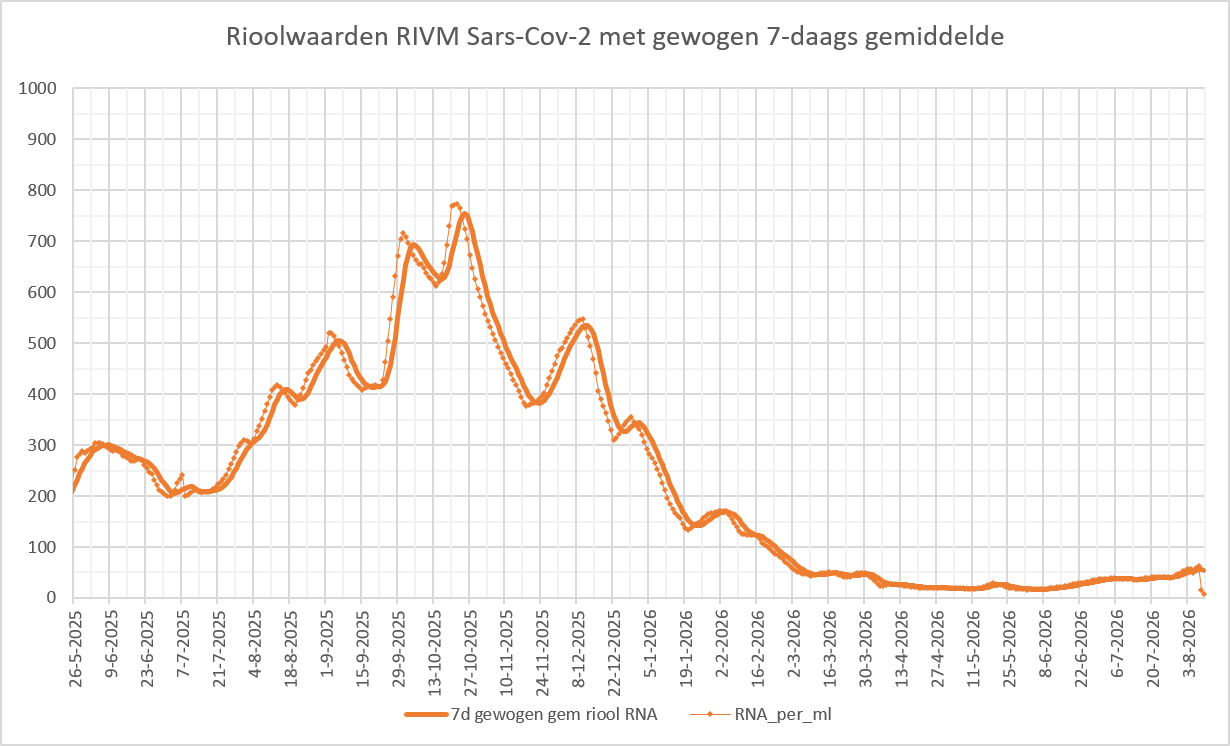
RIVM update rioolwaarden en percentage positief Sars-Cov-2.
Met vandaag een lichte stijging, tot boven de 50.
Nu zul je zeggen, hoe kan dat? vorige week rond de 30 en nu een 'lichte' stijging??
Dat leg ik hieronder verder uit.
In ieder geval zitten er 10 nieuwe dagen in de data: 30 juli t/m 8 aug. De laatste 4 dagen betreffen (ruim) minder dan 50% van de meetstations.
#qp2t
 @simon_brooke@mastodon.scot
2026-08-13 09:23:29
#WeatherScience people, can someone identify where this image is sourced from, and tell me how I can find similar relative humidity charts for other dates/times?
It looks like #MetOffice data, but I cannot find it on `digital.nmla.metoffice.gov.uk`
 @grumpybozo@toad.social
2026-08-09 16:03:47
Yeah, good luck with that for Safari users...
These are the top and bottom parts of 2 loads of that page a few seconds apart. Not private windows, no browser restart or other trickery. It can’t even settle on a CPU or screen size in the same load. It is apparently using 2 different sources for CPU type and for screen dimensions. I have not told Safari to claim that it is on Intel, that appears to be an Apple choice.
![Screenshot of the tail end of the cited page. Relevant text:
SCREEN RESOLUTION 1026 × 1063
1 in 793,651
[…]
THE RECEIPT
Putting it together: roughly 1 in 129.2 million browsers look like yours. None of this used a cookie. how?
Your device fingerprint, this visit:
fa6527ab
26.9 bits of entropy • assembled from 153 signals
Show me the raw data
Forget me](https://cdn.toad.social/media_attachments/files/117/066/394/719/848/154/original/28309a0f863e80ae.jpeg)
![Screenshot of the tail end of the cited page. Relevant text:
SCREEN RESOLUTION 1000 × 1022
1 in 793,651
[…]
THE RECEIPT
Putting it together: roughly 1 in 129.2 million browsers look like yours. None of this used a cookie. how?
Your device fingerprint, this visit:
744dca9f
26.9 bits of entropy • assembled from 153 signals
Show me the raw data
Forget me](https://cdn.toad.social/media_attachments/files/117/066/394/775/592/028/original/954def1979323422.jpeg)
![Screenshot of the top of the same loaded page, relevant text:
• I didn't set a cookie. [FG] [WP 5974]
This page set none. It asked for zero permissions. You have clicked nothing.
And yet.
Nice machine, by the way. an Intel Mac (a vintage one).
8 CPU cores that it admits to and a 2500x2555 display. Doing its best, honestly.
Bit of an old ahh device, though. Time for an upgrade maybe... in this economy.
Anyway. Let me show you the rest of what I already know about you.
WHERE YOU ARE
Your intern…](https://cdn.toad.social/media_attachments/files/117/066/394/846/896/777/original/afcff4920d84fc0f.jpeg)
![Screenshot of the top of the same loaded page, relevant text:
I didn't set a cookie. [FG] [WP5805]
This page set none. It asked for zero permissions. You have clicked nothing.
And yet.
Nice machine, by the way. an Intel Mac (a vintage one).
8 CPU cores that it admits to and a 2565x2658 display. Doing its best, honestly.
Bit of an old ahh device, though. Time for an upgrade maybe... in this economy.
Anyway. Let me show you the rest of what I already know about you.
WHERE YOU ARE
Your internet…](https://cdn.toad.social/media_attachments/files/117/066/394/924/989/694/original/0588234bc7c8c90a.jpeg)
 @arXiv_mathST_bot@mastoxiv.page
2026-08-14 08:12:26
On the Structural Limits of Machine Learning Decision Systems: An Information-Theoretic, Interaction-Based, and Stochastic-Dynamical Perspective
Nestor R. Barraza, Gabriel Pena
https://arxiv.org/abs/2608.13510 https://arxiv.org/pdf/2608.13510 https://arxiv.org/html/2608.13510
arXiv:2608.13510v1 Announce Type: new
Abstract: Machine learning procedures are commonly evaluated in terms of predictive accuracy and computational efficiency. However, their achievable performance is fundamentally constrained by structural properties of the underlying data-generating process, which are formalized in terms of informational bounds. In this work we examine intrinsic limits of data-driven decision systems from an information-theoretic and interaction-based perspective. We analyze minimal achievable error in classification through Fano-type bounds and precision limits in parametric estimation via the Cram\'er-Rao inequality, emphasizing that such limits depend on the underlying model rather than on algorithmic sophistication alone. We further discuss how implicit assumptions, such as independence, ergodicity, and distributional stability, affect the validity of inferential procedures. Building on interaction-based modeling principles, we review typical frameworks such as Markov Random Fields and potential based representations for encoding dependence mechanisms. We also describe decision systems, including LLM-integrated agent architectures, as feedback-driven stochastic processes where state-dependent dynamics may induce emergent macroscopic behavior. This perspective highlights the importance of having adequate models for the data as a prerequi- site for expanding predictive capability, and situates algorithmic learning within the informational limits imposed by the models.
toXiv_bot_toot
 @Marwe@troet.cafe
2026-10-11 23:54:48
Wir müssen uns bei der Ukraine erneut bedanken: die Angriffe auf Russlands Yandex Datencenter reduzieren in Deutschland die Bot-Angriffswelle der AfD und lähmt damit die elektornische Kriegführung gegen unser Land. Bot-Angriffe auf die Demokratie sind um 70% reduziert durch ein paar gezielte Treffer in Russland. Wer es bislang nicht wahrhaben wollte: Russland führt Krieg gegen Deutschland, "hybrid" ist er in vollem Gange und die Unterstützung für Staatsfeinde klar.

 @rasterweb@mastodon.social
2026-08-11 19:13:04
This is the weirdest article... it reads like something from the Onion.
"While driving last week I saw a young adult riding a bicycle. He was probably in his late teens or early twenties. I don't know him or his story, but when I saw him, I felt impressed. I think he reminded me a bit of myself when I wasn't old enough to drive."