 @jake4480@c.im
2026-08-09 18:43:21
Well, they've finally done it. They've found raspberry sugar somewhere else in space https://www.theguardian.com/science/2026/jul/13/natural-sugar-cloud-dust-gas-milky-way-erythrulose

 @m0les@aus.social
2026-07-11 23:51:17
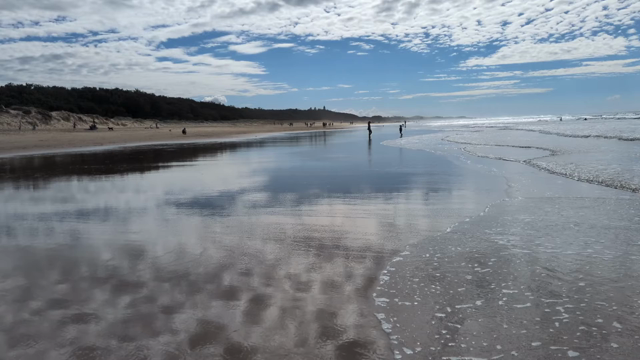
I do love how reflective the sand gets at low tide (Coolum Beach).
 @Mediagazer@mstdn.social
2026-08-04 19:01:06
Jerry Falade, a grad student whose debut novel initially landed a $2M book deal, denies using AI to write it and says such claims are racially motivated (Melissa Korn/Wall Street Journal)
https://www.wsj.com/business/media/author-…
 @cdarwin@c.im
2026-08-24 19:03:05
Progressive California state lawmaker
Aisha Wahab
made history last week in a special election
that will make her the first Afghan American in Congress.
Wahab overcame a flood of attack ads from pro-Israel groups
to beat her Democratic rival, Melissa Hernandez,
in a race to replace disgraced Congressmember Eric Swalwell,
who resigned in April amid allegations of sexual misconduct.
Wahab tells Democracy Now! she appreciates voters in her distri…

 @raiders@darktundra.xyz
2026-09-05 17:38:05
Dolphins Saturday Mailbag: Sullivan, Proctor, Biggers, and More https://www.si.com/nfl/dolphins/onsi/dolphins-saturday-mailbag-sullivan-proctor-biggers-and-more-01m1rm503x2r
 @rasterweb@mastodon.social
2026-08-18 21:52:50
Someone pointed out that David Crowley will need to step down from his role as County Executive of Milwaukee County if/when he is elected Governor...
...and the best thing to do would be to get a *true* progressive (maybe even a Democratic Socialist?) elected to be the new County Executive.
Hell Yeah.
#wisconsin
 @arXiv_astrophGA_bot@mastoxiv.page
2026-07-22 08:14:16
The Large Magellanic Cloud through the lens of the James Webb Space Telescope: Binaries and the mass function in the galaxy's outskirts
M. V. Legnardi, F. Muratore, A. P. Milone, G. Cordoni, E. Dondoglio, L. N. Gorza, A. Bellini, F. Calura, S. Jang, H. Jerjen, A. Karakas, E. P. Lagioia, C. Li, A. Mastrobuono-Battisti, M. Tailo, E. Vesperini, E. Bortolan, A. F. Marino, S. Di Stefano
https://arxiv.org/abs/2607.19260 https://arxiv.org/pdf/2607.19260 https://arxiv.org/html/2607.19260
arXiv:2607.19260v1 Announce Type: new
Abstract: Nearby galaxies such as the Large Magellanic Cloud (LMC) offer an ideal laboratory to test the initial mass function under different physical conditions, but previous works have been limited by photometric depth and have therefore poorly constrained the low-mass regime. Here, we analyze ultra-deep James Webb Space Telescope observations of a field in the LMC outskirts, near the intermediate-age and massive star cluster NGC 1846. Using the $m_{\rm F322W2}$ versus $m_{\rm F115W}-m_{\rm F322W2}$ color-magnitude diagram, we derive the mass function (MF) down to unprecedentedly low masses ($M=0.17 M_{\odot}$), explicitly accounting for the contribution of unresolved binaries, whose fraction is constrained directly from the data. For systems with mass ratios $q>0.6$, we measure a binary fraction of $f_{\rm bin}^{q>0.6}=0.15\pm0.01$, implying a total binary fraction of $f_{\rm bin}^{\rm TOT}=0.34\pm0.02$ for a flat mass-ratio distribution. This is consistent with values in the Small Magellanic Cloud (SMC) and in the Milky Way field, suggesting similar binary formation efficiency across low-density environments. We also derive the MF over the mass interval 0.17-0.82 $M_{\odot}$ and fit it with a power law, obtaining a slope of $\alpha = -1.49 \pm 0.16$. This slope is shallower than the canonical Salpeter value ($\alpha=-2.35$) and slightly shallower than that measured in the SMC field, while remaining consistent with determinations for Galactic open clusters and for several clusters in the Magellanic Clouds and the Milky Way. Together, these results support a scenario in which both binary formation efficiency and the shape of the low-mass MF depend only weakly on the environment.
toXiv_bot_toot