 @cdarwin@c.im
2026-02-28 20:02:37
AI Gave Investors a Glimpse of the Future This Month.
And Then They Sold Their Stocks.
“The main story is still tech and AI uncertainty,” said Ross Mayfield, investment strategist at Baird.
“It is making investors question the fundamental underpinning of the profitability of a lot of industries.”
Those worries have triggered several nauseating stock swings in recent weeks, some with relatively innocuous catalysts
—an incremental update to a particular AI tool, …

 @netzschleuder@social.skewed.de
2025-12-29 00:00:04
baseball: Baseball steroid use (2008)
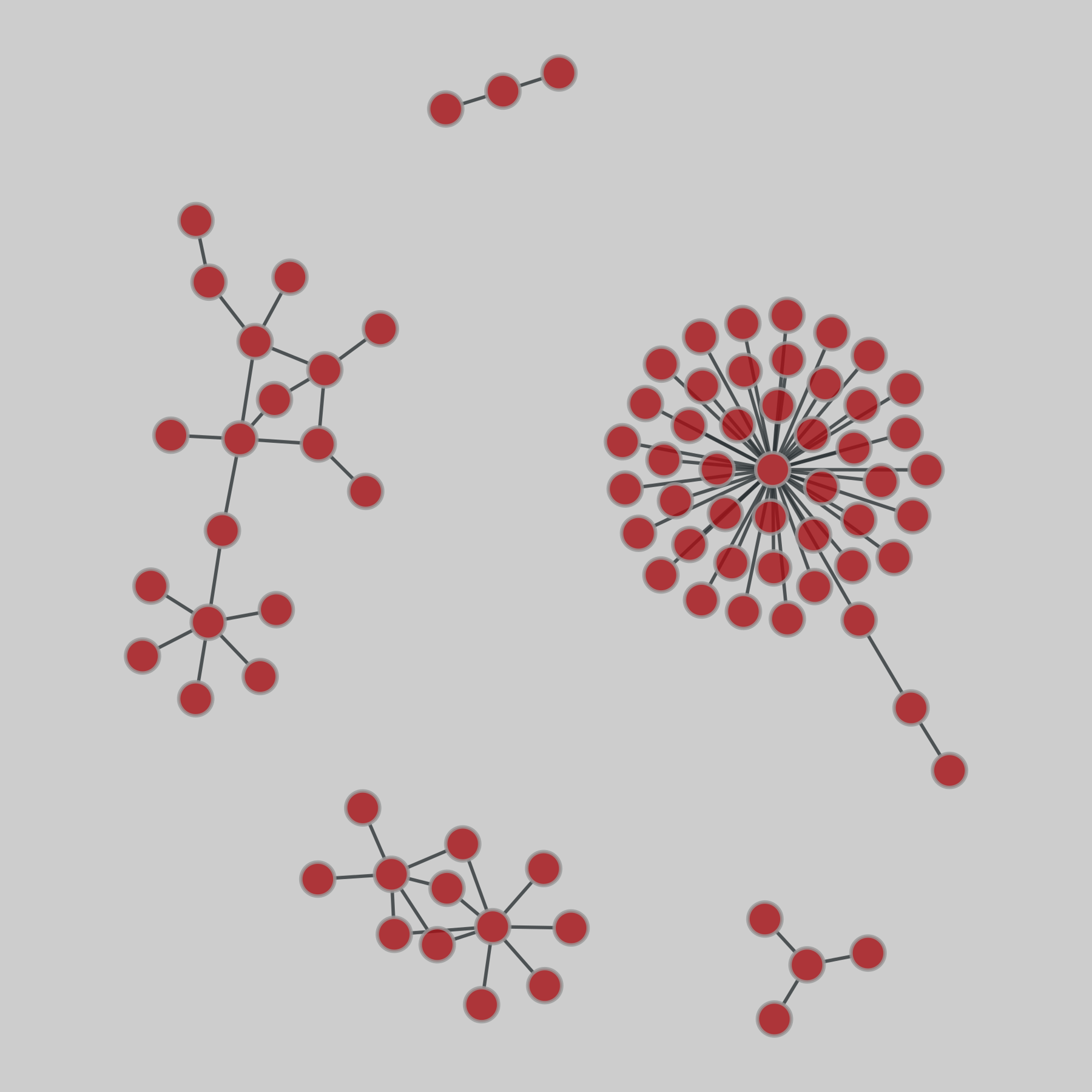
Two networks representing steroid use among baseball players. First, a bipartite network of players and their steroid providers (of illegal performance-enhancing substances). Second, a one-mode projection of players, which are linked if they have a common supplier.
This network has 84 nodes and 84 edges.
Tags: Social, Offline, Weighted, Projection
 @awinkler@openbiblio.social
2026-01-21 14:44:33
There are some really useful suggestions in this article as to what #GLAM|s can do in the #Wikiverse / on #wikidata (it's pretty straightforward to get started):
@netzschleuder@social.skewed.de2026-01-23 02:00:04
baseball: Baseball steroid use (2008)
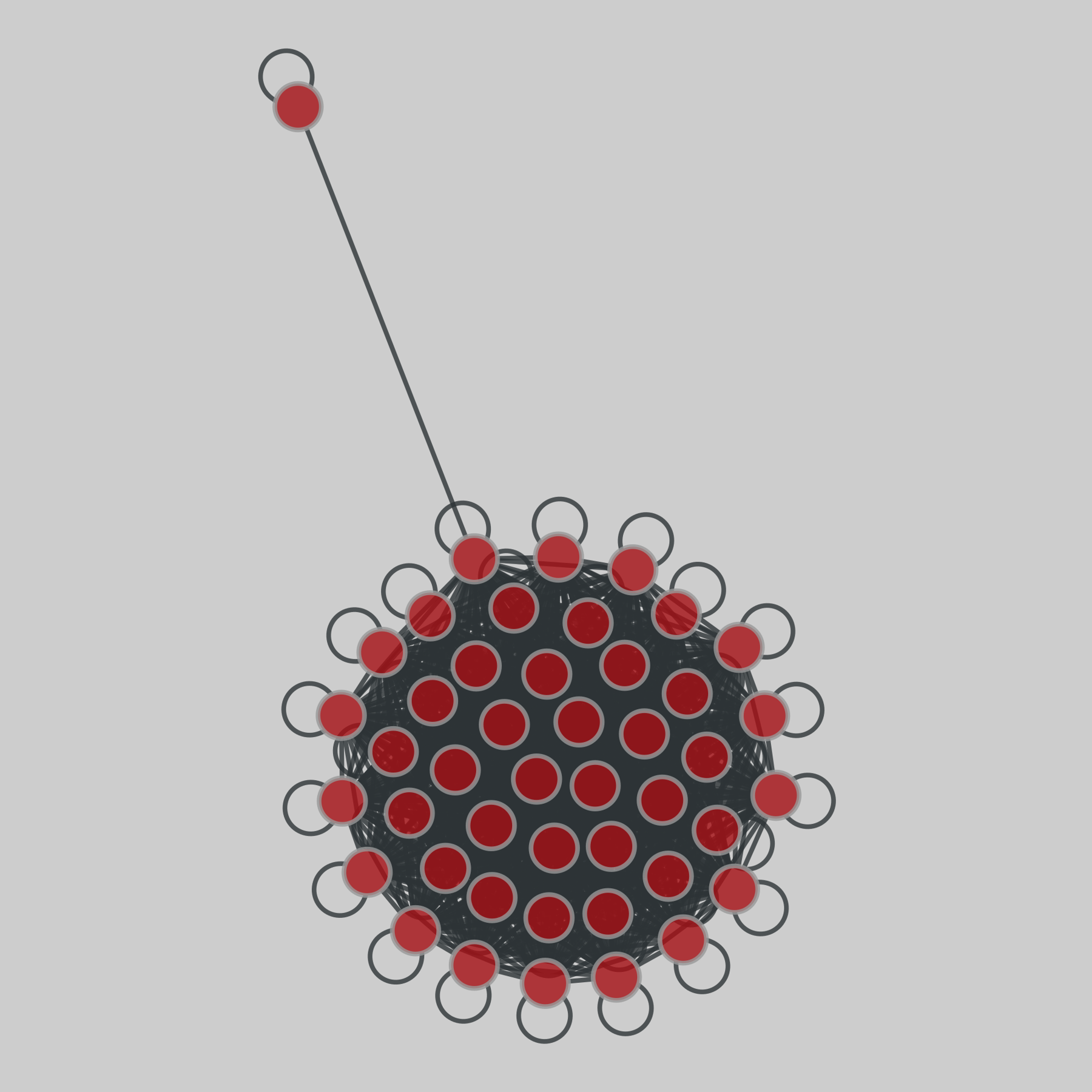
Two networks representing steroid use among baseball players. First, a bipartite network of players and their steroid providers (of illegal performance-enhancing substances). Second, a one-mode projection of players, which are linked if they have a common supplier.
This network has 72 nodes and 1089 edges.
Tags: Social, Offline, Weighted, Projection
 @arXiv_csDS_bot@mastoxiv.page
2026-02-10 09:30:17
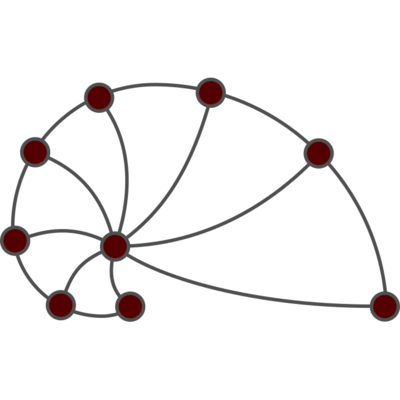
Robust Multiagent Collaboration Through Weighted Max-Min T-Joins
Sharareh Alipour
https://arxiv.org/abs/2602.07720 https://arxiv.org/pdf/2602.07720 https://arxiv.org/html/2602.07720
arXiv:2602.07720v1 Announce Type: new
Abstract: Many multiagent tasks -- such as reviewer assignment, coalition formation, or fair resource allocation -- require selecting a group of agents such that collaboration remains effective even in the worst case. The \emph{weighted max-min $T$-join problem} formalizes this challenge by seeking a subset of vertices whose minimum-weight matching is maximized, thereby ensuring robust outcomes against unfavorable pairings.
We advance the study of this problem in several directions. First, we design an algorithm that computes an upper bound for the \emph{weighted max-min $2k$-matching problem}, where the chosen set must contain exactly $2k$ vertices. Building on this bound, we develop a general algorithm with a \emph{$2 \ln n$-approximation guarantee} that runs in $O(n^4)$ time. Second, using ear decompositions, we propose another upper bound for the weighted max-min $T$-join cost. We also show that the problem can be solved exactly when edge weights belong to $\{1,2\}$.
Finally, we evaluate our methods on real collaboration datasets. Experiments show that the lower bounds from our approximation algorithm and the upper bounds from the ear decomposition method are consistently close, yielding empirically small constant-factor approximations. Overall, our results highlight both the theoretical significance and practical value of weighted max-min $T$-joins as a framework for fair and robust group formation in multiagent systems.
toXiv_bot_toot
@netzschleuder@social.skewed.de2026-01-17 22:00:04
baseball: Baseball steroid use (2008)
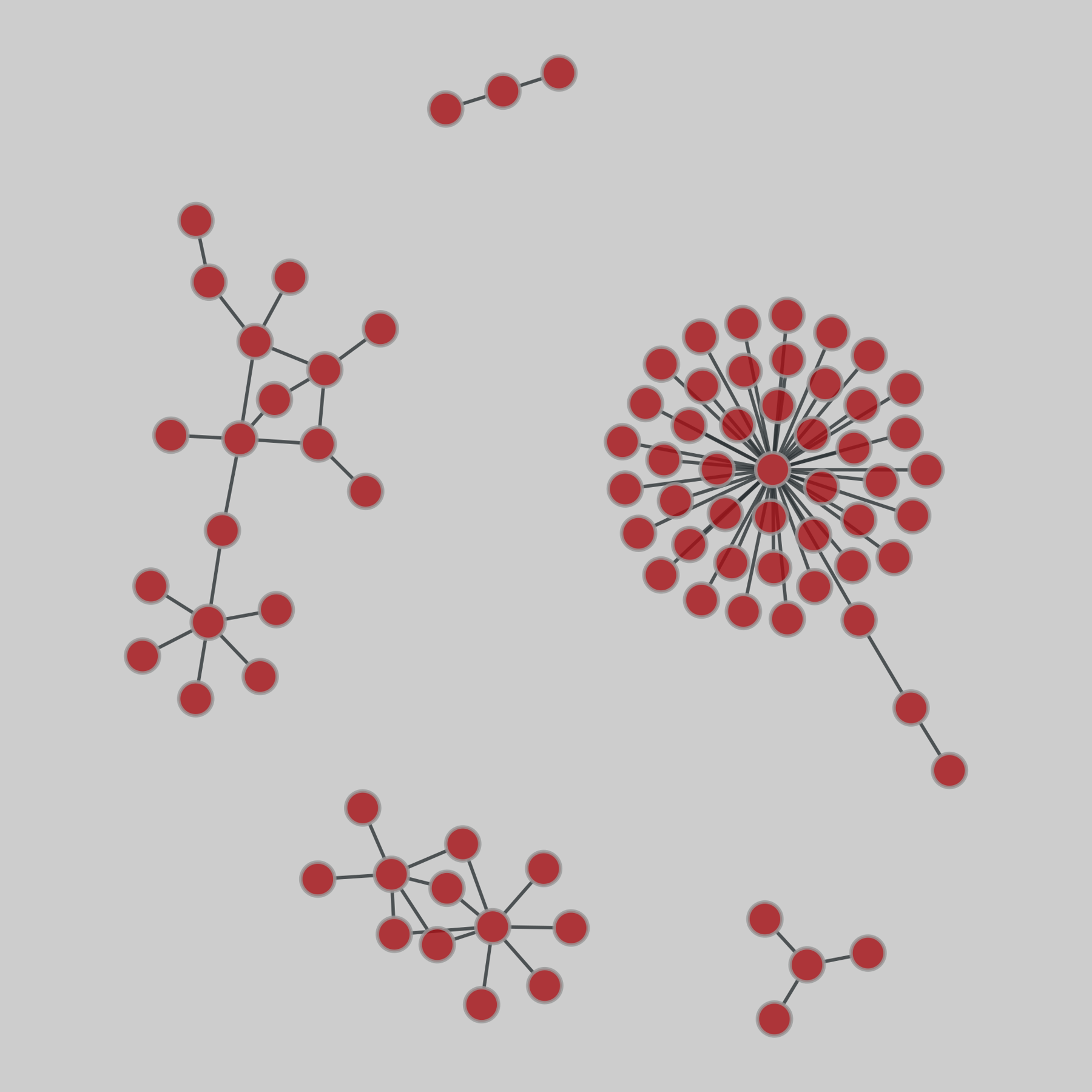
Two networks representing steroid use among baseball players. First, a bipartite network of players and their steroid providers (of illegal performance-enhancing substances). Second, a one-mode projection of players, which are linked if they have a common supplier.
This network has 84 nodes and 84 edges.
Tags: Social, Offline, Weighted, Projection
 @netzschleuder@social.skewed.de
2026-02-17 05:00:03
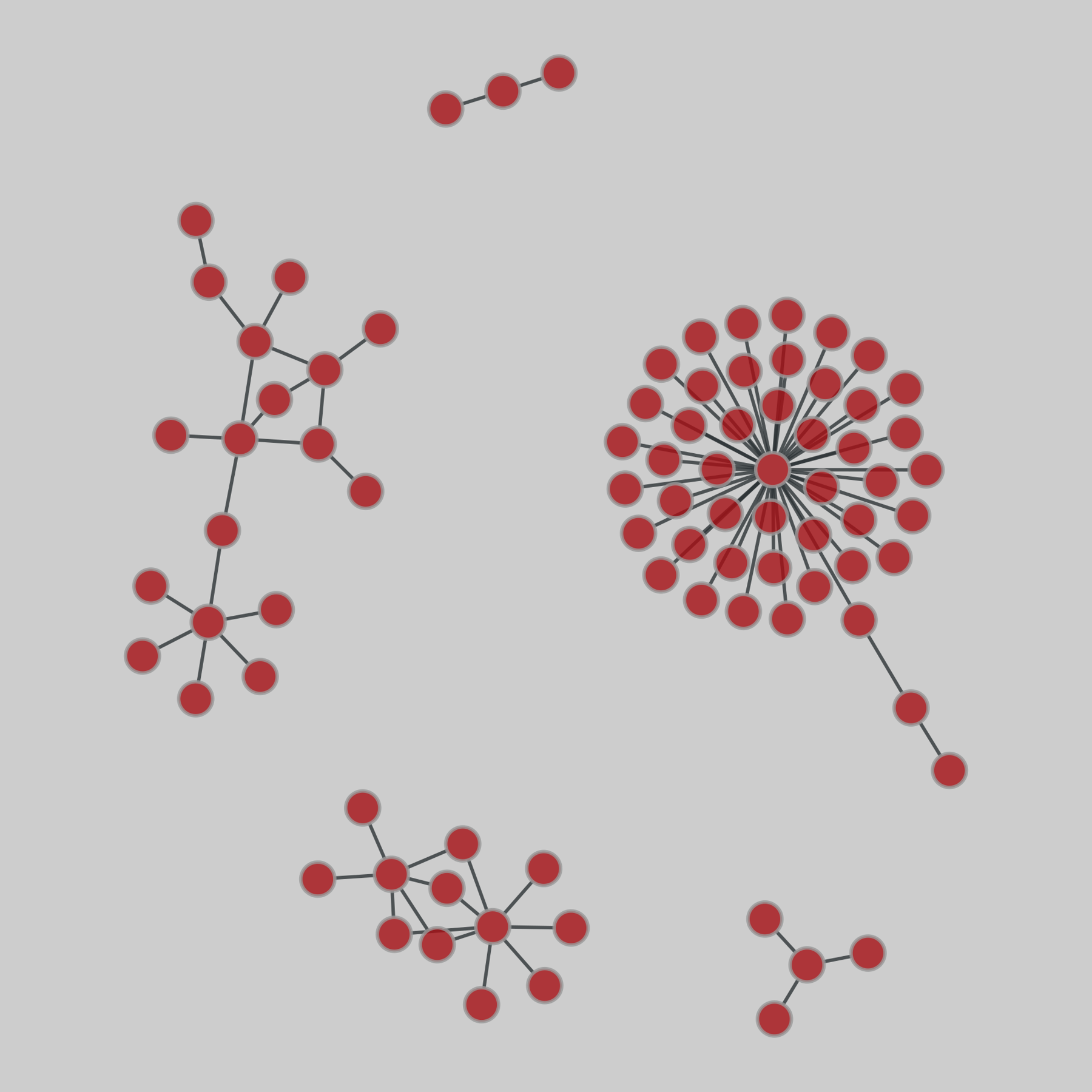
baseball: Baseball steroid use (2008)
Two networks representing steroid use among baseball players. First, a bipartite network of players and their steroid providers (of illegal performance-enhancing substances). Second, a one-mode projection of players, which are linked if they have a common supplier.
This network has 84 nodes and 84 edges.
Tags: Social, Offline, Weighted, Projection
 @netzschleuder@social.skewed.de
2026-02-10 23:00:04
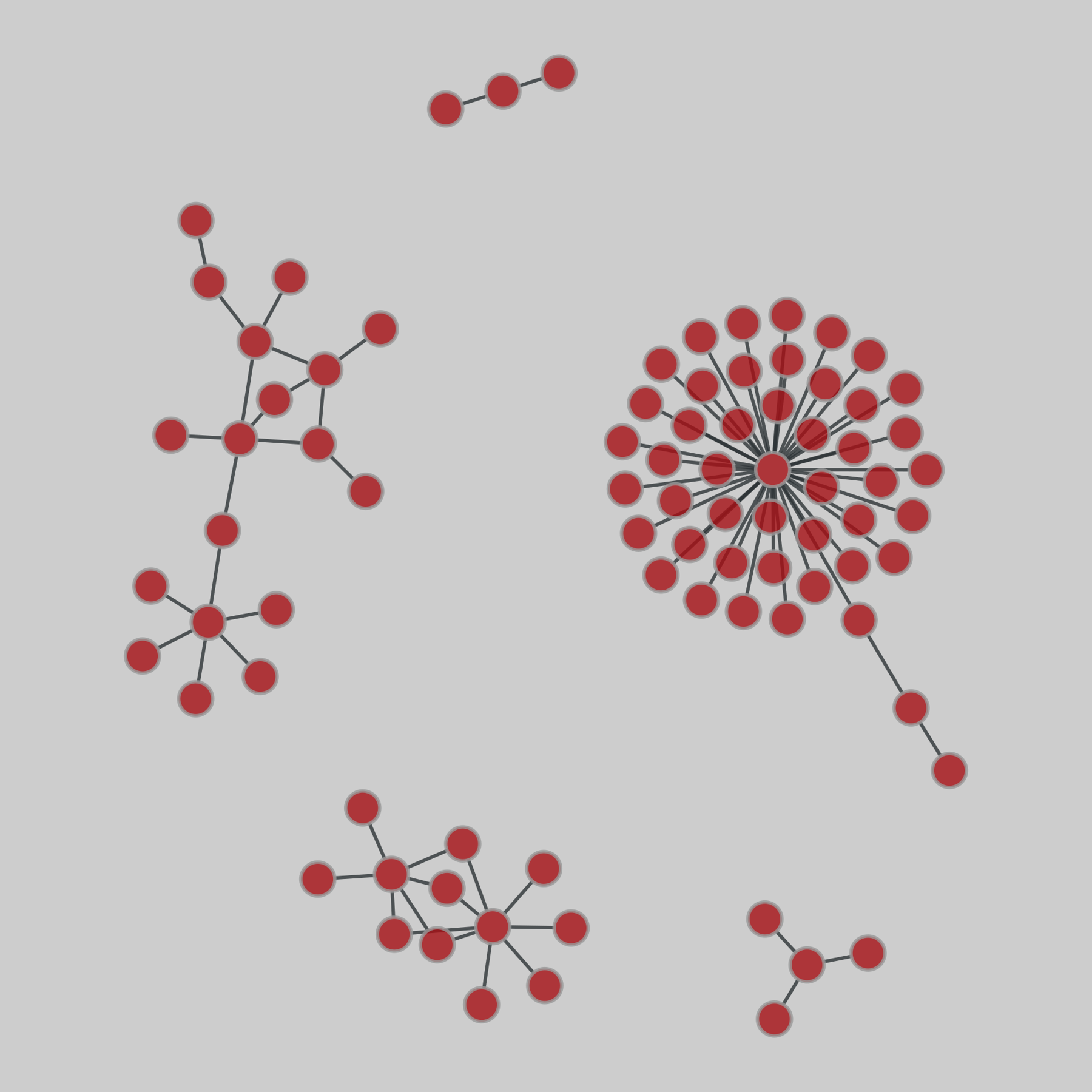
baseball: Baseball steroid use (2008)
Two networks representing steroid use among baseball players. First, a bipartite network of players and their steroid providers (of illegal performance-enhancing substances). Second, a one-mode projection of players, which are linked if they have a common supplier.
This network has 84 nodes and 84 edges.
Tags: Social, Offline, Weighted, Projection
 @netzschleuder@social.skewed.de
2026-03-06 15:00:04
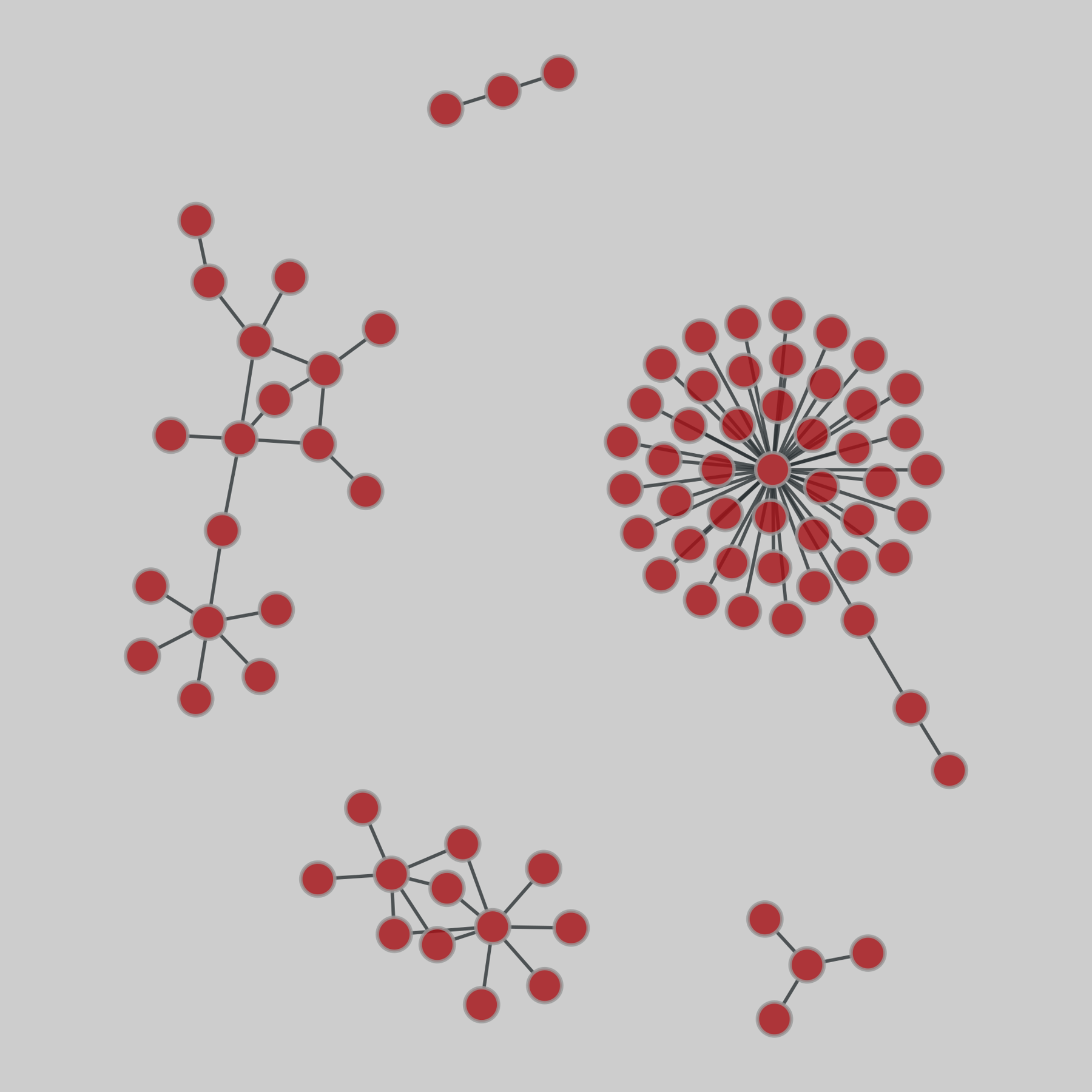
baseball: Baseball steroid use (2008)
Two networks representing steroid use among baseball players. First, a bipartite network of players and their steroid providers (of illegal performance-enhancing substances). Second, a one-mode projection of players, which are linked if they have a common supplier.
This network has 84 nodes and 84 edges.
Tags: Social, Offline, Weighted, Projection