 @seeingwithsound@mas.to
2025-11-19 10:19:11
Impact of a transient neonatal visual deprivation on the development of the ventral occipito-temporal cortex in humans https://www.nature.com/articles/s41467-025-65468-7 "while EVC is permanently affected by early deprivation, categorical coding in VOTC shows resilience"; <…

 @arXiv_csLG_bot@mastoxiv.page
2025-12-22 10:33:20
Can You Hear Me Now? A Benchmark for Long-Range Graph Propagation
Luca Miglior, Matteo Tolloso, Alessio Gravina, Davide Bacciu
https://arxiv.org/abs/2512.17762 https://arxiv.org/pdf/2512.17762 https://arxiv.org/html/2512.17762
arXiv:2512.17762v1 Announce Type: new
Abstract: Effectively capturing long-range interactions remains a fundamental yet unresolved challenge in graph neural network (GNN) research, critical for applications across diverse fields of science. To systematically address this, we introduce ECHO (Evaluating Communication over long HOps), a novel benchmark specifically designed to rigorously assess the capabilities of GNNs in handling very long-range graph propagation. ECHO includes three synthetic graph tasks, namely single-source shortest paths, node eccentricity, and graph diameter, each constructed over diverse and structurally challenging topologies intentionally designed to introduce significant information bottlenecks. ECHO also includes two real-world datasets, ECHO-Charge and ECHO-Energy, which define chemically grounded benchmarks for predicting atomic partial charges and molecular total energies, respectively, with reference computations obtained at the density functional theory (DFT) level. Both tasks inherently depend on capturing complex long-range molecular interactions. Our extensive benchmarking of popular GNN architectures reveals clear performance gaps, emphasizing the difficulty of true long-range propagation and highlighting design choices capable of overcoming inherent limitations. ECHO thereby sets a new standard for evaluating long-range information propagation, also providing a compelling example for its need in AI for science.
toXiv_bot_toot
 @midtsveen@social.linux.pizza
2026-01-15 18:22:20
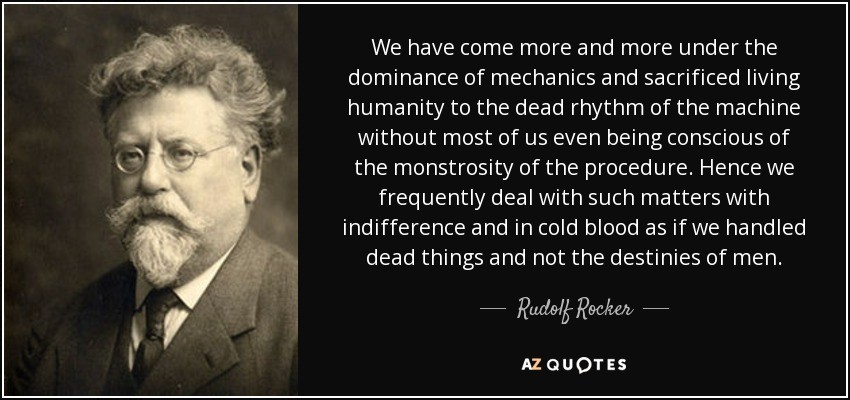
The working class is the fundamental force that produces the material conditions necessary for the reproduction of society, and through our collective labor we not only create food, shelter, healthcare, education, transportation, and communication networks, but we also sustain and reproduce the conditions that allow every aspect of social life to continue functioning, so that even those who do not work, whether they are managers, bureaucrats, or capitalists, depend entirely on our labor for …
 @lightweight@mastodon.nzoss.nz
2025-12-07 22:08:54
We need more folks who understand POSSE and why it's crucial to a) personal digital sovereignty, b) functional open (democratic) societies, and c) a free and open Internet: Publish on your Own Site, Syndicate Elsewhere.
canonical: https://indieweb.org/POSSE
popular media:
 @thomastraynor@social.linux.pizza
2025-12-08 21:32:51
What I want is less buggy updates, software that starts to run a bit faster and isn't a resource hog along with fixing those 'NOT RESPONDING' messages multiple times an hour. From what I see these updates are just putting a layer of lipstick on a bloated pig.
https://www.
 @arXiv_csGT_bot@mastoxiv.page
2025-12-10 07:45:10
Selling Privacy in Blockchain Transactions
Georgios Chionas, Olga Gorelkina, Piotr Krysta, Rida Laraki
https://arxiv.org/abs/2512.08096 https://arxiv.org/pdf/2512.08096 https://arxiv.org/html/2512.08096
arXiv:2512.08096v1 Announce Type: new
Abstract: We study methods to enhance privacy in blockchain transactions from an economic angle. We consider mechanisms for privacy-aware users whose utility depends not only on the outcome of the mechanism but also negatively on the exposure of their economic preferences. Specifically, we study two auction-theoretic settings with privacy-aware users. First, we analyze an order flow auction, where a user auctions off to specialized agents, called searchers, the right to execute her transaction while maintaining a degree of privacy. We examine how the degree of privacy affects the revenue of the auction and, broadly, the net utility of the privacy-aware user. In this new setting, we describe the optimal auction, which is a sealed-bid auction. Subsequently, we analyze a variant of a Dutch auction in which the user gradually decreases the price and the degree of privacy until the transaction is sold. We compare the revenue of this auction to that of the optimal one as a function of the number of communication rounds. Then, we introduce a two-sided market - a privacy marketplace - with multiple users selling their transactions under their privacy preferences to multiple searchers. We propose a posted-price mechanism for the two-sided market that guarantees constant approximation of the optimal social welfare while maintaining incentive compatibility (from both sides of the market) and budget balance. This work builds on the emerging line of research that attempts to improve the performance of economic mechanisms by appending cryptographic primitives to them.
toXiv_bot_toot
 @smashtie@mas.to
2026-01-04 14:47:21

 @hex@kolektiva.social
2025-11-27 09:39:16
Real conspiracies tend to come out, but some of them take a while. Information on the Iran/Contra scandal broke out about 5 years after the conspiracy started. That would have taken several hundred people to carry out, so it was somewhat hard to hide. Even so, they largely got away with it.
The moon landing conspiracy theory would have taken thousands of people, so it would have come out more quickly. Since we have an example of a real secret program of a similar scale as what would be required to fake a moon landing (that is, the Manhattan project), we know that the fake moon landing conspiracy theory is not true. (There's also the literally tons of evidence in the form of rocks and other samples, and all kinds of other ways to debunk the claim.)
Could Kash Patel's FBI have been trying really hard to entrap people into carrying out terrorist attacks in order to justify #Trump's occupation of DC? Could they have helped a guy plan an attack then just failed to arrest him? There are reasonable scenarios that fall in between malice and incompetence while still indicating some level of false flag.
Could someone have just snapped and ambushed some guardsmen without any involvement from the FBI? Yeah, totally. The US is a country full of guns with a completely non-functional mental health system. Someone coming from a country that the US destroyed, twice, could have a lot of untreated trauma. Might they see the national guard as a threat (even if that wasn't totally true)? Yeah, they were deployed to threaten people (even when they were just picking up trash). The point was to incite this kind of response. It's completely reasonable to believe that the FBI would not need to be involved at all, that this would just be the stochastic response they were looking for.
So the point here is that everything is on the table, nothing is really known, nothing should be surprising, and no matter what it's Trump's fault. This is exactly the escalation he was looking for. If he didn't get it naturally, he would also have had ways of making it happen.
He will use this in exactly the same way as the Reichstag fire, to drive a wedge between liberals and radicals. Don't fall for it.
Edit:
There are plausible reasons to not believe the official narrative at all right now, or maybe ever. The official narrative is also plausible, but there are plausible reasons to disagree with the response even if the official story is true. It is unnecessary to resort to conspiracy thinking in order to account for what happened and to disagree with the response. But it is also understandable why someone might jump immediately to a conspiracy given the circumstances.
 @cdarwin@c.im
2025-12-27 23:45:35
On 4 March, Donald Trump delivered his epic 100-minute speech to Congress, the longest such presidential address in US history.
Having finished speaking, in time-honored fashion, he walked down the line of supreme court justices, gladhanding each in turn before coming to a stop before the chief justice, #John #Roberts