 @johnleonard@mastodon.social
2026-07-16 13:15:32
AWS is facing a lawsuit in the US alleging it misled the public about the water consumption and environmental impact of its datacentres in Northern Virginia.
The legal complaint claims AWS overstated progress towards its water sustainability goals while failing to disclose the full extent of its regional water use.
 @floheinstein@chaos.social
2026-08-17 08:19:55
Bodensee Tourismus reagiert auf das Niedrigwasser - Wattwanderung 20€
Quelle und Copyright: RuedisComics Rüdiger Anderka #trockenheit

 @publicvoit@graz.social
2026-09-14 20:12:54




 @marcel@waldvogel.family
2026-08-13 10:31:48
 @leftsidestory@mstdn.social
2026-07-14 01:36:54
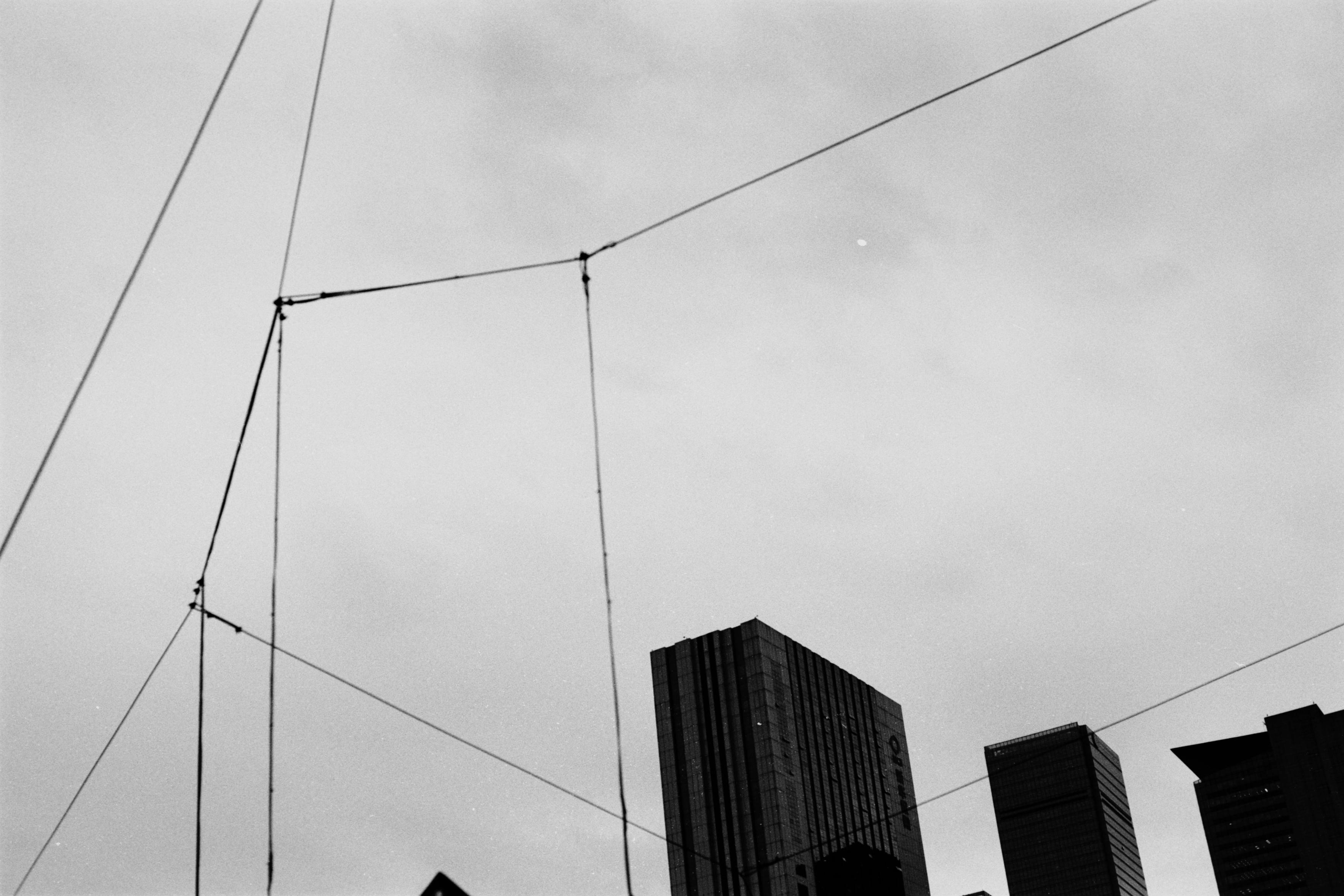
Inside Outside V 🔲
中间 V 🔲
📷 Pentax MX
🎞️ Fujifilm Neopan F, expired 1993
If you like my work, Support by buying me a coffee or a roll of film from
PayPal https://www.paypal.com/paypalme/ydcdingsite
Wise



 @drgeraint@glasgow.social
2026-08-09 22:23:51
BallotBox Scotland: "It’s time everyone got serious about the Scottish Greens"
Some reflections from BBS, and a little pointer into what we should expect for the next parliament.
"The belief that right wing voters have to be courted and coddled, and left wing voters uncomfortable with that will just have to suck it up because they don’t have other options. It turns out they do, in fact, have other options"

 @arXiv_condmatsoft_bot@mastoxiv.page
2026-08-13 07:41:35
Spatially heterogeneous relaxational dynamics and the evolution of recoverable strain following flow cessation of a ductile nanocolloidal glass
Chloe W. Lindeman, James J. Griebler, Penelope Grace Kovakas, Miaoqi Chu, Qingteng Zhang, Suresh Narayanan, James L. Harden, Simon A. Rogers, Robert L. Leheny
https://arxiv.org/abs/2608.11470 https://arxiv.org/pdf/2608.11470 https://arxiv.org/html/2608.11470
arXiv:2608.11470v1 Announce Type: new
Abstract: We report a combined rheology and x-ray photon correlation spectroscopy (XPCS) study of the structural and mechanical relaxation of a ductile, nanocolloidal glass following the cessation of shear flow. After the glass is sheared to 300% strain at various shear rates and then held at fixed strain, the stress undergoes a protracted, quasi-logarithmic decay with hold time that depends weakly on the initial strain rate. Recovery rheology measurements reveal that this stress relaxation is accompanied by a logarithmic decrease in the elastic component of the recoverable strain; hence, the rates of decrease of the stress and recoverable strain are proportional. XPCS measurements during the stress relaxation reveal dynamics dominated by a convection-like backflow that is divided into two dynamically distinct regions indicative of banded motion. In one region, the flow can be modeled by an affine strain, while in the other region the glass moves as a plug while undergoing slow, glassy relaxation. The rates of these dynamics approximately track the rate of loss of recoverable strain, indicating this motion is the predominant microscopic mechanism driving the conversion of recoverable to unrecoverable strain during stress relaxation. In contrast, XPCS measurements during strain recovery reveal purely affine flow with no evidence of heterogeneity and with strain rates that agree quantitatively with the rheometry measurements. Together, these results provide a unified microscopic picture connecting the evolving internal dynamics of a ductile glass to its macroscopic mechanical relaxation following flow cessation.
toXiv_bot_toot
 @simon_jf@mastodon.scot
2026-09-06 08:19:57
Going on holiday today. Flying from Glasgow Prestwick this morning! Picked here to see what it was like (nice enough but itch now scratched).
“Glasgow” is a bit of a stretch mind you, should be called Ayrport! (I am sure I am not the first to make this joke)
 @peterhoneyman@a2mi.social
2026-09-11 00:05:22


 @floheinstein@chaos.social
2026-07-10 12:44:10
"Scha-atz, draussen auf der Strasse vor unserem Haus stehen so ein paar komische Typen."
"Dann verriegel die Tür."
"Sie ziehen Kabel aus dem Boden. Schau mal 📷 "
"WTF ICH BIN GLEICH DA!!!!"
#fiberdefense
