 @thomasfuchs@hachyderm.io
2026-08-17 18:14:12
RE: https://hachyderm.io/@thomasfuchs/117105566079788795
So just to the left of the VGA monitor are 4 (I think) big box DOS computer games—I was big into flight simulators I guess.
- B-17 Flying Fortress (MicroProse, 1992)
- Unknown box, too small to identify
- Secret Weapons of the Luftwaffe (Lucasfilm Games, 1991)
- Gunship (MicroProse, 1986)
Specifically I think for me the time from about 1990 to 1994, is the most magical time of computer games; sort of starting with The Secret of Monkey Island and ending with Wing Commander III.
Do you have personal favorites from that era of games?
 @hikingdude@mastodon.social
2026-08-08 12:06:25

 @arXiv_astrophCO_bot@mastoxiv.page
2026-08-06 07:52:32
Non-Thermal Pressure due to Gas Motions in the Intracluster Medium: Confronting XRISM/Resolve with TNG-Cluster Simulations
Erwin T. Lau, Naomi Ota, Daisuke Nagai
https://arxiv.org/abs/2608.04757 https://arxiv.org/pdf/2608.04757 https://arxiv.org/html/2608.04757
arXiv:2608.04757v1 Announce Type: new
Abstract: Intracluster medium (ICM) gas motions probe cluster assembly, feedback, and non-thermal pressure support, but recent XRISM observations reveal velocity dispersions and non-thermal pressure fractions systematically lower than simulations predict, with extreme systems such as Abell 2029 falling below nearly all simulated clusters. Using the TNG-Cluster simulations, we show that the non-thermal pressure fraction depends sensitively on cool-core state and formation history, and provide a two-scale fitting function capturing both the inner cool-core suppression and outer rise of the radial profile. By forward-modeling mock XRISM observations and comparing them with both projected and intrinsic three-dimensional quantities, we find that azimuthal variations and projection effects contribute to the deficit in the observed velocity dispersion and non-thermal pressure fraction. This bias increases with radius and partially offsets the intrinsic outward rise in the true three-dimensional non-thermal pressure fraction. However, these effects cannot explain the extremely low values of the non-thermal pressure fraction observed in Abell 2029, which fall below approximately the 0th - 6th percentiles of the simulated cool-core cluster distribution at every measured radius under both the turbulence-only and turbulence-plus-bulk definitions. The remaining tension points to rare dynamical conditions or missing physics affecting the amplitude of gas motions in current ICM models.
toXiv_bot_toot
 @aral@mastodon.ar.al
2026-07-31 12:58:23
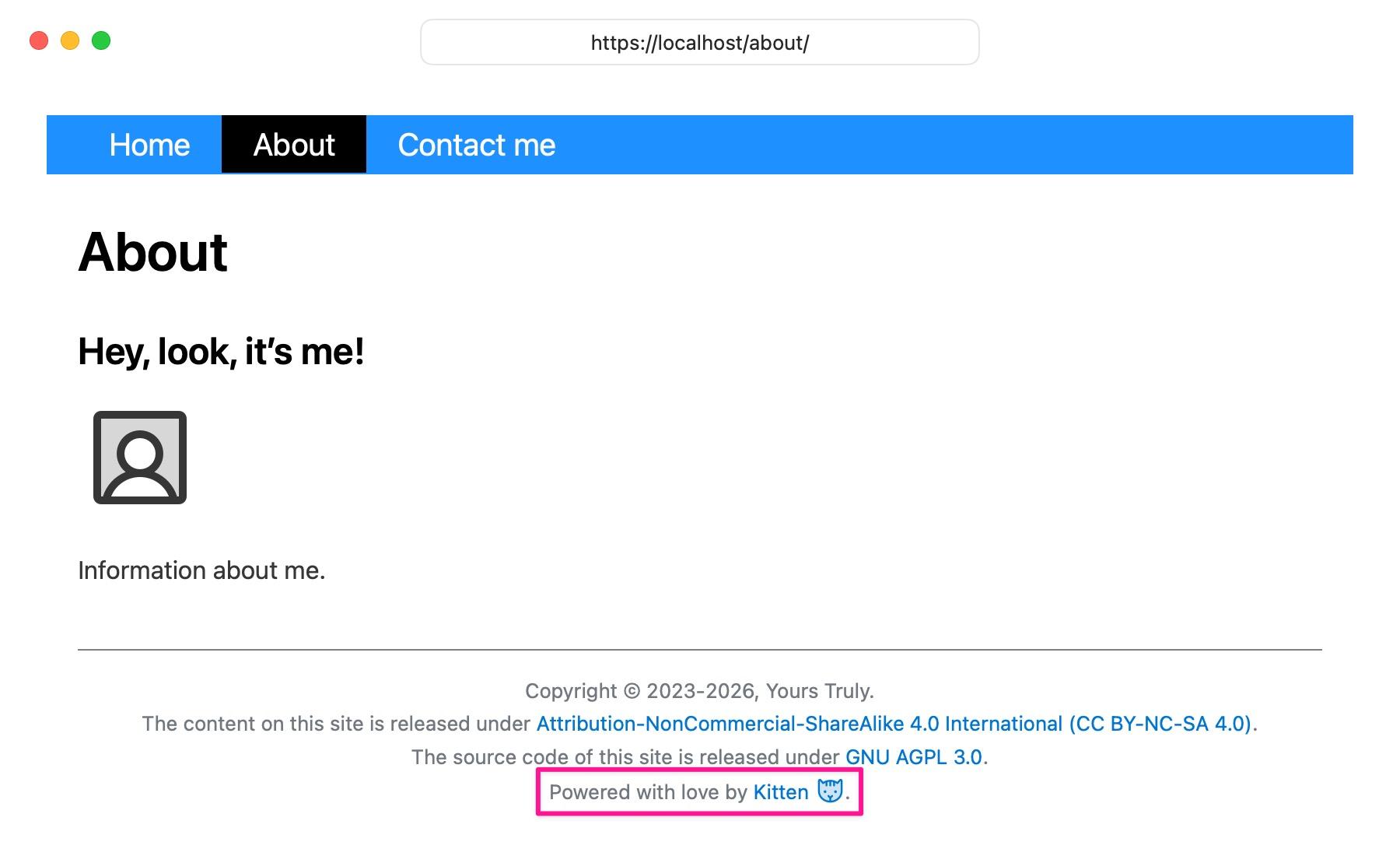
That feeling when your renderer can handle a component that outputs HTML inside link text in Markdown that’s embedded in HTML.
(Yes, I’m bragging.)
#Kitten #SmallWeb #SmallTech
.
Full (visible) code:
export default () => kitten.html`
<footer>
<markdown>
Copyright (c) 2023-${new Date().getFullYear()}, Yours Truly.
T…](https://s3-eu-central-1.amazonaws.com/mastodon-aral/media_attachments/files/117/014/705/153/360/218/original/229421ba28ff29f6.jpeg)
 @arXiv_condmatsoft_bot@mastoxiv.page
2026-08-14 07:55:14
Substrate-Directed Wetting Layers in Bicontinuous Particle-Stabilised Emulsions
Jesse M. Steenhoff, Martin F. Haase
https://arxiv.org/abs/2608.13230 https://arxiv.org/pdf/2608.13230 https://arxiv.org/html/2608.13230
arXiv:2608.13230v1 Announce Type: new
Abstract: Bicontinuous interfacially jammed emulsion gels (bijels) facilitate efficient mass transport across multiple length scales due to their interwoven structure of particle-stabilised liquid channels. This unique morphology imparts considerable potential for applications in separation and catalysis, particularly when fabricated \textit{via} solvent-transfer-induced phase separation (STrIPS). STrIPS enables the continuous, large-scale production of nanostructured bijel films on solid substrates, yet the influence of the substrate properties on the formation dynamics and final morphology remains insufficiently understood. In this study, this relationship is elucidated by preparing STrIPS bijel films on silane-functionalised glass substrates with selectively controlled wettability and analysing the resulting structure with confocal microscopy. The results showed the presence of notable wetting layers at the bijel-substrate interface, whose thicknesses could be tuned through the nanoparticle weight fraction. In line with numerical simulations, increasing the substrate hydrophobicity drove a transition from a laminar, water-rich surface layer to a patch-like, progressively oil-rich structure. These findings provide crucial insight into the structure-directing role of substrates in supported bijel films, which aids their application as functional materials.
toXiv_bot_toot
 @arXiv_csOH_bot@mastoxiv.page
2026-07-23 07:34:35
Digital Twin Modeling of a Highly Automated Agricultural Tractor
Clay Hallman, Lukas Pindl, Timo Oksanen
https://arxiv.org/abs/2607.19912 https://arxiv.org/pdf/2607.19912 https://arxiv.org/html/2607.19912
arXiv:2607.19912v1 Announce Type: new
Abstract: In efforts to increase research efficiency and availability, a digital twin of our research tractor (AMX G-trac) is created, focusing especially on the CAN communication for data reading and actuation command following the ISOBUS protocol. Mevea Simulation Software is utilized as the foundation, providing the kinematic model and visuals, while Python is used to read and write CAN messages over a Kvaser CanKing virtual CAN channel. Various performance tests involving straight line and turning behavior are performed in both the digital twin simulation and in the real world to measure similarity. Results indicate that the Mevea model behaves very comparable in its lateral dynamics, often within 5-10 percent, but requires better data to fully capture the longitudinal aspects like acceleration. The final model described in this paper sets the table for a second iteration to include more tractor functions such as hydraulics and tractor-implement dynamics.
toXiv_bot_toot
 @arXiv_physicsmedph_bot@mastoxiv.page
2026-07-21 07:55:04
Theoretical derivation of blood velocity from TOF-MRA based artery centerline
Abrar Faiyaz
https://arxiv.org/abs/2607.16498 https://arxiv.org/pdf/2607.16498 https://arxiv.org/html/2607.16498
arXiv:2607.16498v1 Announce Type: new
Abstract: Time-of-flight magnetic resonance angiography (TOF-MRA) is widely used for structural vascular imaging, but extracting functional hemodynamics like blood velocity typically requires supplementary phase-contrast scans. This study proposes a novel, physics-informed computational framework to extract variable fluid velocity directly from standard TOF-MRA signal profiles. We analytically expand the Bloch equations into Bloch-McConnell flow equations, establishing a mathematical relationship between the spatial decay of longitudinal magnetization and fluid velocity. To validate this derivation and overcome the limitations of constant-velocity assumptions, a MATLAB simulation framework was developed to model fluid flow in two variable-geometry flowing tube cases i.e continuous tapering and focal stenosis -under synthetic scanner noise. A global inverse optimization approach utilizing Dual-Tikhonov regularization was deployed to stably invert the ill-posed transit time integral, actively penalizing high-frequency numerical ringing while preserving structural curve stiffness. The computational sim-ulations successfully recovered ground-truth point-wise velocities, accurately tracking gradual hemodynamic accelerations and sharp stenotic jets. This theoretical framework provides a robust mathematical proof-of-concept that quantitative, localized functional hemodynamic metrics can be extracted from standard structural MRA imaging, estab-lishing a foundation for advanced flow quantification without requiring additional scan time.
toXiv_bot_toot
 @cosmos4u@scicomm.xyz
2026-07-25 17:28:59
Recent active rifting on #Venus revealed by wide rift flank uplifts: https://www.nature.com/articles/s41561-026-02044-8 -> Simulations conducted by researchers at ETH Zurich suggest a strong likelihood that Venus’s rift valleys are still geologically active rather than being mere relics of a bygone era, as had been previously believed: https://ethz.ch/en/news-and-events/eth-news/news/2026/07/venus-dead-far-from-it.html - this finding reshapes our understanding of Earth’s sister planet and will influence future missions to Venus.