 @hikingdude@mastodon.social
2026-07-10 06:31:08
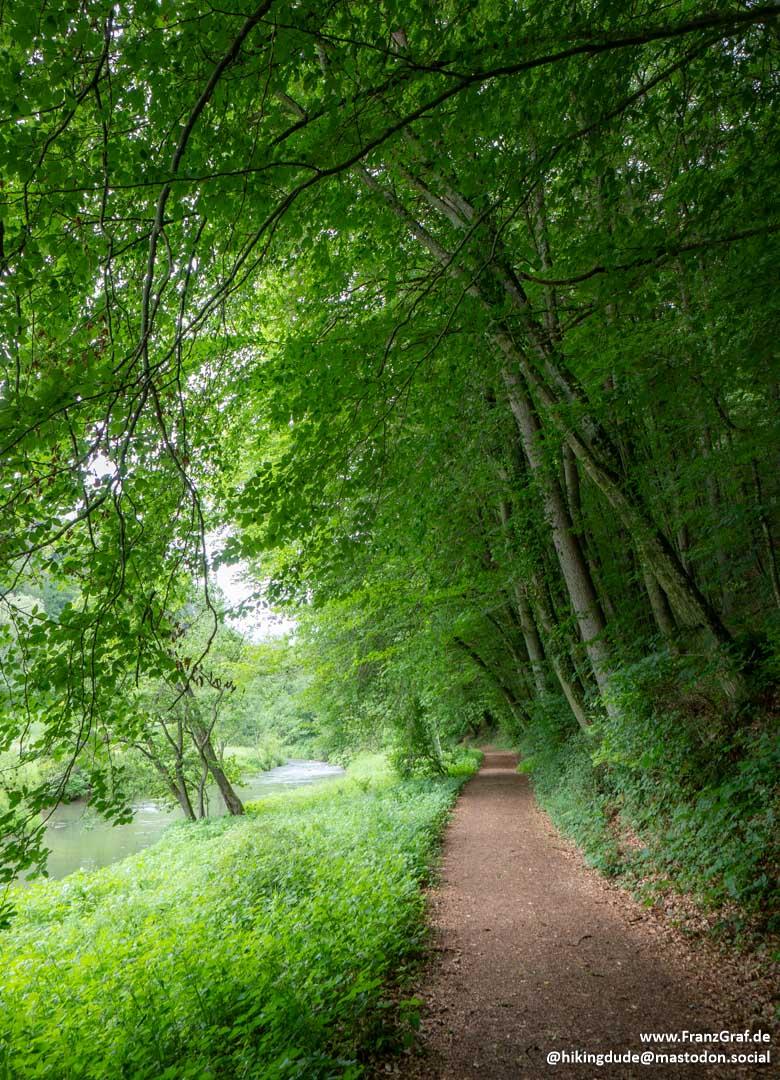
One of the typical scenes that we had throughout that day. The path wasn't always so well and broad like this. It often was narrow and more natural, but we also enjoyed walking along such sections.
The green was just amazing and calming. And I didn't even have to wait until there was noone else in the scene - it really isn't very frequented, so we could enjoy it all by our own
 @toxi@mastodon.thi.ng
2026-10-07 06:45:04
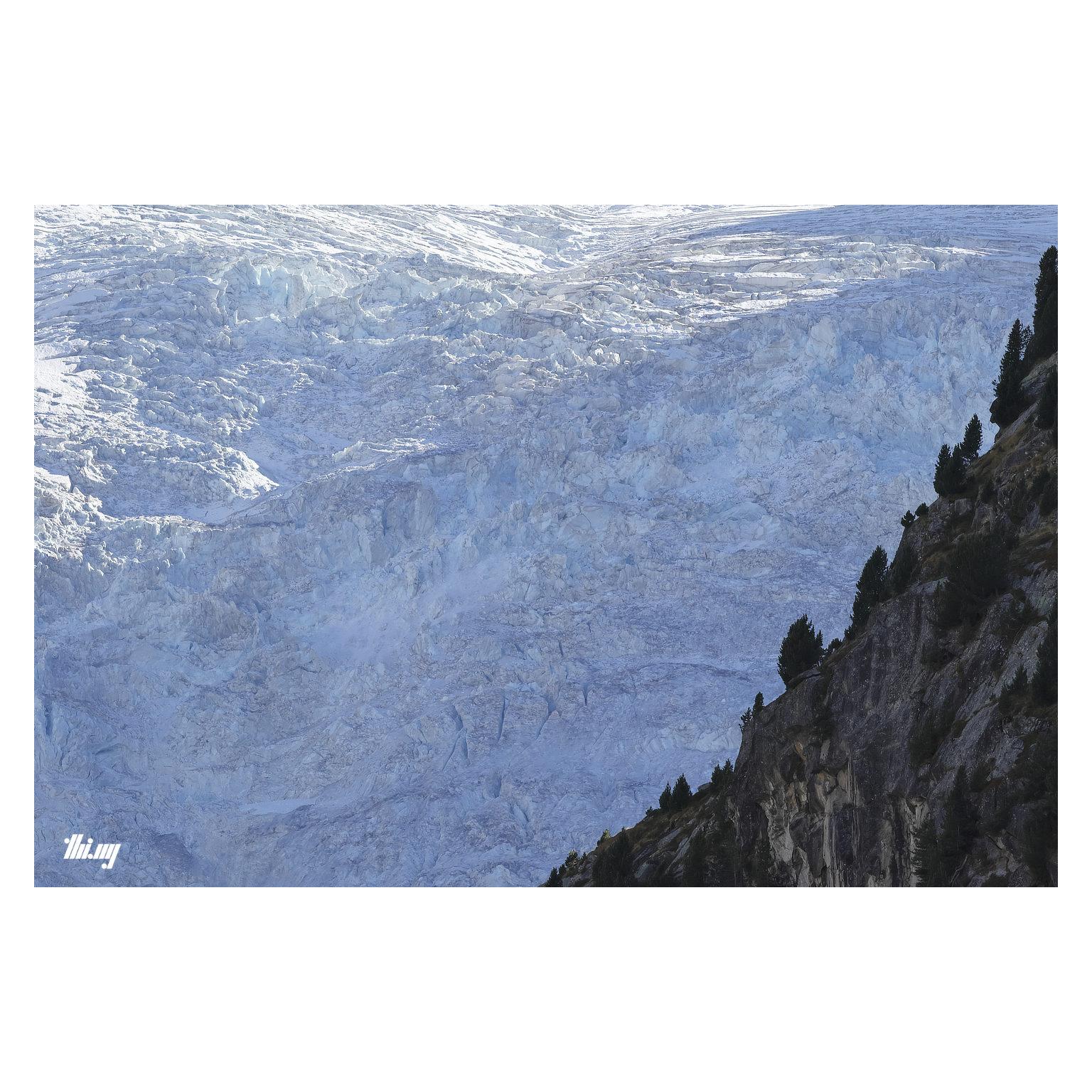
Labyrinth (2026)
The literal name of this section of a wall of almost a thousand meters[1] of near vertical ice, a slowly shapeshifting maze of seracs, flowing, fracturing, the light refracting and revealing the beautiful blue ice glow of the (dying) glacier... No photo can do justice (to the scale and impressions). For reference, the cliffs in the foreground are ~2.4 km (1.5 miles) in front and the path to the ice goes first over/across them...
(Ps. I will keep posting my images…
 @arXiv_astrophCO_bot@mastoxiv.page
2026-08-06 07:52:32
Non-Thermal Pressure due to Gas Motions in the Intracluster Medium: Confronting XRISM/Resolve with TNG-Cluster Simulations
Erwin T. Lau, Naomi Ota, Daisuke Nagai
https://arxiv.org/abs/2608.04757 https://arxiv.org/pdf/2608.04757 https://arxiv.org/html/2608.04757
arXiv:2608.04757v1 Announce Type: new
Abstract: Intracluster medium (ICM) gas motions probe cluster assembly, feedback, and non-thermal pressure support, but recent XRISM observations reveal velocity dispersions and non-thermal pressure fractions systematically lower than simulations predict, with extreme systems such as Abell 2029 falling below nearly all simulated clusters. Using the TNG-Cluster simulations, we show that the non-thermal pressure fraction depends sensitively on cool-core state and formation history, and provide a two-scale fitting function capturing both the inner cool-core suppression and outer rise of the radial profile. By forward-modeling mock XRISM observations and comparing them with both projected and intrinsic three-dimensional quantities, we find that azimuthal variations and projection effects contribute to the deficit in the observed velocity dispersion and non-thermal pressure fraction. This bias increases with radius and partially offsets the intrinsic outward rise in the true three-dimensional non-thermal pressure fraction. However, these effects cannot explain the extremely low values of the non-thermal pressure fraction observed in Abell 2029, which fall below approximately the 0th - 6th percentiles of the simulated cool-core cluster distribution at every measured radius under both the turbulence-only and turbulence-plus-bulk definitions. The remaining tension points to rare dynamical conditions or missing physics affecting the amplitude of gas motions in current ICM models.
toXiv_bot_toot
 @detondev@social.linux.pizza
2026-09-12 06:23:28
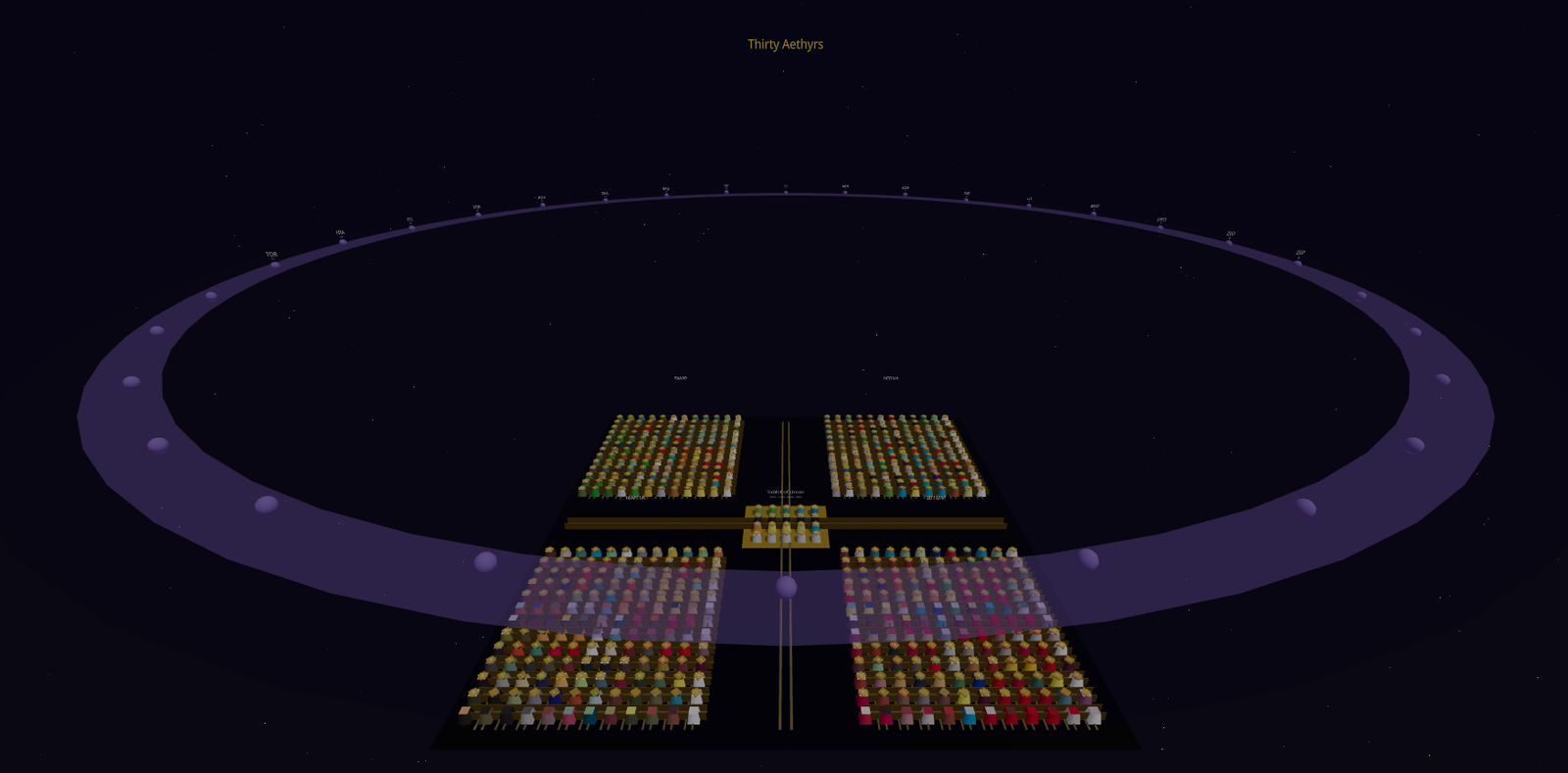
Found a site that always goes the extra mile for it's niche subject, to the point I genuinely feel bad tryna explore rather than be a sincere initiate https://enochian.net/


 @CubitOom@social.linux.pizza
2026-07-27 16:32:42
Tearing families apart, so concentration camps can profit, targeting non-criminal people following the correct legal processes is a recurring theme in our fascist USA
Video Source
https://reddit.com/comments/1v7cus4

 @floheinstein@chaos.social
2026-08-19 06:40:04
PSA: Der österreichische Tracker-Halsband-Hersteller Tractive scheint ein Leck im Shop-System zu haben - oder Daten verkauft. Ich habe im Oktober 2025 eine unique Mail-Adresse für die Bestellung tractive.com Online-Shop verwendet. Nun erhielt ich Spam adressiert an diese Mail-Adresse.
Immerhin: Das Tracking-Konto läuft mit einer anderen Adresse, dort kam kein Mail an.
#hunde
![E-Mail-Screenshot.
Betreff: RE
Datum: Wednesday, August 19, 2026, 01:23 CEST
Absender: postmaster@denteton.com
Empfänger: tractivecom@[geschwärzt]
Mailtext: Ich bin Abbas Shafii. Vor Kurzem habe ich den ersten Powerball-Jackpot des Jahres in Oregon gewonnen. Ich spende jeweils 7 Millionen Dollar an fünf förderungswürdige Einzelpersonen sowie gemeinnützige Organisationen. Ich freue mich darauf, bald mit Ihnen in Kontakt zu treten.](https://assets.chaos.social/media_attachments/files/117/120/773/942/561/809/original/6a32d28b667b6ddb.png)
 @mgorny@social.treehouse.systems
2026-10-02 07:06:26
Here's something important: a healthier #lifestyle is not an all-or-nothing deal, and don't let anyone convince you otherwise.
Some exercise is better than no exercise at all. Find the kinds of exercise you enjoy, and do them for as long as you're comfortable exercising. Over time, you may start exercising more — or not, that's fine too. Don't fall into the trap of exercising too hard. If you don't have enough time to exercise as much as you think you should, don't try to compensate with intensity, that will only backfire. A walk is a kind of exercise too, and a steady walk is better than trying too hard to run and failing.
A healthier diet is better than unhealthy one. Some veggies are better than none. Some mixed grain bread is better than white bread around the clock. There are so many dietary improvements that you could do without sacrificing taste or even spending much more. Sometimes it's literally a win-win situation: I prepare potatoes for 2–3 days, cool them overnight and then reheat in the oven, and I get both a healthier and a faster meal. And fiber is something you can easily add to various meals, and believe me, it's the most significant improvement I can think of.
And dear parents, please don't fuck up your children's good habits by raising the bar. If your kid likes some veggies, don't keep insisting that they must eat "healthier" veggies they hate. This never works well.
#health
 @tiotasram@kolektiva.social
2026-08-22 00:59:57
People who don't mind driverless cars will find all sorts out reason to brush off this kind of news:
https://flipboard.social/@TechDesk/117135628617386440
It was moving slowly already to be safe, it did brake before the collision, the injuries were minimal, the child is at fault, etc.
In the end, a lot of people will shrug and say: human drivers also make mistakes like this, so what's the big deal if a robot does? Maybe the robot even has a better safety record on average than humans. You can't ask for perfection!
Here are three related reasons why you shouldn't buy these arguments:
1. The crash statistics for the "average human driver" include (and are probably significantly driven by) impaired human drivers, like drunk drivers or people on their phones. When driverless car companies put "as good as the average human driver" as the goal, they're saying that they're okay with their systems being just as bad as drunk or distracted drivers sometimes. That's not the right goal at all! We should demand that driving robots perform at least as well as non-distracted human drivers, which is significantly *better* than the average human driver when it comes to things like crashes.
2. Mistakes made by a robotic system are fundamentally different in nature from mistakes made by humans, because the robot mistakes ate *systematic* across all robots in similar-enough situations. If a human looking at their phone slows down too late and hits a child, that's tragic, but it doesn't mean that *every* human driver put into the same situation would make the same mistake. In fact, many of them probably wouldn't be looking at their phone and thus would avoid the accident, *even given the exact same situation in which to react.* In contrast, *every Waymo taxi running the same software* will make exactly the same mistake in that situation. In other words, this kind of event will definitely repeat whenever a similar-enough situation arises around a Waymo taxi. That's why news like this should be scary, even though the accident was a minor one.
3. Some might claim that it's good that a software upgrade could potentially fix the issue that caused this accident. It's sort of true that there's an upside there (although any behavior updates can cause errors in other situations). But the question we should be asking is: why wasn't this already fixed before the vehicle was approved for testing on real roads with real children and people in harm's way? Why wasn't there a stimulation scenario for this exact kind of situation, so that the system already knew what to do? Why should it take a child getting injured for a fix to be developed v(if one in fact will be)? In theory, of course, it's possible that this was a truly exceptional situation where even an alert human couldn't have done better. I'm sure what's what the company is telling the investigators. It's also possible that the designers are following the Silicon Valley motto of "move fast and break things", which reaches an entirely new level of frightfulness when the thing that's moving fast is a car and the thing being broken is a child. "I'll just deploy it now and as test cases when I see what really breaks in production" is an attitude I've been guilty of, but then I make videogames, not deadly robots.
 @arXiv_csPL_bot@mastoxiv.page
2026-07-22 07:37:04
Formal Verification of an Out-of-Order Multiprocessor against an In-Order Weak-Memory ISA
Janggun Lee, Jeehoon Kang
https://arxiv.org/abs/2607.18727 https://arxiv.org/pdf/2607.18727 https://arxiv.org/html/2607.18727
arXiv:2607.18727v1 Announce Type: new
Abstract: Out-of-order multiprocessor is a critical piece of modern hardware, and their verification must solve the following challenges. First, inter-core interleaving, in which the order their reads and writes reach shared memory is unrestricted. Second, intra-core out-of-order execution, in which instructions fire out of program order. The combination of the two yields weak outcomes, which no sequential execution explains, and modern ISA allows such behaviors to account for them. However, the microarchitecture even exhibits excess out-of-order executions, temporarily entering states forbidden by the ISA. While discarded later, such states complicate reasoning about the core in full-system verification. Prior works verify a range of processor designs, while none have performed unbounded verification for out-of-order multiprocessor exhibiting such weak outcomes.
We present the first formal verification of an out-of-order multiprocessor against an in-order, weak-memory ISA. Our key idea is a well-designed core specification, which captures the essence of excess executions in a single list of instructions. Building upon this, we decompose the proof into two steps. The first is a core refinement, proving a core implementation against this specification, abstracting away every microarchitectural state except those necessary to reason about excess executions and the core interface. The second is a system inclusion, serializing the out-of-order memory executions and inter-core interleaving into the ISA, easily removing excess executions thanks to the core specification. All of our proofs are mechanized in Rocq, heavily utilizing large language model (LLM) agents to write proofs automatically.
toXiv_bot_toot
@tiotasram@kolektiva.social2026-08-12 22:05:28
I'm not big on the whole Christian "natural/artificial" binary, or the settler-colonialist concept of "wilderness" which erases indigenous stewardship in a bid to claim mid territory (see, e.g., tribes forced out of what are now national parks in the US). But I do enjoy getting out of urban/suburban environments and into places where the human impact on the land is minimal and/or synergistic with non-human flourishing.
I was thinking about why I enjoy this so much today while out on a stroller hike with my younger child, and came to the conclusion that it may be less about being in a "natural" space and more about being in a space whose flourishing is not tied to the capitalist necropolitical "growth" spiral.
Like, there's the baseline intrinsic beauty of flowers, trees, flowing water, etc. Then there's the pleasure of considering how these things fit together into an ecosystem and mutually support each other (and also compete/predate, etc.). But on top of all that, there's the sense that these things are part of a self-sustaining pattern that's capable of continuing without outside inputs and without creating external waste over vast, geologic timescales. The things I see when I look around in a city aren't like that. 100 or 1000 or 10000 years from now they'll be ruins, not necessarily because of human extinction or anything like that, but because the resource flows that create them are inseparable from a fundamentally unsustainable economy built around a paradoxical assumption of infinite exponential growth.
There *are* of course some human-built or -stewarded things in the world that are sustainably maintained, and ruins can have their own kind of beauty. But to me part of the joy of being on a hiking trail is to look around and see beautiful systems that will persist regardless of (most) human political outcomes that I spend a lot of energy worrying about.
Even in the extreme cases of climate change these things will eventually come back, albeit in an altered form. I don't want to ignore the incredibly destructive impact of humans on the environment, of course, but still, it's comforting to me to think about how the problems and brokenness of currently-dominant human cultures might change and scar but will not actually destroy the many systems on this planet that just don't depend on humans for their propagation.