 @detondev@social.linux.pizza
2025-12-10 17:09:33
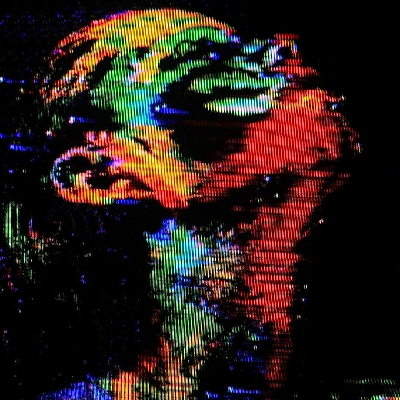
if i had to pick a favorite thing by yoko ono its prolly this

 @heiseonline@social.heise.de
2025-10-10 07:24:00
Der "Minecraft"-Film bekommt eine Fortsetzung
Der Kinoerfolg des "Minecraft"-Films macht es alternativlos: Ein Nachfolger ist in Arbeit und soll 2027 erscheinen.
https://www.hei…
 @floheinstein@chaos.social
2025-12-10 08:48:04
Die Amokfahrt vom 11. September 2020 in Amriswil war ein Incel-Attentat.
Er fuhr los, um zu töten https://www.srf.ch/news/schweiz/hass-auf-frauen-er-fuhr-los-um-zu-toeten?srg_sm_medium=mastodon

 @Techmeme@techhub.social
2026-01-09 12:56:00
Filings: X's UK revenue fell 58.3% YoY from £69.1M in 2023 to £28.9M in 2024; pre-tax profits fell from £2.2M in 2023 to £767,000 in 2024 (Mark Sweney/The Guardian)
https://www.theguardian.com/technology/202
 @cdarwin@c.im
2025-12-08 05:50:00
Mount Sinai Hospital in New York City disciplined three nurses
who spoke to the media and to fellow staff about safety concerns
following an attempted shooting in the hospital’s emergency department last month
— a consequence their union calls unlawful.
The New York State Nurses Association alleges that Mount Sinai’s decision
to write up two nurses and suspend another the day after Thanksgiving for discussing the union’s safety proposals with fellow nurses

 @thomasfuchs@hachyderm.io
2025-12-10 15:37:37
It’s odd that that happened, I’ve removed batteries a long time ago (these laptops have 3 separate batteries), and while there was some corrosion from one of them I cleaned it all up and it worked for several years.
I suspect something in power suppply (which is built into the laptop), so gonna have to take it apart which is annoying to say the least (brittle plastics, flimsy cables).
 @arXiv_csCV_bot@mastoxiv.page
2025-10-10 11:13:49
InstructX: Towards Unified Visual Editing with MLLM Guidance
Chong Mou, Qichao Sun, Yanze Wu, Pengze Zhang, Xinghui Li, Fulong Ye, Songtao Zhao, Qian He
https://arxiv.org/abs/2510.08485

 @sauer_lauwarm@mastodon.social
2025-11-09 19:22:58
Die eine Hälfte des Films frug ich mich nach den Beziehungen zwischen den Frauen und Mädchen in den verschiedenen Zeitebenen ("geht sich das rechnerisch aus?"), die andere frug ich mich, welcher Frau bzw. welchem Mädchen als Nächstes Grauenhaftes widerfahren wird. (Schilinski, In die Sonne schauen.) #film
 @catsalad@infosec.exchange
2026-01-09 16:56:40
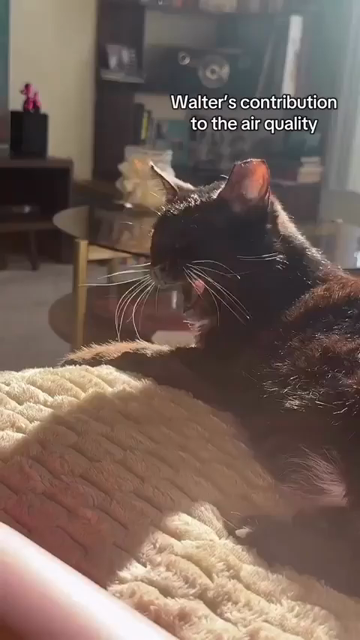
Air Quality Index: Cats
 @tiotasram@kolektiva.social
2025-10-10 13:21:09
Finished "Lobizona" by Romina Garber. I have extremely mixed feelings about this book. It's a powerful depiction of the fear of living as an undocumented child/teen and it has interesting things to say about rejection, belonging, and the choice between seeking to be recognized for who you are and wanting you blend in enough to be accepted as normal. However, it's also an explicit homage to Harry Potter, and while it doesn't include antisemitic tropes or glorify slavery or even have any anti-trans sentiments I can detect, to me the magical school setup felt forced and I thought it would have been a better book had it not tried to fit that mould. Also, it would have been a super interesting situation to explore trans issues, and while it's definitely fine for it not to do that, the author's praise of Rowling's work has me wondering...
There's a sequel that I think could in theory be amazing, but given the execution of the first book, I think I'll wait a bit before checking it out. By putting her main character in opposition to both ICE in the human world and the magical authorities in the other world, Garber explicitly sets the stage for a revolution standing between her protagonist and any kind of lasting peace. But I'm not confident she's capable of writing that story without relying on some kind of supernatural deus ex machina, which would be disappointing to me, since "a better world if only possible through divine intervention" is an inherently regressive message.
Overall, #OwnVoices fantasy centering an undocumented immigrant is an excellent thing, and I've certainly got a lot of privilege that surely influences my criticism. However, #OwnVoices stuff has a range of levels of craft and political stances, and it can be excellent for some reasons and mediocre for others.
On that point, if anyone reading this has suggestions for fiction books grappling with borders and the carceral state, Is be happy to hear them.
#AmReading