 @bourgwick@heads.social
2026-06-23 00:40:08
what happened when clive davis (aka siva devil c) met owsley & robert hunter, 1973. https://www.dead.net/deadcast/wake-flood-50-mississippi-half-step-uptown-toodeloo
![RON RAKOW: So anyway, we set it up. [Sam] Cutler had a booking agency down the street from
the Grateful Dead office. He had the most stunning Gothic dining room table you ever saw. It was a
big table with 12 thrones around it, hand-carved Gothic chairs. So they're around the table, and
Clive Davis comes in. All the important guys are there. Let's see: there was the band; [Robert]
Hunter; Owsley; Ram Rod; and maybe [Kidd] Candelario, somebody like that. Anyway, we're sitting
around and starting …](https://cdn.masto.host/headssocial/media_attachments/files/116/796/634/191/727/668/original/586d51be274a610b.jpeg)
 @jonippolito@digipres.club
2026-07-21 14:35:02
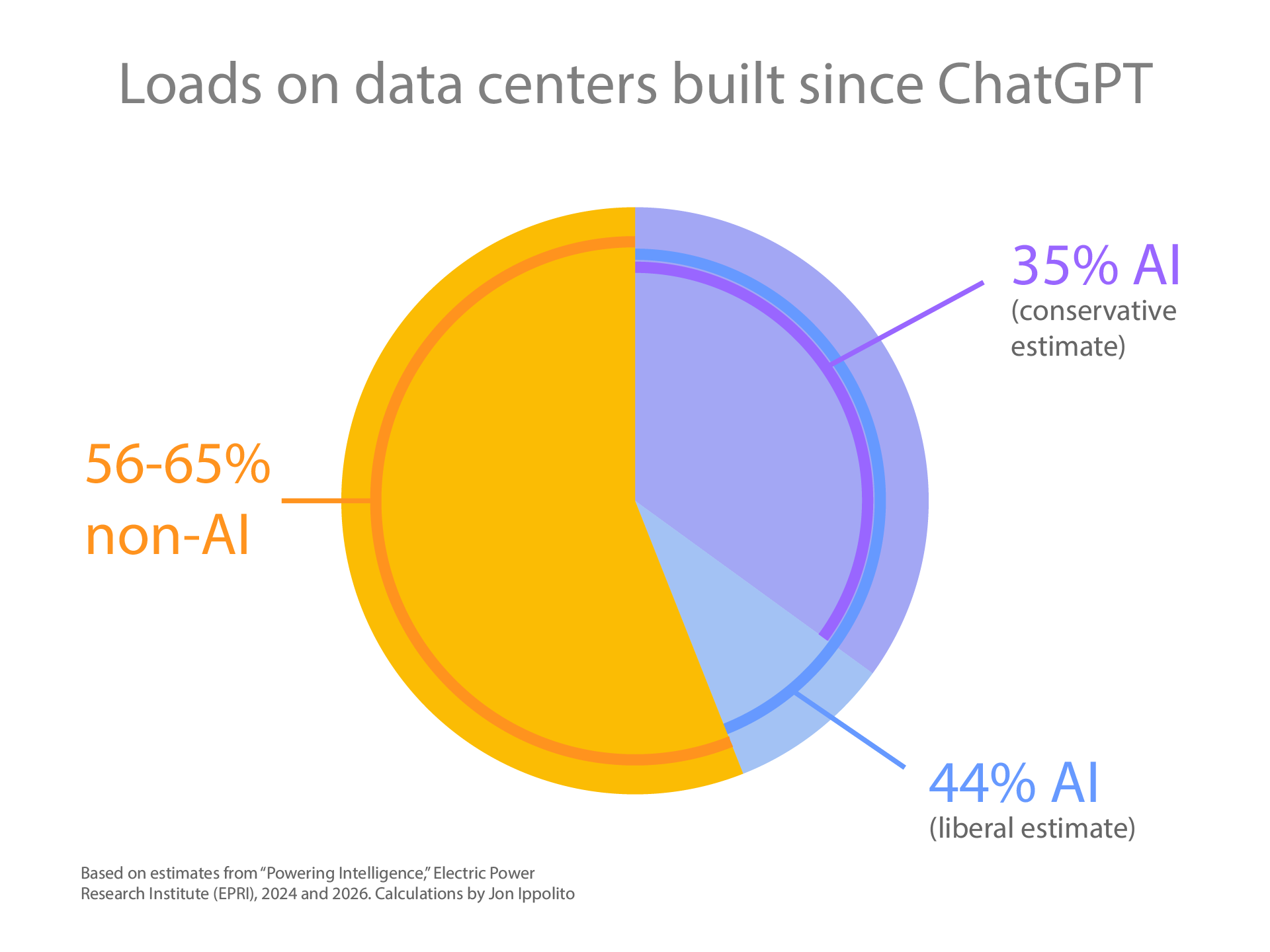
Meta's new Anthropic compute deal hints at a bigger strategy: rather than just bet on AI, hyperscalers are building data centers that will continue to pay off even if the AI bubble doesn't. My latest Substack https://jonippolito.substack.com/p/what-if-data-centers-aren…
 @NFL@darktundra.xyz
2026-08-22 17:55:21
NFL news roundup: Rashawn Slater back at Chargers practice; Jake Bobo out for season https://www.nfl.com/news/nfl-news-roundup-latest-league-updates-from-saturday-aug-22
 @azonenberg@ioc.exchange
2026-07-20 05:08:58
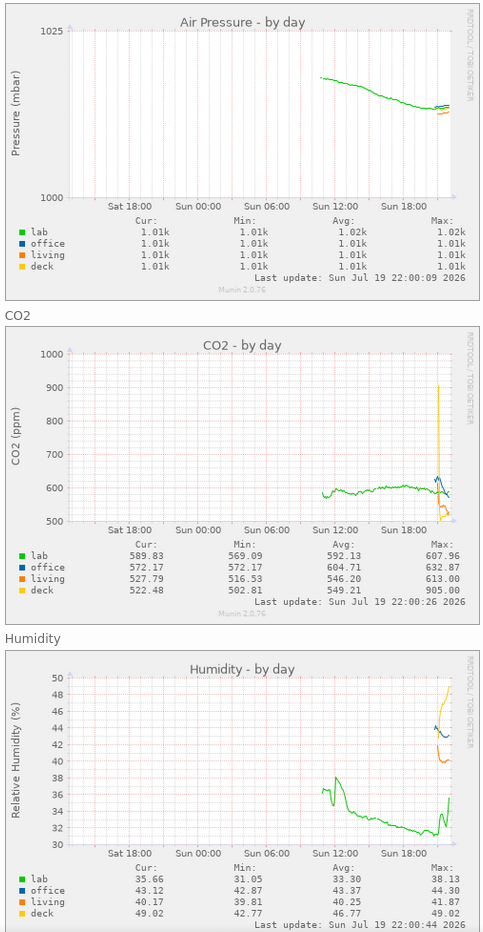
Just set up some new IAQ monitoring stations around the house. Still want to put one in the bedroom to see how stuffy it gets at night with the door closed, but I only had four units so this is what I started with.
Particle counts are Sensirion SEN5x, CO2 and most other atmospheric data SCD4x.
Haven't done any kind of zero cal on the CO2 and they've been sitting around idle for a while, so there's probably a bit of offset that will need to be corrected - the one on th…
 @davej@dice.camp
2026-07-20 05:28:45
“Random? Monday? #MondayRandom10. Yeah? Here.”
(Wraps pillow around face. Passes out.)
1. Emily Barker—“Return Me”
2. The Heavy Eyes—“These Men Are Wolves”
3. The Fray—“Ice Cold Lakes"
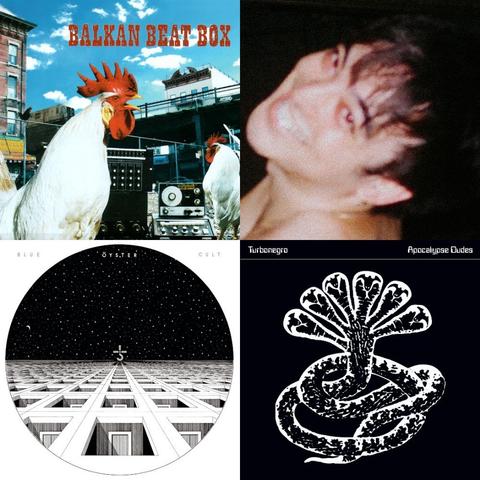
4. Balkan Beat Box (ft Boom Pam)—“Gross”
5. Joji—“Yeah Right”
6. Ghoultown—“Drink with the Living Dead”
7. Blue Öyster Cult—“I'm on the Lamb but I Ain't No S…
 @cdarwin@c.im
2026-08-15 06:46:37
The aircraft carrier U.S.S. Abraham Lincoln’s supply problems began soon after the first day of the war, as Iranian missiles and attack dronesfell on a Navy base in Bahrain.
The Iranian attack, retaliation for the U.S.-Israeli assault on Tehran, destroyed much of the base.
And as it went up in smoke, so did a major logistics hub that the Navy has relied on for decades.
The Navy needed a Plan B to continue feeding the sailors working around the clock to keep warplanes flying…

 @burger_jaap@mastodon.social
2026-08-18 13:24:44
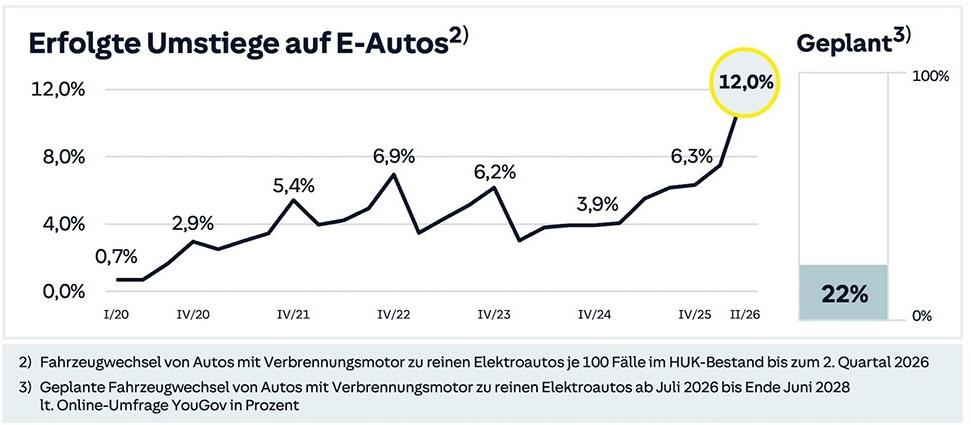
Data from German vehicle insurer HUK-COBURG (which holds a quarter of the market) shows that Germans have been choosing EVs almost twice as often since the latest oil price crisis in March: 12 per cent of car insurance policy switches in Q2 2026 were to an EV
Second-hand EVs are also becoming increasingly popular amongst frequent drivers, for whom the cost savings are even greater. Volkswagen EVs are popular as second-hand cars, whilst new German EVs are less so.
 @arXiv_qbioNC_bot@mastoxiv.page
2026-07-22 07:57:40
Eccentricity-Constrained CNN Training Reveals Adaptive Information Coding Around the Visual Field
Dylan M. Diaz, Margaret M. Henderson
https://arxiv.org/abs/2607.19316 https://arxiv.org/pdf/2607.19316 https://arxiv.org/html/2607.19316
arXiv:2607.19316v1 Announce Type: new
Abstract: In the primate visual system, center-preferring cortical populations have higher spatial resolution and overlap face- and word-selective regions while periphery-preferring populations have lower spatial resolution and overlap scene-selective regions. This "eccentricity bias" may reflect differential task-relevance: central vision may better support fine-grained tasks like face recognition and reading, while peripheral vision may better support scene understanding. To test whether eccentricity-dependent coding can emerge from natural experience, we used egocentric video and eye-tracking data from the Visual Experience Dataset (VEDB). We trained ResNet-18 models using contrastive learning (SimCLR) on frames modified to isolate different eccentricities (gaze-contingent fovea-only crops, periphery-only crops, and periphery-only crops with a NeuroFovea transform applied). We evaluated downstream task performance and model alignment with human fMRI data (Natural Scenes Dataset; encoding models). In-domain VEDB frame classification showed systematic differences between fovea- and periphery-only models across categories, indicating differential informativeness across tasks. On downstream classification, VEDB-pretrained models generalized better to scene categorization (Places365) than face recognition (VGGFace2), with fovea-only models stronger on both. Across visual cortex, VEDB-pretrained models matched neural predictivity of models trained on mid-sized non-egocentric datasets (ImageNet-100), suggesting egocentric data supports emergence of cortically-aligned representations. In scene-selective cortex (PPA, RSC), periphery-only models held a small but consistent advantage in explained variance over fovea-only models, suggesting these regions are aligned with peripheral statistics. Together, these results suggest egocentric experience may adaptively constrain cortical information processing.
toXiv_bot_toot
 @tiotasram@kolektiva.social
2026-08-20 22:28:10
So about that discomfort...
In the end, we have basically "hooray, national park declaration will protect the endangered species, whose traditional guardians, effectively extinct, will move into a new formal structure."
Celeste isn't Indigenous-coded, but this is *way* to close to several layers of colonialist myth that we have in America. The real story of our national parks, after all, is that we genocided the original inhabitants and forced them to move out of the parks, including banning culturally-important religious ceremonies at sacred sites in parks like Yosemite (in a country that's supposed to be very serious about freedom of religion...). Then we mostly erased those tribes from officially-taught history, pretending that they had tragically disappeared (they're still around; I could probably go look up their websites right now if I wanted to), and said "look at the majesty of this *wild*, *untamed*, *remote* wilderness. Isn't its completely *natural* beauty, untouched by humans, so wonderful?" Then just like the original tribes we do a bunch of human intervention to maintain the ecosystems there, and start charging camping and parking fees to support that work.
Yeah, it's a really fucked-up history.
So that's why it bothers me that the book ends with this as a positive resolution. In the book, the dragons' guardians are actually extinct, down to just Celeste. The prophecy-bending pretty much ensures that they won't actually make a comeback as a culture... But in real life, the descendants of the tribes that were forced out of Yellowstone, Yosemite, and other national parks are still around. The portrayal of genocides of indigenous peoples as completed is actually one big part of the colonialist myth: if they're all dead already, it might be tragic, but it's history, and there's no reason to give the land back or pay reparations or anything like that (Hollow Knight is sadly another extremely popular example of this myth-making). Then there's the idea that humans and nature are separable, the idea that the colonizers are trustworthy stewards of the land they stole, etc. When you set these things up to be true in your fictional world, you're helping acclimate readers to the idea that they're true in the real world, and that's bad.
I don't think that Matrin necessarily did this with malice: she's probably just reflecting back the myths she was taught. Special order tasked with sacred duty now almost extinct? Great way to give a character a tragic backstory and some powerful motivations, right? Etc.
TL;DR: I wish Martin had been as conscious of and clever in undermining colonialist myths as she was in dealing with standard fantasy racism.
 @chrisnelder@mastodon.energy
2026-07-16 02:14:08
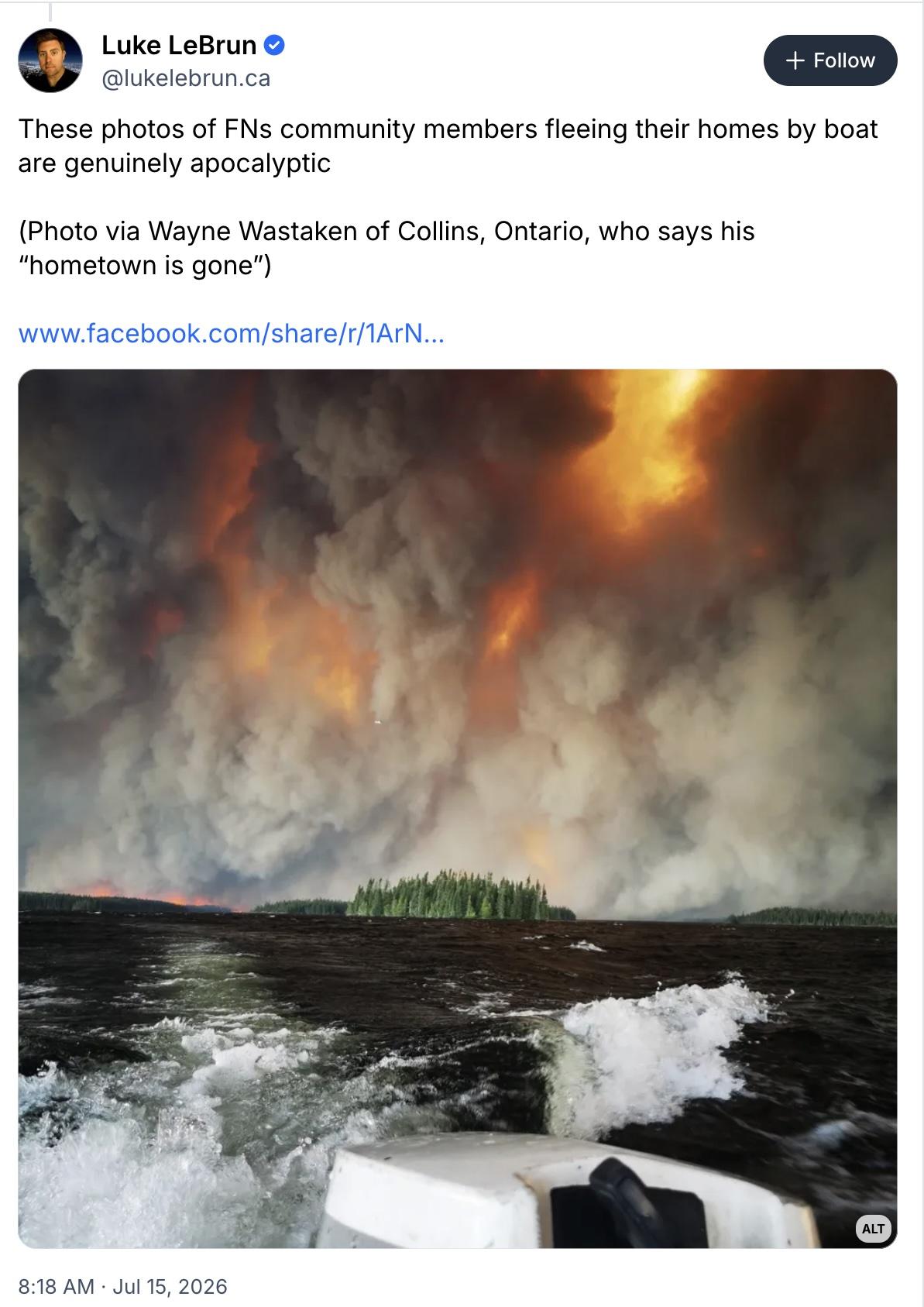
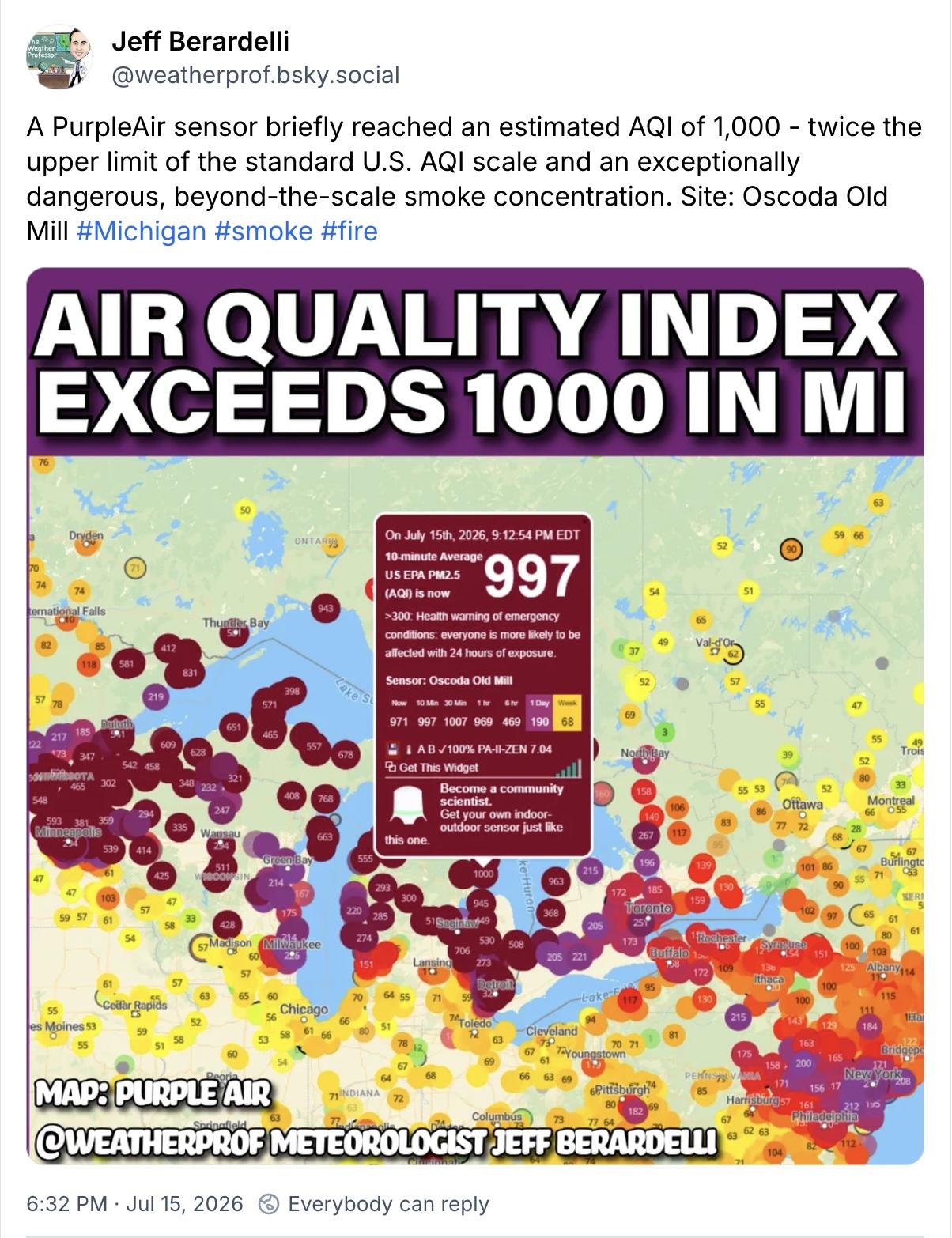
In 2022 I drove across Canada from Ottawa to northern BC. I remember driving for three full days around the top of Lake Superior with a wall of mostly dead trees on either side of the road the whole way, thinking, man when Ontario burns, there's going to be no stopping it. And here we are.
Via Bluesky: