We’ve published new research from the EU co-funded project NGSOTI: “Learning from large-scale IPv4 blackhole: Behavioral analysis of SNMP traffic”.
Over a 12-month period (Nov 2024–Oct 2025), our network telescope captured ~634 million unsolicited SNMP queries from more than 153,000 unique IPv4 sources scanning an unused /18 block.
The origins of the traffic are globally distributed, with notable concentrations from Indonesia, China, the United States, Germany, Chile and others, …
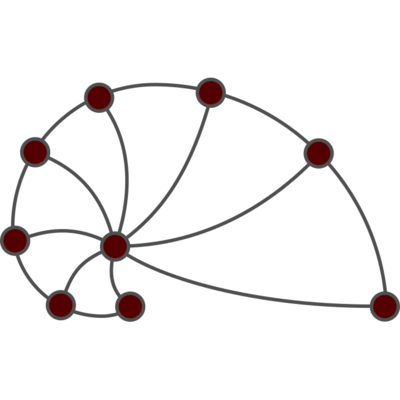
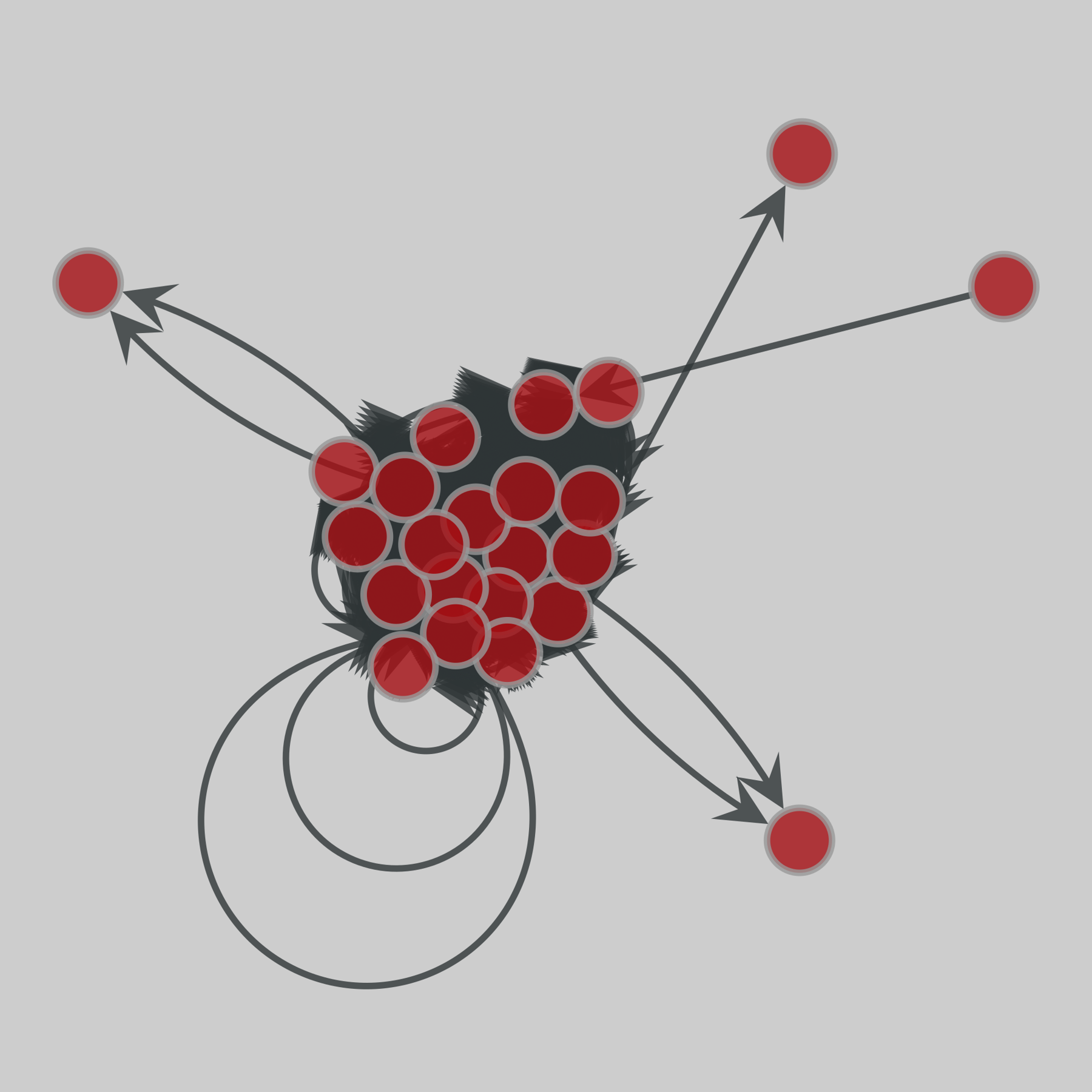
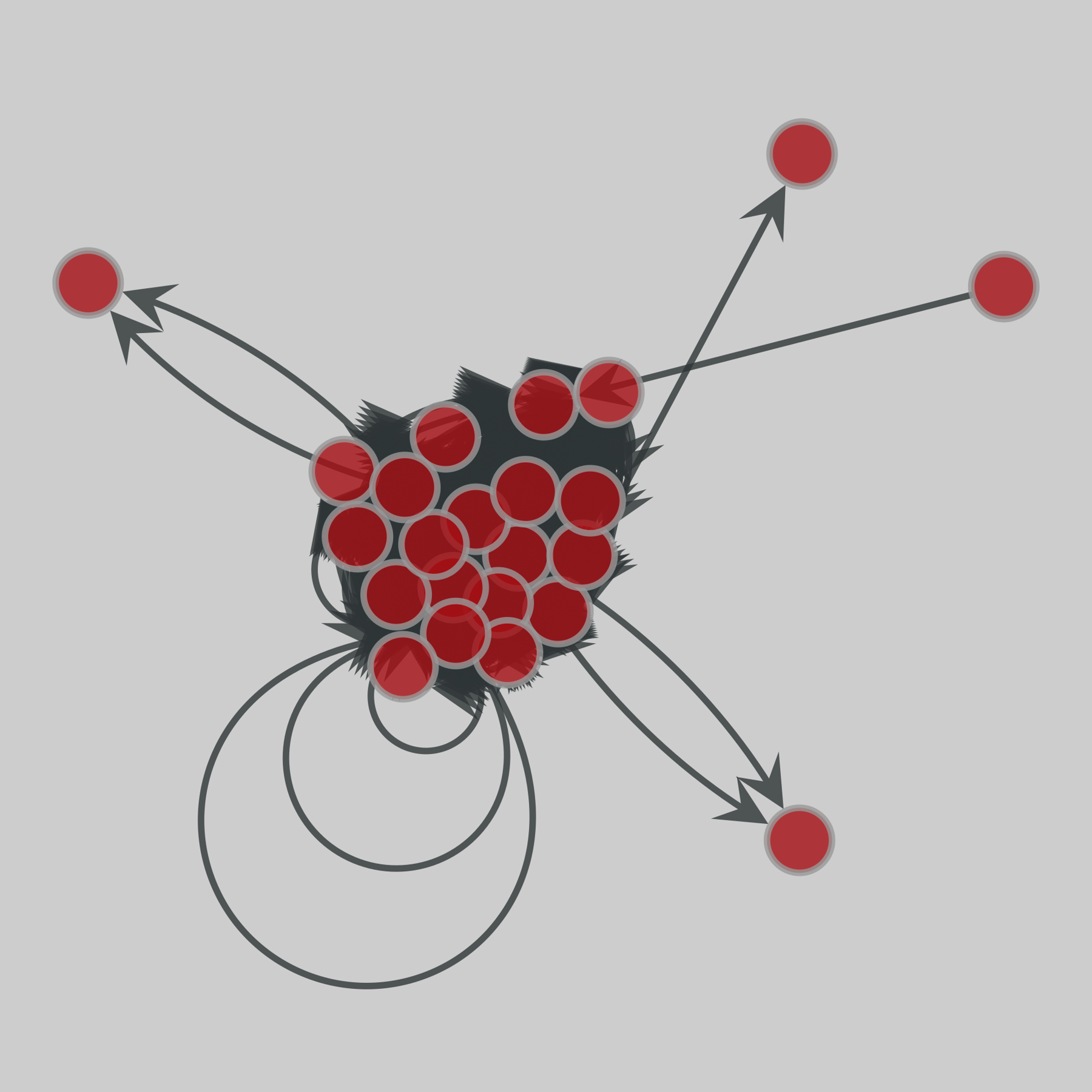
sp_baboons: Baboons' interactions (2020)
Network of interactions between a group of 20 Guinea baboons living in an enclosure of a Primate Center in France, between June 13th 2019 and July 10th 2019. The data set contains observational and wearable sensors data.
This network has 13 nodes and 63095 edges.
Tags: Social, Animal, Offline, Unweighted, Weighted, Temporal, Metadata
Proposition 36, approved by voters last year, gave prosecutors the ability to charge people convicted of various third-time drug offenses with a so-called
treatment-mandated felony
– a choice between behavioral health treatment or up to three years in jail or prison.
https://bit.ly/3NiBX0r
📸 J.…
sp_baboons: Baboons' interactions (2020)
Network of interactions between a group of 20 Guinea baboons living in an enclosure of a Primate Center in France, between June 13th 2019 and July 10th 2019. The data set contains observational and wearable sensors data.
This network has 13 nodes and 63095 edges.
Tags: Social, Animal, Offline, Unweighted, Weighted, Temporal, Metadata
kabr-tools: Automated Framework for Multi-Species Behavioral Monitoring
Jenna Kline, Maksim Kholiavchenko, Samuel Stevens, Nina van Tiel, Alison Zhong, Namrata Banerji, Alec Sheets, Sowbaranika Balasubramaniam, Isla Duporge, Matthew Thompson, Elizabeth Campolongo, Jackson Miliko, Neil Rosser, Tanya Berger-Wolf, Charles V. Stewart, Daniel I. Rubenstein
https://
TraceAegis: Securing LLM-Based Agents via Hierarchical and Behavioral Anomaly Detection
Jiahao Liu, Bonan Ruan, Xianglin Yang, Zhiwei Lin, Yan Liu, Yang Wang, Tao Wei, Zhenkai Liang
https://arxiv.org/abs/2510.11203
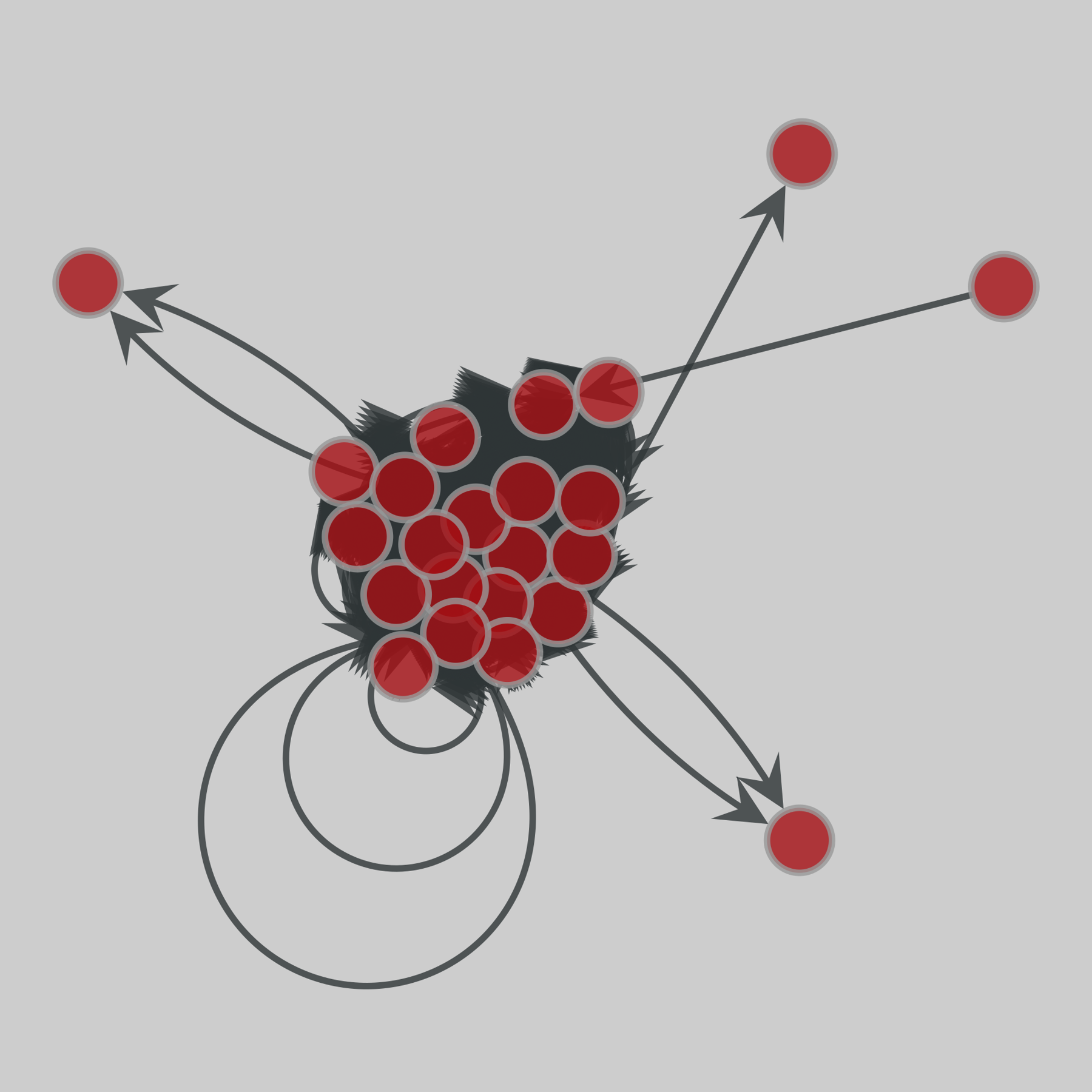
sp_baboons: Baboons' interactions (2020)
Network of interactions between a group of 20 Guinea baboons living in an enclosure of a Primate Center in France, between June 13th 2019 and July 10th 2019. The data set contains observational and wearable sensors data.
This network has 23 nodes and 3197 edges.
Tags: Social, Animal, Offline, Unweighted, Weighted, Temporal, Metadata
MIT Provost
Anantha P. Chandrakasan told an audience of about 300 undergraduates from the Class of 2029:
“The goal is for MIT to become one of the world’s most prolific, collaborative, and interdisciplinary sources of technological, behavioral, and policy solutions for the global climate challenge over the next decade...
It is something we need to do urgently, and today is your opportunity to play a role in that bold mission.”
From Behavioral Performance to Internal Competence: Interpreting Vision-Language Models with VLM-Lens
Hala Sheta, Eric Huang, Shuyu Wu, Ilia Alenabi, Jiajun Hong, Ryker Lin, Ruoxi Ning, Daniel Wei, Jialin Yang, Jiawei Zhou, Ziqiao Ma, Freda Shi
https://arxiv.org/abs/2510.02292
I was looking into the #DANDI archive, following a post of @… that mentioned it as a possibility for #Neuroscience data storage.. It looks like it could be useful i…
Total #SolarEclipse triggers dawn behavior in birds: Insights from acoustic recordings and community science: https://www.science.org/doi/10.1126/science.adx3025 -> "Compiling more than 10,000 community observations and artificial intelligence analyses of nearly 100,000 vocalizations, we found that bird behavior was substantially affected by these few minutes of unexpected afternoon darkness. More than half of wild bird species changed their biological rhythms, with many producing a dawn chorus in the aftermath of the eclipse. This natural experiment underscores the power of light in structuring animal behavior: Even when 'night' lasts for just 4 minutes, robust behavioral changes ensue." -> "Variation in species response also informs us about variation in sensitivity to light, with implications for the impacts of artificial light."
HatLLM: Hierarchical Attention Masking for Enhanced Collaborative Modeling in LLM-based Recommendation
Yu Cui, Feng Liu, Jiawei Chen, Canghong Jin, Xingyu Lou, Changwang Zhang, Jun Wang, Yuegang Sun, Can Wang
https://arxiv.org/abs/2510.10955
Task-Specific Dual-Model Framework for Comprehensive Traffic Safety Video Description and Analysis
Blessing Agyei Kyem, Neema Jakisa Owor, Andrews Danyo, Joshua Kofi Asamoah, Eugene Denteh, Tanner Muturi, Anthony Dontoh, Yaw Adu-Gyamfi, Armstrong Aboah
https://arxiv.org/abs/2510.11907
Replaced article(s) found for cs.MA. https://arxiv.org/list/cs.MA/new
[1/1]:
- Agent-Based Modelling for Real-World Stock Markets under Behavioral Economic Principles
He, Zhu, Lu, Xu, Liu, Liu, Lin, Chan, Bian
FM-IRL: Flow-Matching for Reward Modeling and Policy Regularization in Reinforcement Learning
Zhenglin Wan, Jingxuan Wu, Xingrui Yu, Chubin Zhang, Mingcong Lei, Bo An, Ivor Tsang
https://arxiv.org/abs/2510.09222
Retrieving the structure of probabilistic sequences from EEG data during the goalkeeper game
P. R. Cabral-Passos, P. S. Azevedo, V. H. Moraes, B. L. Ramalho, A. Duarte, C. D. Vargas
https://arxiv.org/abs/2510.06344
Beyond Surface Reasoning: Unveiling the True Long Chain-of-Thought Capacity of Diffusion Large Language Models
Qiguang Chen, Hanjing Li, Libo Qin, Dengyun Peng, Jinhao Liu, Jiangyi Wang, Chengyue Wu, Xie Chen, Yantao Du, Wanxiang Che
https://arxiv.org/abs/2510.09544
Modeling the control of West Nile virus using mosquito reduction methods, vaccination of equids, and human behavioral adaptation to the usage of personal protective equipment
Pride Duve, Felix Gregor Sauer, Renke L\"uhken
https://arxiv.org/abs/2509.24657
Beyond Revenue and Welfare: Counterfactual Analysis of Spectrum Auctions with Application to Canada's 3800MHz Allocation
Sara Jalili Shani, Kris Joseph, Michael B. McNally, James R. Wright
https://arxiv.org/abs/2512.08106 https://arxiv.org/pdf/2512.08106 https://arxiv.org/html/2512.08106
arXiv:2512.08106v1 Announce Type: new
Abstract: Spectrum auctions are the primary mechanism through which governments allocate scarce radio frequencies, with outcomes that shape competition, coverage, and innovation in telecommunications markets. While traditional models of spectrum auctions often rely on strong equilibrium assumptions, we take a more parsimonious approach by modeling bidders as myopic and straightforward: in each round, firms simply demand the bundle that maximizes their utility given current prices. Despite its simplicity, this model proves effective in predicting the outcomes of Canada's 2023 auction of 3800 MHz spectrum licenses. Using detailed round-by-round bidding data, we estimate bidders' valuations through a linear programming framework and validate that our model reproduces key features of the observed allocation and price evolution. We then use these estimated valuations to simulate a counterfactual auction under an alternative mechanism that incentivizes deployment in rural and remote regions, aligning with one of the key objectives set out in the Canadian Telecommunications Act. The results show that the proposed mechanism substantially improves population coverage in underserved areas. These findings demonstrate that a behavioral model with minimal assumptions is sufficient to generate reliable counterfactual predictions, making it a practical tool for policymakers to evaluate how alternative auction designs may influence future outcomes. In particular, our study demonstrates a method for counterfactual mechanism design, providing a framework to evaluate how alternative auction rules could advance policy goals such as equitable deployment across Canada.
toXiv_bot_toot
Crosslisted article(s) found for cs.AI. https://arxiv.org/list/cs.AI/new
[3/6]:
- An AI-Based Behavioral Health Safety Filter and Dataset for Identifying Mental Health Crises in T...
Nelson, Wong, Silvestrini, Shin, Robinson, Lee, Yang, Torous, Trister
Reliability of Single-Level Equality-Constrained Inverse Optimal Control
Filip Be\v{c}anovi\'c (University of Belgrade - School of Electrical Engineering), Kosta Jovanovi\'c (University of Belgrade - School of Electrical Engineering), Vincent Bonnet (LAAS-CNRS)
https://arxiv.org/abs/2510.08406
Replaced article(s) found for nlin.AO. https://arxiv.org/list/nlin.AO/new
[1/1]:
- Behavioral alignment in social networks
Yu Xia, Alex McAvoy, Qi Su
https://…
ChoirRec: Semantic User Grouping via LLMs for Conversion Rate Prediction of Low-Activity Users
Dakai Zhai, Jiong Gao, Boya Du, Junwei Xu, Qijie Shen, Jialin Zhu, Yuning Jiang
https://arxiv.org/abs/2510.09393
Crosslisted article(s) found for cs.LG. https://arxiv.org/list/cs.LG/new
[2/4]:
- Adaptive Deception Framework with Behavioral Analysis for Enhanced Cybersecurity Defense
Basil Abdullah AL-Zahrani
Crosslisted article(s) found for q-fin.RM. https://arxiv.org/list/q-fin.RM/new
[1/1]:
- Portfolio Analysis Based on Markowitz Stochastic Dominance Criteria: A Behavioral Perspective
Peng Xu
Crosslisted article(s) found for cs.HC. https://arxiv.org/list/cs.HC/new
[1/1]:
- AdaptAuth: Multi-Layered Behavioral and Credential Analysis for a Secure and Adaptive Authenticat...
Tonmoy Ghosh
Replaced article(s) found for physics.soc-ph. https://arxiv.org/list/physics.soc-ph/new
[1/1]:
- Behavioral alignment in social networks
Yu Xia, Alex McAvoy, Qi Su
Synthetic Dialogue Generation for Interactive Conversational Elicitation & Recommendation (ICER)
Moonkyung Ryu, Chih-Wei Hsu, Yinlam Chow, Mohammad Ghavamzadeh, Craig Boutilier
https://arxiv.org/abs/2510.02331
Prefrontal scaling of reward prediction error readout gates reinforcement-derived adaptive behavior in primates
Tian Sang, Yichun Huang, Fangwei Zhong, Miao Wang, Shiqi Yu, Jiahui Li, Yuanjing Feng, Yizhou Wang, Kwok Sze Chai, Ravi S. Menon, Meiyun Wang, Fang Fang, Zheng Wang
https://arxiv.org/abs/2512.09761 https://arxiv.org/pdf/2512.09761 https://arxiv.org/html/2512.09761
arXiv:2512.09761v1 Announce Type: new
Abstract: Reinforcement learning (RL) enables adaptive behavior across species via reward prediction errors (RPEs), but the neural origins of species-specific adaptability remain unknown. Integrating RL modeling, transcriptomics, and neuroimaging during reversal learning, we discovered convergent RPE signatures - shared monoaminergic/synaptic gene upregulation and neuroanatomical representations, yet humans outperformed macaques behaviorally. Single-trial decoding showed RPEs guided choices similarly in both species, but humans disproportionately recruited dorsal anterior cingulate (dACC) and dorsolateral prefrontal cortex (dlPFC). Cross-species alignment uncovered that macaque prefrontal circuits encode human-like optimal RPEs yet fail to translate them into action. Adaptability scaled not with RPE encoding fidelity, but with the areal extent of dACC/dlPFC recruitment governing RPE-to-action transformation. These findings resolve an evolutionary puzzle: behavioral performance gaps arise from executive cortical readout efficiency, not encoding capacity.
toXiv_bot_toot
Crosslisted article(s) found for cs.AI. https://arxiv.org/list/cs.AI/new
[5/8]:
- A Human Behavioral Baseline for Collective Governance in Software Projects
Mobina Noori, Mahasweta Chakraborti, Amy X Zhang, Seth Frey
Toward a Realistic Encoding Model of Auditory Affective Understanding in the Brain
Guandong Pan, Yaqian Yang, Shi Chen, Xin Wang, Longzhao Liu, Hongwei Zheng, Shaoting Tang
https://arxiv.org/abs/2509.21381
Evidence of Cognitive Biases in Capture-the-Flag Cybersecurity Competitions
Carolina Carreira, Anu Aggarwal, Alejandro Cuevas, Maria Jos\'e Ferreira, Hanan Hibshi, Cleotilde Gonzalez
https://arxiv.org/abs/2510.05771
sp_baboons: Baboons' interactions (2020)
Network of interactions between a group of 20 Guinea baboons living in an enclosure of a Primate Center in France, between June 13th 2019 and July 10th 2019. The data set contains observational and wearable sensors data.
This network has 23 nodes and 3197 edges.
Tags: Social, Animal, Offline, Unweighted, Weighted, Temporal, Metadata
Crosslisted article(s) found for cs.HC. https://arxiv.org/list/cs.HC/new
[1/1]:
- Deep Learning Based Approach to Enhanced Recognition of Emotions and Behavioral Patterns of Autis...
Nelaka K. A. R, Peiris M. K. V, Liyanage R. P. B
Replaced article(s) found for cs.CL. https://arxiv.org/list/cs.CL/new
[8/8]:
- EigenBench: A Comparative Behavioral Measure of Value Alignment
Jonathn Chang, Leonhard Piff, Suvadip Sana, Jasmine X. Li, Lionel Levine
sp_baboons: Baboons' interactions (2020)
Network of interactions between a group of 20 Guinea baboons living in an enclosure of a Primate Center in France, between June 13th 2019 and July 10th 2019. The data set contains observational and wearable sensors data.
This network has 23 nodes and 3197 edges.
Tags: Social, Animal, Offline, Unweighted, Weighted, Temporal, Metadata
When Researchers Say Mental Model/Theory of Mind of AI, What Are They Really Talking About?
Xiaoyun Yin, Elmira Zahmat Doost, Shiwen Zhou, Garima Arya Yadav, Jamie C. Gorman
https://arxiv.org/abs/2510.02660
sp_baboons: Baboons' interactions (2020)
Network of interactions between a group of 20 Guinea baboons living in an enclosure of a Primate Center in France, between June 13th 2019 and July 10th 2019. The data set contains observational and wearable sensors data.
This network has 23 nodes and 3197 edges.
Tags: Social, Animal, Offline, Unweighted, Weighted, Temporal, Metadata
"Having Lunch Now": Understanding How Users Engage with a Proactive Agent for Daily Planning and Self-Reflection
Adnan Abbas, Caleb Wohn, Arnav Jagtap, Eugenia H Rho, Sang Won Lee
https://arxiv.org/abs/2509.24073
 @adulau@infosec.exchange