 @krone@frawas.de
2026-04-24 09:46:28
Fataler Fehler - Tödlicher Flugzeugcrash: Lotse erteilte Freigabe #News #Nachrichten
 @nelson@tech.lgbt
2026-02-23 08:19:04
I've been making a point of wearing LGBT flare in the US this last year, but no one seems to notice or care. Fine! But on this trip in Rome I'm pretty sure several folks have been friendlier to me on seeing my rainbow watchband. Lots of flirty waiters.
 @leftsidestory@mstdn.social
2026-03-05 06:55:25
Sickly Red III ⭕️
病态的红 III ⭕️
📷 Pentax MX
🎞️ CineStill 800T
If you like my work, buy me a coffee from PayPal #filmphotography




 @penguin42@mastodon.org.uk
2026-02-19 18:49:32
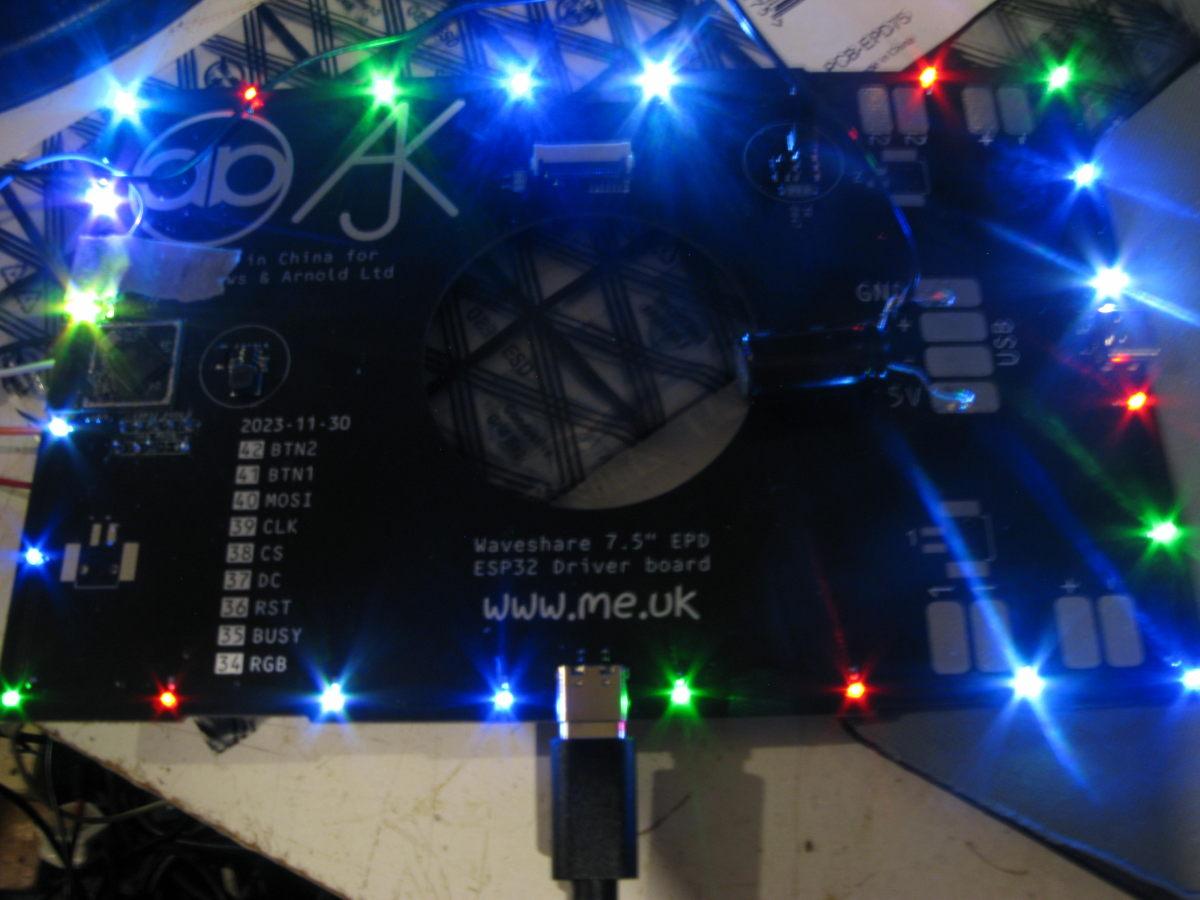
Playing with esp32-rs on a misused @… epaper-less doorbell.
(Heck that LED protocol is a pain)
 @crell@phpc.social
2026-03-17 16:49:04
If your #CSS works fine in Chrome, but results in white-on-white colors on Firefox, then your CSS doesn't work fine, and whoever leads your CSS team needs to go back to their bootcamp and start over.
It's 2026. It's simply unprofessional to have that kind of basic color scheme failure in *any* browser.
#WebDev
 @arXiv_physicsfludyn_bot@mastoxiv.page
2026-02-26 09:01:51
Large eddy simulation of turbulent swirl-stabilized flames using the front propagation formulation: impact of the resolved flame thickness
Ruochen Guo, Yunde Su, Yuewen Jiang
https://arxiv.org/abs/2602.21940 https://arxiv.org/pdf/2602.21940 https://arxiv.org/html/2602.21940
arXiv:2602.21940v1 Announce Type: new
Abstract: This work extends the front propagation formulation (FPF) combustion model to large eddy simulation (LES) of swirl-stabilized turbulent premixed flames and investigates the effects of resolved flame thickness on the predicted flame dynamics. The FPF method is designed to mitigate the spurious propagation of under-resolved flames while preserving the reaction characteristics of filtered flame fronts. In this study, the model is extended to account for non-adiabatic effects and is coupled with an improved sub-filter flame speed estimation that resolves the inconsistency arising from heat-release effects on local sub-filter turbulence. The performance of the extended FPF method is validated by LES of the TECFLAM swirl-stabilized burner, where the results agree well with experimental measurements. The simulations reveal that the stretching of vortical structures in the outer shear layer leads to the formation of trapped flame pockets, which are identified as the physical mechanism responsible for the secondary temperature peaks observed in the experiment. The prediction of this phenomenon is shown to be strongly dependent on the resolved flame thickness, when the filter size is used for modeling sub-filter flame wrinklings. Without proper modeling of the chemical steepening effects, the thickness of the resolved flame brush is over-predicted, causing the flame consumption rate to be under-estimated. Consequently, the flame brush detaches from the outer shear layer, resulting in a failure to capture the flame pockets and the associated secondary temperature peaks.
toXiv_bot_toot
 @hanno@mastodon.social
2026-03-31 11:49:10
Europe's🇪🇺 failure to scale Green Methanol production leads to a compounding failure to attract one of the most promising projects for a fossil-free future chemical industry🌱⚗️🏭
It all feels like what played out in the Solar☀️ industry. China invests early and big. More in my latest newsletter.
 @teledyn@mstdn.ca
2026-03-31 15:46:06
No progress at all on this #Ubuntu #GDM login failure issue; I can now only use the machine with a PTS console login, then run gnome-session --wayland, and that gives me only basic function, no access to things like User Accounts.
journalctl only gives these two clues, neither of which yields any meaningful Search results (in 2026)
gdm-autologin][]: gkr-pam: no password is available for user
gdm-autologin][]: pam_unix(gdm-autologin:session): session opened for user guest(uid=1005) by guest(uid=0)
gdm-autologin][]: gkr-pam: couldn't unlock the login keyring.
gdm3[841002]: Gdm: GdmDisplay: Session never registered, failing
but console login proves the user has a perfectly good password! GDM3 fails on the auto-login acct, presents the list of users, clicking one lets you enter pw, then bounces back to the acct list screen and any subsequent attempts are shown a non-functional box to enter their pw and a 'back' button that does nothing. 😩