 @leftsidestory@mstdn.social
2026-07-29 01:26:55
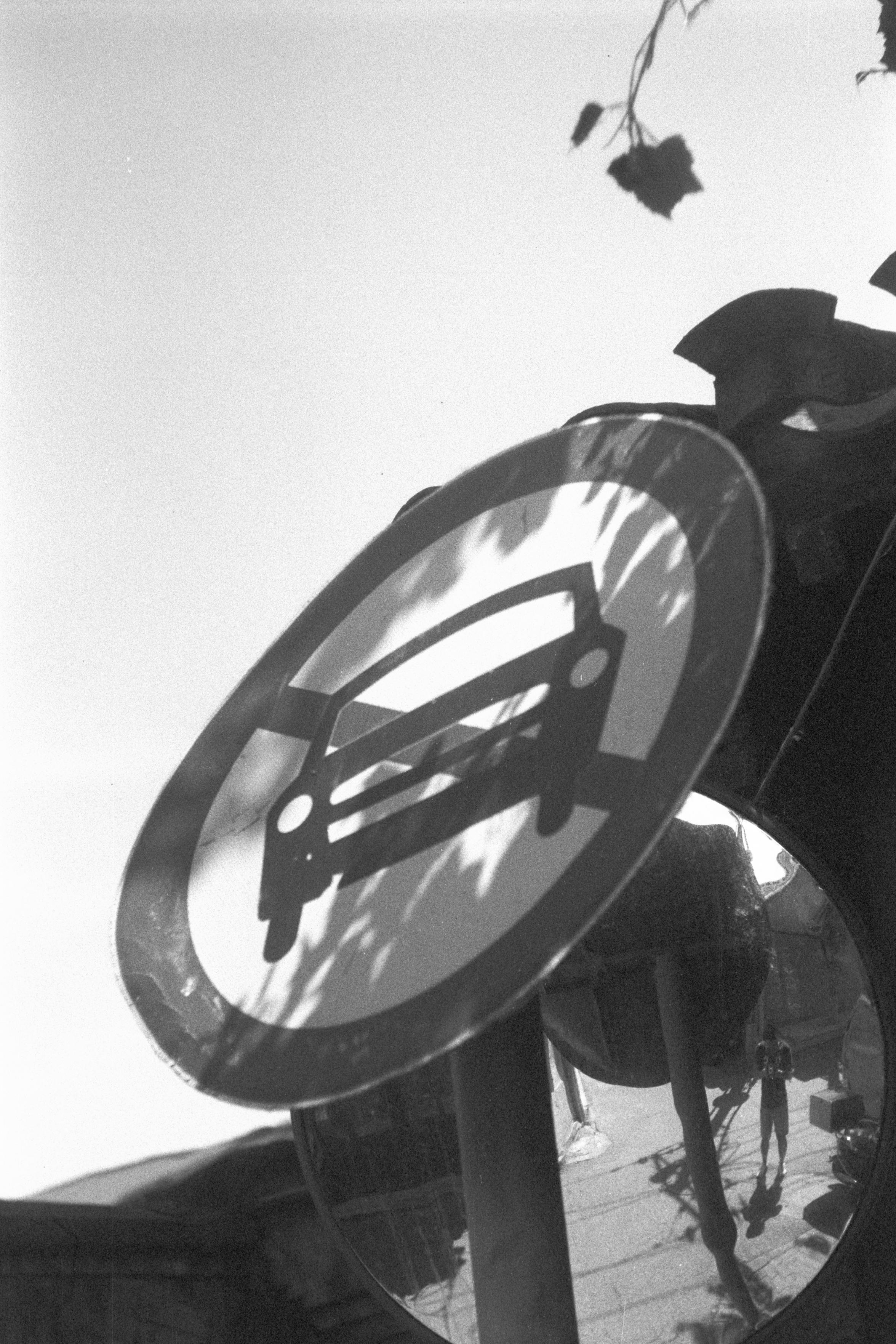
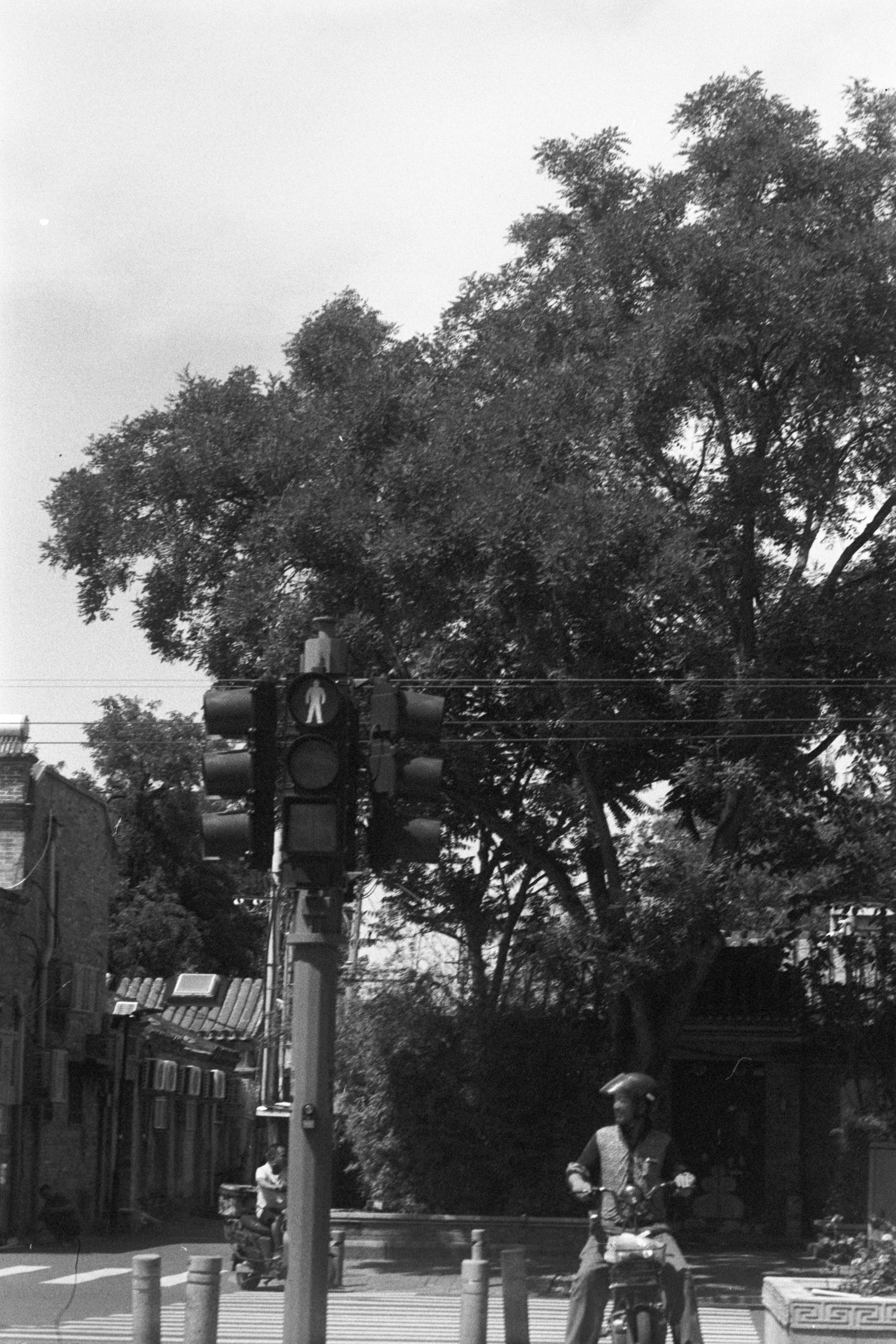
Non-Blurry Figures 🧿
非-模糊的形象 🧿
📷 Yashica 635
🎞️ Ilford FP4 Plus 125 (FF), expired 1994
If you like my work, Support by buying me a coffee or a roll of film from
PayPal https://www.paypal.com/paypalme/ydcdingsite
Wise


 @fanf@mendeddrum.org
2026-09-16 14:42:04
from my link log —
A design space exploration of async/await.
https://cel.cs.brown.edu/blog/design-space-async-await/
saved 2026-09-15 https:/…

 @thomasfuchs@hachyderm.io
2026-09-21 13:33:11
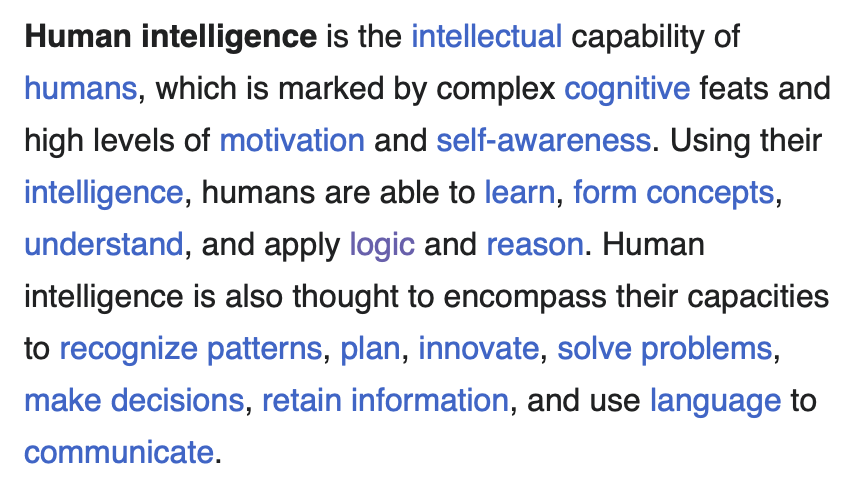
This is the Wikipedia definition for human intelligence. Artificial intelligence (in the form of LLMs) does literally none of these things.
It doesn't act by itself, it isn't self-aware[1], it doesn't learn[2], it doesn't understand or form concepts[3], it doesn't logic or reason[4], it doesn't recognize patterns[5], plan, innovate, solve problems, make decisions[6], retain information or even use language to communicate[7].
LLMs are a simulated model (aka it's not real) of human intelligence. Models, in scientific parlance, are just that: they don't try to explain how a process works, they try to achieve the same outcome as a natural process (usually in an effort to perhaps learn something about that process).[8]
There simply is no "AI". Anyone telling you about how LLMs are sentient or sapient or will murder us is 100% bullshitting.
[1] There is nothing to be aware about, they don't have physicality. They're literally long lists of numbers.
[2] Models themselves are static, they're the result of machine learning, but can't grow beyond the initial state.
[3] LLMs don't "know" anything. It's matrix multiplications without permanence or embodiment. https://en.wikipedia.org/wiki/Understanding
[4] Because they can't understand or form concepts, they can't reason about them.
[5] This requires memory, which LLMs don't have. https://en.wikipedia.org/wiki/Pattern_recognition_(psychology)
[6] Memory and understanding are required. https://en.wikipedia.org/wiki/Decision-making
[7] All it does it getting an input in the form of a lot of numbers and returns statistically likely follow-up numbers.
[8] "A model is an informative representation of an object, person, or system." https://en.wikipedia.org/wiki/Model
 @tiotasram@kolektiva.social
2026-07-12 16:28:07
Since it was relevant to a discussion I just had on here and is something most people probably haven't thought about much (unless you've taken one of a handful of philosophy classes), I thought I'd try to lay out a key piece of Descartes' Meditations (#philosophy
 @cheryanne@aus.social
2026-07-16 12:16:49
Two Brunettes & A Gay
Indulge in an hour of witty banter and lively discussions with these cheeky 30-somethings, along with special guests from the entertainment industry and beyond...
Great Australian Pods Podcast Directory: https://www.greataustralianpods.com/two-br…

 @arXiv_csPL_bot@mastoxiv.page
2026-07-22 07:43:31
Build-Authorized Evidence for Opaque Calls: A Fail-Closed Rewrite-Authority Boundary
Zhonghua Yi (Toka Language Research Group)
https://arxiv.org/abs/2607.18949 https://arxiv.org/pdf/2607.18949 https://arxiv.org/html/2607.18949
arXiv:2607.18949v1 Announce Type: new
Abstract: Detached semantic facts about opaque native providers do not by themselves justify compiler rewrites: rewrite authority must be confined to the accepted fact, selected provider and build, caller, callback environment, observation, and runtime target. We present a build-authorized path-effect interface that enforces this boundary through fail-closed authorization and link receipts. The design separates receipt closure, callback-environment closure, and projection identity, and passes accepted facts to LLVM through a narrow internal API. We use one-hop topology-load reuse as a minimal observable witness of authority, not as the optimization target.
A conservative LLVM consumer reuses a pointer observation only from a noalias root or one constant nonzero projection. Rocq models prove conditional refinement and authority non-amplification under explicit effect, alias, compiler/ABI, and target-resolution premises. We instantiate checked production with Toka: a source-summary gate emits exact LLVM IR, a separate IR checker accepts only a bounded topology-preserving subset, and only accepted IR is compiled into the receipt-bound provider object. A bounded static Darwin/arm64 profile also checks the final direct branch target.
Across issuer-declared readv, recvmsg, and Cairo boundaries, authorized IR retains each opaque call, reduces the relevant loads from two to one, and preserves observed results; mismatched providers, builds, callbacks, projections, and unsupported IR remain neutral. A libjpeg case is rejected because its callback environment is open, while a bound callback singleton demonstrates the supported closure rule. The contribution is a checked deployment-compiler boundary with an explicit trust and applicability frontier, not a uniquely expressive effect encoding or a new load-elimination algorithm.
toXiv_bot_toot
 @christydena@zirk.us
2026-09-12 23:54:27
@… You may already know about this. Just in case you don't, here!
Point-&-Click Showcase & Steam Event
https://

 @benthos@mastodon.sdf.org
2026-07-11 14:19:21


 @arXiv_mathST_bot@mastoxiv.page
2026-08-17 07:39:50
Generalization Error Estimation for Primal--Dual Algorithms in Non-Smooth Regression
Kai Tan, Pierre C Bellec
https://arxiv.org/abs/2608.13870 https://arxiv.org/pdf/2608.13870 https://arxiv.org/html/2608.13870
arXiv:2608.13870v1 Announce Type: new
Abstract: This paper studies trajectory-wise estimation of generalization error for primal--dual algorithms in non-smooth regression. Motivating examples include \(\ell_1\)-penalized least absolute deviations regression and square-root Lasso regression, where the data-fitting loss is non-differentiable and existing risk estimators for gradient-type optimization paths do not apply directly. We develop a general recursive framework that includes the Chambolle--Pock algorithm and related primal--dual splitting methods. We estimate risk by correcting each in-sample fitted value with a weighted combination of past dual iterates. The ideal weights are Stein derivative contractions and depend on the design covariance. We construct replacement weights from observable derivative contractions of the fitted-signal trajectory, yielding a covariance-free, data-driven correction. For high-dimensional Gaussian designs and fixed finite iteration horizon, we prove finite-sample guarantees for both estimators. For square-root ridge, we further establish a matched-Gaussian universality result beyond Gaussian designs. Numerical experiments show that the proposed estimators accurately track the out-of-sample risk along finite optimization paths.
toXiv_bot_toot