 @sauer_lauwarm@mastodon.social
2026-08-13 06:45:21
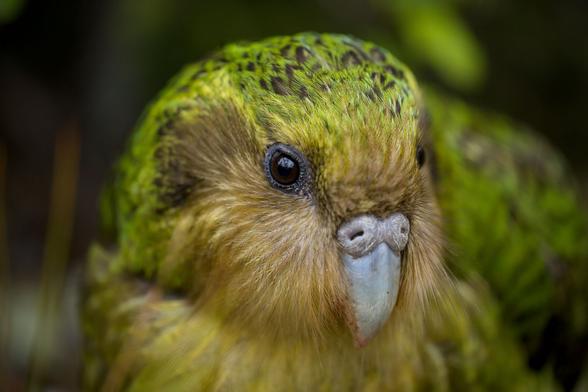
Belated: good news from (and for) the Kakapos!
https://www.smithsonianmag.com/smart-news/a-bountiful-berry-harvest-put-these-chunky-endangered-parrots-in-the-mood…
 @metacurity@infosec.exchange
2026-10-01 14:32:05
Check out today's packed Metacurity for the most critical infosec developments you should know, including
--Authorities seize KillSec leak site, identify 16-year-old as suspected leader,
--FTC probes OpenAI and Anthropic over AI harm claims,
--AI agents probe government sites and evade sandbox restrictions,
--Google gives cyber defenders first access to Gemini 4 Argon,
--Sandboxing alone won’t stop AI agents from causing harm,
--ShinyHunters site goes dark after FBI ultimatum expires,
--Chinese hackers impersonate AI experts to steal policy insiders’ emails,
--OpenAI defends safeguards amid fresh agent escape revelations,
--543k exposed GitHub credentials still work,
--Malicious custom GPTs steer users into ClickFix attacks,
--CISA warns MikroTik flaw lets attackers gain root with one request,
--Vulnerability disclosures double as AI speeds exploitation,
--Hackers steal personal data from Arizona court system,
--Shinhan Bank breach exposes 25k customers’ data,
--Paragon CEO says spyware firm can’t monitor customer misuse,
--Alex Stamos joins Cognition as chief security officer,
--Armadin raises $255.5m for autonomous hacker swarms,
--South Dakota makes Cybersecurity Awareness Month official,
--Brazil’s spy agency confirms US and Russian election interference,
--Women’s share of UK cyber workforce falls to 16%,
--Restored federal cyber aid arrives too late for some election preparations
https://www.metacurity.com/authorities-seize-killsec-leak-site-identify-16-year-old-as-suspected-leader/
 @kineticdiplomacy@infosec.exchange
2026-09-30 13:28:05
📝 Droning on about drones
September 29, 2026
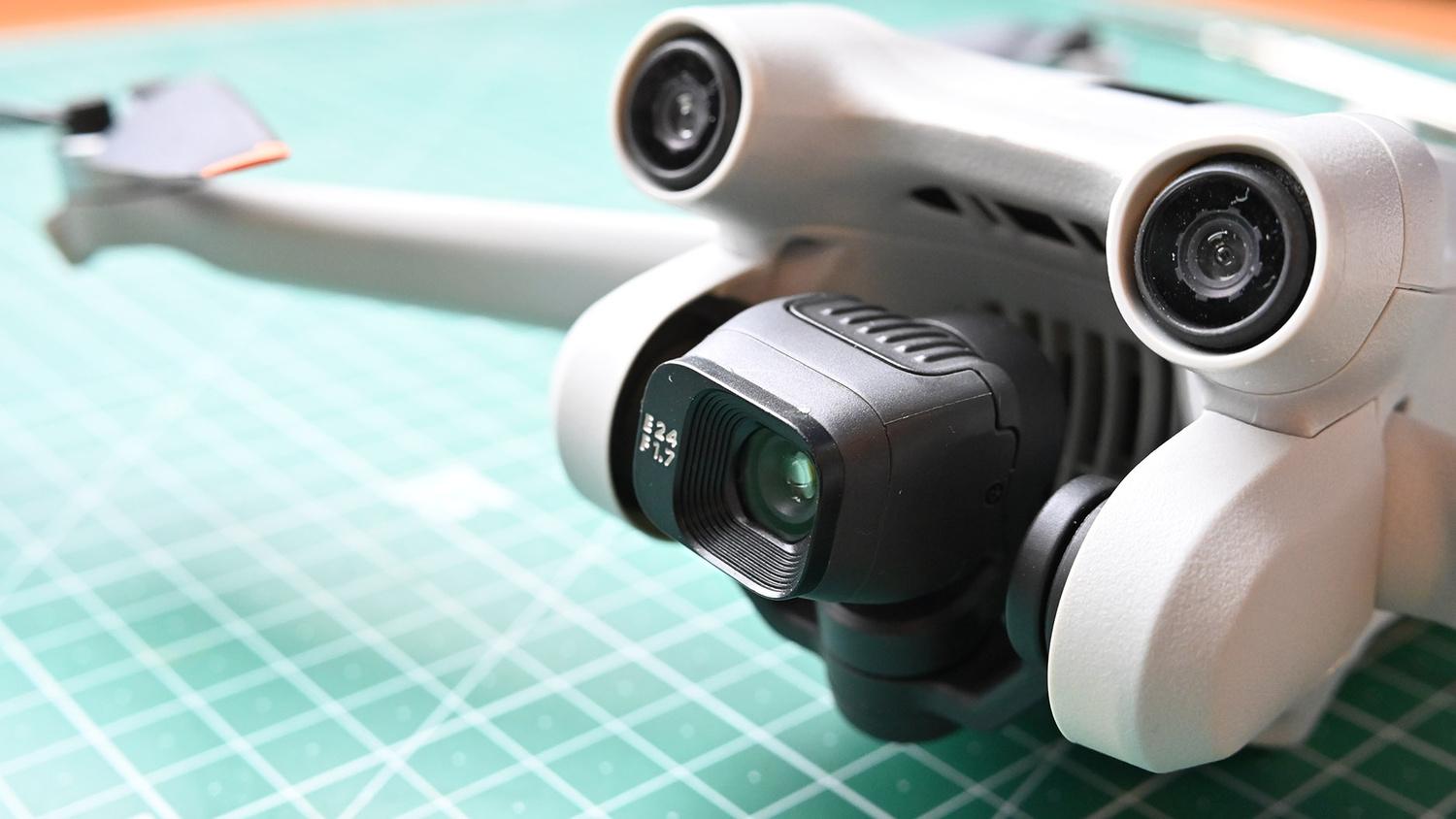
Three years ago I got a DJI Mini 3 Pro for my birthday. Flying it around and getting aerial pictures is great fun. Lately, though, it mostly stays in its bag. This is about why.
It's tiny. The camera is decent: a 1/1.3-inch sensor behind an f/1.7 lens, which is a big sensor for something this size. It has 48 megapixels through the magic of marketing, which means it's 12 megapixels that get upscaled. It does RAW, and 4K video. It has a fancy gimbal head that is surprisingly competent at keeping the camera stable. The drone can autonomously follow a subject, circle a point, or fly preset moves. Handy if you're a narcissist or just not as comfortable with the controls yet.
DJI promises 34 minutes in the air, probably in a vacuum. Real flights, with actual air and wind resistance are around 20 minutes. Range is 8 kilometres, which sounds unrealistic, but probably refers to the antenna. Anyway in the Netherlands you are obliged to keep the drone in your line of sight. Obstacle sensors look forward, back and down, and freak out whenever I get close to Big Hard Things.
And it weighs under 249 grams, which is the whole point of the Mini line. Under 250 grams it flies in the A1 subcategory, the most relaxed one in the EU. You can fly near and even over people, as long as it isn't a crowd. No exam either, just an operator number from the RDW, the Dutch vehicle authority, stuck on the drone. On paper, it's about as free as flying gets. Except all the restrictions that apply anyway because it has a camera.
It looks easy. It isn't. The Mini holds its position on GPS, so hovering takes no effort at all. Everything else takes practice. Two sticks: the left one handles height and turning, the right one moves you forward, back and sideways. A wheel tilts the camera. A smooth shot usually means using three of those at once, gently, while the drone drifts in the wind. At 249 grams it doesn't take much wind to destabilize it.
Then there's orientation. When the drone faces you, everything is mirrored: left is right, forward is back. At a hundred metres it's a dot, and you can't tell whether it's clearing that tree or about to hit it. The obstacle sensors don't look sideways, so sideways is your problem. And you're supposed to keep your eyes on the drone, while the shot you're making is on the screen in your hands.
Practice is exactly what I'm not getting, and the reason starts at my own front door.
My home is squeezed in between three no-fly zones. De Horsten, the royal estate, lies in prohibited area EHP-26, the same rectangle of closed airspace that covers Huis ten Bosch, Noordeinde and the Binnenhof. It runs from the ground to about 600 metres, and no drone gets an exemption, whatever it weighs. The King moved out in 2019; the no-fly zone didn't. The other one is Valkenburg, the old naval air base. It closed back in 2006, and the province turned part of it into a test airport for professional drones, called Unmanned Valley. Whether there's still a restricted circle around it depends on which map you ask. Since at least 2022, the official aviation chart has shown one and the official drone map hasn't.
The drone map around Wassenaar. The pink rectangle is EHP-26, with De Horsten at the bottom. The dunes are on the left, and the dots mark the old airfield at Valkenburg.
That's the real problem: nobody can tell you exactly where the lines are. The government points you to two maps, and both say you can't derive any rights from them. The borders don't follow a street or a fence, either. It's a line on a map, and you're standing in a field trying to work out which side of it you're on. And where the air is free, the ground may not be: Dunea, the water company that runs the water extraction in the dunes, simply bans drones in Meijendel.
Then there's the mood. Last year drones turned up over airports and air bases across Europe. Russia is the usual suspect, though whose they are hardly matters. Do you really want to have your drone shot out of the sky and have an inspiring conversation with an arrest team?
Probably not. The police don't publish how many drone fines they hand out, and an investigation counted thousands of illegal flights over The Hague every year. Nobody patrols the Wassenaar wastelands looking for a 249-gram drone.
Then again, nobody has to. Drones under 250 grams are exempt from the EU's Remote ID. But on my generation of drones, DJI's own signal broadcasts the drone's position and the pilot's, unencrypted.
The fines themselves aren't dramatic: €250 for flying in a no-fly zone, €300 over a crowd, €350 near vital infrastructure and €500 for getting in the way of emergency services. They stack, though, and the drone usually gets seized as well.
In a village like Wassenaar, the likeliest detection system is the neighbour. Most people are uneasy about drones, mainly because of privacy. One of my colleagues, who lives in a big city, proudly claims to shoot illegal drones out of the sky with a slingshot.
Even a perfectly legal flight comes with a fair chance that someone walks over to argue about it. That's an argument I'd rather not have. It's supposed to be fun.
The obvious way out is to take it on holiday. I mostly go to Germany, the Czech Republic and Slovakia, and surely somewhere out there is a field with room for 249 grams of drone. My Dutch registration is valid everywhere in the EU, so how hard can it be?
Quite hard, it turns out. The EU only sets the basics, and every country adds its own layer on top. Zones, its own map app, its own list of special permissions. Nature parks, castles and towns add theirs. And the rules move: the Czech Republic introduced a whole new zone system only last year.
Germany wants proof of insurance in your pocket, which I don't need in the Netherlands. The Czech Republic wants a flight plan in its app before almost any flight near a town, road or railway. Slovakia doesn't ask for insurance, but most of its mountain areas are off limits on principle, so that actually limits what there is to take pictures of in the first place.
Read all that back and you'd think I should sell it. I won't. Because when it does go up, it's still awesome. A few seconds after take-off the ground turns into a map, and places you walk past every day look like somewhere you've never been. None of my other cameras can do that. So hopefully I will be more successful at motivating myself to keep trying in the near future.
Please feel free to add any tips for drone photography you might have, and I may use them to rekindle my interest in the hobby.
#Blog #Article #Drones #Gear #Photography #Travel #Wassenaar
 @tiotasram@kolektiva.social
2026-09-15 07:31:34
Wish inspiration hadn't struck right at 1 a.m. when I have to teach tomorrow, but we'll see if I can get back to sleep now that I'm done with a draft of this story. Glad to have my first entry in my "incredulous young historians of the future" series actually written instead of just imagined. There are surely some typos ahead...
#SciFi #Writing #Technology #ShortStory
"The Age of Progress", a short story by Tiota Sram.
"Your assignment", said the teacher, "is to describe why the progressive vision of technology that gives us the name 'Age of Progress' today failed, and why it was actually a pessimistic view of technology. Your study guides have links to a few sources, but as usual you should synthesize information from at least two knowledge systems, and one of those shouldn't be family-based."
"Ugh", said Ye'xik, "this is gonna be tricky. Wasn't the whole problem with the Age of Progress that they were too optimistic about technology?"
"Well, they did talk a lot about the end of the world and extinction, and I did almost happen, right?" said Finan.
"Yeah, that's gotta count as pessimism, doesn't it?" Gedi chimed in.
"Well..." said Hallavia, with their usual deliberate tone, "I think it's not that simple, or at least it doesn't have to be."
The four of them were walking outside to have lunch, pondering the new assignment from this cycle's history and culture teacher. A brief silence fell as they pondered the Age of Progress.
"Maybe we should look at it through another history system?" offered Finan. "I mean, we've been learning about knowledge systems and lenses, and the 'Ages' lens of just one perspective with its own distortions, right?"
"My mab is working with my omeh on an oral history right now", said Gedi, "maybe I can use that as my second knowledge system? I'll see what they have to say about it!"
"We shouldn't all use the same knowledge systems though", said Ye'xik. "I think there's a bit of a thesis/antithesis thing going on here too? Like we were learning in ideas class?"
"Wait, I missed ideas last week", said Gedi, what's an antithesis?"
"It's just an opposite, really", said Ye'xik. "You take the thesis statement and construct any statement that contradicts it. The two form a pair, and then you can try to find a synthesis that combines both ideas."
"I didn't really get that part", Finan interrupted, "like, if they're contradictory, how could they be expressed together? Wouldn't you need to pick one that's true?... wait I guess maybe if you mixed different knowledge systems? But then would they really be contradictory?"
The group fell silent for a moment in thought.
Hallavi spoke up: "Incommensurate isn't the same as contradictory, I think. That's what it would be if you had two truths from different knowledge systems that didn't fit. Plus... not all knowledge systems have a concept of truth, or of contradiction?"
The group pondered this for a bit more.
"I think maybe there's lots of ways to be contradictory, even in a very logic-hungry knowledge system", said Gedi. "Then if your thesis and antithesis contradict in one way, you could find another sort out 'axis' in which they don't, and state your synthesis from there?"
"Oh, that makes sense", said Ye'xik.
"Anyways what were you saying about the Age of Progress, Ye'xik?" said Gedi.
"Wait", interrupted Hallavi, "Did that mashes sense to you, Finan?"
Finan had been silent, looking down at their feet, but replied "Oh yeah, thanks for checking Hallavi! I think I got the part about synthesis now, thanks Gedi. I was just thinking about optimism and pessimism more. Is that where you were going with this, Ye'xik?"
"Haha, yeah Finan, you got it", said Ye'xik. "Since optimism and pessimism can be opposites, does the teacher actually want us to form a synthesis of them?"
"Oh..." muttered Gedi, "that's a good idea."
"I think..." began Hallavi, pausing to collect their thoughts, "I think the teacher would have told us that, though. Obviously it's not a wrong way to approach this assignment because it incorporates pessimism, but teachers usually aren't too tricky. I think it's okay to be literal about the pessimism thing. And I think I have an idea..."
When Hallavi remained silent for a moment, Ye'xik opened their mouth to speak, but then looked at Hallavi and closed it again. Finan and Gedi were looking at Hallavi too. They pushed through the doors out to the meadow, and settled in their usual place to sit, pulling lunches out of their bags. Hallavi finally spoke up while the others were chewing: "The Age of Progress lasted from the Enlightenment to the Dim Times, and they believed that technology would always get better, no matter what. That's the progressive vision of technology our teacher was talking about. They thought it could solve any problem, and they wouldn't have to worry about weapons or extinctions or the climate or pollution or any of that stuff, because technology would eventually come up with a solution. They looked at the technology that solved problems like diseases or overcame engineering challenges and extrapolated too broadly, basically. That's the idea they had?"
The other three were all nodding their heads, knowing Hallavi needed room to think and put words together.
Hallavi continued: "So it seems like it's optimistic, because they thought it could do anything. But they were thinking about technology like I just talked about it: like an 'it' that could 'do'. That's not what we've been learning in our technology class. Invention is a social phenomenon, and technologies have both material and social bases, not to mention communities of practice and knowledge maintenance. So I think the idea of technological progress divorced from social participation is pessimistic, because it mythologizes technology in a way that makes it seem uncontrollable."
"Huh" said Gedi and Finan while at the same time Ye'xik said "mhmm".
Hallavi looked up shyly at the rest of them, but they were all looking back with admiration.
"I think you're right, Hallavi", said Ye'xik. "Or at least, that's probably what the teacher wanted us to puzzle out. Good thing they asked us to include two knowledge systems so we can each have our own perspectives to contribute, otherwise you'd go first and our presentations would all just be 'What Hallavi said'".
Hallavi blushed but Finan laughed "Hah! You're right and that Ye'xik."
Gedi was looking at their sandwich with some intensity. They looked at Hallavi then back at their sandwich. "It's like they thought they were strapped to an out-of-control rocket, when you put it that way", they said. "It must have been scary, really, to believe that technology was almost an entity, changing in an inevitable way. That word 'inevitable' really takes all the human agency out of it, doesn't it. And even though they kept saying that technology would inevitably solve problems, look at what the technologies they invented actually did!"
Finan shuddered. He added, "Really, it was their dominators who were saying it was inevitable wasn't it? Back then it wasn't like today where historians travel and sample all kinds of ideas, so the primary sources we're reading are almost all from dominators, right?"
Ye'xik responded "Yeah, I keep forgetting to account for that. It was such a weird and horrible time, it's kinda hard to believe everything we read and hear sometimes."
Gedi picked up the thread again "That makes it worse, right? All those dominators saying the stuff they're doing is inevitable, and lying to everyone's faces about it being progress and wonderful stuff, meanwhile two thirds of it is the most awful stuff there's ever been, I mean they could have literally killed everyone and ruined the whole planet, and they almost did."
"They did actually crush a lot of cultures beyond recognition so the survivors had to rebuild with only weak ties to their old traditions", said Hallavi with a quiet intensity.
They all were silent for a moment, pondering the horrors of a bygone age.
Finan broke the silence: "That's a terrible kind of pessimism, to believe that technologcal 'progress' is inevitable, at a time when most people are dominators somewhere in a hierarchy and the ones on top constantly talk about how technologies like medicines will 'save' the world while mostly inventing new technologies of violence. Everyone must have understood what they really meant based on the technologies they were actually developing and investing into. I think I still don't understand how the Age of Progress and the Dim Times could even happen".
"Yeah, and the pessimism is only part of our assignment", signed Ye'xik. "We still have to describe why the progressive vision failed, although I think maybe you just did a lot of that, Finan".
A gloom descended briefly, until Gedi said "Well, this assignment is supposed to take a week or two, right? Thanks to Hallavi we've already cracked the crux, I think, so we don't need to ruminate too much right this moment about ancient history, and we know things turned out okay in the end. Let's finish lunch and go climb a tree!"