@Techmeme@techhub.social
2026-10-14 11:01:38
Analysis: AI safety groups and individual donors have spent $48M in the midterm election cycle across bipartisan races to back candidates favoring AI regulation (Maria Curi/Axios)
https://www.axios.com/2026/10/14/ai-safety-regulation-election-spending-50-mi…

 @arXiv_condmatsoft_bot@mastoxiv.page
2026-08-14 07:47:02
Blinking membrane patterns induced by protein binding/unbinding
Hiroshi Noguchi
https://arxiv.org/abs/2608.13016 https://arxiv.org/pdf/2608.13016 https://arxiv.org/html/2608.13016
arXiv:2608.13016v1 Announce Type: new
Abstract: Nonequilibrium membrane pattern formation is studied using meshless membrane simulation. Bound proteins are considered to have two states that generate different membrane spontaneous curvatures. Protein binding and unbinding occur cyclically owing to chemical potential differences, as an off-lattice active Potts model. It is found that this cyclic binding/unbinding can induce blinking domains, with oscillating size: convex domains of the proteins with a higher spontaneous curvature grow, and subsequently, the proteins change to the other state with a lower spontaneous curvature, resulting in domain shrinkage. These processes repeat. In thermal equilibrium, hexagonal convex domains are formed by the competition between bending and surface tension energies, so that they are stably formed only under positive surface tension. However, blinking domains can form even in tensionless membranes.
toXiv_bot_toot
 @arXiv_hepth_bot@mastoxiv.page
2026-08-14 08:13:29
D4-branes wrapped on topological disks from matter-coupled F(4) gauged supergravity
Patharadanai Nuchino, Parinya Karndumri
https://arxiv.org/abs/2608.12850 https://arxiv.org/pdf/2608.12850 https://arxiv.org/html/2608.12850
arXiv:2608.12850v1 Announce Type: new
Abstract: We study a number of supersymmetric $AdS_4\times \Sigma$ solutions with $\Sigma$ being a topological disk with non-trivial $U(1)$ holonomy on the boundary or a ``half-spindle'' from matter-coupled $F(4)$ gauged supergravity. The gauged supergravity is coupled to three vector multiplets with $SO(3)\times SO(3)$ gauge group. The resulting solutions preserve eight supercharges and $SO(2)\times SO(2)$ or $SO(2)_{\text{diag}}$ symmetries and are expected to be dual to $N=2$ SCFTs in three dimensions arising from compactifications of five-dimensional $N=2$ SCFT on a half-spindle. All of the solutions lie within the $U(1)\times U(1)$ subsector of the matter-coupled $F(4)$ gauged supergravity that can be embedded in massive type IIA theory. After uplifted to ten dimensions, the solutions can be interpreted as a system of D4-D8-branes wrapped on $\Sigma$. Some of the solutions are asymptotic to a locally $AdS_6$ geometry and can be identified as codimension-2 conformal defects within the $N=2$ SCFT in five dimensions. For these solutions, the circle inside $\Sigma$ decompactifies in the $AdS_6$ limit rendering the holographic free energy infinite. There also exist solutions with finite free energy in the dual three-dimensional SCFTs. In addition, we show that the results both extend the previously known solutions and provide a novel class of solutions.
toXiv_bot_toot
 @netzschleuder@social.skewed.de
2026-10-10 04:00:04
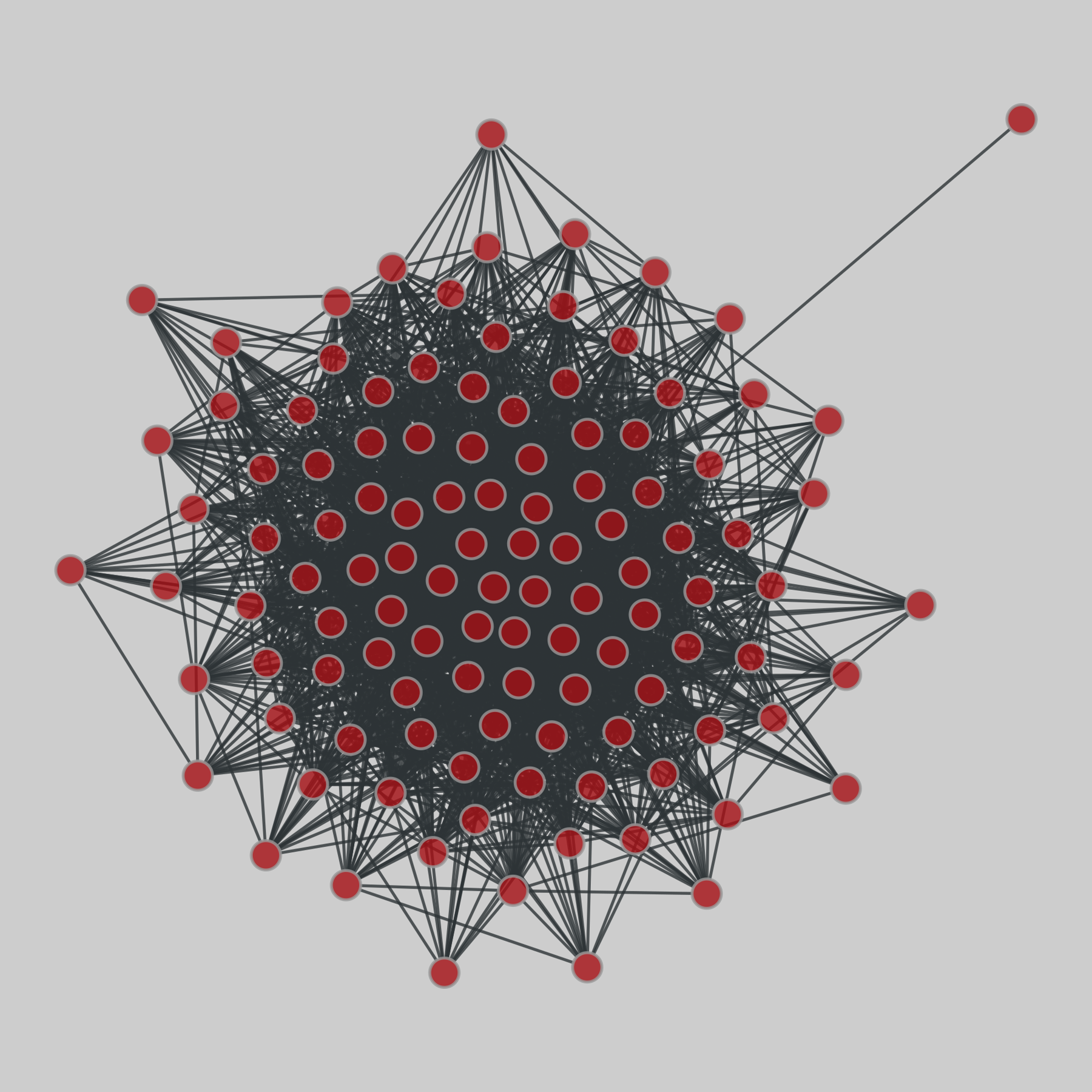
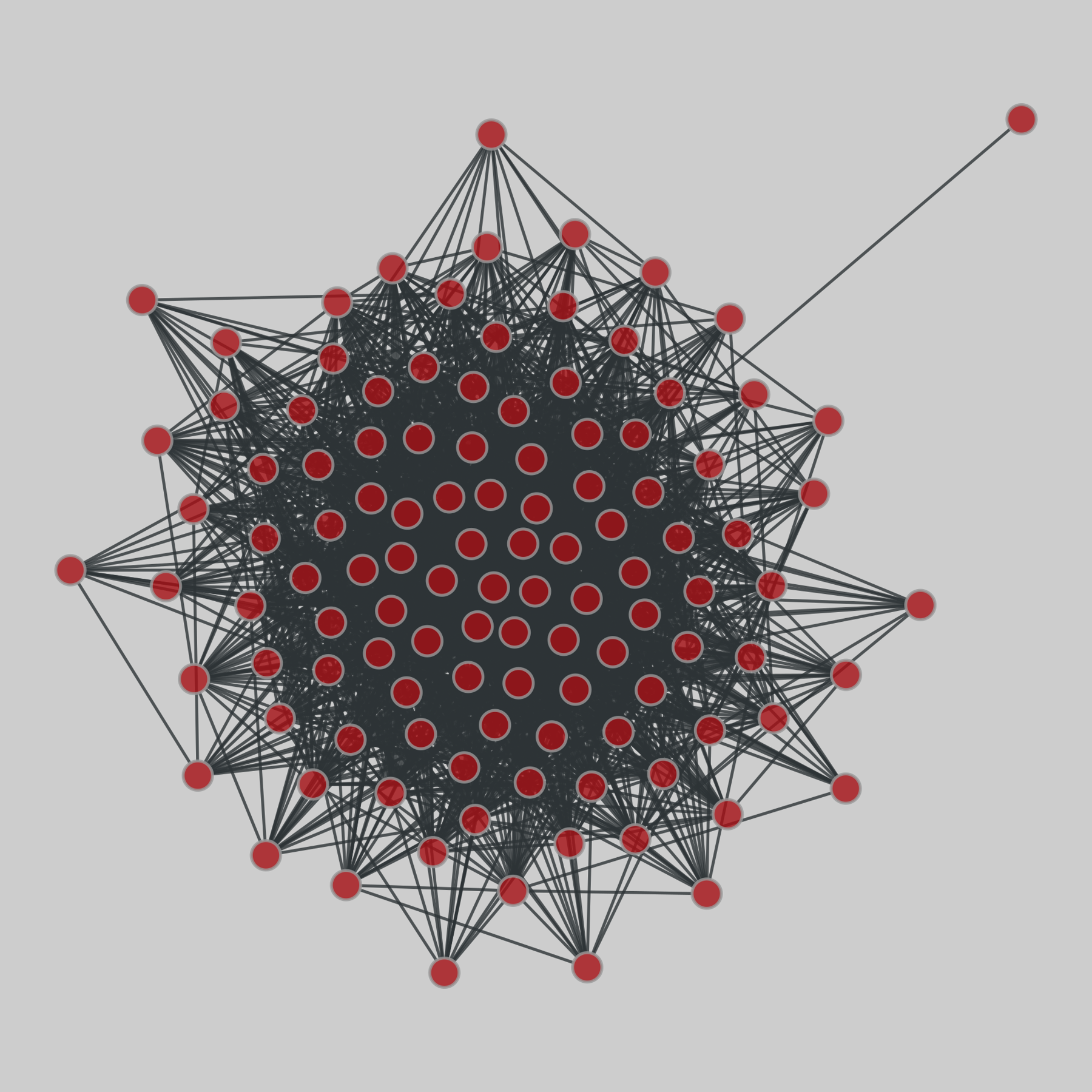
sp_hypertext: Hypertext 2009 dynamic contact network
The temporal network of contacts among attendees of the ACM Hypertext 2009 conference, which spanned 2.5 days of time.
This network has 113 nodes and 2196 edges.
Tags: Social, Offline, Unweighted, Temporal
https://networks.skewed.de/net/sp_hype…
 @Techmeme@techhub.social
2026-10-07 01:31:02
Boston Dynamics appoints former Amazon executive Rohit Prasad, who spent 12 years helping build and expand Alexa, as its CEO (Samantha Kelly/Bloomberg)
https://www.bloomberg.com/news/articles/2026-10-06/boston-dynamics-taps-amazon-ale…
 @cdarwin@c.im
2026-10-06 19:03:32
Whistleblower alleges Trump ordered FBI to investigate protesters in LA over immigration crackdown
Donald Trump ordered the FBI to investigate protesters in Los Angeles who were demonstrating against the president’s immigration crackdown,
according to a whistleblower complaint that was submitted to the Senate judiciary committee.
Senator Alex Padilla, a Democrat who represents California and serves on the committee, said his office had received a copy of the complaint.

 @newsie@darktundra.xyz
2026-08-28 14:06:25
ICE Plans to Spends Millions on Boston Dynamics Dog Robots https://www.404media.co/ice-plans-to-spends-millions-on-boston-dynamics-dog-robots/
 @arXiv_mathST_bot@mastoxiv.page
2026-10-08 08:06:20
Drift Estimation for a Multi-Dimensional L\'evy-Driven Stochastic Differential Equation Using Deep Neural Networks
Taisei Noguchi, Teppei Ogihara
https://arxiv.org/abs/2610.09813 https://arxiv.org/pdf/2610.09813 https://arxiv.org/html/2610.09813
arXiv:2610.09813v1 Announce Type: new
Abstract: We develop a non-asymptotic theory for nonparametric drift estimation in discretely observed multi-dimensional L\'evy-driven stochastic differential equations using sparse ReLU neural networks. Under exponential \(\beta\)-mixing and an exponential-tail condition on the L\'evy measure, we establish an oracle inequality for the least-squares estimator. The jump component changes both the martingale structure and the concentration regime relative to diffusion models: continuous martingales are replaced by discontinuous martingales, while the relevant empirical-process fluctuations are sub-exponential rather than sub-Gaussian. We handle these difficulties without truncating the observed increments, using an exponential-supermartingale argument for compensated Poisson integrals and \(\psi_1\)-chaining. Despite the weaker concentration, the resulting statistical bound is, up to constants, of the same order as the corresponding diffusion bound. For drift functions with hierarchical compositional structure, this yields intrinsic-dimensional convergence rates. The framework allows infinite jump activity and, in some cases, infinite variation. Finally, we establish a minimax lower bound on a fixed non-trivial compound-Poisson submodel. Together with the upper bound, this shows that the estimator is minimax optimal up to logarithmic factors.
toXiv_bot_toot
@netzschleuder@social.skewed.de2026-09-07 19:00:05
sp_hypertext: Hypertext 2009 dynamic contact network
The temporal network of contacts among attendees of the ACM Hypertext 2009 conference, which spanned 2.5 days of time.
This network has 113 nodes and 2196 edges.
Tags: Social, Offline, Unweighted, Temporal
https://networks.skewed.de/net/sp_hype…
 @netzschleuder@social.skewed.de
2026-09-06 18:00:05
sp_hypertext: Hypertext 2009 dynamic contact network
The temporal network of contacts among attendees of the ACM Hypertext 2009 conference, which spanned 2.5 days of time.
This network has 113 nodes and 2196 edges.
Tags: Social, Offline, Unweighted, Temporal
https://networks.skewed.de/net/sp_hype…