 @EarthOrgUK@mastodon.energy
2026-08-21 03:23:04
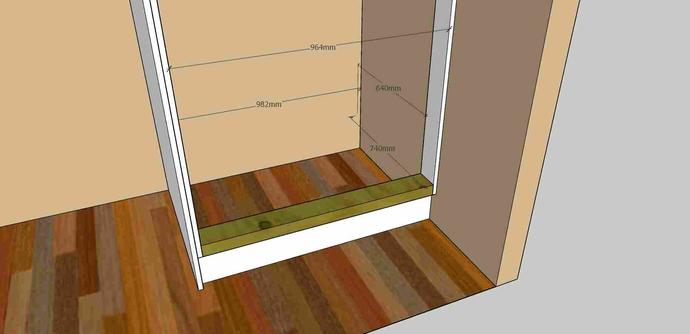
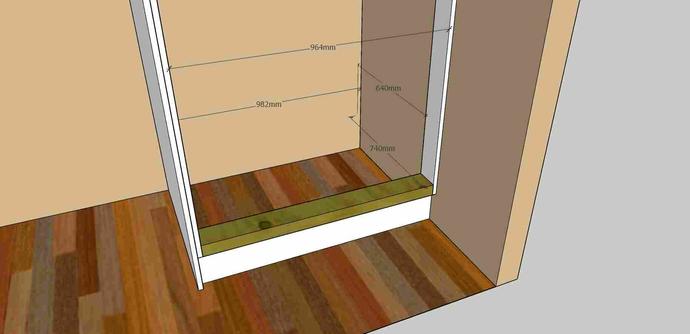
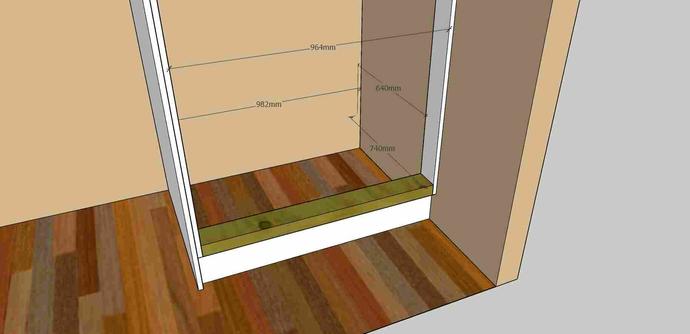
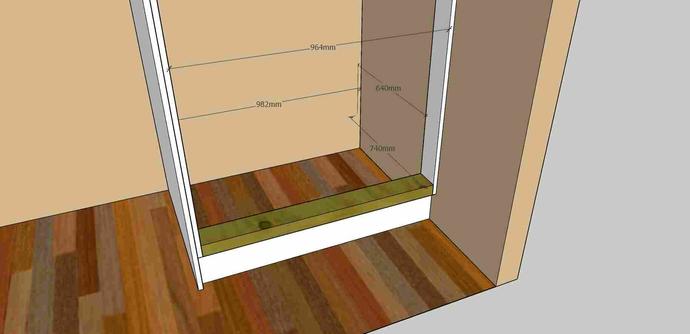
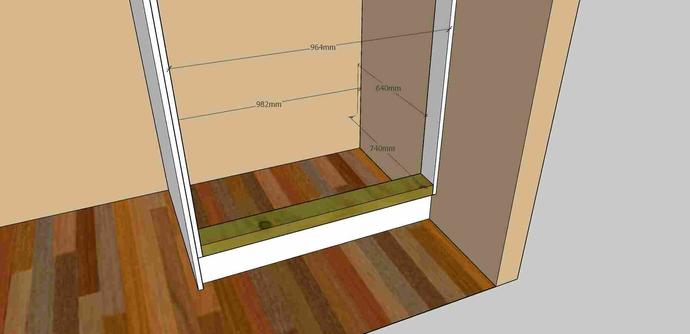
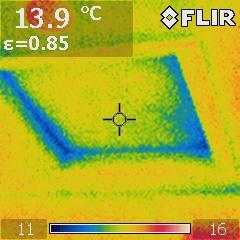
Octopus Heat-pump Journey - Via quote and survey and negotiation to keeping us warm fossil-free #heatPump #DHW #spaceHeat
@EarthOrgUK@mastodon.energyOctopus Heat-pump Journey - Via quote and survey and negotiation to keeping us warm fossil-free #heatPump #DHW #spaceHeat
 @cdarwin@c.im
California joined 19 other states
on July 16 to take a swing at a Trump administration delay tactic
in approving onshore wind energy projects.
In light of California’s goal for its energy to be 100 percent carbon-free by 2045,
wind plays a large part.
On a hot and humid afternoon like this Friday’s, renewable energy is supplying 70 percent of the 34-gigawatt demand.
Wind makes up 11 percent of that carbon-free renewable energy.
Any project that uses…
@EarthOrgUK@mastodon.energyOctopus Heat-pump Journey - Via quote and survey and negotiation to keeping us warm fossil-free #heatPump #DHW #spaceHeat
 @chrisnelder@mastodon.energy
RE: https://mastodon.energy/@TransitionShow/117248679476316421
Energy Transition Show fans, please see the important announcement below. Then join me on my new platform as a free or paid subscriber to continue following my work:
@EarthOrgUK@mastodon.energyOctopus Heat-pump Journey - Via quote and survey and negotiation to keeping us warm fossil-free #heatPump #DHW #spaceHeat
@EarthOrgUK@mastodon.energyOctopus Heat-pump Journey - Via quote and survey and negotiation to keeping us warm fossil-free #heatPump #DHW #spaceHeat
 @burger_jaap@mastodon.social
“How about Free? Is that affordable enough for you?
Beginning next week, Australians across a huge swath of the continent will begin getting three free hours of electricity every afternoon—to charge their cars, runs their dishwashers, fill up a storage battery to run the house at night.”
https://
 @fortune@social.linux.pizza
It's simply unbelievable how much energy and creativity people have
invested into creating contradictory, bogus and stupid licenses...
-- - Sven Rudolph about licences in debian/non-free.
 @primonatura@mstdn.social
"UK households free to install plug-in balcony solar panels from end of August"
#UK #UnitedKingdom #SolarPower
 @arXiv_mathST_bot@mastoxiv.page
Sharp proper estimation of fixed-component Gaussian location mixtures in polynomial time
Hengzhi He, Guang Cheng
https://arxiv.org/abs/2608.12701 https://arxiv.org/pdf/2608.12701 https://arxiv.org/html/2608.12701
arXiv:2608.12701v1 Announce Type: new
Abstract: We consider a mixture of at most $k$ unit-covariance Gaussians in $\mathbb{R}^d$ whose means belong to a fixed-radius ball, with no separation or minimum-weight condition. Doss, Wu, Yang and Zhou (2023) proved that the minimax Hellinger risk is of order $\sqrt{d/n}\wedge 1$ and constructed a proper polynomial-time estimator with the slower general bound $(d/n)^{1/4}$; obtaining the sharp rate in polynomial time for fixed $k\geq 3$ was left open. We resolve this question. The key device is a moment-fiber range finder. A second-moment subspace controls the energy missed by projection. We then estimate finitely many one-free-index Hermite contractions. These vector-valued contractions recover every tensor component containing exactly one missed direction at the sharp $\sqrt{d/n}$ scale. Every remaining term contains at least two missed factors and is therefore controlled by the residual second-moment energy. The resulting subspace has dimension depending only on $k$. Exhaustive moment fitting in this constant-dimensional space produces a proper mixture and, together with the dimension-free moment characterization of Gaussian mixtures, achieves the optimal Hellinger rate in polynomial arithmetic time for every fixed $k$.
toXiv_bot_toot
@EarthOrgUK@mastodon.energyOctopus Heat-pump Journey - Via quote and survey and negotiation to keeping us warm fossil-free #heatPump #DHW #spaceHeat
 @theodric@social.linux.pizza
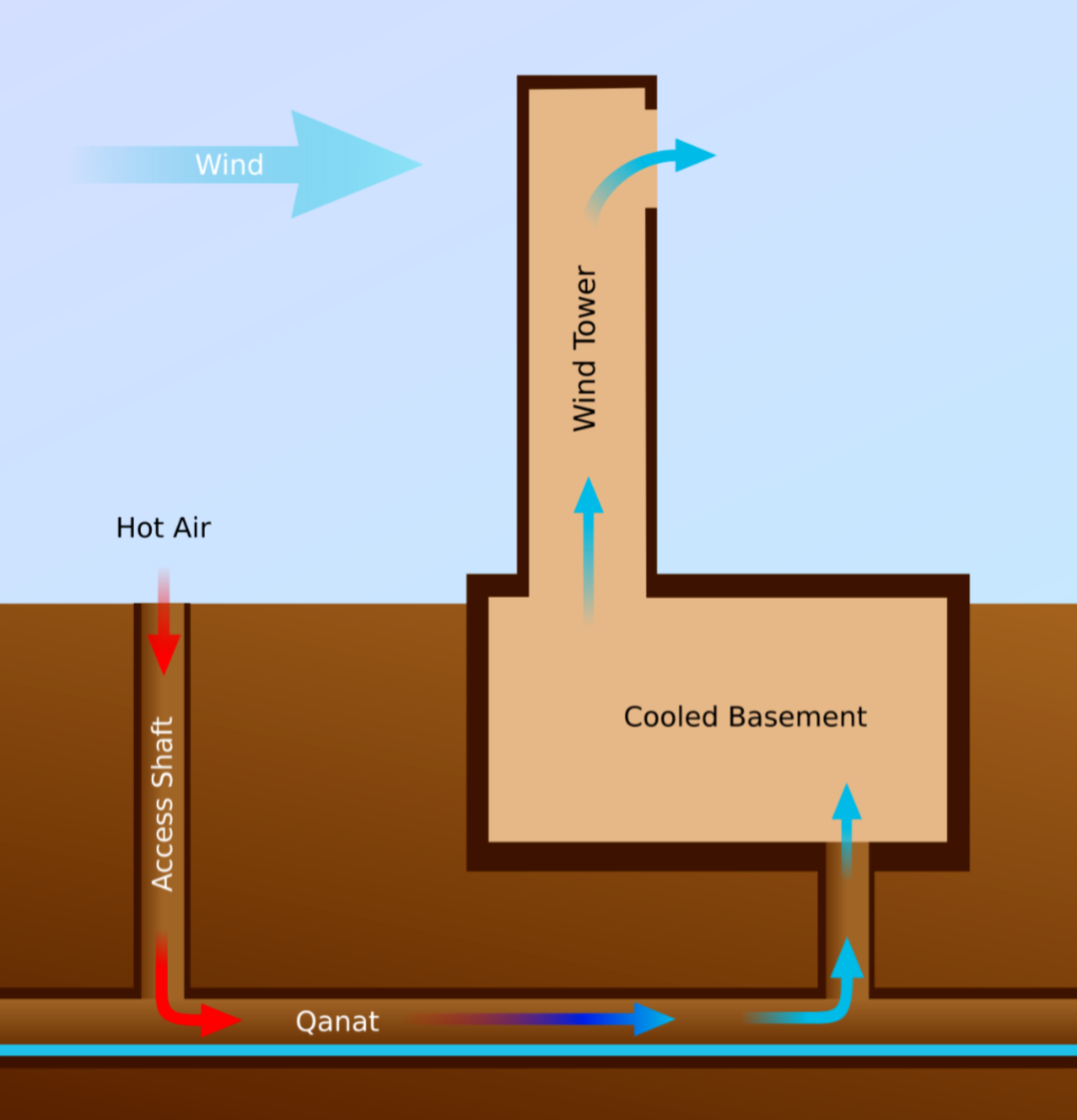
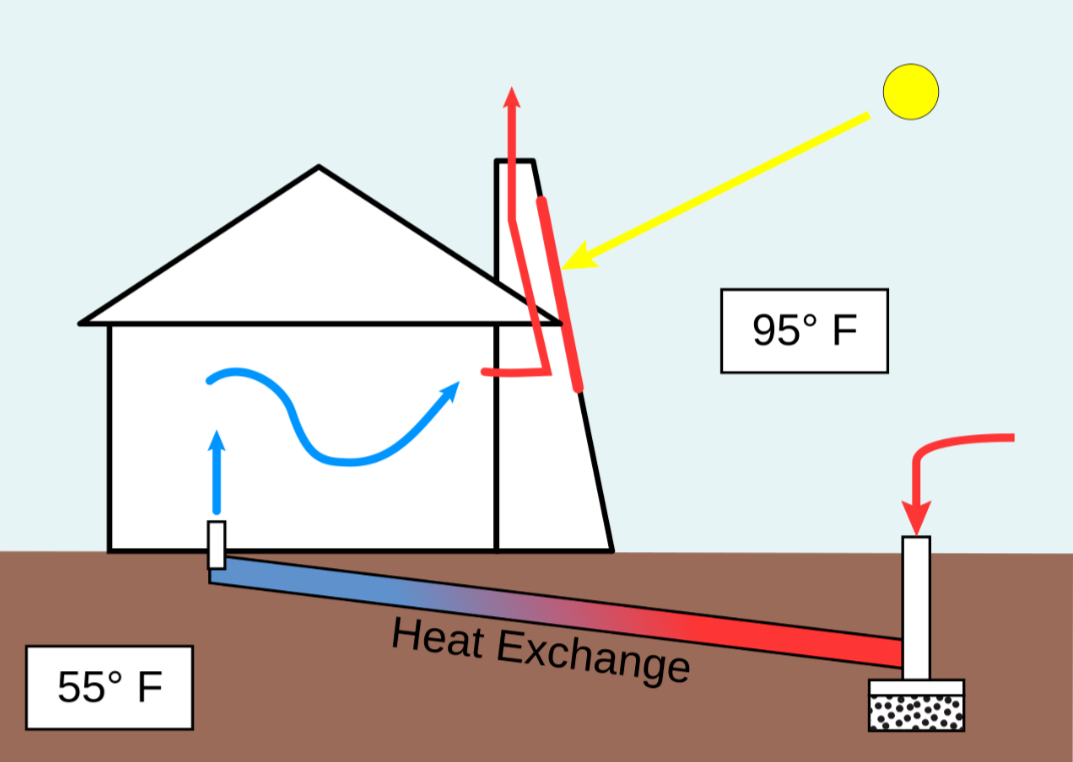
The ancient Middle-East had a solution for surviving the heat without chillers: windcatchers (and the related solar chimneys). Such things should be employed for first-tier cooling where possible to reduce energy demand, leaving chillers to take up the slack (until we figure out how to get infinity gigawatts of free power into every house, at which point we should just capture all the excess heat from running chillers and use the Seebeck effect to convert it into electricity to power a giant…


 @pgcd@mastodon.online
The absolute waste of time and knowledge and energy caused by smart people "building" shit with and for LLMs.
Smart people giving their work away for free to motherfuckers like altman and amodei and musk and jfc i hate this timeline.
@cdarwin@c.imBeginning next week, most Australians will get free electricity for three hours every afternoon.
That's what happens when you build out wind, sun, and batteries.
As the cost of clean energy keeps plummeting, it is more and more obvious how much money we waste, and how much financial risk we incur, by staying with fossil fuel.
@EarthOrgUK@mastodon.energyEco Puzzler: 0-GHG Energy - For those on their way to mastering engineering... How to create a 100% Greenhouse Gas Free Energy System for the UK? #ecoEngineering #renewables -
 @arXiv_astrophCO_bot@mastoxiv.page
Is Dark Matter Really Matter?
Jun-Qian Jiang, Arman Shafieloo
https://arxiv.org/abs/2608.04763 https://arxiv.org/pdf/2608.04763 https://arxiv.org/html/2608.04763
arXiv:2608.04763v1 Announce Type: new
Abstract: In the standard model of cosmology, it is assumed that dark matter is pressureless with equation of state $w=0$ and dark energy has $w=-1$. We test these assumptions jointly using DESI DR2 distance measurements, including the recent Lyman-$\alpha$ full-shape Alcock-Paczynski (AP) information, DES supernovae, and two complementary CMB treatment. When constant $w_{dm}$ and $w_{de}$ are varied together, we find $w_{dm}=0.000968^{ 0.000501}_{-0.000496}$ and $w_{de}=-0.9380^{ 0.0259}_{-0.0262}$ (68%). With an alternative CMB treatment that marginalizes over the lensing spectrum, the corresponding constraints are $w_{dm}=0.000870^{ 0.000408}_{-0.000410}$ and $w_{de}=-0.9353^{ 0.0258}_{-0.0254}$. Both standard $\Lambda$CDM values are disfavored at approximately $2\sigma$ in the joint extension. Neither parameter departs significantly from its standard value when only that parameter is varied. This behavior arises because late-time distances favor $w_{de}>-1$, while maintaining the early-Universe physical matter density requires a compensating positive $w_{dm}$, which changes the mapping to the matter density today. Allowing dynamical dark energy clarify further on complexity of the situation: phantom crossing for dark energy makes $w_{dm}=0$ consistent with the data, whereas a positive $w_{dm}$ preference persists when crossing is forbidden. Interestingly, the Pad'e-$w$ parameterization that provides a flexible description of a class of quintessence models (with no phantom crossing), along with $w_{dm}$ free, is even mildly favored over the phantom-crossing $w_0w_a$ model according to both the best-fit $\chi^2$ and the DIC under both CMB treatments. One can conclude that the apparent preference for phantom crossing may instead reflect deviations in the dark-matter sector rather than dark-energy dynamics alone. [abridged]
toXiv_bot_toot
 @arXiv_mathDG_bot@mastoxiv.page
Crosslisted article(s) found for math.DG. https://arxiv.org/list/math.DG/new
[1/2]:
- Riemann spaces associated with the Navier-Stokes equations: a survey of the geometric approach
Valerii S. Dryuma
https://arxiv.org/abs/2609.13314 https://mastoxiv.page/@arXiv_nlinSI_bot/117274006969728261
- Differential Realizability of Static Control Allocation in Multirotors: An Impossibility under No...
Antonio Franchi, Mirko Mizzoni
https://arxiv.org/abs/2609.13588 https://mastoxiv.page/@arXiv_csRO_bot/117274156987489403
- The hedgehog uniquely minimises every $p$-energy
Siran Li
https://arxiv.org/abs/2609.13979 https://mastoxiv.page/@arXiv_mathAP_bot/117274305038334418
- Parabolic defect measures for Harmonic Maps with Free Boundary
Anirban Das, Ali Hyder, Yannick Sire
https://arxiv.org/abs/2609.14050 https://mastoxiv.page/@arXiv_mathAP_bot/117274307593717475
- Weights of finite cyclic actions on definite $4$-manifolds
David Baraglia
https://arxiv.org/abs/2609.14328 https://mastoxiv.page/@arXiv_mathGT_bot/117274033362312860
- (In)stability results for the Light Ray Transform
Leonard Busch, Sebasti\'an Mu\~noz-Thon, Lauri Oksanen
https://arxiv.org/abs/2609.14387 https://mastoxiv.page/@arXiv_mathAP_bot/117274341608053045
- Sharp comparison between the perimeter and its fractional analogue in two dimensions
Rupert L. Frank, Paata Ivanisvili
https://arxiv.org/abs/2609.14513 https://mastoxiv.page/@arXiv_mathAP_bot/117274346129993394
- Odd branching obstructs multiplicity-one integral current structures
Deguang Zhong
https://arxiv.org/abs/2609.14515 https://mastoxiv.page/@arXiv_mathMG_bot/117273947394588521
- Interior gravitational perturbations to naked singularities of a scalar field
Junbin Li, Tingting Li
https://arxiv.org/abs/2609.15107 https://mastoxiv.page/@arXiv_grqc_bot/117274229147764001
- Isolated Flat Points and $C^2$-Robustness of the No Focal Points Property
Alexander Cantoral, Sergio Roma\~na
https://arxiv.org/abs/2609.15185 https://mastoxiv.page/@arXiv_mathDS_bot/117274188051576649
- The homology cobordism group is not generated by graph homology $3$-spheres
Ben Mares, Yuta Nozaki, Masaki Taniguchi
https://arxiv.org/abs/2609.15415 https://mastoxiv.page/@arXiv_mathGT_bot/117274100001782508
- Triangles minimize the Monge-Amp\`ere eigenvalue among planar bounded convex domains of a given area
Chong Gu
https://arxiv.org/abs/2609.15563 https://mastoxiv.page/@arXiv_mathAP_bot/117274422417964181
toXiv_bot_toot
 @arXiv_csAR_bot@mastoxiv.page
Lonic: Algorithm-Hardware Co-Design for Energy-Efficient Fully Local Online SNN Training with INT4 Precision
Peilin Chen, Xiaoxuan Yang
https://arxiv.org/abs/2608.12500 https://arxiv.org/pdf/2608.12500 https://arxiv.org/html/2608.12500
arXiv:2608.12500v1 Announce Type: new
Abstract: Spiking neural networks (SNNs) have recently attracted increasing attention as an energy-efficient learning paradigm. Existing works also propose temporally and fully local online SNN training algorithms to address memory and computation overhead. However, they do not consider whether the algorithmic advantages can be effectively translated into real-device efficiency. To address this challenge, we present Lonic, an algorithm-hardware co-design for energy-efficient and scalable fully local online supervised SNN learning. On the algorithm side, we implement an INT4 low-precision training algorithm for fully local online SNN learning while maintaining accuracy. On the hardware side, to leverage the benefits of the proposed algorithm, we introduce reconfigurable multiplier-free integer PE arrays, dual-optimization zero-gating strategy, temporal prefix-accelerated local learning dataflow, and low-precision weight movement to significantly improve training efficiency. Compared to Apple M4 and Nvidia V100 GPUs, Lonic achieves average energy efficiency improvements of 17.44x and 66.28x, respectively, along with speedups of 3.25x and 1.02x, respectively. Moreover, Lonic achieves 15.95x (14.64x) and 1.52x (7.28x) energy efficiency (area efficiency) over ASIC TPU-like and H2Learn accelerators, respectively. The code for Lonic is available at https://github.com/peilin-chen/Lonic.
toXiv_bot_toot
 @dichotomiker@dresden.network @EarthOrgUK@mastodon.energy
Octopus Heat-pump Journey - Via quote and survey and negotiation to keeping us warm fossil-free #heatPump #DHW #spaceHeat
@primonatura@mstdn.social"UK households free to install plug-in balcony solar panels from end of August"
#UK #UnitedKingdom #SolarPower #Renewables
 @grumpybozo@toad.social
Dude should just call himself Babs… @… https://awful.systems/comment/12487932
@EarthOrgUK@mastodon.energyOctopus Heat-pump Journey - Via quote and survey and negotiation to keeping us warm fossil-free #heatPump #DHW #spaceHeat
 @arXiv_hepth_bot@mastoxiv.page
D4-branes wrapped on topological disks from matter-coupled F(4) gauged supergravity
Patharadanai Nuchino, Parinya Karndumri
https://arxiv.org/abs/2608.12850 https://arxiv.org/pdf/2608.12850 https://arxiv.org/html/2608.12850
arXiv:2608.12850v1 Announce Type: new
Abstract: We study a number of supersymmetric $AdS_4\times \Sigma$ solutions with $\Sigma$ being a topological disk with non-trivial $U(1)$ holonomy on the boundary or a ``half-spindle'' from matter-coupled $F(4)$ gauged supergravity. The gauged supergravity is coupled to three vector multiplets with $SO(3)\times SO(3)$ gauge group. The resulting solutions preserve eight supercharges and $SO(2)\times SO(2)$ or $SO(2)_{\text{diag}}$ symmetries and are expected to be dual to $N=2$ SCFTs in three dimensions arising from compactifications of five-dimensional $N=2$ SCFT on a half-spindle. All of the solutions lie within the $U(1)\times U(1)$ subsector of the matter-coupled $F(4)$ gauged supergravity that can be embedded in massive type IIA theory. After uplifted to ten dimensions, the solutions can be interpreted as a system of D4-D8-branes wrapped on $\Sigma$. Some of the solutions are asymptotic to a locally $AdS_6$ geometry and can be identified as codimension-2 conformal defects within the $N=2$ SCFT in five dimensions. For these solutions, the circle inside $\Sigma$ decompactifies in the $AdS_6$ limit rendering the holographic free energy infinite. There also exist solutions with finite free energy in the dual three-dimensional SCFTs. In addition, we show that the results both extend the previously known solutions and provide a novel class of solutions.
toXiv_bot_toot
 @bibbleco@infosec.exchange
Good idea for energy (electricity) suppliers: an hour free next week, in return for not using heavy appliances (washing machines / driers / dishwashers / .. ) during the upcoming solar eclipse, to compensate for lost solar PV generation.
https://www.theguardian.com/business/2026/aug/10/octopus-energy-electricity-solar-eclipse-washing-machines-dishwashers
 @arXiv_qbioNC_bot@mastoxiv.page
Thoughtseeds as Latent Causes: A Dual-Process Computational Phenomenology of Focused-Attention Meditation
Prakash Chandra Kavi, Daniel Ari Friedman, Gustavo Patow
https://arxiv.org/abs/2607.14833 https://arxiv.org/pdf/2607.14833 https://arxiv.org/html/2607.14833
arXiv:2607.14833v1 Announce Type: new
Abstract: Meditative expertise involves sustained attention, rapid recovery from distraction, and coordinated dynamics of large-scale brain networks. We present a computational phenomenology of focused-attention meditation traversing four attractor states: breath focus, mind-wandering, meta-awareness, and redirect attention. Within a dual-process active inference formulation, the model implements a three-layer nested Markov-blanket architecture: (L1) a high-dimensional physiological neuronal substrate modeled as a stochastic multivariate Ornstein--Uhlenbeck process over attentional Yeo networks; (L2) a low-dimensional generative model (System 1) that encodes latent mental content as thoughtseeds and evaluates autonomic action tendencies; and (L3) an agentic metacognitive monitor (System 2) that implements a Global Neuronal Workspace (GNW) capacity bottleneck to selectively gate these tendencies. In L3, meta-awareness functions as the GNW ignition signal, derived from policy-prior divergence and dynamically gated by direct competition between orchestrator and distractor thoughtseeds. Policy selection actively minimizes expected free energy, and L2 actions furnish descending predictions over network activity to close the enactive perception--action cycle. Training uses variational Expectation-Maximization (EM) across expert and novice phenotypes. Simulations reproduce behavior consistent with empirical observations and findings in contemplative neuroscience, providing a tractable link between first-person phenomenology and objective neurophysiological measures.
toXiv_bot_toot
@cdarwin@c.imAt Cornell University in upstate New York, researchers are testing how a deep geothermal system can work
far from the tectonic boundaries and volcanoes that have long defined where distributing their energy is even viable.
By tapping into the planet's internal warmth, the project, known as
"Earth Source Heat",
could supply the 2,300-acre
(931-hectare) campus in Ithaca with fossil fuel-free heat to help the university become carbon neutral by 2035.…
@EarthOrgUK@mastodon.energyOctopus Heat-pump Journey - Via quote and survey and negotiation to keeping us warm fossil-free #heatPump #DHW #spaceHeat
@EarthOrgUK@mastodon.energyOctopus Heat-pump Journey - Via quote and survey and negotiation to keeping us warm fossil-free #heatPump #DHW #spaceHeat
@EarthOrgUK@mastodon.energyOctopus Heat-pump Journey - Via quote and survey and negotiation to keeping us warm fossil-free #heatPump #DHW #spaceHeat
 @arXiv_physicscompph_bot@mastoxiv.page
Lanczos Method for QRPA Strength Functions in Atomic Nuclei
Dong Min Roh, Chao Yang, Jonathan Engel, Matthew L. Dai
https://arxiv.org/abs/2607.01114 https://arxiv.org/pdf/2607.01114 https://arxiv.org/html/2607.01114
arXiv:2607.01114v1 Announce Type: new
Abstract: We present a symmetric Lanczos method for computing charge-changing QRPA strength functions in atomic nuclei. Starting from the finite-amplitude-method formulation of the QRPA linear-response problem, we derive equivalent spectral representations and, in the real case, a reduced eigenvalue problem involving the matrix products $MK$ and $KM$, where $M\equiv A B$ and $K\equiv A-B$ are formed from the usual QRPA matrices $A$ and $B$. The resulting formulation enables a matrix-free Lanczos approximation of the Lorentzian-smeared strength function over a broad energy interval from a single Krylov run, in contrast to conventional frequency-by-frequency response calculations. Numerical tests for $^{112}$Sn and $^{150}$Nd first show that GMRES reproduces the converged iterative FAM strength profiles while requiring fewer iterations. Using GMRES as the frequency-by-frequency reference, we then show that the Lanczos approximation reproduces the same strength profiles with reduced overall cost. These results indicate that symmetric Lanczos projection provides an efficient and accurate approach for QRPA strength-function calculations when spectral information is required over an extended frequency range.
toXiv_bot_toot
@EarthOrgUK@mastodon.energyOctopus Heat-pump Journey - Via quote and survey and negotiation to keeping us warm fossil-free #heatPump #DHW #spaceHeat
@arXiv_astrophCO_bot@mastoxiv.pageIntegrated cosmological memory: A dark-siren method to probe dark energy
Indranil Chakraborty, Sayantan Ghosh, Susmita Jana, Archana Pai, S. Shankaranarayanan
https://arxiv.org/abs/2608.03739 https://arxiv.org/pdf/2608.03739 https://arxiv.org/html/2608.03739
arXiv:2608.03739v1 Announce Type: new
Abstract: Gravitational-wave (GW) cosmology is currently bottlenecked by the scarcity of electromagnetic counterparts for bright sirens and the systematic uncertainties of galaxy catalogs for dark sirens. We propose a purely gravitational resolution using the Integrated Cosmological Memory (ICM)-the cumulative GW strain encoded in the spacetime geometry of an expanding Universe. While the GW transient emitted by the source provides the luminosity distance, the ICM accumulates a mathematically distinct integral of the cosmic expansion history. We demonstrate that extracting both observables from a single binary merger completely breaks the distance-redshift degeneracy within the gravitational sector. This establishes a novel, catalog-free dark siren framework for third-generation GW detector networks. Crucially, the resulting constraints on late-time dark energy are only weakly sensitive to the local expansion rate, providing a robust cosmological probe that can potentially mitigate the impact of the H0 tension.
toXiv_bot_toot
 @arXiv_nlinSI_bot@mastoxiv.page
Integrable curl-force Hamiltonians: bi-Hamiltonian structure, separability, and periodic orbits
Alexander Felski, Andreas Fring
https://arxiv.org/abs/2608.05952 https://arxiv.org/pdf/2608.05952 https://arxiv.org/html/2608.05952
arXiv:2608.05952v1 Announce Type: new
Abstract: We investigate Hamiltonian curl-force systems with indefinite kinetic energy. We first reconsider Berry's polynomial Hamiltonian curl-force model, whose numerically observed closed trajectories motivated an integrability conjecture. A Painlev\'e analysis yields a non-principal resonance spectrum, so that the corresponding Laurent series cannot accommodate the required number of arbitrary constants of the general solution. The model therefore fails the standard Painlev\'e test. We then introduce a four-parameter curl-force family and identify the parameter locus on which this system is integrable. We construct a second Hamiltonian, compatible Poisson tensors, separated complex characteristic variables, and a Lax representation. More generally, the separated form yields polynomial integrable curl-force Hamiltonians of arbitrary degree. We also show that the same construction admits a higher time-derivative potentialisation whose free limit is the degenerate Pais-Uhlenbeck oscillator. Finally, we analyse zero-curl invariant reductions and elliptic periodic solutions, and exhibit an isolated periodic orbit outside the integrable regime. This illustrates that closed trajectories alone do not imply Liouville or Painlev\'e integrability.
toXiv_bot_toot
@arXiv_hepth_bot@mastoxiv.pageIsomorphic Emergence of Lorentz and Gauge Symmetries--A Constructive Interpretation Based on Continuum Mechanics
Ke-Xia Jiang
https://arxiv.org/abs/2608.06244 https://arxiv.org/pdf/2608.06244 https://arxiv.org/html/2608.06244
arXiv:2608.06244v1 Announce Type: new
Abstract: Lorentz symmetry and gauge symmetry constitute the mathematical cornerstones of modern physics, yet their ultimate physical origins remain elusive. From the standpoint of a constructive interpretation, this paper demonstrates that both symmetry structures can emerge isomorphically from a unified classical source: dynamical constraints on wave-packet excitations in a continuous elastic substrate medium (SM). Neither symmetry is posited as fundamental, nor does their emergence rely on quantization. Three core results are established. First, taking the transverse wave speed of a homogeneous, isotropic SM as the benchmark under a conventionalist synchronization scheme, Minkowski-type spacetime arises isomorphically, with Lorentz transformations as effective coordinate transformations between inertial frames. This reinterprets the Michelson--Morley null result: observers are composite wave-packet excitations, and medium-induced kinematic corrections are encoded in their measurement frameworks. Second, for wave packets endowed with $SU(N)$ intrinsic symmetry, the requirement of identity invariance drives the SM to spontaneously generate gauge fields. This requires invariant equivalence classes of intrinsic states under propagation, yielding gauge structures isomorphic to Yang-Mills theory. The gauge group $SU(N)$ is uniquely determined by the number of stable normal modes supported by the medium. Third, through the same conventionalist measurement protocols, inhomogeneous distributions of the SM emerge isomorphically as curved spacetime geometry, governed by Einstein-type field equations from variational extremization of the medium's deformation free energy. This paper advances a unified interpretive account of the physical origin underlying the mathematical structures of both Relativity and the Standard Model.
toXiv_bot_toot
 @arXiv_physicsmedph_bot@mastoxiv.page
A Positron Range Correction with Texture Preservation Framework in PET Imaging
Nerea Encina-Baranda, Yifan Zheng, Jorge Cabello, Robert. J. Paneque-Yunta, Cindy. M. Solano-Cordero, Alejandro Lopez-Montes, Maurizio Conti, Joaquin. L. Herraiz
https://arxiv.org/abs/2606.23100 https://arxiv.org/pdf/2606.23100 https://arxiv.org/html/2606.23100
arXiv:2606.23100v1 Announce Type: new
Abstract: Positron range (PR) blurring is a fundamental resolution limitation in PET imaging with high-energy positron emitters such as 82Rb, causing contrast loss and spill-out effects across heterogeneous tissue interfaces. We propose PRC-TP, a positron range correction (PRC) framework with explicit texture preservation that decouples deterministic resolution recovery from stochastic texture restoration. A nnFormer-based neural network (NN) was trained on patient-derived Monte Carlo simulations to map PR-degraded 82Rb reconstructions to PR-free references using attenuation maps as anatomical context. However, this NN also significantly removed the noise in the images, which could impact some texture analysis methods or make the images look unrealistic. An auxiliary Noise2Noise model estimates that smoothing effect, enabling texture extraction and transfer to the PR-corrected prediction through Model-consistent Texture Re-Injection (MTRI). In simulated patients, PRC-TP preserved contrast recovery close to ground truth (GT) (98.96-99.04%) while restoring noise and CNR closer to the reference. The function-based MTRI formulation achieved near unity global texture amplitude agreement with GT (0.997 /- 0.011), reducing the input texture amplitude bias (0.951 /- 0.011). Radiomics analysis showed improved agreement with GT across texture-sensitive feature families. A clinical 82Rb evaluation showed trends consistent with simulations, including comparable contrast-ratio increase (10.18% vs. 10.99%) and restoration of texture suppressed by PRC. These results support PRC-TP as a practical framework for resolution recovery with acquisition-consistent texture preservation in PET imaging.
Submitted to IEEE TRPMS.
toXiv_bot_toot
@arXiv_csAR_bot@mastoxiv.pageAPEX: Adaptive Expert Prefetching for Memory-Efficient Edge MoE Inference
Alish Kanani, Layan Badawi, Umit Y. Ogras
https://arxiv.org/abs/2608.11688 https://arxiv.org/pdf/2608.11688 https://arxiv.org/html/2608.11688
arXiv:2608.11688v1 Announce Type: new
Abstract: Mixture-of-Experts (MoE) models are attractive for edge deployment because they provide high model capacity while activating only a small subset of parameters per token, improving compute efficiency. However, MoE inference at the edge is fundamentally limited by memory. Expert parameters are large and often reside in off-chip memory due to capacity, cost, and power constraints, putting expert loading to the critical path. We present APEX: Adaptive Expert Prefetching, a predictive resource management framework that overlaps expert loading with useful computation. APEX introduces a lightweight prefetch router that predicts candidate experts before the attention block to dynamically fetch additional experts using a learned confidence model. This adaptive strategy achieves over 99% overlap accuracy, significantly outperforming fixed top-k prefetching techniques. APEX supports two execution modes: a correctness-preserving mode that guarantees exact routing semantics, and a stall-free mode that eliminates residual stalls by operating on available experts with negligible impact on application accuracy. Across multiple MoE models, the correctness-preserving mode reduces per-token latency by up to 26% and improves energy-delay product (EDP) by up to 41% over state-of-the-art baselines, while the stall-free mode provides additional efficiency gains with negligible impact on application accuracy. These results establish adaptive, confidence-driven expert prefetching as an effective approach for efficient MoE inference on edge systems.
toXiv_bot_toot
@arXiv_hepth_bot@mastoxiv.pageReplaced article(s) found for hep-th. https://arxiv.org/list/hep-th/new
[2/3]:
- Toward an Observable Algebra for de Sitter Space: Gap Protection and Modular Dressings
Hassan ElSayed
https://arxiv.org/abs/2607.26194 https://mastoxiv.page/@arXiv_hepth_bot/117007888988009612
- Extended Scalar Particle Solutions in Black String Spacetimes with Anisotropic Quintessence
M. L. Deglmann, B. V. Sim\~ao, C. C. Barros Jr
https://arxiv.org/abs/2504.17765 https://mastoxiv.page/@arXiv_grqc_bot/114397428123774125
- Universal supercritical thermodynamics for black holes
Shoucheng Wang, Xinyang Li, Yuliang Jin, Li Li
https://arxiv.org/abs/2506.10808 https://mastoxiv.page/@arXiv_grqc_bot/114675464316469493
- Running Quantum Computers in Discovery Mode
Aydin Deger, Benedikt Placke, G. J. Sreejith, Alessio Lerose, S. L. Sondhi
https://arxiv.org/abs/2507.01013 https://mastoxiv.page/@arXiv_quantph_bot/114783153034025740
- Full Eigenstate Thermalization in Integrable Spin Systems
Tanay Pathak
https://arxiv.org/abs/2510.05887 https://mastoxiv.page/@arXiv_condmatstatmech_bot/115337676705890347
- Boundary structure of gauge fields on asymptotically AdS spaces
Maxim Grigoriev, Mikhail Markov
https://arxiv.org/abs/2512.06576 https://mastoxiv.page/@arXiv_mathph_bot/115688746382829511
- Improved frequency hierarchy treatment for anisotropic spectral distortions
Jens Chluba, Sara Evangelista, Tom Daman, Geoff Vasil
https://arxiv.org/abs/2602.14963 https://mastoxiv.page/@arXiv_astrophCO_bot/116085543680916118
- Black-Hole Microstate Hair Requires a Horizon Measurement
Sudhanva Joshi, Sunil Kumar Mishra
https://arxiv.org/abs/2604.28050 https://mastoxiv.page/@arXiv_quantph_bot/116498398591886253
- Unified dark sector and Hubble-tension alleviation in scalar-vector-tensor gravity
Kimet Jusufi, Amir A. Khodahami, Ahmad Sheykhi, Jackson Levi Said, Emmanuel N. Saridakis
https://arxiv.org/abs/2605.14977 https://mastoxiv.page/@arXiv_grqc_bot/116577642488987255
- Exact spectrum and anomalous relaxation in the open disorder-free Sachdev-Ye-Kitaev system
Soshun Ozaki, Hironobu Yoshida, Hosho Katsura
https://arxiv.org/abs/2606.08079 https://mastoxiv.page/@arXiv_condmatstrel_bot/116719187444301432
- Energy Flux as an Entanglement Current in Moving-Mirror Radiation
Yasusada Nambu, Riku Yoshimoto
https://arxiv.org/abs/2607.19763 https://mastoxiv.page/@arXiv_grqc_bot/116968262813501741
toXiv_bot_toot
 @thomasfuchs@hachyderm.io
Tackling the climate crisis is actually an affordability issue—
Switching to renewables and emission-free energy, replacing fossil fuels with electricity for mobility and heating and cooling is making things a lot cheaper.
I think the gerontological class running the party hasn't understood yet that climate change isn't a danger to some abstract "the planet" thing (the planet has seen worse and will do fine, thank you very much) but one to humans and our civilization.
https://www.theguardian.com/us-news/2026/aug/01/democrats-climate-policy-hushing
@arXiv_hepth_bot@mastoxiv.pageCrosslisted article(s) found for hep-th. https://arxiv.org/list/hep-th/new
[2/2]:
- Quantum-Corrected Thermodynamics and Phase Structure of AdS Euler-Heisenberg Black Hole
Siddhartha Sankar Borah, Dhruba Jyoti Gogoi, Kalyan Bhuyan
https://arxiv.org/abs/2608.13378 https://mastoxiv.page/@arXiv_grqc_bot/117092882010925510
- Spectral Localization Principle for Entanglement Harvesting
Hao Xu
https://arxiv.org/abs/2608.13449 https://mastoxiv.page/@arXiv_quantph_bot/117092925661141660
- Aperiodicity is sufficient for macroscopic thermalization
Amit Vikram
https://arxiv.org/abs/2608.13462 https://mastoxiv.page/@arXiv_quantph_bot/117092925858310269
- Hidden Dyson Universality in Inverse-Spectral Geometry
Momo Hayashi, Kazumitsu Sakai
https://arxiv.org/abs/2608.13475 https://mastoxiv.page/@arXiv_mathph_bot/117092831087700599
- Higher-Order Analytical Expansion of Thawing Dark Energy with an Exponential Potential
Naoto Maki, Kazunori Kohri
https://arxiv.org/abs/2608.13488 https://mastoxiv.page/@arXiv_astrophCO_bot/117092821454359415
- Quadratic effective energy--momentum tensor on uniform-density hypersurfaces during slow-roll inf...
Inyong Cho
https://arxiv.org/abs/2608.13498 https://mastoxiv.page/@arXiv_grqc_bot/117092883190058856
- Vector Perturbations in Ghost-Free Quasidilaton Massive Gravity
Ekapob Kulchoakrungsun, Daris Samart
https://arxiv.org/abs/2608.13529 https://mastoxiv.page/@arXiv_grqc_bot/117092893808594082
- Effective field theory of quasi-hydrodynamics from kinetic theory
Lorenzo Gavassino
https://arxiv.org/abs/2608.13542 https://mastoxiv.page/@arXiv_nuclth_bot/117092749884993738
toXiv_bot_toot
 @arXiv_physicsfludyn_bot@mastoxiv.page
Label-Free Finite-Volume-Residual Training of Attention Graph Neural Networks for Coupled Thermo-Fluid Fields
Tianyu Li, Zhiwei Cao, Qingang Zhang, Ruihang Wang, Binyang Song, Yonggang Wen
https://arxiv.org/abs/2607.20321 https://arxiv.org/pdf/2607.20321 https://arxiv.org/html/2607.20321
arXiv:2607.20321v1 Announce Type: new
Abstract: Neural surrogates are widely used in scientific machine learning for fast prediction of three-dimensional (3D) thermo-fluid fields. However, generating training data using conventional numerical solvers often incurs substantial computational and storage costs. We propose to train an attention graph neural network by minimizing the finite-volume method (FVM) residuals of the governing equations. These residuals are evaluated directly on the mesh, requiring no labeled data. We evaluate the trained surrogates against computational fluid dynamics (CFD) references and a data-supervised baseline across four scenarios. On the two steady-state benchmarks, the FVM-loss model achieves an all-field normalized root-mean-square error (nRMSE) of 2.3-2.8%. It demonstrates close agreement with the CFD references, including the buoyancy-energy coupling. On the two parametric transient cases, the FVM-loss model outperforms the supervised baseline in terms of accuracy, while avoiding the data-generation cost entirely. These results indicate that the FVM loss can provide a practical training signal for neural surrogates and reduce the model development cost.
toXiv_bot_toot
@arXiv_hepth_bot@mastoxiv.pageLee-Yang paradigm of phase transition in eigenstate thermalized systems
Yongjiang Xu, Weixin Sun, Chushun Tian, Huajia Wang
https://arxiv.org/abs/2608.13174 https://arxiv.org/pdf/2608.13174 https://arxiv.org/html/2608.13174
arXiv:2608.13174v1 Announce Type: new
Abstract: As phase transitions in isolated quantum systems remain elusive, here we show how a thermodynamic-like phase transition, falling into the Lee-Yang paradigm, can arise in systems displaying eigenstate thermalization. Specifically, we show that in holographic conformal field theories, the eigenstate expectation of the auto-correlation function can be mapped to the partition function ${\cal Z}_{{gauge}}(z)$ of a virtual interacting instanton gas, with the conformal mapping of the imaginary time: $z=1-e^{-\tau}$ and the central charge $c$ mimicking the instanton fugacity and volume, respectively. We find that akin to the Lee-Yang paradigm, for $c\to\infty$ a pair of complex conjugate zeros of ${\cal Z}_{{gauge}}(z)$ move to the real axis located at the famous forbidden singularity. Passing through the singularity the system transits from the low- to high-fugacity phase, accompanied by dramatic changes in scaling behaviors of the free energy and dominant microscopic configurations. Our findings indicate that physics of phase transitions from eigenstate thermalization is very rich.
toXiv_bot_toot
 @chris@mstdn.chrisalemany.ca
Some really interesting electric power math here for #BCFerries upcoming large transitional hybrid-to-full electric ferries. They will be known as the “Summit” class. 2100 passengers and crew, almost 400 cars. These are big ships.
Equivalent to the biggest Spirit Class between Victoria and Tsawwassen. So would be replacing the last of the 1970s Queens and possibly one of the Spirit or Coastal ships? We’ll see.
Anyway: They will initially have 10Megawatt Hours (MWh) of battery capacity as hybrid diesel/electric which is interesting, not natural gas like some of the other recent hybrids. (Which always felt like a stupid political decision to show off LNG, not a sound engineering decision)
They will then, once docks are upgraded for electric charging, be refit with 60MWh of batteries (total 70MWh) to “enable 2 hours of emissions free sailing”. In distance terms, that’s the one-way sailing time between Duke Point Terminal in Nanaimo and Tsawwassen in Vancouver, about 40 nautical miles (74km).
For comparison, my Kona EV car has a 65kilowatt hour battery… 1000x less capacity!.. giving a range of 450km.
That’s a very heavy ship!!🛳️
It’s a pretty tight capacity window considering the major routes are all between 1.5hrs and 2hrs. But they could be being conservative in the press release, indicating they would comfortably fit those timelines, or they will be still using hybrid power and shore docking ports to augment and ensure they have adequate power. They will always need lots of reserve and backup for safety.
I also imagine in the 30-60 year lifetime of the ships, we could see the energy density of batteries in general increase, so a refit in 2040 or 2050 could replace 70MWh with 100 or 140MWh in the same physical space.
What seems sure though is that B.C. Ferries is going to have some, if not the, largest fully electric capable ferries in the world. That’s a good thing.
First ship of 4 will arrive from China in 2029. Last of the class arrives in 2031. So hopefully we get our first ride in 2030! Looking forward to it!
#bcferries #ev #electric #transportation #bcpoli #ferry #boats #ships #battery
@arXiv_physicsfludyn_bot@mastoxiv.pageA High-Order Flux Reconstruction Actuator-Line Framework for Rotating-Blade Aerodynamics on Fixed Cartesian Grids
Abdullah Al Imran, Meilin Yu
https://arxiv.org/abs/2607.20347 https://arxiv.org/pdf/2607.20347 https://arxiv.org/html/2607.20347
arXiv:2607.20347v1 Announce Type: new
Abstract: This work couples a high-order flux reconstruction/correction procedure via reconstruction (FR/CPR) solver with a rotating actuator-line model (ALM) to simulate rotating-blade aerodynamics on fixed Cartesian grids. Blade loading is represented by volumetric body force source terms projected through an isotropic Gaussian kernel in a blade-attached frame, eliminating the need to resolve blade geometry. Vertical-axis wind turbines (VAWTs) serve as the demonstration configuration, with a modified Boeing-Vertol dynamic stall model incorporated to capture unsteady lift and drag. A mesh-resolution criterion for the Gaussian projection kernel on reasonably coarse meshes is derived. It shows that cost-effective coarse meshes can operate in a mesh-controlled regime with negligible induction feedback, motivating a Double Multiple Streamtube (DMST) correction to recover the physical inflow. Simulations are carried out over a range of tip-speed ratios at a chord-based Reynolds number of Re_c ~ 3.6 x 10^5. The framework is validated against experimental near-wake measurements and previously reported LES-ALM results, and the mean wake profile shows good agreement. The predicted power-coefficient curve matches high-fidelity three-dimensional LES-ALM data to within 6% around the optimal VAWT operation conditions. The framework also captures the regime-dependent influence of dynamic stall, azimuthal blade loading, lift hysteresis, and characteristic wake structures. These results demonstrate that the FR/CPR-ALM framework provides an accurate and computationally efficient geometry-free approach for VAWT analysis, making it well suited for parametric studies and large-scale wind energy applications.
toXiv_bot_toot