 @castarco@hachyderm.io
2025-11-16 12:05:17
I have the distinct impression that we could use most American "sci-fi" TV series (which seem to have a kink for post-apocalyptical scenographies) as a diagnostic tool for the autism spectrum.
For a moment, let's leave aside the tons of right-wing propaganda "hidden" in plain sight, and their excessive reliance on boring & worn out tropes (religious & cultish bullshit, irrational lack of communication & excess of anti-social behaviour, all vs all, ultra-low-iq characters*, psychotic & irrationally treacherous characters*, ultra-inconsistent character development used to justify "unexpected" plot twists, rampant anti-intellectualism...).
What could be used as a diagnosis tool is the incredible amount of strong inconsistencies that we can find in them**. It throws me out of the story every single time; and I suspect that it takes a certain kind of "uncommon personality" to feel that way about it, because otherwise these series wouldn't be so popular without real widespread criticism beyond cliches like "too slow", "it loses steam towards the end of the season", etc.
Many of those plots start in a gold mine of potentially powerful ideas... yet they consistently provide us with dirt & clay instead, while side-lining the "good stuff" as if it was too complicated for the populace.
Do you feel strongly about it? Do you feel like you can't verbalize it without being criticised as "too negative", or "too picky", or an "unbearable snob"? Do you wonder why it seems like nobody around shares your discomfort with these stories?
* : I feel this is a bit like the chicken & egg problem. Has the media conditioned part of American society to behave like dumb psychopaths as if it was something "natural", or is the media reflecting what was already there? Also, could we use other societies as models for these stories... just for a change? Please?
** : Just a tiny example: a "brilliant" engineer who builds a bridge out of fence parts and who doesn't bother to perform the most basic tests before trying it in a real setting and suffer the consequences: the bridge failing and her falling into the void. Bonus points for anyone who knows what I'm talking about.
 @NFL@darktundra.xyz
2026-01-01 17:35:47
NFL contract incentives tracker: Which players can cash in during Week 18? https://www.nfl.com/news/2025-nfl-contract-incentives-tracker-which-players-can-cash-in-during-week-18
 @fgraver@hcommons.social
2025-12-12 12:09:59
People on here who complain about the politics on Substack — are you still on Facebook or another Meta platform? If so, check your hypocrisy.
Really, everyone needs to get off those platforms. Now. They only have power over us because we’re willing to give it to them, and unwilling to deal with the inconvenience of finding alternatives.
#DeleteFacebook
 @hex@kolektiva.social
2025-10-30 10:05:59
The fracturing of the Dutch far-right, after Wilder's reminded everyone that bigots are bad at compromise, is definitely a relief. Dutch folks I've talked to definitely see D66 as progressive, <strike>so there's no question this is a hard turn to the left (even if it's not a total flip to the far-left)</strike> a lot of folks don't agree. I'm going to let the comments speak rather than editorialize myself..
While this is a useful example of how a democracy can be far more resilient to fascism than the US, that is, perhaps, not the most interesting thing about Dutch politics. The most interesting thing is something Dutch folks take for granted and never think of as such: there are two "governments."
The election was for the Tweede Kamer. This is a house of representatives. The Dutch use proportional representation, so people can (more or less) vote for the parties they actually want. Parties <strike>rarely</strike> never actually get a ruling majority, so they have to form coalition governments. This forces compromise, which is something Wilders was extremely bad at. He was actually responsible for collapsing the coalition his party put together, which triggered this election... and a massive loss of seats for his party.
Dutch folks do still vote strategically, since a larger party has an easier time building the governing coalition and the PM tends to come from the largest party. This will likely be D66, which is really good for the EU. D66 has a pretty radical plan to solve the housing crisis, and it will be really interesting to see if they can pull it off. But that's not the government I want to talk about right now.
In the Netherlands, failure to control water can destroy entire towns. A good chunk of the country is below sea level. Both floods and land reclamation have been critical parts of Dutch history. So in the 1200's or so, the Dutch realized that some things are too important to mix with normal politics.
You see, if there's an incompetent government that isn't able to actually *do* anything (see Dick Schoof and the PVV/VVD/NSC/BBB coalition) you don't want your dikes to collapse and poulders to flood. So the Dutch created a parallel "government" that exists only to manage water: waterschap or heemraadschap (roughly "Water Board" in English). These are regional bureaucracies that exist only to manage water. They exist completely outside the thing we usually talk about as a "government" but they have some of the same properties as a government. They can, for example, levy taxes. The central government contributes funds to them, but lacks authority over them. Water boards are democratically elected and can operate more-or-less independent of the central government.
Controlling water is a common problem, so water boards were created to fulfill the role of commons management. Meanwhile, so many other things in politics run into the very same "Tragedy of the Commons" problems. The right wing solution to commons management is to let corporations ruin everything. The left-state solution is to move everything into the government so it can be undermined and destroyed by the right. The Dutch solution to this specific problem has been to move commons management out of the domain of the central government into something else.
And when I say "government" here, I'm speaking more to the liberal definition of the term than to an anarchist definition. A democratically controlled authority that facilitates resource management lacks the capacity for coercive violence that anarchists define as "government." (Though I assume they might leverage police or something if folks refuse to pay their taxes, but I can't imagine anyone choosing not to.)
As the US federal government destroys the social fabric of the US, as Trump guts programs critical to people's survival, it might be worth thinking about this model. These authorities weren't created by any central authority, they evolved from the people. Nothing stops Americans from building similar institutions that are both democratic and outside of the authority of a government that could choose to defund and abolish them... nothing but the realization that yes, you actually can.
#USPol #NLPol
 @pre@boing.world
2025-11-23 15:57:01
A panel on bitcoin treasury companies.
Because investment law makes it hard for institutions to buy bitcoin in their funds. You can't own BTC in you tax free ISA. So some companies that do hold bitcoin, notably microstrategy, became proxy investments. If you can't hold BTC you could maybe own a company that owns BTC instead.
Microstrategy started because it's ceo realized it's dollar treasury was being debased by dollar printing. So tried buying BTC instead, with fantastic success.
Copycat companies proliferated. They boomed and then busted. One panelist calls that a grift. A way to memeticly pump share price.
A line can be drawn between profitable companies just storing their profit in bitcoin Vs those raising debt to buy without having a profitable business.
Imagine a world transiting from using seashells for money to using gold coins. A company gathers seashells from investors to buy gold coins, which will do better than sea shells. Trouble is the next step where the company pays back it's investors with... More seashells.
If you own shares in the company, you do not own bitcoin. You'll just get more old fashioned bank money.
Still. It's worked as marketing, more people being convinced BTC has value.
If you do buy a treasury company, check it's bitcoin not "digital assets" including shitcoins.
#bitfest #bitcoin #bitcoinTreasuryCompanies

 @vosje62@mastodon.nl
2025-12-30 11:45:18
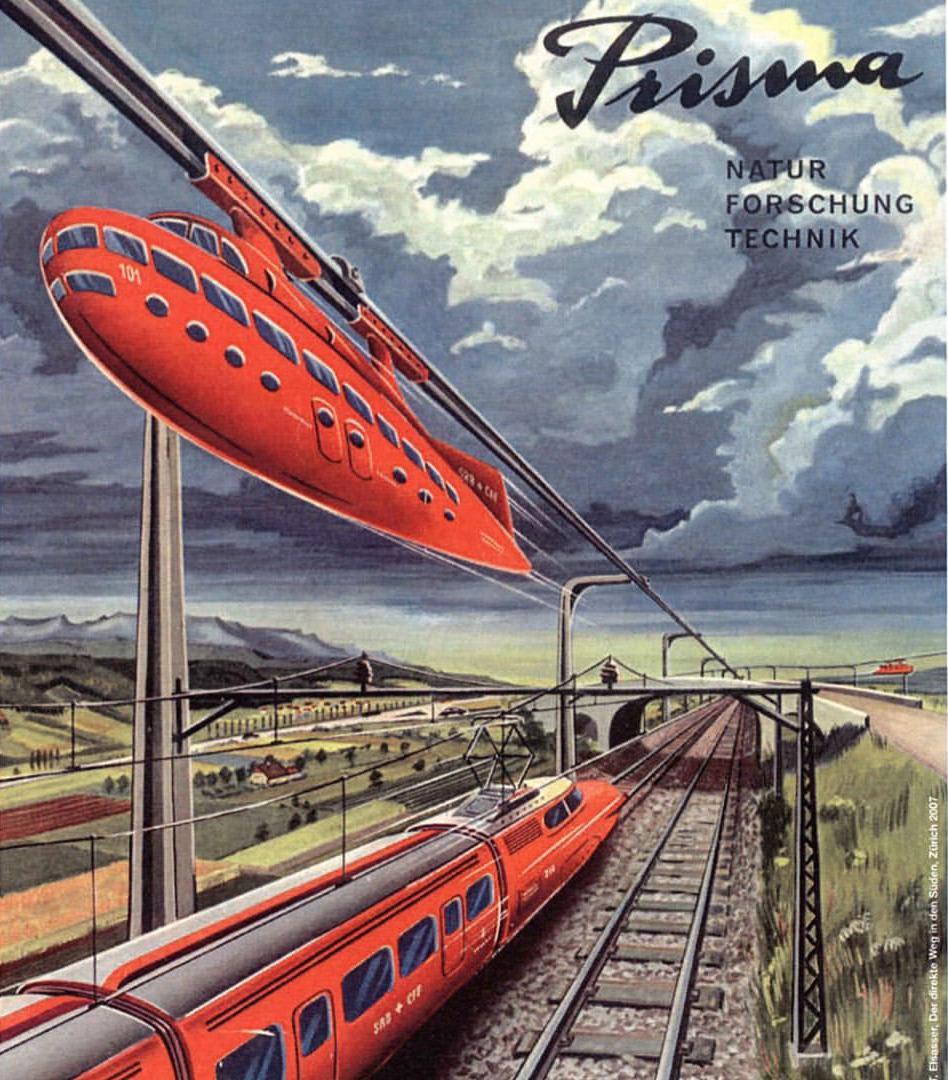
9/ Porta Alpina - Beatrice Trussardi Foundation
https://beatricetrussardifoundation.com/ideas/9-porta-alpina/
'Like all good utopian visions, the “Porta Alpina” station began with a proclamation for transforming the way that Swiss passengers would travel. Its creator, the engineer Eduard Gruner, published an essay in 1947 that imagined how people in the year 2000 would travel the country by trains that took them deep into the belly of the earth, under the mountains, to a great underground station ...'