@metacurity@infosec.exchange
2025-11-24 14:45:38
As SBOMs slowly progress at the federal level and in enterprises, the rise of AI coding assistants is fueling optimistic—and, some experts argue, “kind of insane”—claims about a future with vulnerability-free software.
Check out my latest CyberScoop piece.
Many thanks to @…, @…

 @ingo@social.stuetzle.cc
2026-01-22 20:08:23
„Immigration and Customs Enforcement agentsdetained a 5-year-old on his way home from school on Tuesday and used him as ‚bait‘ to knock on his front door to see if anyone was home, according to school officials in Minnesota.“
https://www.motherjones.com/politics/2026…
 @FandaSin@social.linux.pizza
2025-11-25 08:57:28
Yesterday they've released SOLO Leveling: Arise Overdrive.
I kinda liked anime and game looked good, so I've tried it.
I was surprised, when in the middle of the fight everything stoped and I couldn't move / use any skills / attacks.
My surprise was even bigger when outisde of the battle I stopped moving for about 10(maybe 20) seconds.
Fights are perfect🤌, if it wasn't "always online" "feature" it would be really good game with great c…

 @mgorny@social.treehouse.systems
2025-12-25 13:13:41
1. Plan going to Opole, via Kościan.
2. When you enter the train to Kościan, you discover that the change to Opole is delayed 15 minutes already. Consider changing in Leszno instead; if the delay increases, you'd have more options there.
3. Discover that there aren't any more options in Leszno today. Your change is delayed 30 minutes already. Return the reservations, and take one the other way, to Poznań instead.
4. Train station in Kościan. The displays aren't showing any delays, trains are announced normally. Tell people about the delays, so they won't stand in the -10°C waiting for the train to arrive.
5. Take the train to Poznań, and try to figure out what to do next.
6. Discover that the only reasonable choice going forward is Inowrocław: no delays and good return connection. It's the same train, so take another reservation. Your current seat is already taken there, so move elsewhere.
7. Your train should be followed by another one in the same direction, that departs from Poznań 6 minutes later. However, your train ends up waiting for another delayed train, so the other train goes first. The delay further increases as your train needs to slow down after the other train.
8. Reach Inowrocław 10 minutes later. That's not a problem, since you didn't have enough to see for all the time there anyway.
9. Discover that the town is more interesting than you thought, and you'd use more time.
10. When you almost get to the station, discover that your train is 10 minutes late. Not that you have any use for that time at this point.
11. When you're at the station, the train keeps increasing delay while waiting at the previous station, in Bydgoszcz. The station displays are completely useless, as they show only a random subset of regional trains, for no apparent reason. The announcements include all trains, but are rarely given.
12. The delay keeps increasing. Start thinking about getting a reservation for the next train to Poznań, in case it arrived first. You can't return the reservation after the planned departure time, and you can't have two reservations simultaneously, so reserve the seat from Mogilno, the next station.
13. The next train arrives first. While on board, you discover that you're not going to have any train home for 1.5 hr. Take another seat reservation to Leszno, where you can change into a suburban train and get home 15 minutes earlier than from Poznań. This time, your seat is still free.
14. The train departs 15 minutes delayed from Poznań. After all, you're changing trains in Kościan.
So I was going to go south, to Opole, via Kościan. Instead, I've ended up slingshotting north to Inowrocław, and getting back home via the same train as if I were in Opole.
#rail
 @netzschleuder@social.skewed.de
2025-11-25 11:00:15
amazon_copurchases: Amazon co-purchasing network (2003)
Network of items for sale on amazon.com in 2003 and the items they "recommend" (via the "Customers Who Bought This Item Also Bought" feature). If one item is frequently co-purchased with another, then the first item recommends the second.
This network has 403394 nodes and 3387388 edges.
Tags: Economic, Commerce, Unweighted

 @hikingdude@mastodon.social
2026-01-24 08:15:10
If you are buying a new computer, there's no need to throw the old one away. I was really surprised last year how many items found another owner.
Nothing to get rich of, but avoid unnecessary e-waste
https://www.locked.de/how-i-gave-my-old-computer-parts-a-s…
 @jswright61@ruby.social
2025-11-25 13:19:56
@… wanted to make sure you saw this.
https://mastodon.social/@GeekAndDad/115606048944508598
 @Techmeme@techhub.social
2026-01-22 10:10:52
Filing: PhonePe reports H1 FY 2026 revenue up 22% YoY to ~$427.5M, a ~$157M loss, and 657.6M users; the payments company plans to sell 50.7M shares in its IPO (Rajesh Mascarenhas/Bloomberg)
https://www.bloomberg.com/news/articles/20
 @wraithe@mastodon.social
2026-01-21 21:18:23
Via @delilahsdawson.bsky.social
“Look, I'm going to tell you a secret. If you buy an e-book while it's on sale, you never have to read it. If you have $2 to spare & want to help that particular author, you can just chuck the book into the oubliette of your TBR. Every sale helps. The author will never know, but you gave them a gift.”
…
@netzschleuder@social.skewed.de2025-11-24 04:00:05
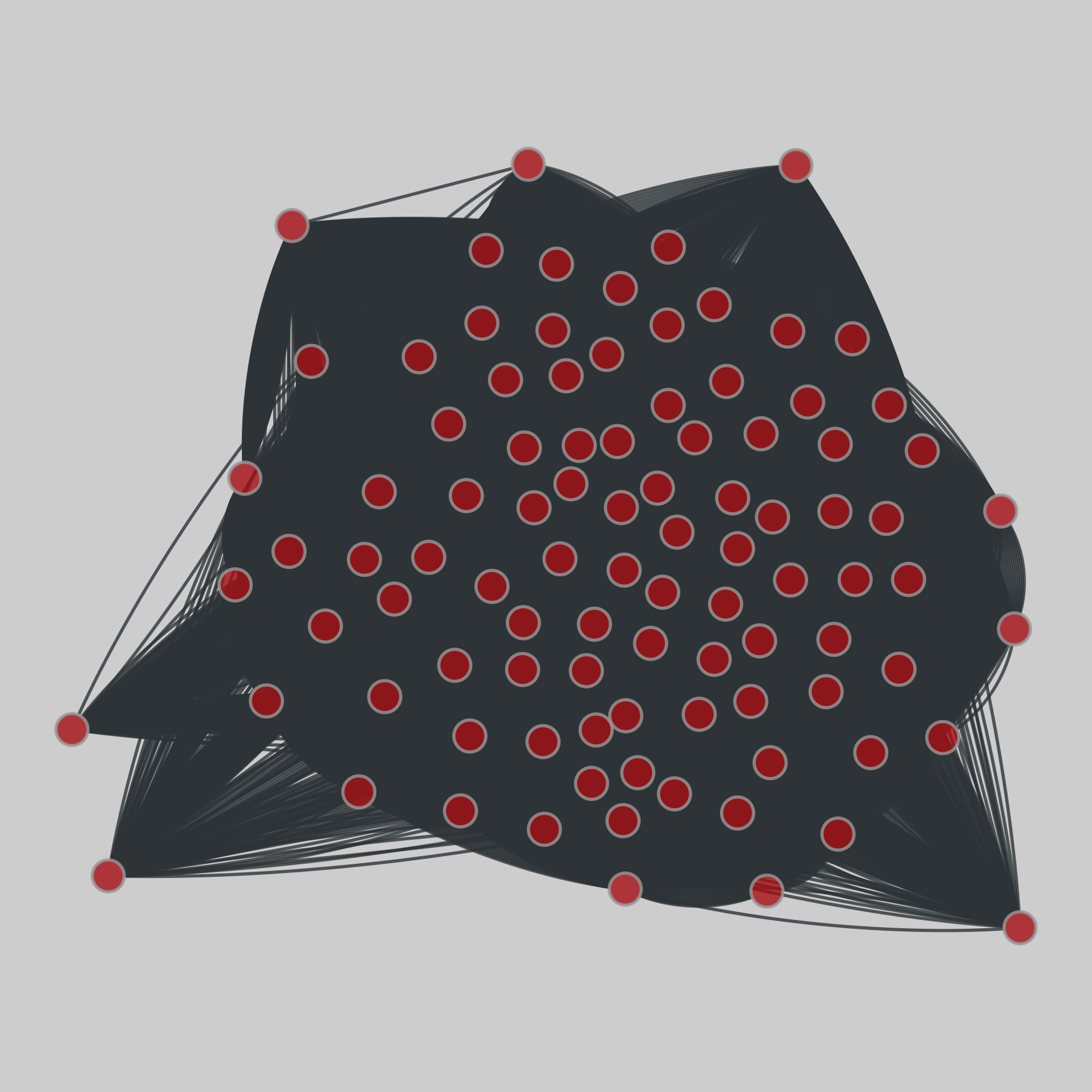
sp_colocation: Social co-locations (2018)
Network of colocations between peoople, based on the information on which RFID readers received information from the RFID tags. Namely, we define two individuals to be in co-presence if the same exact set of readers have received signals from both individuals during a 20s time window.
This network has 100 nodes and 394247 edges.
Tags: Social, Offline, Unweighted, Weighted, Temporal, Metadata