Even Meshtastic has been infected. There is some slop-sucker in Milwaukee who created an AI bot that is on the mesh.
Locals are talking about how to ban it, the issue of censorship, future improvements to apps, etc.
Anyone else seeing spam (or AI) on the mesh?
#meshtastic #noAI
Mesh, founded by ex-SpaceX staff to mass produce optical transceivers that convert optical signals to electrical signals, raised a $50M Series A led by Thrive (Edward Ludlow/Bloomberg)
https://www.bloomberg.com/news/articles/2026…
Weekly scan done. Mesh up-to-date. No strange devices. All devices are up-to-date for security patches.
Experimental Validation of HomHBFEM Simulations of Fast Corrector Magnets for PETRA IV
Jan-Magnus Christmann, Laura Anna Maria D'Angelo, Herbert De Gersem, Sven Pfeiffer, Sajjad Hussain Mirza, Adeel Amjad, Lucas Rousselange, Matthias Thede
https://arxiv.org/abs/2602.14824 https://arxiv.org/pdf/2602.14824 https://arxiv.org/html/2602.14824
arXiv:2602.14824v1 Announce Type: new
Abstract: This paper presents experimental validation of the homogenized harmonic balance finite element method (HomHBFEM), which we have developed as a dedicated simulation technique for magnets with fast excitation cycles, in particular the fast corrector (FC) magnets for PETRA IV at DESY. The HomHBFEM allows efficient three-dimensional nonlinear eddy-current simulations of laminated magnets at elevated frequencies with a relatively coarse finite element (FE) mesh and without computationally expensive time-stepping. This is achieved by combining a frequency-domain-based homogenization technique with the harmonic balance FE method. The simulation results for the magnetic flux density along the axis of the FC magnets as a function of frequency and the resulting integrated transfer function (ITF) are compared to Hall probe and search coil measurements of the first prototype FC magnet for PETRA IV. A good agreement between simulated and measured ITFs is achieved for excitation frequencies from 10 Hz to 10 kHz.
toXiv_bot_toot
EasyTier - A Simple, Secure, Decentralized SD-WAN Solution
A simple, decentralized mesh VPN with WireGuard support.
✨ #dezentral
My node fell down, but I'll put it up again! 🎵
#meshtastic
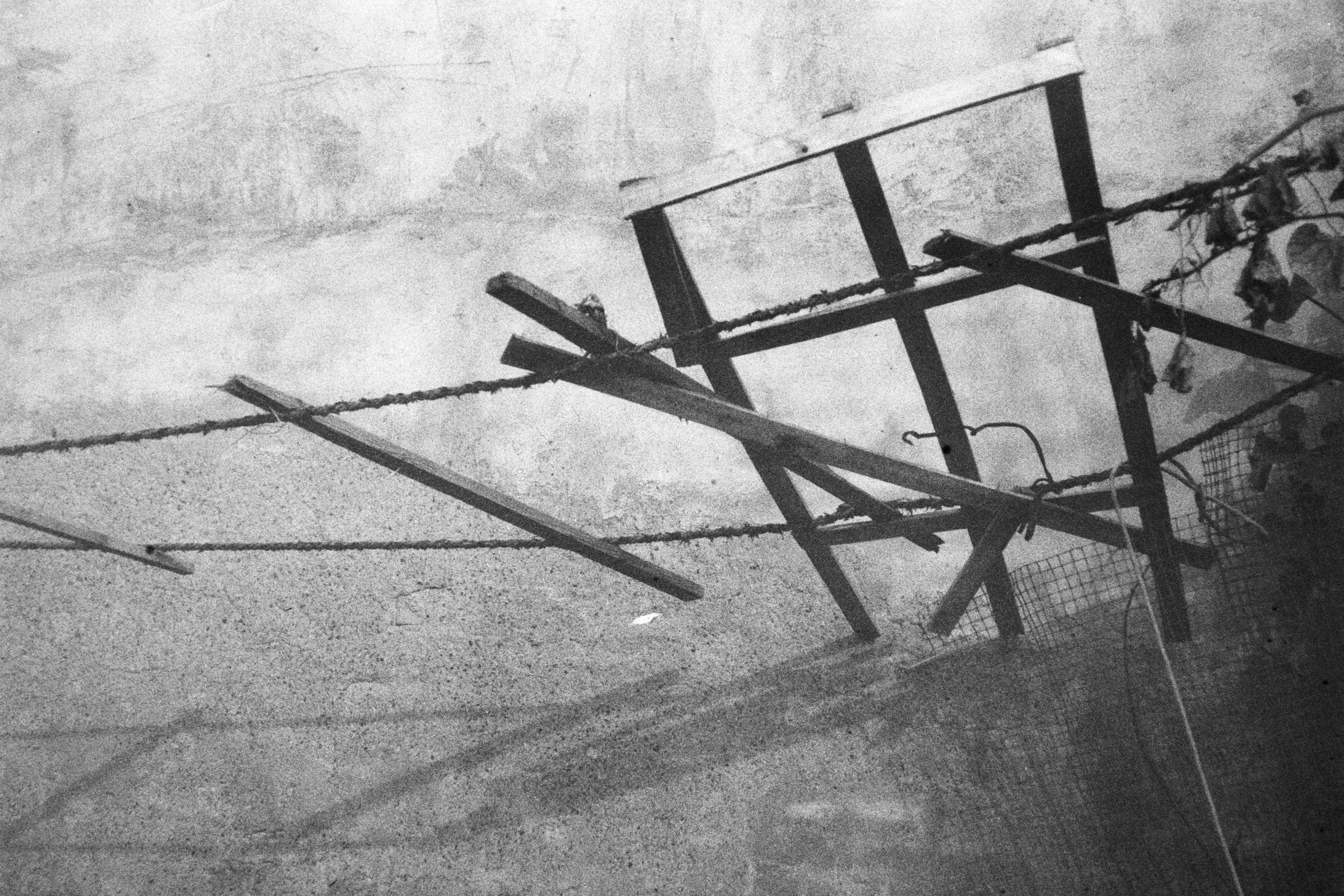
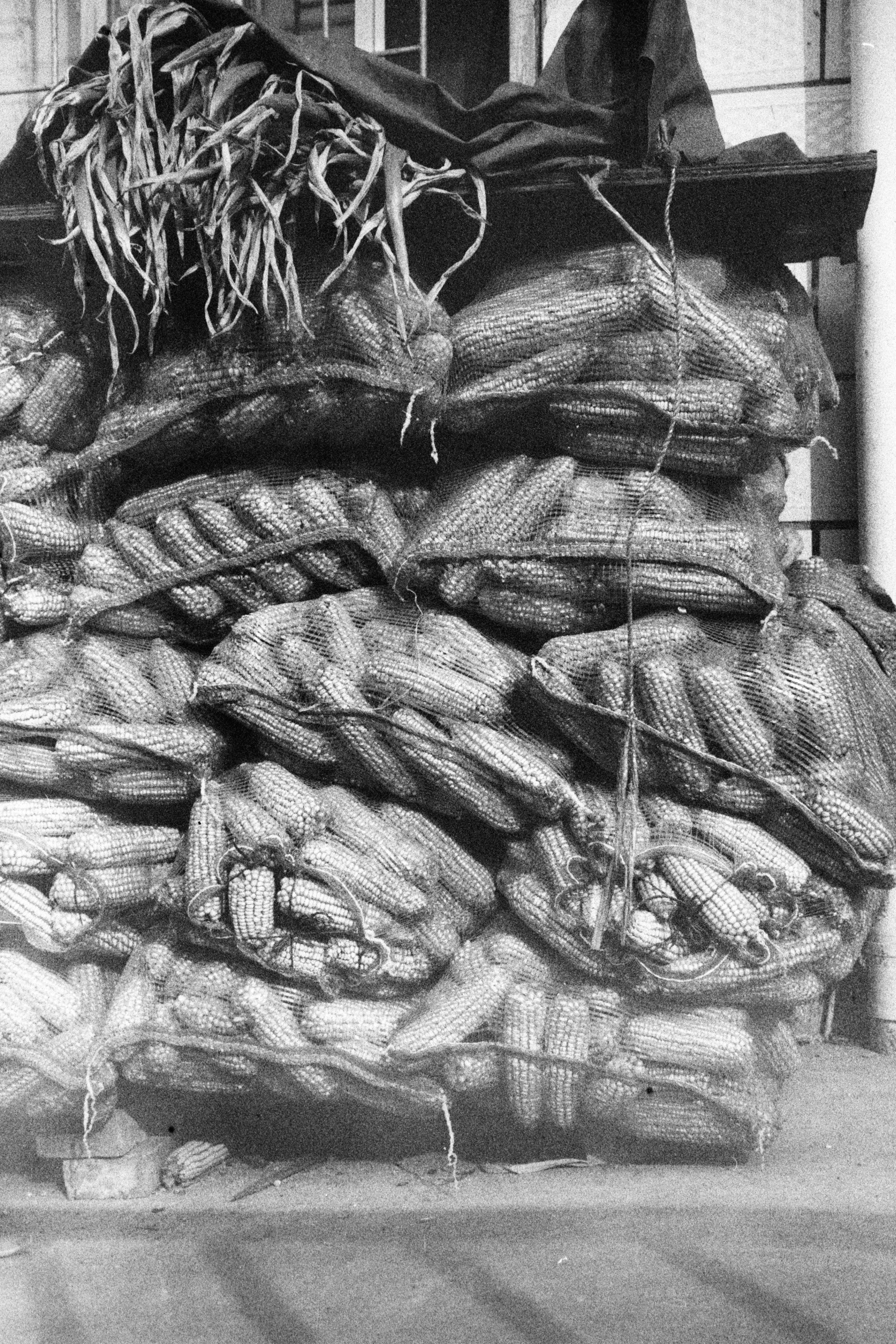
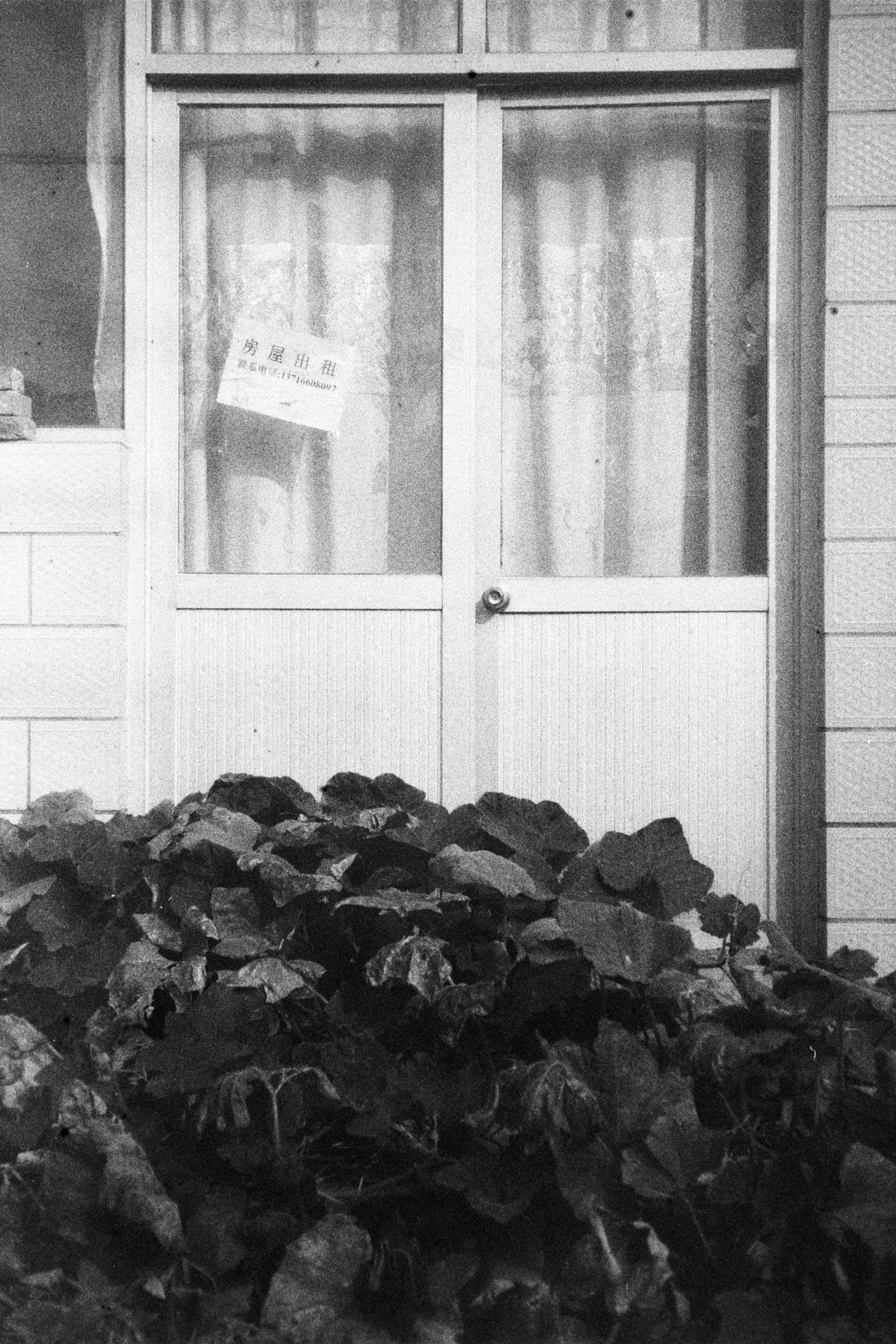
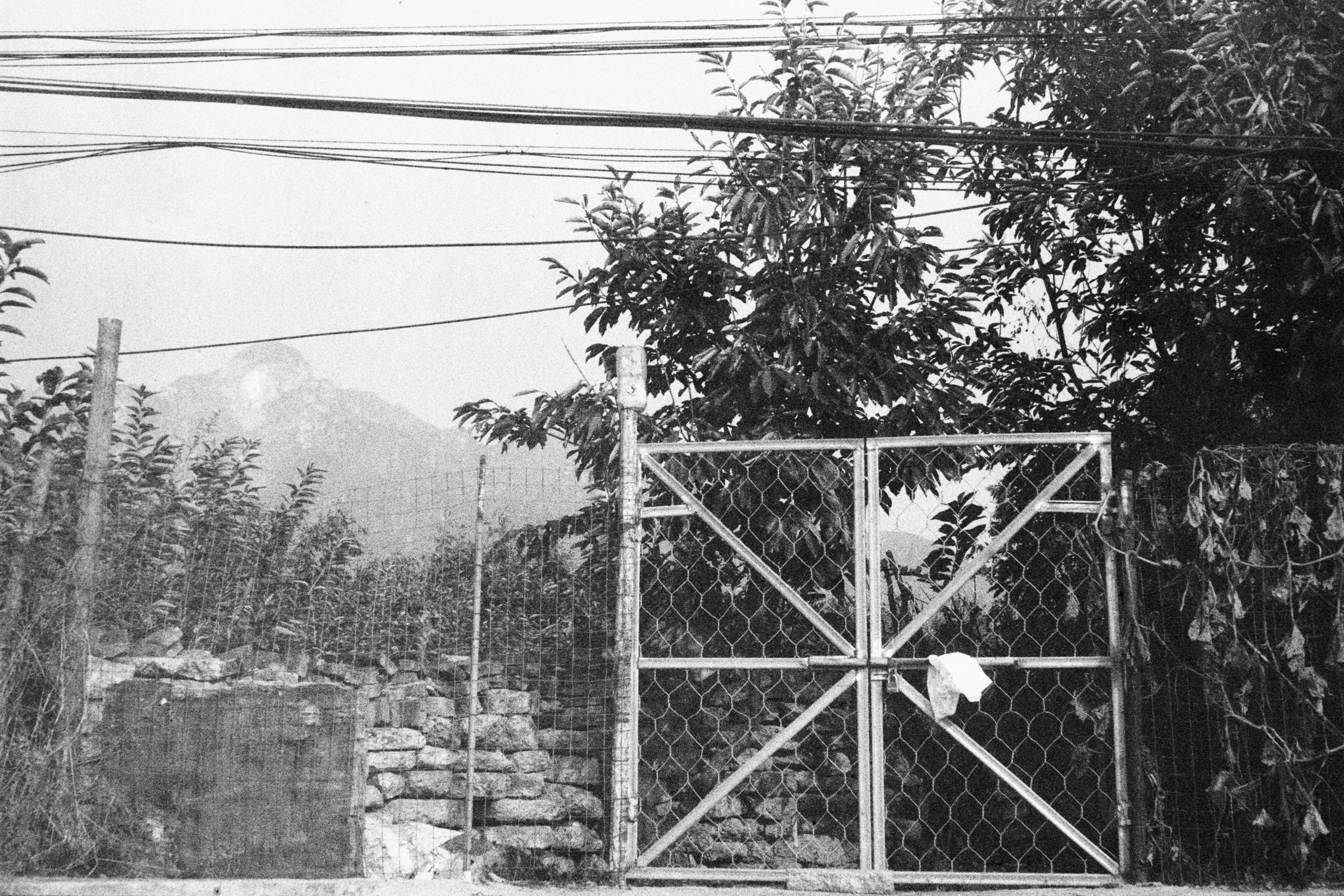
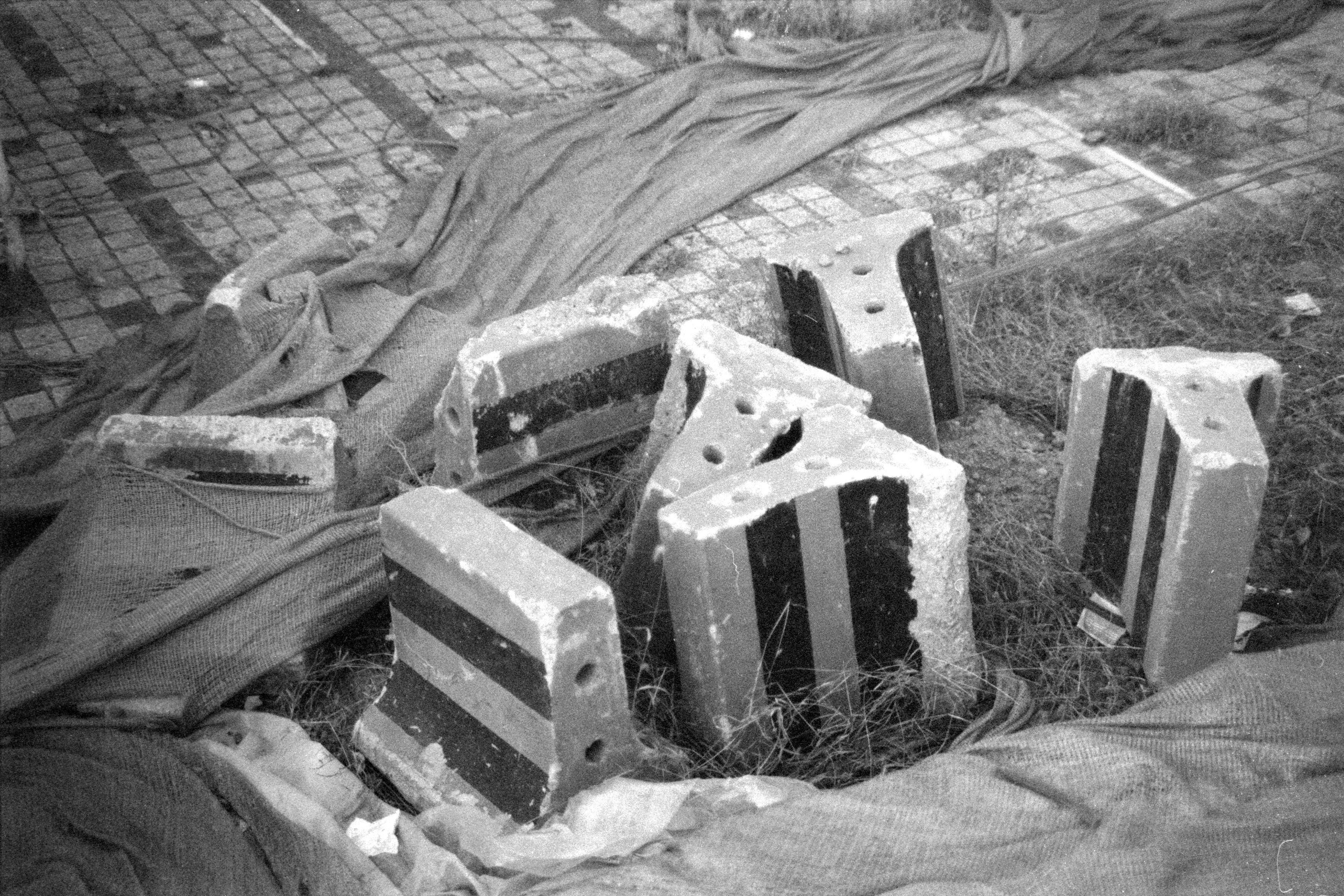
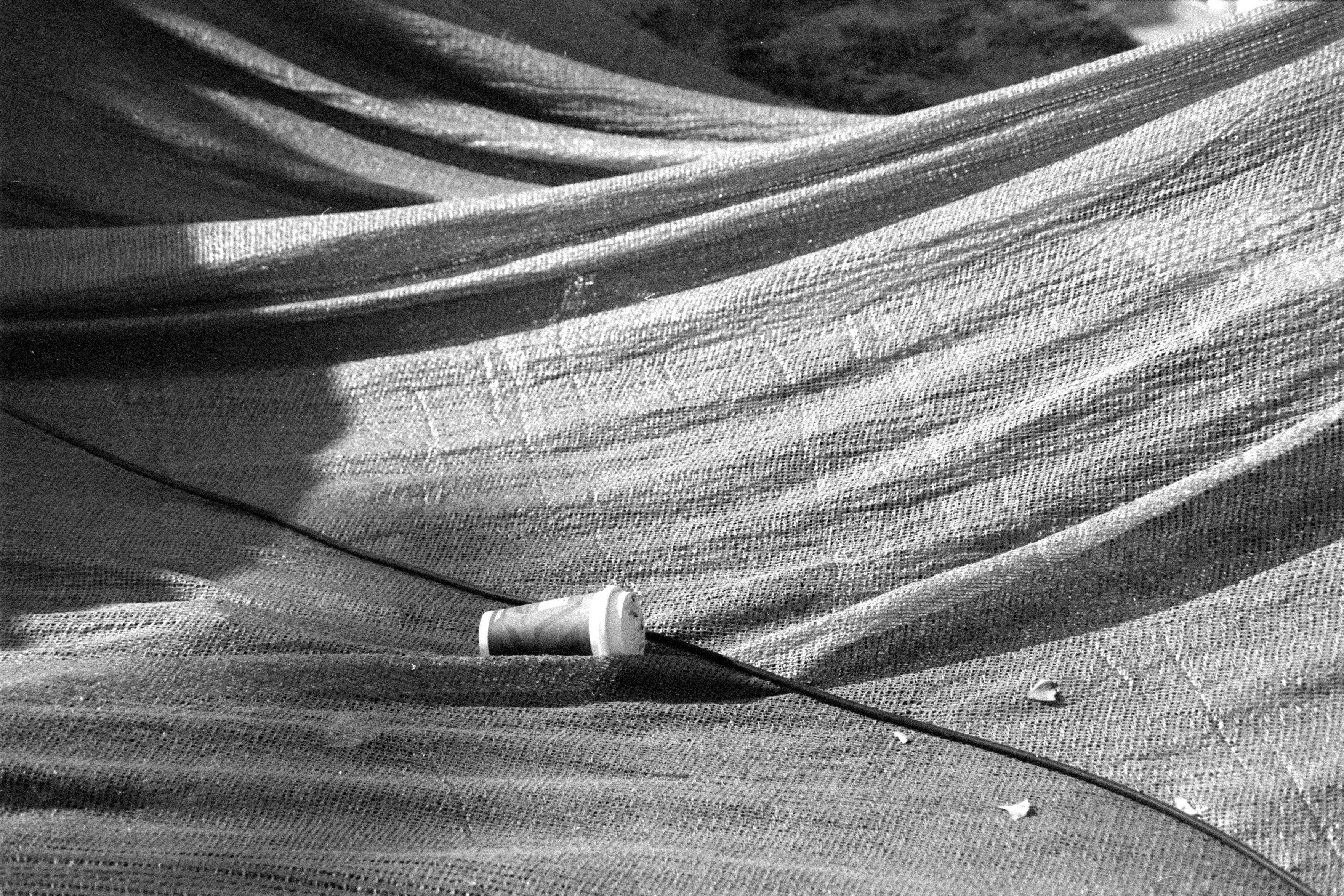
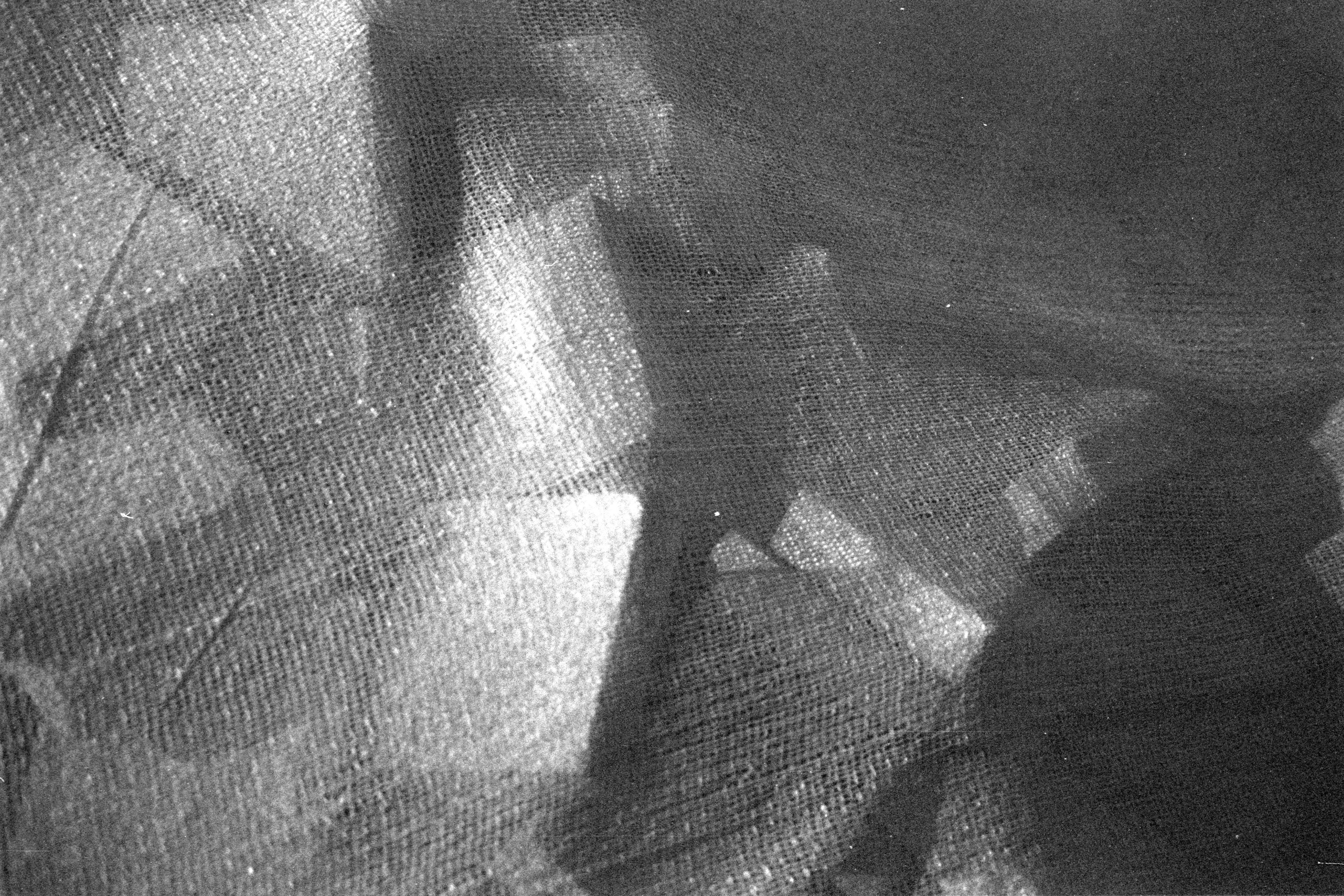
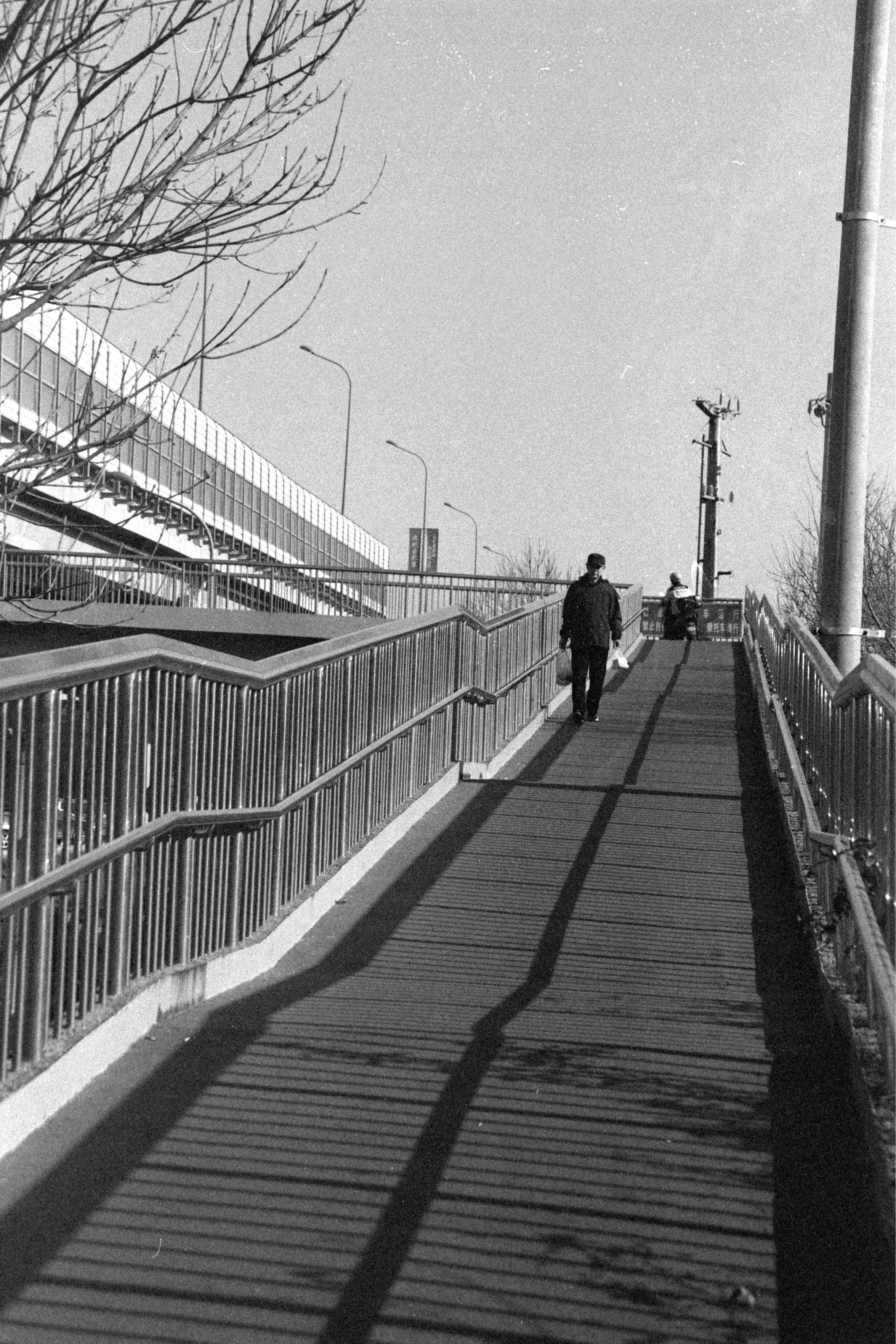
Mundane Things VIII🌀
普通物件 VIII🌀
📷 Nikon FE
🎞️ Ilford FP4 Plus 125, expired 1993
If you like my work, buy me a coffee from PayPal #filmphotography
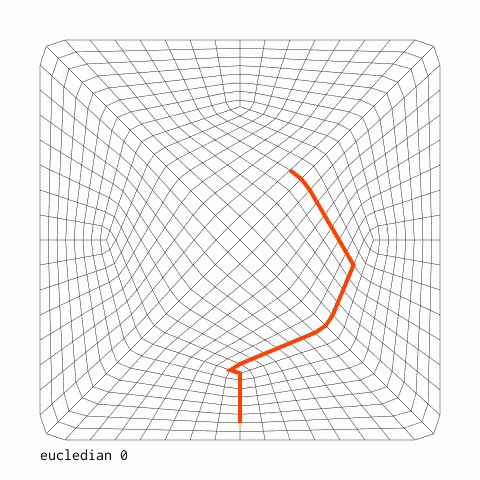
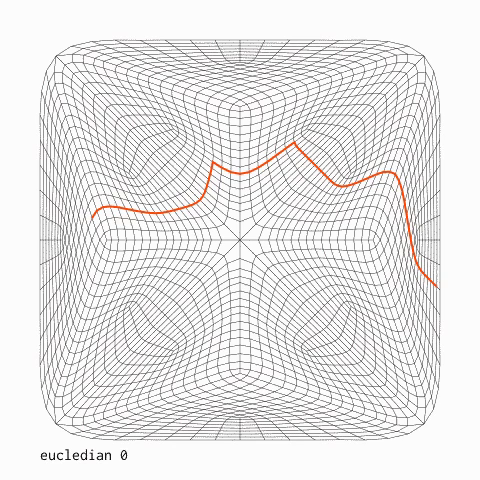
This was an interesting problem to work on (back in 2017): A visualization of a path planner for 3D printing (FDM) a single layer/mesh structure of a multi-layer textile. Two setups of the same path strategy which optimized for longest continuous sub-paths and minimum rapids (distance without filament extrusion) between sub-paths. The planner supported six strategies in total, incl. optimizing for straight sub-paths and minimum amounts of "recent" crossings (to allow filament to co…
Migration von z2m auf zha abgeschlossen.
Alle 107 derzeit aktiven Geräte (die Gartenbewässerung ist derzeit nicht in Betrieb) sind erfolgreich umgezogen und tun ihren Job.
#Homeassistant
It's #Mesh Night at @… tonight at 19h00 local #Montreal time.
I've been going to these this year, and it's been educational and fun.
Last month was pretty busy. Lots …
Batteries fully charged. Flashlights are ready. UPS for router and mesh system ready, only thing connected to it is the router. UPS behind TV is ready, but, that is only for the TV. Third UPS is beside me here, fully charged and ready to go. Last UPS is connected to the upstairs mesh device. Turned up the thermostat so when (not if) we lose power the house will stay warm enough for a few hours.
Still checking out the battery backup systems, but have to save enough to buy one (acc…
EAG-PT: Emission-Aware Gaussians and Path Tracing for Indoor Scene Reconstruction and Editing
Xijie Yang, Mulin Yu, Changjian Jiang, Kerui Ren, Tao Lu, Jiangmiao Pang, Dahua Lin, Bo Dai, Linning Xu
https://arxiv.org/abs/2601.23065 https://arxiv.org/pdf/2601.23065 https://arxiv.org/html/2601.23065
arXiv:2601.23065v1 Announce Type: new
Abstract: Recent reconstruction methods based on radiance field such as NeRF and 3DGS reproduce indoor scenes with high visual fidelity, but break down under scene editing due to baked illumination and the lack of explicit light transport. In contrast, physically based inverse rendering relies on mesh representations and path tracing, which enforce correct light transport but place strong requirements on geometric fidelity, becoming a practical bottleneck for real indoor scenes. In this work, we propose Emission-Aware Gaussians and Path Tracing (EAG-PT), aiming for physically based light transport with a unified 2D Gaussian representation. Our design is based on three cores: (1) using 2D Gaussians as a unified scene representation and transport-friendly geometry proxy that avoids reconstructed mesh, (2) explicitly separating emissive and non-emissive components during reconstruction for further scene editing, and (3) decoupling reconstruction from final rendering by using efficient single-bounce optimization and high-quality multi-bounce path tracing after scene editing. Experiments on synthetic and real indoor scenes show that EAG-PT produces more natural and physically consistent renders after editing than radiant scene reconstructions, while preserving finer geometric detail and avoiding mesh-induced artifacts compared to mesh-based inverse path tracing. These results suggest promising directions for future use in interior design, XR content creation, and embodied AI.
toXiv_bot_toot
What's a good mesh router brand? Will be looking for a new/secondhand routers
#homelab
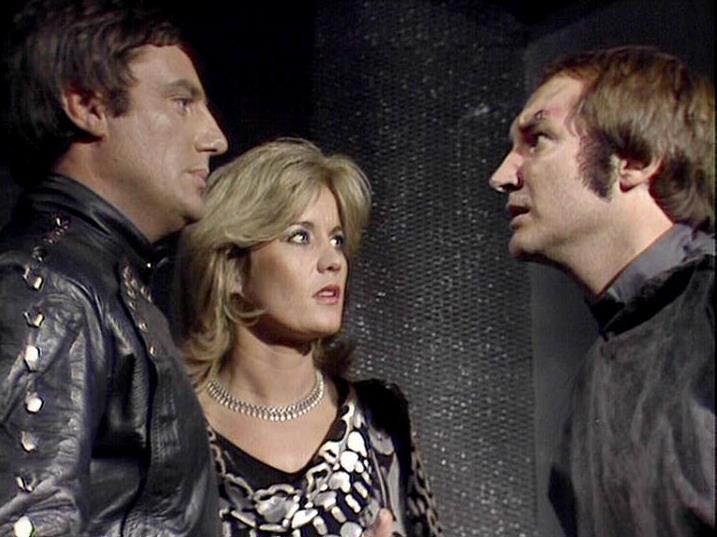
Series B, Episode 08 - Hostage
VILA: Me?
MOLOK: You.
VILA: Now wait a minute. Let's not be hasty. [Molok punches Vila in the stomach who cries out.]
VILA: There's no need for violence, is there?
BLAKE: So what happens now? [Pulsing sounds]
https://blake.torpidity.net/m/208/549
Some _very_ early algorithm concept/pre-viz sketches/explorations for the Tron Legacy (2010) intro sequence. They informed another concept/approach in which we applied a similar algorithm to progressively trace out edges of an initially invisible and super detailed 3D city mesh. This required a lot of effort to retopologize the (huge) geometry supplied and creating a multi-res navigation graph to prioritize long/major edges over shorter ones, filter out undesired edges/directions, thereby cr…
Crypto payments network Mesh raised a $75M Series C led by Dragonfly at a $1B valuation, bringing its total funding to $200M (Naga Avan-Nomayo/The Block)
https://www.theblock.co/post/387241/crypto-payments-net…
Habt ihr Erfahrung mit Access Points im Außeneinsatz? Ich will dieses Jahr ein paar APs außen aufhängen und suche gerade passende Geräte.
Das sollte einen aktuellen Standard (802.11 ax?) beherrschen, Dualband besitzen und wetterfest (IP65?, direkte Sonneneinstrahlung) sein.
Bisher in der Auswahl sind
- UniFi U6 Mesh
- TP-Link EAP610-Outdoor
Halten die Außeneinsatz aus? Habt ihr Alternativen?
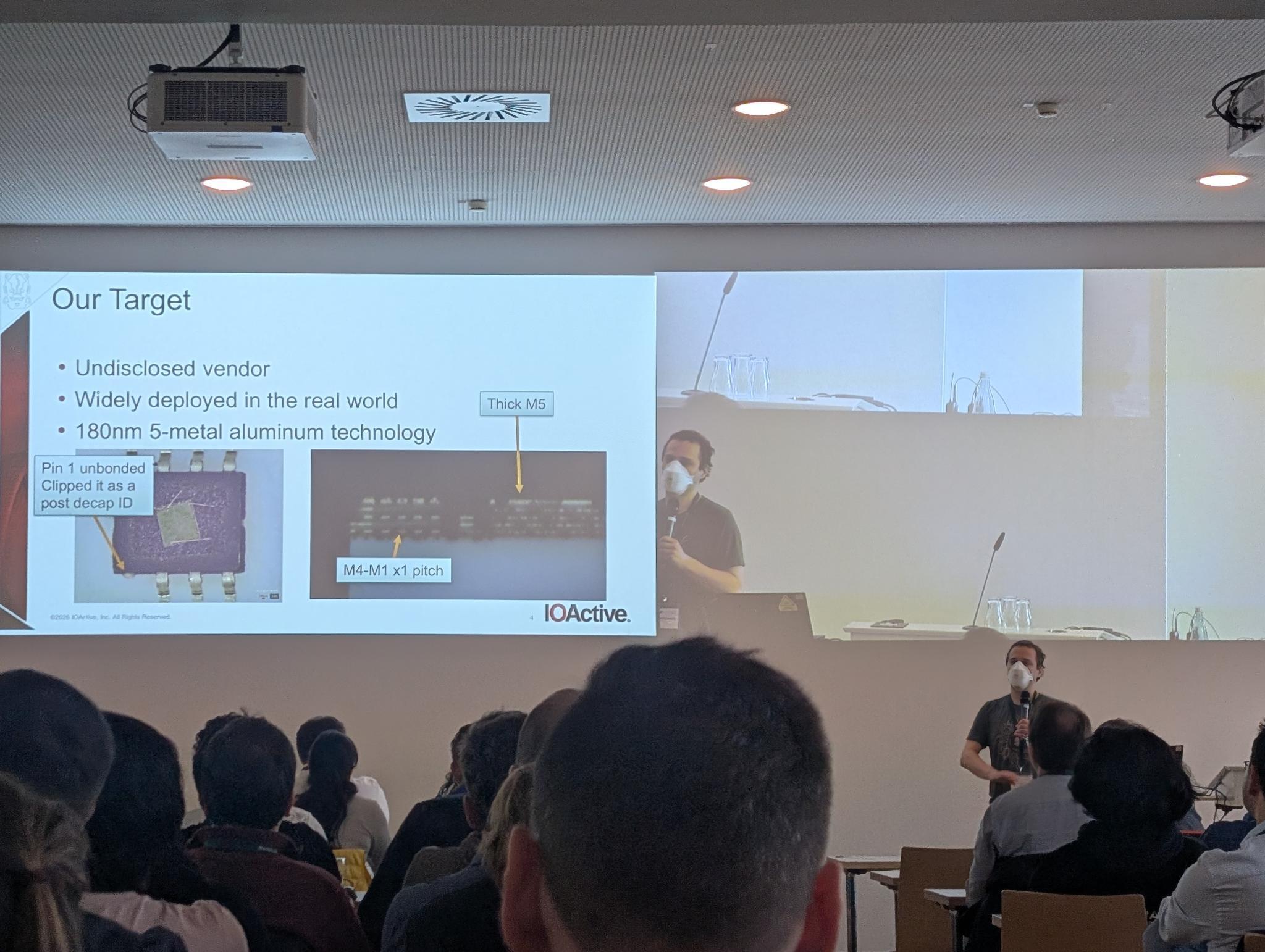
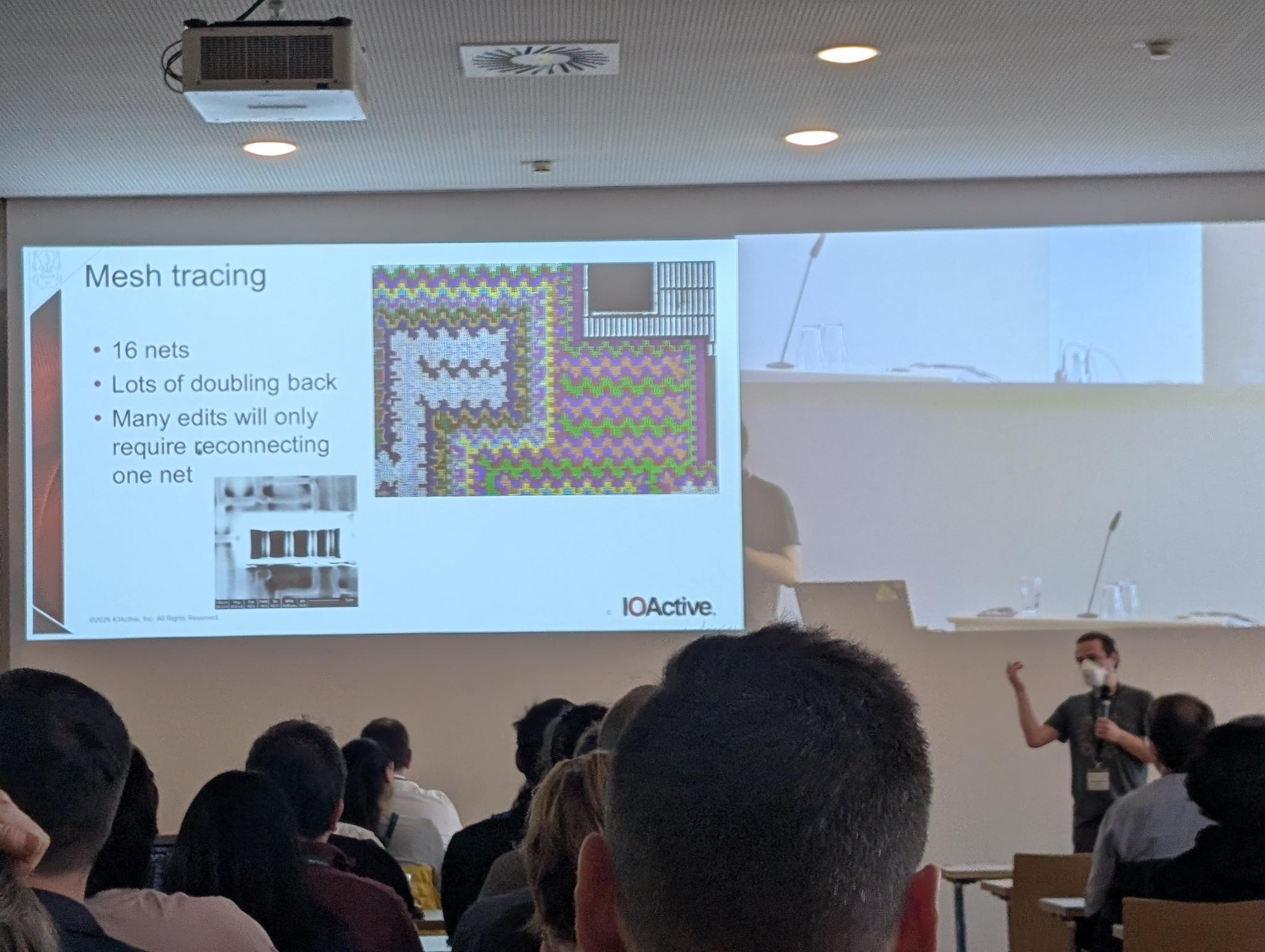
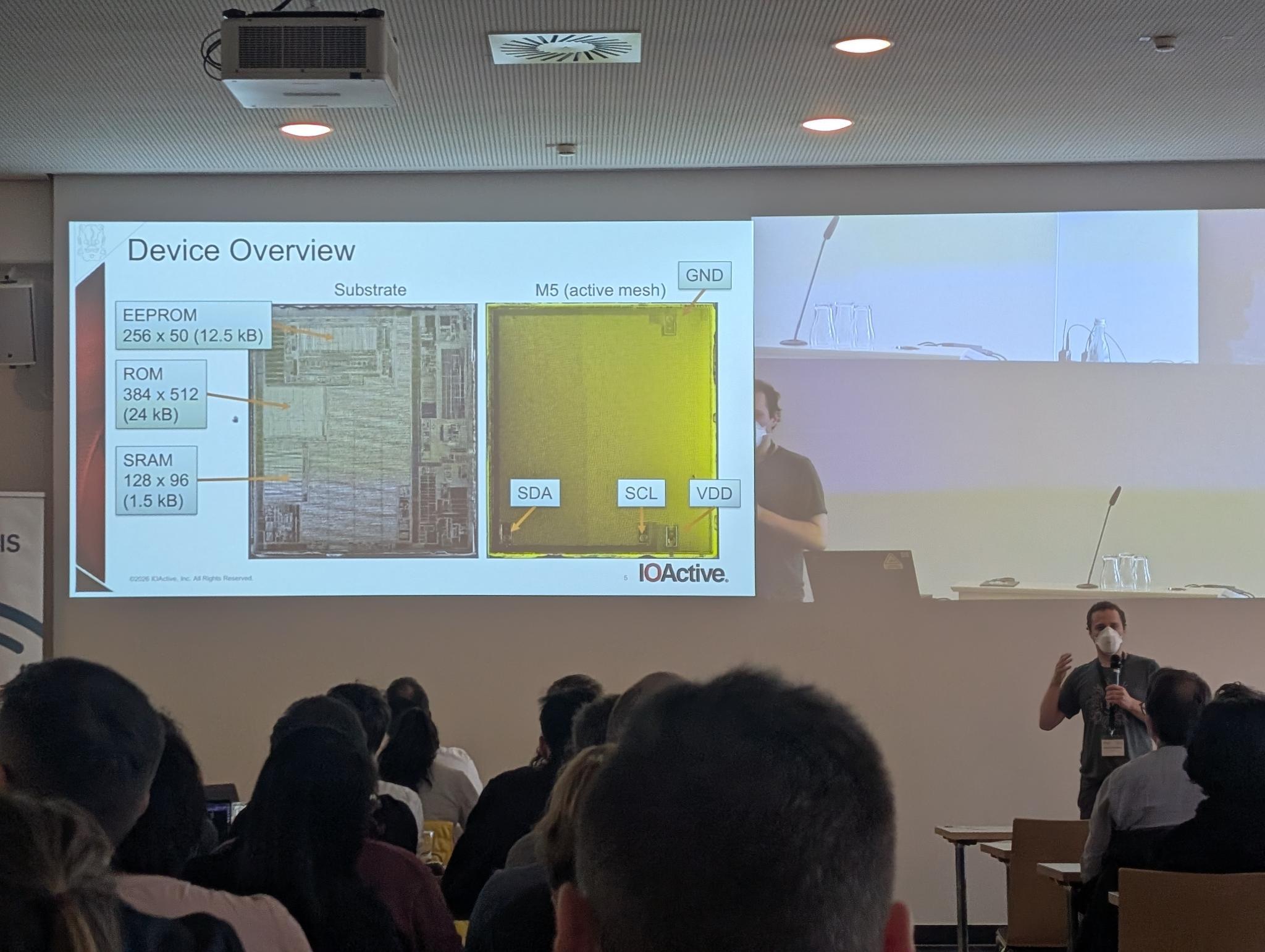
My talk went well
(Photos by John McMaster)
Oh hey, if you like mesh networking and hidden networks, you might want to keep an eye on https://reticulum.network/
It still has some issues, but it's getting off to a good start. It's kind of amazing how easy it is to embed it in other things for steganographic purposes. I definitely see room for improvement, but it's already exciting.
Nomadnet (built on top of it) is already really exciting. It feels very much like the 90's internet. Enjoy!
Mesh Splatting for End-to-end Multiview Surface Reconstruction
Ruiqi Zhang, Jiacheng Wu, Jie Chen
https://arxiv.org/abs/2601.21400 https://arxiv.org/pdf/2601.21400 https://arxiv.org/html/2601.21400
arXiv:2601.21400v1 Announce Type: new
Abstract: Surfaces are typically represented as meshes, which can be extracted from volumetric fields via meshing or optimized directly as surface parameterizations. Volumetric representations occupy 3D space and have a large effective receptive field along rays, enabling stable and efficient optimization via volumetric rendering; however, subsequent meshing often produces overly dense meshes and introduces accumulated errors. In contrast, pure surface methods avoid meshing but capture only boundary geometry with a single-layer receptive field, making it difficult to learn intricate geometric details and increasing reliance on priors (e.g., shading or normals). We bridge this gap by differentiably turning a surface representation into a volumetric one, enabling end-to-end surface reconstruction via volumetric rendering to model complex geometries. Specifically, we soften a mesh into multiple semi-transparent layers that remain differentiable with respect to the base mesh, endowing it with a controllable 3D receptive field. Combined with a splatting-based renderer and a topology-control strategy, our method can be optimized in about 20 minutes to achieve accurate surface reconstruction while substantially improving mesh quality.
toXiv_bot_toot
Series B, Episode 01 - Redemption
VILA: Been looking all over for you two.
JENNA: How did you get here?
VILA: I was just passing - thought I'd drop in and see you.
AVON: Where are Gan and Cally?
VILA: They're in a cell along the corridor.
https://blake.torpidity.net/m/201/469
Just returned my brand new #Google #WiFi Pro.
So many issues with dropped connections on Android and MacOS. Turns out they are known issues. Going back to my ancient Google WiFi mesh which actually works.
Some City Some Nature V 🏙️
一些城一些自然 V 🏙️
📷 Nikon F4E
🎞️ ERA 100, expired 1993
#filmphotography #Photography #blackandwhite
#Meshtastic community: is it rude to have an automated system publish events to a private (unencrypted) channel (on the order of averaging one every 5 minutes, maximum) if the radio channel utilization on my local mesh is really low (currently rounds to 0%)?
Warum in dem Standard- Kabel-Router von Vodafone noch nicht mal der Fritz WLAN-Repeater mit IP angezeigt wird, keine Ahnung. Zum Glück konnte ich die IP dann über einen Netzwerkscan mit der Fritz WLAN App herausfinden, um mich mal in der Admin-Oberfläche des Repeaters anzumelden. Vielleicht sollte ich doch mal über eine Fritzbox Cable nachdenken, dann funktioniert das mit dem Mesh bestimmt auch besser. Naja, gibt Wichtigeres.
Flowers on my 'Belle of Georgia' dwarf peach (Prunus persica). Squirrels ate every single fruit last year so this season I'm going to encase them in stainless steel mesh bags. Might even use a finer mesh plastic bag inside to prevent peach-loving moths from ovipositing. #flowers #blumen #peach #prunus #tree #gardening
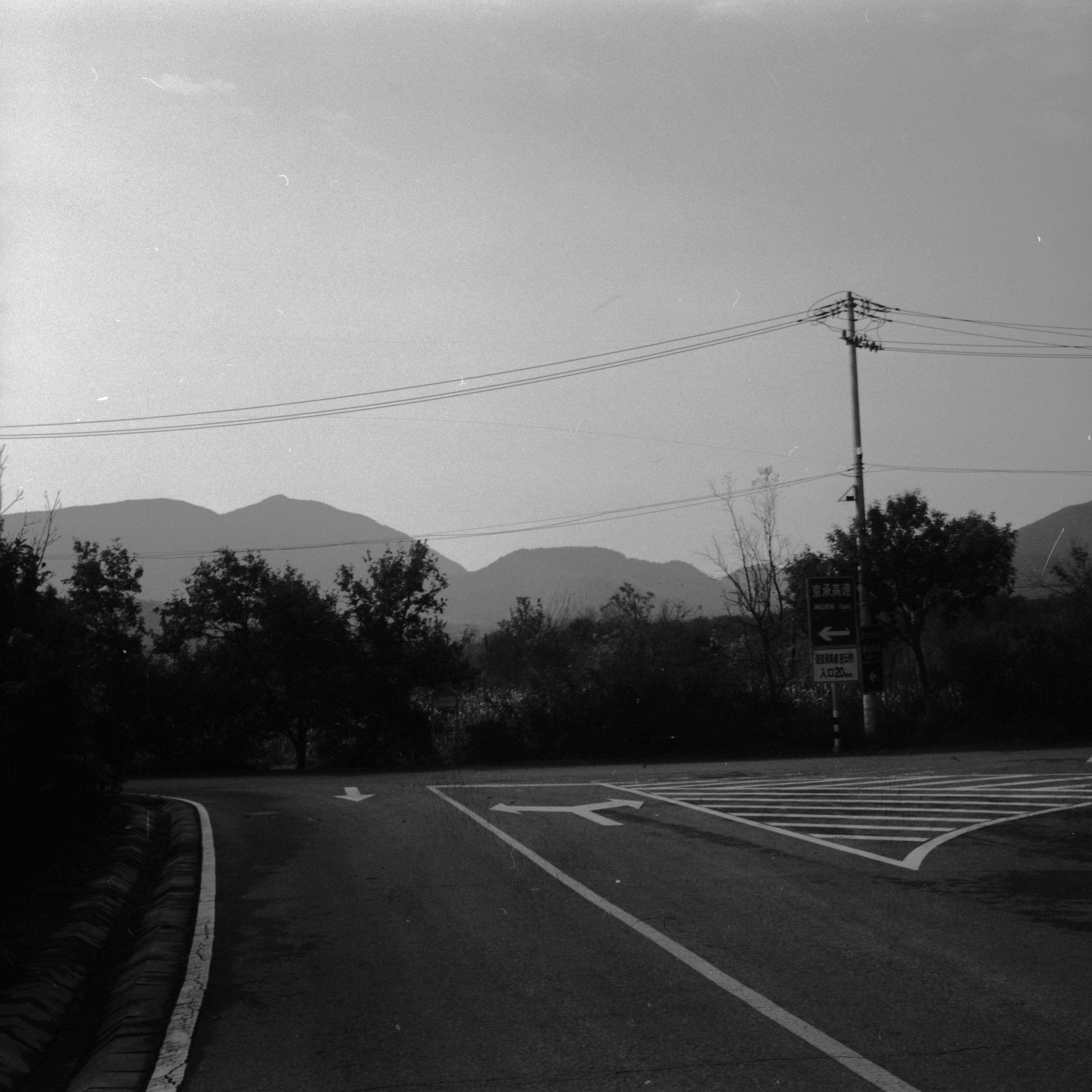
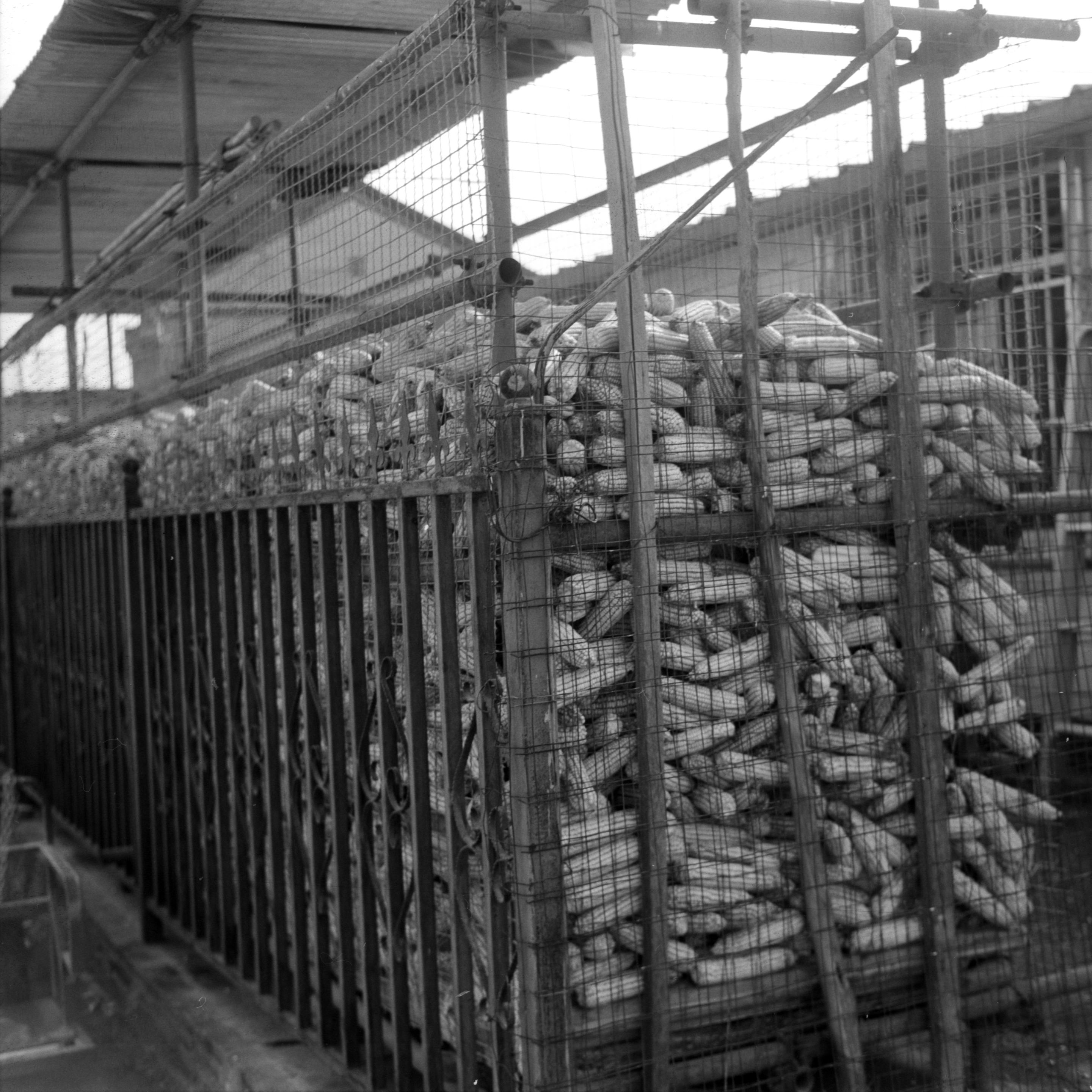
Some City Some Nature IV 🏙️
一些城一些自然 IV🏙️
📷 Zeiss IKON Super Ikonta 533/16
🎞️ Lucky SHD 400 (6x6)
#filmphotography #Photography #blackandwhite
Replaced article(s) found for cs.GR. https://arxiv.org/list/cs.GR/new
[1/1]:
- Locality-Aware Automatic Differentiation on the GPU for Mesh-Based Computations
Ahmed H. Mahmoud, Rahul Goel, Jonathan Ragan-Kelley, Justin Solomon
https://arxiv.org/abs/2509.00406 https://mastoxiv.page/@arXiv_csGR_bot/115139432473803894
- F-scheduler: illuminating the free-lunch design space for fast sampling of diffusion models
Zilai Li, Lujia Bai
https://arxiv.org/abs/2510.02390 https://mastoxiv.page/@arXiv_csGR_bot/115326072853284835
- Mesh Splatting for End-to-end Multiview Surface Reconstruction
Ruiqi Zhang, Jiacheng Wu, Jie Chen
https://arxiv.org/abs/2601.21400 https://mastoxiv.page/@arXiv_csGR_bot/115983057390044475
- InterMimic: Towards Universal Whole-Body Control for Physics-Based Human-Object Interactions
Sirui Xu, Hung Yu Ling, Yu-Xiong Wang, Liang-Yan Gui
https://arxiv.org/abs/2502.20390 https://mastoxiv.page/@arXiv_csCV_bot/114080380833806621
- Attention in Geometry: Scalable Spatial Modeling via Adaptive Density Fields and FAISS-Accelerate...
Zhaowen Fan
https://arxiv.org/abs/2601.06135 https://mastoxiv.page/@arXiv_csLG_bot/115887382327150666
- Under-Canopy Terrain Reconstruction in Dense Forests Using RGB Imaging and Neural 3D Reconstruction
Refael Sheffer, Chen Pinchover, Haim Zisman, Dror Ozeri, Roee Litman
https://arxiv.org/abs/2601.22861 https://mastoxiv.page/@arXiv_csCV_bot/116000605470776021
toXiv_bot_toot
WeirNet: A Large-Scale 3D CFD Benchmark for Geometric Surrogate Modeling of Piano Key Weirs
Lisa L\"uddecke, Michael Hohmann, Sebastian Eilermann, Jan Tillmann-Mumm, Pezhman Pourabdollah, Mario Oertel, Oliver Niggemann
https://arxiv.org/abs/2602.20714 https://arxiv.org/pdf/2602.20714 https://arxiv.org/html/2602.20714
arXiv:2602.20714v1 Announce Type: new
Abstract: Reliable prediction of hydraulic performance is challenging for Piano Key Weir (PKW) design because discharge capacity depends on three-dimensional geometry and operating conditions. Surrogate models can accelerate hydraulic-structure design, but progress is limited by scarce large, well-documented datasets that jointly capture geometric variation, operating conditions, and functional performance. This study presents WeirNet, a large 3D CFD benchmark dataset for geometric surrogate modeling of PKWs. WeirNet contains 3,794 parametric, feasibility-constrained rectangular and trapezoidal PKW geometries, each scheduled at 19 discharge conditions using a consistent free-surface OpenFOAM workflow, resulting in 71,387 completed simulations that form the benchmark and with complete discharge coefficient labels. The dataset is released as multiple modalities compact parametric descriptors, watertight surface meshes and high-resolution point clouds together with standardized tasks and in-distribution and out-of-distribution splits. Representative surrogate families are benchmarked for discharge coefficient prediction. Tree-based regressors on parametric descriptors achieve the best overall accuracy, while point- and mesh-based models remain competitive and offer parameterization-agnostic inference. All surrogates evaluate in milliseconds per sample, providing orders-of-magnitude speedups over CFD runtimes. Out-of-distribution results identify geometry shift as the dominant failure mode compared to unseen discharge values, and data-efficiency experiments show diminishing returns beyond roughly 60% of the training data. By publicly releasing the dataset together with simulation setups and evaluation pipelines, WeirNet establishes a reproducible framework for data-driven hydraulic modeling and enables faster exploration of PKW designs during the early stages of hydraulic planning.
toXiv_bot_toot
Learning to Build Shapes by Extrusion
Thor Vestergaard Christiansen, Karran Pandey, Alba Reinders, Karan Singh, Morten Rieger Hannemose, J. Andreas B{\ae}rentzen
https://arxiv.org/abs/2601.22858 https://arxiv.org/pdf/2601.22858 https://arxiv.org/html/2601.22858
arXiv:2601.22858v1 Announce Type: new
Abstract: We introduce Text Encoded Extrusion (TEE), a text-based representation that expresses mesh construction as sequences of face extrusions rather than polygon lists, and a method for generating 3D meshes from TEE using a large language model (LLM). By learning extrusion sequences that assemble a mesh, similar to the way artists create meshes, our approach naturally supports arbitrary output face counts and produces manifold meshes by design, in contrast to recent transformer-based models. The learnt extrusion sequences can also be applied to existing meshes - enabling editing in addition to generation. To train our model, we decompose a library of quadrilateral meshes with non-self-intersecting face loops into constituent loops, which can be viewed as their building blocks, and finetune an LLM on the steps for reassembling the meshes by performing a sequence of extrusions. We demonstrate that our representation enables reconstruction, novel shape synthesis, and the addition of new features to existing meshes.
toXiv_bot_toot
Yesterday, I managed to 1) install #PiHole on a #RaspberryPi behind in my #Tailscale mesh and configure the #DNS to…
Crosslisted article(s) found for cs.GR. https://arxiv.org/list/cs.GR/new
[1/1]:
- Optimization and Mobile Deployment for Anthropocene Neural Style Transfer
Po-Hsun Chen, Ivan C. H. Liu
https://arxiv.org/abs/2601.21141 https://mastoxiv.page/@arXiv_csHC_bot/115983012560898066
- HiFi-Mesh: High-Fidelity Efficient 3D Mesh Generation via Compact Autoregressive Dependence
Yanfeng Li, Tao Tan, Qingquan Gao, Zhiwen Cao, Xiaohong liu, Yue Sun
https://arxiv.org/abs/2601.21314 https://mastoxiv.page/@arXiv_csCV_bot/115983484680840673
- Synthetic-to-Real Domain Bridging for Single-View 3D Reconstruction of Ships for Maritime Monitoring
Borja Carrillo-Perez, Felix Sattler, Angel Bueno Rodriguez, Maurice Stephan, Sarah Barnes
https://arxiv.org/abs/2601.21786 https://mastoxiv.page/@arXiv_csCV_bot/115983653113440181
- EditYourself: Audio-Driven Generation and Manipulation of Talking Head Videos with Diffusion Tran...
Flynn, Paier, Dinev, Nguyen, Poghosyan, Toribio, Banerjee, Gafni
https://arxiv.org/abs/2601.22127 https://mastoxiv.page/@arXiv_csCV_bot/115983720617201966
toXiv_bot_toot
Some City Some Nature III 🏙️
一些城一些自然 III 🏙️
📷 Nikon F4E
🎞️ ERA 100, expired 1993
#filmphotography #Photography #blackandwhite
Fast Sparse Matrix Permutation for Mesh-Based Direct Solvers
Behrooz Zarebavami, Ahmed H. Mahmoud, Ana Dodik, Changcheng Yuan, Serban D. Porumbescu, John D. Owens, Maryam Mehri Dehnavi, Justin Solomon
https://arxiv.org/abs/2602.00898 https://arxiv.org/pdf/2602.00898 https://arxiv.org/html/2602.00898
arXiv:2602.00898v1 Announce Type: new
Abstract: We present a fast sparse matrix permutation algorithm tailored to linear systems arising from triangle meshes. Our approach produces nested-dissection-style permutations while significantly reducing permutation runtime overhead. Rather than enforcing strict balance and separator optimality, the algorithm deliberately relaxes these design decisions to favor fast partitioning and efficient elimination-tree construction. Our method decomposes permutation into patch-level local orderings and a compact quotient-graph ordering of separators, preserving the essential structure required by sparse Cholesky factorization while avoiding its most expensive components. We integrate our algorithm into vendor-maintained sparse Cholesky solvers on both CPUs and GPUs. Across a range of graphics applications, including single factorizations, repeated factorizations, our method reduces permutation time and improves the sparse Cholesky solve performance by up to 6.27x.
toXiv_bot_toot
SplatBus: A Gaussian Splatting Viewer Framework via GPU Interprocess Communication
Yinghan Xu, Th\'eo Morales, John Dingliana
https://arxiv.org/abs/2601.15431 https://arxiv.org/pdf/2601.15431 https://arxiv.org/html/2601.15431
arXiv:2601.15431v1 Announce Type: new
Abstract: Radiance field-based rendering methods have attracted significant interest from the computer vision and computer graphics communities. They enable high-fidelity rendering with complex real-world lighting effects, but at the cost of high rendering time. 3D Gaussian Splatting solves this issue with a rasterisation-based approach for real-time rendering, enabling applications such as autonomous driving, robotics, virtual reality, and extended reality. However, current 3DGS implementations are difficult to integrate into traditional mesh-based rendering pipelines, which is a common use case for interactive applications and artistic exploration. To address this limitation, this software solution uses Nvidia's interprocess communication (IPC) APIs to easily integrate into implementations and allow the results to be viewed in external clients such as Unity, Blender, Unreal Engine, and OpenGL viewers. The code is available at https://github.com/RockyXu66/splatbus.
toXiv_bot_toot
 @rasterweb@mastodon.social







![p -— p= _ a Portable Power Station, 3840Wh LiFePO4 Battery,
: E Expandable to 11520Wh, Fully Charged in 3H,
tru Adjustable Input Power, UPS, 3600W Solar
| 88 (3) 5s Generator for Outdoor RV
Visit the Eco Play Store
“Er 45 doko (18) | Search this page
[I | LAY
LR ] ECOP - . £1,499
= { = 0r $8382 /mo (24 mo). Select from 1 plan
fa [| Si Delivery & Support
| « | | Select to learn more
i es 8 ©
N - Shipstrom Nonretumable. Custom
EcoPlay-cA Transports :](https://cdn.social.linux.pizza/system/media_attachments/files/116/210/943/588/696/676/original/3e096c4943e92aa5.png)