 @arXiv_mathNA_bot@mastoxiv.page
2025-10-14 11:11:38
A fourth-order active flux method for parabolic problems with application to porous medium equation
Junming Duan
https://arxiv.org/abs/2510.11527 https://a…
@arXiv_mathNA_bot@mastoxiv.pageA fourth-order active flux method for parabolic problems with application to porous medium equation
Junming Duan
https://arxiv.org/abs/2510.11527 https://a…
 @arXiv_csLG_bot@mastoxiv.page
A PCA-based Data Prediction Method
Peteris Daugulis, Vija Vagale, Emiliano Mancini, Filippo Castiglione
https://arxiv.org/abs/2510.09246 https://arxiv.org/…
 @arXiv_mathOC_bot@mastoxiv.page
An inexact semismooth Newton-Krylov method for semilinear elliptic optimal control problem
Shiqi Chen, Xuesong Chen
https://arxiv.org/abs/2511.10058 https://arxiv.org/pdf/2511.10058 https://arxiv.org/html/2511.10058
arXiv:2511.10058v1 Announce Type: new
Abstract: An inexact semismooth Newton method has been proposed for solving semi-linear elliptic optimal control problems in this paper. This method incorporates the generalized minimal residual (GMRES) method, a type of Krylov subspace method, to solve the Newton equations and utilizes nonmonotonic line search to adjust the iteration step size. The original problem is reformulated into a nonlinear equation through variational inequality principles and discretized using a second-order finite difference scheme. By leveraging slanting differentiability, the algorithm constructs semismooth Newton directions and employs GMRES method to inexactly solve the Newton equations, significantly reducing computational overhead. A dynamic nonmonotonic line search strategy is introduced to adjust stepsizes adaptively, ensuring global convergence while overcoming local stagnation. Theoretical analysis demonstrates that the algorithm achieves superlinear convergence near optimal solutions when the residual control parameter $\eta_k$ approaches to 0. Numerical experiments validate the method's accuracy and efficiency in solving semilinear elliptic optimal control problems, corroborating theoretical insights.
toXiv_bot_toot
 @arXiv_physicsfludyn_bot@mastoxiv.page
A novel spatial distribution method for wind farm parameterizations based on the Gaussian function
Bowen Du, Qi Li, Mingwei Ge, Xintao Li, Yongqian Liu
https://arxiv.org/abs/2510.11392
 @arXiv_physicsoptics_bot@mastoxiv.page
Lattice Boltzmann method for electromagnetic wave scattering
Mohd. Meraj Khan, Sumesh P. Thampi, Anubhab Roy
https://arxiv.org/abs/2510.11042 https://arxiv…
 @arXiv_mathph_bot@mastoxiv.page
A Morphology-Adaptive Random Feature Method for Inverse Source Problem of the Helmholtz Equation
Xinwei Hu, Jingrun Chen, Haijun Yu
https://arxiv.org/abs/2510.09213 https://
 @arXiv_condmatmeshall_bot@mastoxiv.page
Non-unitary Time Evolution via the Chebyshev Expansion Method
\'Aron Holl\'o, D\'aniel Varjas, Cosma Fulga, L\'aszl\'o Oroszl\'any, Viktor K\"onye
https://arxiv.org/abs/2510.10643
 @arXiv_physicschemph_bot@mastoxiv.page
Scalable Quantum Monte Carlo Method for Polariton Chemistry via Mixed Block Sparsity and Tensor Hypercontraction Method
Yu Zhang
https://arxiv.org/abs/2510.11634 https://…
 @arXiv_eessSP_bot@mastoxiv.page
Graph Signal Wiener Filtering in the Linear Canonical Domain: Theory and Method Design
Xiaopeng Cheng, Zhichao Zhang
https://arxiv.org/abs/2510.10512 https://
 @Techmeme@techhub.social
Anthropic open sources a method to score AI model political evenhandedness; Gemini 2.5 Pro got 97%, Grok 4 96%, Claude Opus 4.1 95%, GPT-5 89%, and Llama 4 66% (Ina Fried/Axios)
https://www.axios.com/2025/11/13/anthropic-bot-bias-data
 @arXiv_astrophSR_bot@mastoxiv.page
Spectropolarimetric Inversion in Four Dimensions with Deep Learning (SPIn4D): II. A Physics-Informed Machine Learning Method for 3D Solar Photosphere Reconstruction
Kai E. Yang, Xudong Sun, Lucas A. Tarr, Jiayi Liu, Peter Sadowski, S. Curt Dodds, Matthias Rempel, Sarah A. Jaeggli, Thomas A. Schad, Ian Cunnyngham, Yannik Glaser, Linnea Wolniewicz
https://…
 @arXiv_csNE_bot@mastoxiv.page
A Neural Surrogate-Enhanced Multi-Method Framework for Robust Wing Design Optimization
Arash Fath Lipaei, AmirHossein Ghaemi, Melika Sabzikari
https://arxiv.org/abs/2510.08582 h…
 @arXiv_astrophCO_bot@mastoxiv.page
Selecting Clusters and Protoclusters via Stellar Mass Density: I. Method and tests on Mock HSC-SSP catalogs
Marcelo C. Vicentin, Pablo Araya-Araya, Laerte Sodr\'e Jr., Michael A. Strauss
https://arxiv.org/abs/2510.10735
 @arXiv_condmatmtrlsci_bot@mastoxiv.page
Ab-initio calculation of magnetic exchange interactions using the spin-spiral method in VASP: Self-consistent versus magnetic force theorem approaches
Umit Dogan Daglum, Maria Stamenova, Ersoy Sasioglu, Stefano Sanvito
https://arxiv.org/abs/2510.11603
 @arXiv_csCV_bot@mastoxiv.page
EvoCAD: Evolutionary CAD Code Generation with Vision Language Models
Tobias Preintner, Weixuan Yuan, Adrian K\"onig, Thomas B\"ack, Elena Raponi, Niki van Stein
https://arxiv.org/abs/2510.11631
 @primonatura@mstdn.social
"New Teflon Recycling Method Turns The “Forever Chemical” into Toothpaste "
#PFAS #ForeverChemicals
https://
 @arXiv_mathNT_bot@mastoxiv.page
Experimental investigations on Lehmer's conjecture for elliptic curves
Sven Cats, John Michael Clark, Charlotte Dombrowsky, Mar Curco Iranzo, Krystal Maughan, Eli Orvis
https://arxiv.org/abs/2510.08871
 @arXiv_csCE_bot@mastoxiv.page
Parameterized crack modelling based on a localized non-intrusive reduced basis method
Margarita Chasapi
https://arxiv.org/abs/2510.10624 https://arxiv.org/…
 @arXiv_physicsedph_bot@mastoxiv.page
Science ouverte et collaborative pour l'\'elaboration d'un banc automatis\'e de caract\'erisation de pertes en commutation par opposition
Nicolas Rouger, Luiz Villa, Matthieu Masson, Pauline Kergus, Joseph Kemdeg, Lorenzo Leijnen, Jean Alinei, Adrien Colomb, Ayoub Farah-Hassan, Arnauld Biganzoli
https://arxiv.org/abs/25…
 @arXiv_csSD_bot@mastoxiv.page
Dual Data Scaling for Robust Two-Stage User-Defined Keyword Spotting
Zhiqi Ai, Han Cheng, Yuxin Wang, Shiyi Mu, Shugong Xu, Yongjin Zhou
https://arxiv.org/abs/2510.10740 https:/…
@arXiv_mathNA_bot@mastoxiv.pageA Localized Orthogonal Decomposition method for heterogeneous mixed-dimensional problems
Moritz Hauck, Axel M{\aa}lqvist, Malin Mosquera
https://arxiv.org/abs/2510.09442 https:/…
 @karlauerbach@sfba.social
Our puritanical streak strikes again...
Many of us endure pain. Pain from many causes. Often intense, often of long duration.
In the race to prevent opioid adiction the US Federal government has denied many of us who are careful users, who have no history of abuse, access to an effective remedy.
Now the puritans want to deny another method of meeting pain. Why, because they want to control our lives and our bodies (sound familiar?)
The bill to fund the government w…
@arXiv_mathOC_bot@mastoxiv.pageHalpern Acceleration of the Inexact Proximal Point Method of Rockafellar
Liwei Zhang, Fanli Zhuang, Ning Zhang
https://arxiv.org/abs/2511.10372 https://arxiv.org/pdf/2511.10372 https://arxiv.org/html/2511.10372
arXiv:2511.10372v1 Announce Type: new
Abstract: This paper investigates a Halpern acceleration of the inexact proximal point method for solving maximal monotone inclusion problems in Hilbert spaces. The proposed Halpern inexact proximal point method (HiPPM) is shown to be globally convergent, and a unified framework is developed to analyze its worst-case convergence rate. Under mild summability conditions on the inexactness tolerances, HiPPM achieves an $\mathcal{O}(1/k^{2})$ rate in terms of the squared fixed-point residual. Furthermore, under additional mild condition, the method retains a fast linear convergence rate. Building upon this framework, we further extend the acceleration technique to constrained convex optimization through the augmented Lagrangian formulation. In analogy to Rockafellar's classical results, the resulting accelerated inexact augmented Lagrangian method inherits the convergence rate and complexity guarantees of HiPPM. The analysis thus provides a unified theoretical foundation for accelerated inexact proximal algorithms and their augmented Lagrangian extensions.
toXiv_bot_toot
 @arXiv_csDS_bot@mastoxiv.page
A Faster Randomized Algorithm for Vertex Cover: An Automated Approach
Katie Clinch, Serge Gaspers, Tao Zixu He, Simon Mackenzie, Tiankuang Zhang
https://arxiv.org/abs/2510.09027
 @cjust@infosec.exchange
I used to work at McDonald's in my youth. Can confirm
#ShamelesslyStolenFromSomewhereElseOnTheInternetHonestlyICantKeepTrackOfThisStuffAnymore #Shitpost

 @seeingwithsound@mas.to
Advancing credibility and transparency in brain-to-image reconstruction research: Reanalysis of Koide-Majima, Nishimoto, and Majima https://arxiv.org/abs/2511.07960 by @… et al.;
 @teledyn@mstdn.ca
A new puzzle: normally in #XOrg I can blank the screen with "xset dpms force off" and with KDE/Plasma I could bind this to a hot key, but in Gnome #Ubuntu 25.10 using #XFCE4 it will work from inside a terminal, but as a hotkey it blanks, pauses, then refreshes the screens. Why would this be? Or perhaps, is there a prefered method to instantly blank all screens in XFCE-4? Not to lock, just to turn them off.
 @aral@mastodon.ar.al
I love how simple Kitten’s Streaming HTML workflow makes building features like this, especially when using class-based Kitten pages and components :)
#Kitten

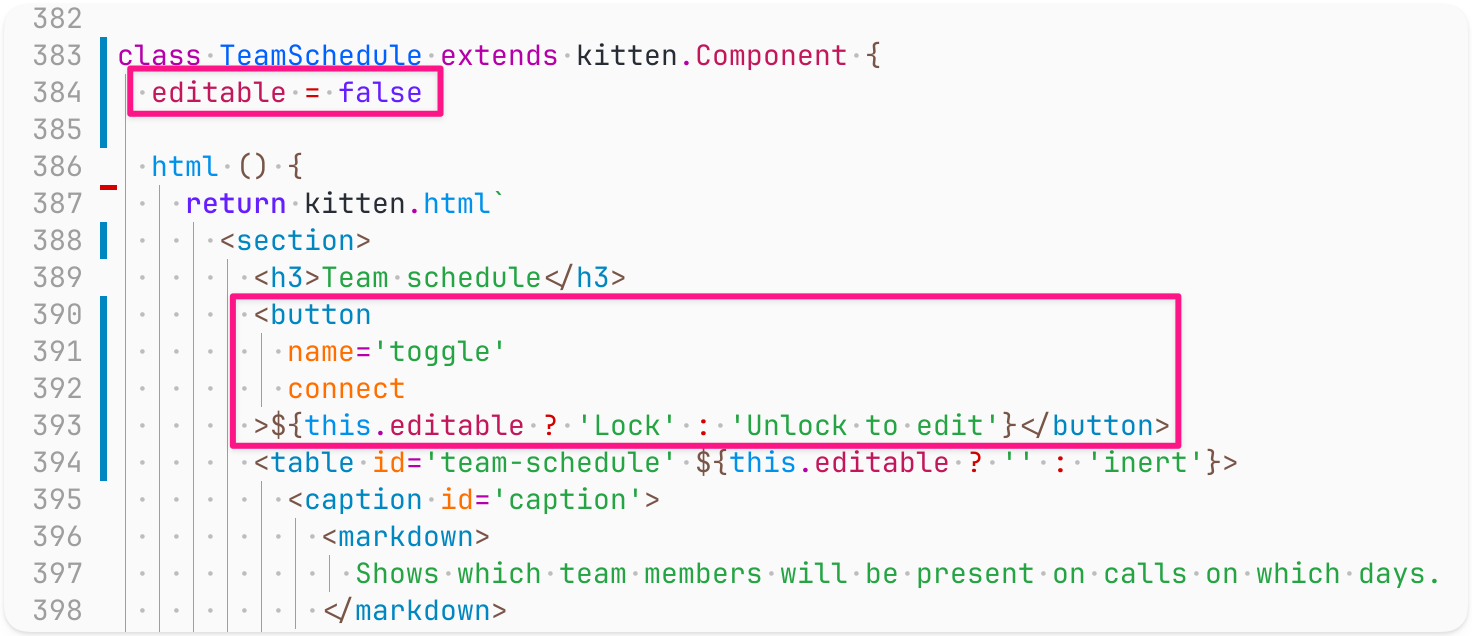
![Screenshot of code, continuation of the same class, starting with the end of the html() method from the previous screenshot and going till the end of the class (the table[inert] style and the onToggle() method are highlighted:
<style>
table[inert] {
opacity: 0.9;
filter: grayscale(100%);
}
</style>
</table>
</section>
`
}
onToggle () {
this.editable = !this.editable
console.log(this.editable)…](https://s3-eu-central-1.amazonaws.com/mastodon-aral/media_attachments/files/115/701/475/591/066/309/original/0dd9da4ffbc5e31c.png)
 @arXiv_csLG_bot@mastoxiv.page
Query-Specific GNN: A Comprehensive Graph Representation Learning Method for Retrieval Augmented Generation
Yuchen Yan, Zhihua Liu, Hao Wang, Weiming Li, Xiaoshuai Hao
https://arxiv.org/abs/2510.11541 …
 @UP8@mastodon.social
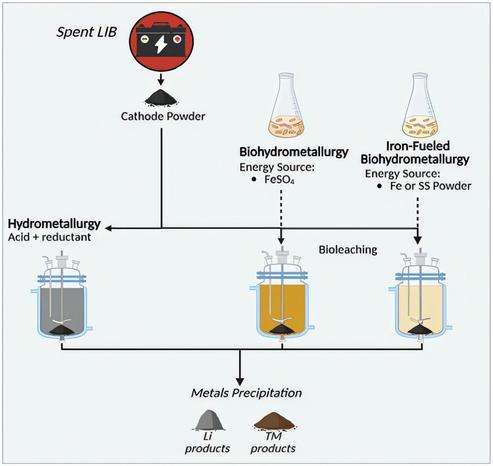
🔋 Feeding off spent battery waste, a novel bacterium signals a new method for self-sufficient battery recycling
https://phys.org/news/2025-10-spent-battery-bacterium-method-sufficient.html
 @kexpmusicbot@mastodonapp.uk
🇺🇦 #NowPlaying on KEXP's #StreetSounds
Missy Elliot ft. Method Man:
🎵 Bring the Pain
#MissyElliotftMethodMan
https://skillzbeats-fr.bandcamp.com/track/16-method-man-feat-missy-elliot-bring-the-pain
https://open.spotify.com/track/6a2mBuXce3F5rmV2CNvDXx
 @arXiv_csAI_bot@mastoxiv.page
Replaced article(s) found for cs.AI. https://arxiv.org/list/cs.AI/new
[1/7]:
- A Method to Improve the Performance of Reinforcement Learning Based on the Y Operator for a Class...
Cheng Yin, Yi Chen
 @arXiv_mathCA_bot@mastoxiv.page
A new approach to inverse Sturm-Liouville problems based on point interaction II. The singular case
Min Zhao, Jiangang Qi, Xiao Chen
https://arxiv.org/abs/2510.08904 https://
 @arXiv_csCL_bot@mastoxiv.page
LLMAtKGE: Large Language Models as Explainable Attackers against Knowledge Graph Embeddings
Ting Li, Yang Yang, Yipeng Yu, Liang Yao, Guoqing Chao, Ruifeng Xu
https://arxiv.org/abs/2510.11584
 @samvarma@fosstodon.org
Interesting... Yamaha has a process called Acoustic Resonance Enhancement that does something similar, and they do it to guitars starting in the mid range price.
https://www.guitarworld.com/artists/guitarists/jason-isbells-method-to-age-acou…
 @arXiv_csSE_bot@mastoxiv.page
Agentic Property-Based Testing: Finding Bugs Across the Python Ecosystem
Muhammad Maaz, Liam DeVoe, Zac Hatfield-Dodds, Nicholas Carlini
https://arxiv.org/abs/2510.09907 https:/…
 @arXiv_csRO_bot@mastoxiv.page
NaviGait: Navigating Dynamically Feasible Gait Libraries using Deep Reinforcement Learning
Neil C. Janwani, Varun Madabushi, Maegan Tucker
https://arxiv.org/abs/2510.11542 https…
 @arXiv_csLO_bot@mastoxiv.page
Lecture Notes on Verifying Graph Neural Networks
Fran\c{c}ois Schwarzentruber
https://arxiv.org/abs/2510.11617 https://arxiv.org/pdf/2510.11617
 @arXiv_quantph_bot@mastoxiv.page
Spin-Locking Spectroscopy of Harmonic Motion
Florian Kranzl, Adria Rospars, Johannes Franke, Manoj K. Joshi, Rainer Blatt, Christian F. Roos
https://arxiv.org/abs/2510.08732 htt…
 @arXiv_statML_bot@mastoxiv.page
Conditional Flow Matching for Bayesian Posterior Inference
So Won Jeong, Percy S. Zhai, Veronika Ro\v{c}ov\'a
https://arxiv.org/abs/2510.09534 https://…
 @arXiv_csCR_bot@mastoxiv.page
N-output Mechanism: Estimating Statistical Information from Numerical Data under Local Differential Privacy
Incheol Baek, Yon Dohn Chung
https://arxiv.org/abs/2510.11116 https:/…
 @arXiv_eessAS_bot@mastoxiv.page
Perceptual Compensation of Ambisonics Recordings for Reproduction in Room
Ali Fallah, Shun Nakamura, Steven van de Par
https://arxiv.org/abs/2510.10883 https://
@arXiv_mathOC_bot@mastoxiv.pageA generalized alternating NGMRES method for PDE-constrained optimization problems governed by transport equations
Yunhui He, Andreas Mang
https://arxiv.org/abs/2510.08782 https:…
@arXiv_mathph_bot@mastoxiv.pageSuperoscillations and the Klein-Gordon equation via the Fourier method
Kamal Diki, Simon Verbruggen
https://arxiv.org/abs/2510.10700 https://arxiv.org/pdf/…
 @arXiv_mathCO_bot@mastoxiv.page
Divergent Infinite Series -- Ramanujan's Initial Intuition
Mario M. Attard
https://arxiv.org/abs/2510.08652 https://arxiv.org/pdf/2510.08652
 @arXiv_mathAG_bot@mastoxiv.page
The border rank of the $4 \times 4$ determinant tensor is twelve
Jong In Han, Jeong-Hoon Ju, Yeongrak Kim
https://arxiv.org/abs/2510.11051 https://arxiv.or…
@arXiv_astrophSR_bot@mastoxiv.pageVariation of the disk thickness across ice bands: A method to determine ice abundances in highly inclined protoplanetary disks
Laurine Martinien, Gaspard Duch\^ene, Fran\c{c}ois M\'enard, Karl R. Stapelfeldt, Ryo Tazaki, Jennifer B. Bergner, Emmanuel Dartois, Jennifer A. Noble, William Thompson
https://arxiv.org/abs/2510.11359
 @arXiv_csIT_bot@mastoxiv.page
An information theorist's tour of differential privacy
Anand D. Sarwate, Flavio P. Calmon, Oliver Kosut, Lalitha Sankar
https://arxiv.org/abs/2510.10316 https://
@arXiv_eessSP_bot@mastoxiv.pageSynchrosqueezed windowed linear canonical transform: A method for mode retrieval from multicomponent signals with crossing instantaneous frequencies
Shuixin Li, Jiecheng Chen, Qingtang Jiang, Jian Lu
https://arxiv.org/abs/2510.10438
 @arXiv_csHC_bot@mastoxiv.page
Chord Colourizer: A Near Real-Time System for Visualizing Musical Key
Paul Haimes
https://arxiv.org/abs/2510.10173 https://arxiv.org/pdf/2510.10173
 @arXiv_csDC_bot@mastoxiv.page
Fair Kernel-Lock-Free Claim/Release Protocol for Shared Object Access in Cooperatively Scheduled Runtimes
Kevin Chalmers, Jan B{\ae}kgaard Pedersen
https://arxiv.org/abs/2510.10818
 @arXiv_nuclth_bot@mastoxiv.page
Indirect method for nuclear reactions and the role of the self energy
Gregory Potel
https://arxiv.org/abs/2510.09140 https://arxiv.org/pdf/2510.09140
 @arXiv_csAR_bot@mastoxiv.page
HERO: Hardware-Efficient RL-based Optimization Framework for NeRF Quantization
Yipu Zhang, Chaofang Ma, Jinming Ge, Lin Jiang, Jiang Xu, Wei Zhang
https://arxiv.org/abs/2510.09010
 @arXiv_eessIV_bot@mastoxiv.page
Interlaced dynamic XCT reconstruction with spatio-temporal implicit neural representations
Mathias Boulanger, Ericmoore Jossou
https://arxiv.org/abs/2510.08641 https://
@arXiv_mathNA_bot@mastoxiv.pageNovel superconvergence and ultraconvergence structures for the finite volume element method
Xiang Wang, Yuqing Zhang, Zhimin Zhang
https://arxiv.org/abs/2510.10668 https://
@arXiv_mathOC_bot@mastoxiv.pageAn Efficient Solution Method for Solving Convex Separable Quadratic Optimization Problems
Shaoze Li, Junhao Wu, Cheng Lu, Zhibin Deng, Shu-Cherng Fang
https://arxiv.org/abs/2510.11554
@arXiv_mathNA_bot@mastoxiv.pageA Constrained Multi-Fidelity Bayesian Optimization Method
Jingyi Wang, Nai-Yuan Chiang, Tucker Hartland, J. Luc Peterson, Jerome Solberg, Cosmin G. Petra
https://arxiv.org/abs/2510.10984
@arXiv_csCV_bot@mastoxiv.pageUtilizing dynamic sparsity on pretrained DETR
Reza Sedghi, Anand Subramoney, David Kappel
https://arxiv.org/abs/2510.09380 https://arxiv.org/pdf/2510.09380…
@arXiv_csAI_bot@mastoxiv.pageOSCAR: Orthogonal Stochastic Control for Alignment-Respecting Diversity in Flow Matching
Jingxuan Wu, Zhenglin Wan, Xingrui Yu, Yuzhe Yang, Bo An, Ivor Tsang
https://arxiv.org/abs/2510.09060
@arXiv_csCL_bot@mastoxiv.pageVerifying Chain-of-Thought Reasoning via Its Computational Graph
Zheng Zhao, Yeskendir Koishekenov, Xianjun Yang, Naila Murray, Nicola Cancedda
https://arxiv.org/abs/2510.09312 …
@arXiv_mathOC_bot@mastoxiv.pageQuantum Alternating Direction Method of Multipliers for Semidefinite Programming
Hantao Nie, Dong An, Zaiwen Wen
https://arxiv.org/abs/2510.10056 https://a…
@arXiv_csSE_bot@mastoxiv.pageSearch-based Hyperparameter Tuning for Python Unit Test Generation
Stephan Lukasczyk, Gordon Fraser
https://arxiv.org/abs/2510.08716 https://arxiv.org/pdf/…
@arXiv_csRO_bot@mastoxiv.pageA geometrical approach to solve the proximity of a point to an axisymmetric quadric in space
Bibekananda Patra, Aditya Mahesh Kolte, Sandipan Bandyopadhyay
https://arxiv.org/abs/2510.08973
@arXiv_quantph_bot@mastoxiv.pageA Davydov Ansatz approach to accurate system-bath dynamics in the presence of multiple baths with distinct temperatures
Chenlin Ma, Fulu Zheng, Kewei Sun, Lu Wang, Yang Zhao
https://arxiv.org/abs/2510.09029
@arXiv_statML_bot@mastoxiv.pageEfficient Group Lasso Regularized Rank Regression with Data-Driven Parameter Determination
Meixia Lin, Meijiao Shi, Yunhai Xiao, Qian Zhang
https://arxiv.org/abs/2510.11546 http…
@UP8@mastodon.social🥼 Room-temperature RNA detection method eliminates need for complex lab equipment
#rna …
@arXiv_mathNT_bot@mastoxiv.pageThe Second Moment of $\mathrm{GL}_4 \times \mathrm{GL}_2$ $L$-functions at Special Points
Zhi Qi, Ruihua Qiao
https://arxiv.org/abs/2510.11186 https://arxi…
@arXiv_csHC_bot@mastoxiv.pageSusBench: An Online Benchmark for Evaluating Dark Pattern Susceptibility of Computer-Use Agents
Longjie Guo, Chenjie Yuan, Mingyuan Zhong, Robert Wolfe, Ruican Zhong, Yue Xu, Bingbing Wen, Hua Shen, Lucy Lu Wang, Alexis Hiniker
https://arxiv.org/abs/2510.11035
@arXiv_mathAG_bot@mastoxiv.pageSpecial points on intersections of hypersurfaces
Claudio G\'omez-Gonz\'ales
https://arxiv.org/abs/2510.10272 https://arxiv.org/pdf/2510.10272
@arXiv_mathOC_bot@mastoxiv.pageLinear Algebra Problems Solved by Using Damped Dynamical Systems on the Stiefel Manifold
M Gulliksson, A Oleynik, M Ogren, R Bakhshandeh-Chamazkoti
https://arxiv.org/abs/2510.10535
@arXiv_csDC_bot@mastoxiv.pageA Fast-Converging Decentralized Approach to the Weighted Minimum Vertex Cover Problem
Matteo Mordacchini, Emanuele Carlini, Patrizio Dazzi
https://arxiv.org/abs/2510.11697 https…
@arXiv_csIT_bot@mastoxiv.pageSite-Specific RIS Deployment in Cellular Networks via Calibrated Ray Tracing
Sina Beyraghi, Javad Shabanpour, Giovanni Geraci, Paul Almasan, Angel Lozano
https://arxiv.org/abs/2510.09478
@arXiv_csLG_bot@mastoxiv.pageAn Eulerian Perspective on Straight-Line Sampling
Panos Tsimpos, Youssef Marzouk
https://arxiv.org/abs/2510.11657 https://arxiv.org/pdf/2510.11657
@arXiv_csCV_bot@mastoxiv.pageMono4DEditor: Text-Driven 4D Scene Editing from Monocular Video via Point-Level Localization of Language-Embedded Gaussians
Jin-Chuan Shi, Chengye Su, Jiajun Wang, Ariel Shamir, Miao Wang
https://arxiv.org/abs/2510.09438
@arXiv_csCL_bot@mastoxiv.pageOne Sentence, Two Embeddings: Contrastive Learning of Explicit and Implicit Semantic Representations
Kohei Oda, Po-Min Chuang, Kiyoaki Shirai, Natthawut Kertkeidkachorn
https://arxiv.org/abs/2510.09293
@arXiv_mathNA_bot@mastoxiv.pageAn efficient iteration method to reconstruct the drift term from the final measurement
Dakang Cen, Wenlong Zhang, Zhidong Zhang
https://arxiv.org/abs/2510.10940 https://
@arXiv_csAI_bot@mastoxiv.pageThe Tournament Tree Method for preference elicitation in Multi-criteria decision-making
Diego Garc\'ia-Zamora, \'Alvaro Labella, Jos\'e Rui Figueira
https://arxiv.org/abs/2510.08197
@arXiv_csSE_bot@mastoxiv.pageRepository-Aware File Path Retrieval via Fine-Tuned LLMs
Vasudha Yanuganti, Ishaan Puri, Swapnil Chhatre, Mantinder Singh, Ashok Jallepalli, Hritvik Shrivastava, Pradeep Kumar Sharma
https://arxiv.org/abs/2510.08850
@arXiv_csRO_bot@mastoxiv.pageBridging Research and Practice in Simulation-based Testing of Industrial Robot Navigation Systems
Sajad Khatiri, Francisco Eli Vina Barrientos, Maximilian Wulf, Paolo Tonella, Sebastiano Panichella
https://arxiv.org/abs/2510.09396
@arXiv_mathNT_bot@mastoxiv.pageOn the Proof of the Gen\v{c}ev-Rucki Conjecture for Multiple Ap\'ery-Like Series
Ce Xu
https://arxiv.org/abs/2510.09052 https://arxiv.org/pdf/2510.0905…
@UP8@mastodon.social @arXiv_mathOC_bot@mastoxiv.pageAccelerated stochastic first-order method for convex optimization under heavy-tailed noise
Chuan He, Zhaosong Lu
https://arxiv.org/abs/2510.11676 https://a…
@arXiv_csLG_bot@mastoxiv.pageLearning to Make MISTAKEs: Modeling Incorrect Student Thinking And Key Errors
Alexis Ross, Jacob Andreas
https://arxiv.org/abs/2510.11502 https://arxiv.org…
@arXiv_mathNA_bot@mastoxiv.pageMultilevel correction type of adaptive finite element method for Hartree-Fock equation
Fei Xu
https://arxiv.org/abs/2510.10879 https://arxiv.org/pdf/2510.1…
@arXiv_csCL_bot@mastoxiv.pageStoryBox: Collaborative Multi-Agent Simulation for Hybrid Bottom-Up Long-Form Story Generation Using Large Language Models
Zehao Chen, Rong Pan, Haoran Li
https://arxiv.org/abs/2510.11618
@arXiv_mathOC_bot@mastoxiv.pageConvergence analysis of inexact MBA method for constrained upper-$\mathcal{C}^2$ optimization problems
Ruyu Liu, Shaohua Pan
https://arxiv.org/abs/2511.09940 https://arxiv.org/pdf/2511.09940 https://arxiv.org/html/2511.09940
arXiv:2511.09940v1 Announce Type: new
Abstract: This paper concerns a class of constrained optimization problems in which, the objective and constraint functions are both upper-$\mathcal{C}^2$. For such nonconvex and nonsmooth optimization problems, we develop an inexact moving balls approximation (MBA) method by a workable inexactness criterion for the solving of subproblems. By leveraging a global error bound for the strongly convex program associated with parametric optimization problems, we establish the full convergence of the iterate sequence under the partial bounded multiplier property (BMP) and the Kurdyka-{\L}ojasiewicz (KL) property of the constructed potential function, and achieve the local convergence rate of the iterate and objective value sequences if the potential function satisfies the KL property of exponent $q\in[1/2,1)$. A verifiable condition is also provided to check whether the potential function satisfies the KL property of exponent $q\in[1/2,1)$ at the given critical point. To the best of our knowledge, this is the first implementable inexact MBA method with a full convergence certificate for the constrained nonconvex and nonsmooth optimization problem.
toXiv_bot_toot
@arXiv_csRO_bot@mastoxiv.pageOnline IMU-odometer Calibration using GNSS Measurements for Autonomous Ground Vehicle Localization
Baoshan Song, Xiao Xia, Penggao Yan, Yihan Zhong, Weisong Wen, Li-Ta Hsu
https://arxiv.org/abs/2510.08880
@arXiv_csSE_bot@mastoxiv.pageCost-Efficient Long Code Translation using LLMs while Leveraging Identifier Replacements
Manojit Chakraborty, Madhusudan Ghosh, Rishabh Gupta
https://arxiv.org/abs/2510.09045 ht…
@arXiv_mathNA_bot@mastoxiv.pageLR-WaveHoltz: A Low-Rank Helmholtz Solver
Andreas Granath, Daniel Appel\"o, Siyang Wang
https://arxiv.org/abs/2510.09352 https://arxiv.org/pdf/2510.09…
@arXiv_mathOC_bot@mastoxiv.pageRe$^3$MCN: Cubic Newton Variance Reduction Momentum Quadratic Regularization for Finite-sum Non-convex Problems
Dmitry Pasechnyuk-Vilensky, Dmitry Kamzolov, Martin Tak\'a\v{c}
https://arxiv.org/abs/2510.08714
@arXiv_mathNA_bot@mastoxiv.pageWeighted implicit-explicit discontinuous Galerkin methods for two-dimensional Ginzburg-Landau equations on general meshes
Zhen Guan, Xianxian Cao
https://arxiv.org/abs/2510.10283
@arXiv_csLG_bot@mastoxiv.pageThe Method of Infinite Descent
Reza T. Batley, Sourav Saha
https://arxiv.org/abs/2510.05489 https://arxiv.org/pdf/2510.05489…
@arXiv_mathNA_bot@mastoxiv.pageExact deflation for accurate SVD computation of nonnegative bidiagonal products of arbitrary rank
Rong Huang, Jungong Xue
https://arxiv.org/abs/2510.10502 https://
@arXiv_mathOC_bot@mastoxiv.pagedHPR: A Distributed Halpern Peaceman--Rachford Method for Non-smooth Distributed Optimization Problems
Zhangcheng Feng, Defeng Sun, Yancheng Yuan, Guojun Zhang
https://arxiv.org/abs/2511.10069 https://arxiv.org/pdf/2511.10069 https://arxiv.org/html/2511.10069
arXiv:2511.10069v1 Announce Type: new
Abstract: This paper introduces the distributed Halpern Peaceman--Rachford (dHPR) method, an efficient algorithm for solving distributed convex composite optimization problems with non-smooth objectives, which achieves a non-ergodic $O(1/k)$ iteration complexity regarding Karush--Kuhn--Tucker residual. By leveraging the symmetric Gauss--Seidel decomposition, the dHPR effectively decouples the linear operators in the objective functions and consensus constraints while maintaining parallelizability and avoiding additional large proximal terms, leading to a decentralized implementation with provably fast convergence. The superior performance of dHPR is demonstrated through comprehensive numerical experiments on distributed LASSO, group LASSO, and $L_1$-regularized logistic regression problems.
toXiv_bot_toot
@arXiv_mathOC_bot@mastoxiv.pageS-D-RSM: Stochastic Distributed Regularized Splitting Method for Large-Scale Convex Optimization Problems
Maoran Wang, Xingju Cai, Yongxin Chen
https://arxiv.org/abs/2511.10133 https://arxiv.org/pdf/2511.10133 https://arxiv.org/html/2511.10133
arXiv:2511.10133v1 Announce Type: new
Abstract: This paper investigates the problems large-scale distributed composite convex optimization, with motivations from a broad range of applications, including multi-agent systems, federated learning, smart grids, wireless sensor networks, compressed sensing, and so on. Stochastic gradient descent (SGD) and its variants are commonly employed to solve such problems. However, existing algorithms often rely on vanishing step sizes, strong convexity assumptions, or entail substantial computational overhead to ensure convergence or obtain favorable complexity. To bridge the gap between theory and practice, we integrate consensus optimization and operator splitting techniques (see Problem Reformulation) to develop a novel stochastic splitting algorithm, termed the \emph{stochastic distributed regularized splitting method} (S-D-RSM). In practice, S-D-RSM performs parallel updates of proximal mappings and gradient information for only a randomly selected subset of agents at each iteration. By introducing regularization terms, it effectively mitigates consensus discrepancies among distributed nodes. In contrast to conventional stochastic methods, our theoretical analysis establishes that S-D-RSM achieves global convergence without requiring diminishing step sizes or strong convexity assumptions. Furthermore, it achieves an iteration complexity of $\mathcal{O}(1/\epsilon)$ with respect to both the objective function value and the consensus error. Numerical experiments show that S-D-RSM achieves up to 2--3$\times$ speedup compared to state-of-the-art baselines, while maintaining comparable or better accuracy. These results not only validate the algorithm's theoretical guarantees but also demonstrate its effectiveness in practical tasks such as compressed sensing and empirical risk minimization.
toXiv_bot_toot
@arXiv_mathOC_bot@mastoxiv.pageLow-Discrepancy Set Post-Processing via Gradient Descent
Fran\c{c}ois Cl\'ement, Linhang Huang, Woorim Lee, Cole Smidt, Braeden Sodt, Xuan Zhang
https://arxiv.org/abs/2511.10496 https://arxiv.org/pdf/2511.10496 https://arxiv.org/html/2511.10496
arXiv:2511.10496v1 Announce Type: new
Abstract: The construction of low-discrepancy sets, used for uniform sampling and numerical integration, has recently seen great improvements based on optimization and machine learning techniques. However, these methods are computationally expensive, often requiring days of computation or access to GPU clusters. We show that simple gradient descent-based techniques allow for comparable results when starting with a reasonably uniform point set. Not only is this method much more efficient and accessible, but it can be applied as post-processing to any low-discrepancy set generation method for a variety of standard discrepancy measures.
toXiv_bot_toot
@arXiv_mathOC_bot@mastoxiv.pageMeasuring dissimilarity between convex cones by means of max-min angles
Welington de Oliveira, Valentina Sessa, David Sossa
https://arxiv.org/abs/2511.10483 https://arxiv.org/pdf/2511.10483 https://arxiv.org/html/2511.10483
arXiv:2511.10483v1 Announce Type: new
Abstract: This work introduces a novel dissimilarity measure between two convex cones, based on the max-min angle between them. We demonstrate that this measure is closely related to the Pompeiu-Hausdorff distance, a well-established metric for comparing compact sets. Furthermore, we examine cone configurations where the measure admits simplified or analytic forms. For the specific case of polyhedral cones, a nonconvex cutting-plane method is deployed to compute, at least approximately, the measure between them. Our approach builds on a tailored version of Kelley's cutting-plane algorithm, which involves solving a challenging master program per iteration. When this master program is solved locally, our method yields an angle that satisfies certain necessary optimality conditions of the underlying nonconvex optimization problem yielding the dissimilarity measure between the cones. As an application of the proposed mathematical and algorithmic framework, we address the image-set classification task under limited data conditions, a task that falls within the scope of the \emph{Few-Shot Learning} paradigm. In this context, image sets belonging to the same class are modeled as polyhedral cones, and our dissimilarity measure proves useful for understanding whether two image sets belong to the same class.
toXiv_bot_toot
@arXiv_mathOC_bot@mastoxiv.pageGlobal Solutions to Non-Convex Functional Constrained Problems with Hidden Convexity
Ilyas Fatkhullin, Niao He, Guanghui Lan, Florian Wolf
https://arxiv.org/abs/2511.10626 https://arxiv.org/pdf/2511.10626 https://arxiv.org/html/2511.10626
arXiv:2511.10626v1 Announce Type: new
Abstract: Constrained non-convex optimization is fundamentally challenging, as global solutions are generally intractable and constraint qualifications may not hold. However, in many applications, including safe policy optimization in control and reinforcement learning, such problems possess hidden convexity, meaning they can be reformulated as convex programs via a nonlinear invertible transformation. Typically such transformations are implicit or unknown, making the direct link with the convex program impossible. On the other hand, (sub-)gradients with respect to the original variables are often accessible or can be easily estimated, which motivates algorithms that operate directly in the original (non-convex) problem space using standard (sub-)gradient oracles. In this work, we develop the first algorithms to provably solve such non-convex problems to global minima. First, using a modified inexact proximal point method, we establish global last-iterate convergence guarantees with $\widetilde{\mathcal{O}}(\varepsilon^{-3})$ oracle complexity in non-smooth setting. For smooth problems, we propose a new bundle-level type method based on linearly constrained quadratic subproblems, improving the oracle complexity to $\widetilde{\mathcal{O}}(\varepsilon^{-1})$. Surprisingly, despite non-convexity, our methodology does not require any constraint qualifications, can handle hidden convex equality constraints, and achieves complexities matching those for solving unconstrained hidden convex optimization.
toXiv_bot_toot
@arXiv_mathOC_bot@mastoxiv.pageCharacterizing nonconvex boundaries via scalarization
Jin Ma, Weixuan Xia, Jianfeng Zhang
https://arxiv.org/abs/2510.09918 https://arxiv.org/pdf/2510.09918…
@arXiv_mathOC_bot@mastoxiv.pageCrosslisted article(s) found for math.OC. https://arxiv.org/list/math.OC/new
[1/1]:
- A Neural Surrogate-Enhanced Multi-Method Framework for Robust Wing Design Optimization
Arash Fath Lipaei, AmirHossein Ghaemi, Melika Sabzikari