 @Dragofix@veganism.social
2026-03-13 01:36:21
New Mexico Oil Group Makes Third Bid to Discharge Toxic Fracking Wastewater into Rivers, Crops https://biologicaldiversity.org/w/news/press-releases/new-mexico-oil-group-makes-third-bid-…
@Dragofix@veganism.socialNew Mexico Oil Group Makes Third Bid to Discharge Toxic Fracking Wastewater into Rivers, Crops https://biologicaldiversity.org/w/news/press-releases/new-mexico-oil-group-makes-third-bid-…
 @padraig@mastodon.ie
RE: https://flipboard.com/@engadget/tech-news-3l37fooaz/-/a-8y293aXPQ5WJhSKN7ycBqA:a:3199686-/0
Except he did... in 2023. But it was never updated once after Space Karen was called out as it was adjusted …
 @rasterweb@mastodon.social
I've always wondered about the design of Deep Space Nine...
https://www.forgottentrek.com/deep-space-nine/designing-the-deep-space-nine-space-station/
 @arXiv_csDS_bot@mastoxiv.page
Space Complexity Dichotomies for Subgraph Finding Problems in the Streaming Model
Yu-Sheng Shih, Meng-Tsung Tsai, Yen-Chu Tsai, Ying-Sian Wu
https://arxiv.org/abs/2602.08002 https://arxiv.org/pdf/2602.08002 https://arxiv.org/html/2602.08002
arXiv:2602.08002v1 Announce Type: new
Abstract: We study the space complexity of four variants of the standard subgraph finding problem in the streaming model. Specifically, given an $n$-vertex input graph and a fixed-size pattern graph, we consider two settings: undirected simple graphs, denoted by $G$ and $H$, and oriented graphs, denoted by $\vec{G}$ and $\vec{H}$. Depending on the setting, the task is to decide whether $G$ contains $H$ as a subgraph or as an induced subgraph, or whether $\vec{G}$ contains $\vec{H}$ as a subgraph or as an induced subgraph. Let Sub$(H)$, IndSub$(H)$, Sub$(\vec{H})$, and IndSub$(\vec{H})$ denote these four variants, respectively.
An oriented graph is well-oriented if it admits a bipartition in which every arc is oriented from one part to the other, and a vertex is non-well-oriented if both its in-degree and out-degree are non-zero. For each variant, we obtain a complete dichotomy theorem, briefly summarized as follows.
(1) Sub$(H)$ can be solved by an $\tilde{O}(1)$-pass $n^{2-\Omega(1)}$-space algorithm if and only if $H$ is bipartite.
(2) IndSub$(H)$ can be solved by an $\tilde{O}(1)$-pass $n^{2-\Omega(1)}$-space algorithm if and only if $H \in \{P_3, P_4, co\mbox{-}P_3\}$.
(3) Sub$(\vec{H})$ can be solved by a single-pass $n^{2-\Omega(1)}$-space algorithm if and only if every connected component of $\vec H$ is either a well-oriented bipartite graph or a tree containing at most one non-well-oriented vertex.
(4) IndSub$(\vec{H})$ can be solved by an $\tilde{O}(1)$-pass $n^{2-\Omega(1)}$-space algorithm if and only if the underlying undirected simple graph $H$ is a $co\mbox{-}P_3$.
toXiv_bot_toot
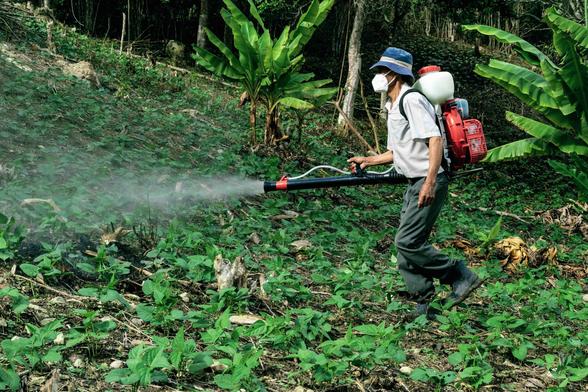
@Dragofix@veganism.socialNations not on track to meet UN 2030 pesticide risk reduction targets: Study https://news.mongabay.com/2026/03/nations-not-on-track-to-meet-un-2030-pesticide-risk-reduction-targets-study/
 @cosmos4u@scicomm.xyz
The fifth #AAS press conference https://www.youtube.com/watch?v=0dHXMm3pbWU about Asteroids, Low-Mass Stars, and a Mystery from History covered the papers Lightcurves, Rotation Periods, and Colors for Vera C. Rubin Observatory’s First Asteroid Discoveries (https://iopscience.iop.org/article/10.3847/2041-8213/ae2a30 with https://rubinobservatory.org/news/rubin-record-breaking-asteroid-pre-survey and https://noirlab.edu/public/news/noirlab2601/ and https://www6.slac.stanford.edu/news/2026-01-07-nsf-doe-vera-c-rubin-observatory-spots-record-breaking-asteroid-pre-survey), Dearth of Photosynthetically Active Radiation Suggests No Complex Life on Late M-Star Exoplanets (https://arxiv.org/abs/2601.02548 with https://drive.google.com/drive/folders/1LlyzaK1wTk0hnqNGRCEMNe8BZEaMMFde), A Plasma Torus around a Young Low-mass Star (https://iopscience.iop.org/article/10.3847/2041-8213/ade39a with https://carnegiescience.edu/naturally-occurring-space-weather-station-elucidates-new-way-study-habitability-planets-orbiting-m) and Barnard's mysterious star near Venus - a strange interloper noted during a satellite search (https://scicomm.xyz/@cosmos4u/115849624944298844).
@arXiv_csDS_bot@mastoxiv.pageA polynomial-time algorithm for recognizing high-bandwidth graphs
Luis M. B. Varona
https://arxiv.org/abs/2602.01755 https://arxiv.org/pdf/2602.01755 https://arxiv.org/html/2602.01755
arXiv:2602.01755v1 Announce Type: new
Abstract: An unweighted, undirected graph $G$ on $n$ nodes is said to have \emph{bandwidth} at most $k$ if its nodes can be labelled from $0$ to $n - 1$ such that no two adjacent nodes have labels that differ by more than $k$. It is known that one can decide whether the bandwidth of $G$ is at most $k$ in $O(n^k)$ time and $O(n^k)$ space using dynamic programming techniques. For small $k$ close to $0$, this approach is effectively polynomial, but as $k$ scales with $n$, it becomes superexponential, requiring up to $O(n^{n - 1})$ time (where $n - 1$ is the maximum possible bandwidth). In this paper, we reformulate the problem in terms of bipartite matching for sufficiently large $k \ge \lfloor (n - 1)/2 \rfloor$, allowing us to use Hall's marriage theorem to develop an algorithm that runs in $O(n^{n - k 1})$ time and $O(n)$ auxiliary space (beyond storage of the input graph). This yields polynomial complexity for large $k$ close to $n - 1$, demonstrating that the bandwidth recognition problem is solvable in polynomial time whenever either $k$ or $n - k$ remains small.
toXiv_bot_toot
 @rokku@soc.saiyajin.space
 @arXiv_mathAP_bot@mastoxiv.page
Nonlinear Neumann boundary problems for $n$-Laplacian Liouville equation on a half space
Wei Dai, Changfeng Gui, Yichen Hu, Shaolong Peng
https://arxiv.org/abs/2602.06414 https:…
 @NFL@darktundra.xyz
2026 NFL offseason resource rankings: How do all 32 teams stack up by salary cap space and draft capital? https://www.nfl.com/news/2026-nfl-offseason-resource-rankings-how-do-all-32-teams-stack-up-by-salary-cap-space-…
@Dragofix@veganism.socialMondelēz: Sugarcoated Suffering #environment
 @cdarwin@c.im
Gravitational forces from the pulsar have stretched the Jupiter-mass world into a bizarre lemon shape.
James Webb Space Telescope data reveals that its atmosphere contains He, C2 and C3, with little H, O or N.
Clouds of carbon soot likely condense and fall as diamonds.
https://
 @scott@carfree.city
Interesting: Minneapolis is actually converting downtown offices to residential, not just using it as an excuse to cut taxes while not converting any, like San Francisco.
Sounds like a bad deal for the public, though. The new units are expensive, up to $4,695 for 1415ft², and to get them the city is waiving all affordability requirements, and MN is considering subsidizing through tax credits as well.
@Dragofix@veganism.socialCaribbean heat waves intensify over five decades, study finds #Caribbea
 @x_cli@infosec.exchange
Je sais que je devrais pas me plaindre d'avoir repris un travail, mais PUTAIN, quel enfer de prendre le RER pour 3h par jour (quand ça va bien et évidemment, ça va JAMAIS bien) pour ensuite tenter de bosser dans un open space bruyant. En trois jours, 1h de sommeil perdu par jour, zéro vie de famille, zéro loisir. Aucun salaire ne mérite ça. Je pète un boulon. Et le troisième jour n'est même pas commencé...
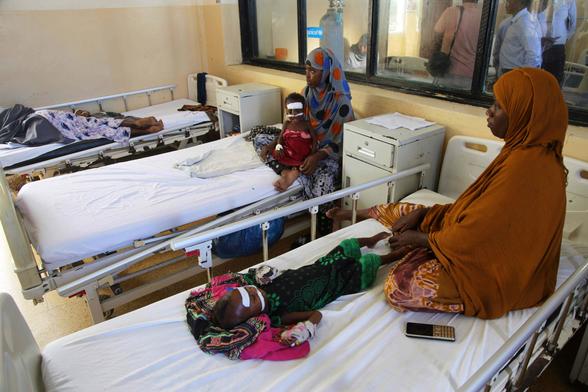
@Dragofix@veganism.socialUN data shows 6.5 million people at risk of severe hunger from drought #environment…
@Dragofix@veganism.socialFor every dollar we spend protecting nature, we spend $30 destroying it: Report #nature
 @arXiv_csLG_bot@mastoxiv.page
Regularized Random Fourier Features and Finite Element Reconstruction for Operator Learning in Sobolev Space
Xinyue Yu, Hayden Schaeffer
https://arxiv.org/abs/2512.17884 https://arxiv.org/pdf/2512.17884 https://arxiv.org/html/2512.17884
arXiv:2512.17884v1 Announce Type: new
Abstract: Operator learning is a data-driven approximation of mappings between infinite-dimensional function spaces, such as the solution operators of partial differential equations. Kernel-based operator learning can offer accurate, theoretically justified approximations that require less training than standard methods. However, they can become computationally prohibitive for large training sets and can be sensitive to noise. We propose a regularized random Fourier feature (RRFF) approach, coupled with a finite element reconstruction map (RRFF-FEM), for learning operators from noisy data. The method uses random features drawn from multivariate Student's $t$ distributions, together with frequency-weighted Tikhonov regularization that suppresses high-frequency noise. We establish high-probability bounds on the extreme singular values of the associated random feature matrix and show that when the number of features $N$ scales like $m \log m$ with the number of training samples $m$, the system is well-conditioned, which yields estimation and generalization guarantees. Detailed numerical experiments on benchmark PDE problems, including advection, Burgers', Darcy flow, Helmholtz, Navier-Stokes, and structural mechanics, demonstrate that RRFF and RRFF-FEM are robust to noise and achieve improved performance with reduced training time compared to the unregularized random feature model, while maintaining competitive accuracy relative to kernel and neural operator tests.
toXiv_bot_toot
@Dragofix@veganism.socialRoughly 30 Million People Participated In ‘Record-Breaking’ Veganuary 2026 #plantbased
 @arXiv_physicsgeoph_bot@mastoxiv.page
Crosslisted article(s) found for physics.geo-ph. https://arxiv.org/list/physics.geo-ph/new
[1/1]:
- HydroDiffusion: Diffusion-Based Probabilistic Streamflow Forecasting with a State Space Backbone
Yihan Wang, Annan Yu, Lujun Zhang, Charuleka Varadharajan, N. Benjamin Erichs…
@Dragofix@veganism.socialIllegal fishing, other maritime threats cost Western Indian Ocean $1b a year: Report https://news.mongabay.com/short-article/2025/12/illegal-fishing-other-maritime-threats-cost-western-indian-ocean-1b-a-year-report/…
@arXiv_csLG_bot@mastoxiv.pageReplaced article(s) found for cs.LG. https://arxiv.org/list/cs.LG/new
[1/5]:
- Feed Two Birds with One Scone: Exploiting Wild Data for Both Out-of-Distribution Generalization a...
Haoyue Bai, Gregory Canal, Xuefeng Du, Jeongyeol Kwon, Robert Nowak, Yixuan Li
https://arxiv.org/abs/2306.09158
- Sparse, Efficient and Explainable Data Attribution with DualXDA
Galip \"Umit Yolcu, Moritz Weckbecker, Thomas Wiegand, Wojciech Samek, Sebastian Lapuschkin
https://arxiv.org/abs/2402.12118 https://mastoxiv.page/@arXiv_csLG_bot/111962593972369958
- HGQ: High Granularity Quantization for Real-time Neural Networks on FPGAs
Sun, Que, {\AA}rrestad, Loncar, Ngadiuba, Luk, Spiropulu
https://arxiv.org/abs/2405.00645 https://mastoxiv.page/@arXiv_csLG_bot/112370274737558603
- On the Identification of Temporally Causal Representation with Instantaneous Dependence
Li, Shen, Zheng, Cai, Song, Gong, Chen, Zhang
https://arxiv.org/abs/2405.15325 https://mastoxiv.page/@arXiv_csLG_bot/112511890051553111
- Basis Selection: Low-Rank Decomposition of Pretrained Large Language Models for Target Applications
Yang Li, Daniel Agyei Asante, Changsheng Zhao, Ernie Chang, Yangyang Shi, Vikas Chandra
https://arxiv.org/abs/2405.15877 https://mastoxiv.page/@arXiv_csLG_bot/112517547424098076
- Privacy Bias in Language Models: A Contextual Integrity-based Auditing Metric
Yan Shvartzshnaider, Vasisht Duddu
https://arxiv.org/abs/2409.03735 https://mastoxiv.page/@arXiv_csLG_bot/113089789682783135
- Low-Rank Filtering and Smoothing for Sequential Deep Learning
Joanna Sliwa, Frank Schneider, Nathanael Bosch, Agustinus Kristiadi, Philipp Hennig
https://arxiv.org/abs/2410.06800 https://mastoxiv.page/@arXiv_csLG_bot/113283021321510736
- Hierarchical Multimodal LLMs with Semantic Space Alignment for Enhanced Time Series Classification
Xiaoyu Tao, Tingyue Pan, Mingyue Cheng, Yucong Luo, Qi Liu, Enhong Chen
https://arxiv.org/abs/2410.18686 https://mastoxiv.page/@arXiv_csLG_bot/113367101100828901
- Fairness via Independence: A (Conditional) Distance Covariance Framework
Ruifan Huang, Haixia Liu
https://arxiv.org/abs/2412.00720 https://mastoxiv.page/@arXiv_csLG_bot/113587817648503815
- Data for Mathematical Copilots: Better Ways of Presenting Proofs for Machine Learning
Simon Frieder, et al.
https://arxiv.org/abs/2412.15184 https://mastoxiv.page/@arXiv_csLG_bot/113683924322164777
- Pairwise Elimination with Instance-Dependent Guarantees for Bandits with Cost Subsidy
Ishank Juneja, Carlee Joe-Wong, Osman Ya\u{g}an
https://arxiv.org/abs/2501.10290 https://mastoxiv.page/@arXiv_csLG_bot/113859392622871057
- Towards Human-Guided, Data-Centric LLM Co-Pilots
Evgeny Saveliev, Jiashuo Liu, Nabeel Seedat, Anders Boyd, Mihaela van der Schaar
https://arxiv.org/abs/2501.10321 https://mastoxiv.page/@arXiv_csLG_bot/113859392688054204
- Regularized Langevin Dynamics for Combinatorial Optimization
Shengyu Feng, Yiming Yang
https://arxiv.org/abs/2502.00277
- Generating Samples to Probe Trained Models
Eren Mehmet K{\i}ral, Nur\c{s}en Ayd{\i}n, \c{S}. \.Ilker Birbil
https://arxiv.org/abs/2502.06658 https://mastoxiv.page/@arXiv_csLG_bot/113984059089245671
- On Agnostic PAC Learning in the Small Error Regime
Julian Asilis, Mikael M{\o}ller H{\o}gsgaard, Grigoris Velegkas
https://arxiv.org/abs/2502.09496 https://mastoxiv.page/@arXiv_csLG_bot/114000974082372598
- Preconditioned Inexact Stochastic ADMM for Deep Model
Shenglong Zhou, Ouya Wang, Ziyan Luo, Yongxu Zhu, Geoffrey Ye Li
https://arxiv.org/abs/2502.10784 https://mastoxiv.page/@arXiv_csLG_bot/114023667639951005
- On the Effect of Sampling Diversity in Scaling LLM Inference
Wang, Liu, Chen, Light, Liu, Chen, Zhang, Cheng
https://arxiv.org/abs/2502.11027 https://mastoxiv.page/@arXiv_csLG_bot/114023688225233656
- How to use score-based diffusion in earth system science: A satellite nowcasting example
Randy J. Chase, Katherine Haynes, Lander Ver Hoef, Imme Ebert-Uphoff
https://arxiv.org/abs/2505.10432 https://mastoxiv.page/@arXiv_csLG_bot/114516300594057680
- PEAR: Equal Area Weather Forecasting on the Sphere
Hampus Linander, Christoffer Petersson, Daniel Persson, Jan E. Gerken
https://arxiv.org/abs/2505.17720 https://mastoxiv.page/@arXiv_csLG_bot/114572963019603744
- Train Sparse Autoencoders Efficiently by Utilizing Features Correlation
Vadim Kurochkin, Yaroslav Aksenov, Daniil Laptev, Daniil Gavrilov, Nikita Balagansky
https://arxiv.org/abs/2505.22255 https://mastoxiv.page/@arXiv_csLG_bot/114589956040892075
- A Certified Unlearning Approach without Access to Source Data
Umit Yigit Basaran, Sk Miraj Ahmed, Amit Roy-Chowdhury, Basak Guler
https://arxiv.org/abs/2506.06486 https://mastoxiv.page/@arXiv_csLG_bot/114658421178857085
toXiv_bot_toot