I've been working on a bit of a larger project. It is still very much a work in progress. It's an attempt to combine blog and mastodon posts with other things I've written in the past, along with some original analysis, into a zine. I'm probably about 2/3 of the way through.
It's primarily focused on political theory and critique, which, I think, deviates a bit from how a lot of other folks view the world. It's pretty explicitly anarchist, though I don't think I've actually put the word "anarchism" or referenced the ideology anywhere so explicitly.
I'd love feedback (especially around editing and flow) if anyone would be willing to put eyes on it and tell me what they think:
https://anarchoccultism.org/building-zion/
Day 29: Leanne Betasamosake Simpson
I've been sitting on Simpson for a while because there's some overlap in her writing with Robin Wall Kimmerer, and I've had a lot of different genres/styles/subjects/media I've wanted to post at least one author from. But I've now hit repeats on at least YA romance and manga, and Simpson's writing is actually quite different from Kimmerer's in a lot of ways. While Kimmerer is a biologist by training and literally braids that knowledge together with her knowledge of Potawatomi cosmology and ethics, Simpson is an Anishinaabe philosopher and anarchist, and her position as a scholar of Indigenous philosophy adds a different depth to her work: she talks in more depth about knowledge relationships and her connections with specific elders, and she has more citations to other Indigenous theorists, which is the one criticism I've ever seen of Kimmerer's work. Rather than being Indigenous and a scientist, she's Indigenous and a scholar of indigenous studies.
I've only read "Theory of Water" by Simpson, but it was excellent, and especially inspiring to read as an anarchist. Simpson's explicit politics are another difference from Kimmerer's work, which is more implicitly than explicitly political. This allows Simpson to draw extremely interesting connections to other anarchist theorists and movements. "Theory of Water" is probably a bit less accessible than "Braiding Sweetgrass," but it's richer from a theory perspective as a result.
In any case, Simpson is a magnificent writer, sharing personal insights and stories along with (and inseparable from) her theoretical ideas.
#30AuthorsNoMen
RE: https://fediscience.org/@suomenantropologi/115614886106180185
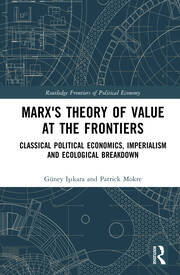
Vale Keith Hart. That keynote from 2010 (link below) was (and still is) a compelling argument for reconnecting value theory to practical political economy by weaving together Marx's commodity fetishism, the concept of plural economy inspired by Mauss, and the digital revolution's radical cheapening of information.
The effort to create authoritarianism is more likely to lead to a breakup of the state than to a total regime change.
This end of the United States is possible, in part,
because our president and vice-president think that it is impossible.
Because they are inside a grift bubble, they push for authoritarianism in their own interest,
without reckoning with the possibility that their actions can wreck the country.
For them, America is a limitless passive resource…
Research: AI's ability to complete long and complex software engineering tasks doubles every 6-7 months, but there is a "messiness tax" for real-world tasks (Boaz Barak/Windows On Theory)
https://windowsontheory.org/2025/11/04/thoughts-by…
The Theory of Strategic Evolution: Games with Endogenous Players and Strategic Replicators
Kevin Vallier
https://arxiv.org/abs/2512.07901 https://arxiv.org/pdf/2512.07901 https://arxiv.org/html/2512.07901
arXiv:2512.07901v1 Announce Type: new
Abstract: This paper develops the Theory of Strategic Evolution, a general model for systems in which the population of players, strategies, and institutional rules evolve together. The theory extends replicator dynamics to settings with endogenous players, multi level selection, innovation, constitutional change, and meta governance. The central mathematical object is a Poiesis stack: a hierarchy of strategic layers linked by cross level gain matrices. Under small gain conditions, the system admits a global Lyapunov function and satisfies selection, tracking, and stochastic stability results at every finite depth. We prove that the class is closed under block extension, innovation events, heterogeneous utilities, continuous strategy spaces, and constitutional evolution. The closure theorem shows that no new dynamics arise at higher levels and that unrestricted self modification cannot preserve Lyapunov structure. The theory unifies results from evolutionary game theory, institutional design, innovation dynamics, and constitutional political economy, providing a general mathematical model of long run strategic adaptation.
toXiv_bot_toot
Stephen Miller has a theory about this political moment.
As President Trump expands his lawbreaking and dictatorial rule,
the powerful MAGA disinformation apparatus
—at Miller’s direction
—is supercharging public attention to the debate over Trump’s conduct in a way that’s designed to deeply polarize it.
That will force Americans to take a side in that standoff, Miller clearly believes,
driving them to embrace authoritarian rule,
though perhaps witho…
Finished "Lobizona" by Romina Garber. I have extremely mixed feelings about this book. It's a powerful depiction of the fear of living as an undocumented child/teen and it has interesting things to say about rejection, belonging, and the choice between seeking to be recognized for who you are and wanting you blend in enough to be accepted as normal. However, it's also an explicit homage to Harry Potter, and while it doesn't include antisemitic tropes or glorify slavery or even have any anti-trans sentiments I can detect, to me the magical school setup felt forced and I thought it would have been a better book had it not tried to fit that mould. Also, it would have been a super interesting situation to explore trans issues, and while it's definitely fine for it not to do that, the author's praise of Rowling's work has me wondering...
There's a sequel that I think could in theory be amazing, but given the execution of the first book, I think I'll wait a bit before checking it out. By putting her main character in opposition to both ICE in the human world and the magical authorities in the other world, Garber explicitly sets the stage for a revolution standing between her protagonist and any kind of lasting peace. But I'm not confident she's capable of writing that story without relying on some kind of supernatural deus ex machina, which would be disappointing to me, since "a better world if only possible through divine intervention" is an inherently regressive message.
Overall, #OwnVoices fantasy centering an undocumented immigrant is an excellent thing, and I've certainly got a lot of privilege that surely influences my criticism. However, #OwnVoices stuff has a range of levels of craft and political stances, and it can be excellent for some reasons and mediocre for others.
On that point, if anyone reading this has suggestions for fiction books grappling with borders and the carceral state, Is be happy to hear them.
#AmReading
 @hex@kolektiva.social